So Many Good Books in 2024

And A Couple of Lousy Ones

“When I have a little money, I buy books; and if I have any left, I buy food and clothes.”
― Desiderius Erasmus Roterodamus

The calendar turns to January, a new year begins, and once again, it’s time to review my reading for the past year. There are fewer books overall this year and a fair number of books were “read” by listening to them (shown on the list as (A)). The count was an intentional choice on my part. Seeking better books and spending more time with them took precedence over the filling of shelves. In looking at the selections of paper versus audio books you can see how I approach each medium. The overwhelming majority of my theological reading is done in paper form so that it can be notated and readily accessed once entering the library. The books I “read” in audio form enable me to explore my diverse interests and engage a variety of topics. It’s also my chance to enjoy my guilty pleasures of Jack Reacher and Harry Bosch novels while working in the garden. In many cases, the audio book inspired me to purchase a companion paper copy as I wanted to give it a second read with a pencil and straightedge in hand. Good marketing Amazon!

“Where is human nature so weak as in the bookstore?”
― Henry Ward Beecherr

A practice that has encouraged multiple reads and improved my understanding of complex material is the making of book notes. These notes are generally thoughts derived from the highlighting and marginalia in a book. Their purpose is to record the most important aspects of a piece of literature in a form that  can serve me for research and writing purposes without having to search my shelves for an idea contained in my reading. I make these notes in Evernote so they are searchable and easily referenced when needed. It is a time-consuming process, but the benefit is priceless; I am rethinking through the material in the book as I make each note, and this process has been beneficial in building depth to my understanding of the selected topics. If this sounds like a benefit you would like to have for yourself, you need not start at this depth. Start by making chapter notes in the empty spaces in your current read. Summarize each chapter on the last page to see what you’ve learned. Outline the book on the blank pages in the back to see if you’re tracking with the author’s thoughts. Make the book your own.

When I have completed each book, I record the date of completion and my rating in the front cover before placing it into my library. My rating system is simple. Books rated 5 of 5 are the best. These are books that are memorable pieces of writing that deserve to be read, notes taken and thought about. Those rated as 4s are also worthy of reading and notation, but perhaps just once. The middle tier is a 3, and this is simply a good book. Those rated as 2 or below come with a warning. Don’t waste your time. Also, don’t ask to borrow these books as they do not have a home in my library. There were only a couple of 10s this year and one was a reread from years past. A 10 is an invaluable book, a must-read that I would recommend to anyone and everyone interested in the topic. Anything noted as (x…) means that it was reread. I intend (someday) to reread all of my Lee Child and Michael Connelly, having moved many of them from state to state. How many books do you have in this category?

TitleAuthorRating
Being God’s ImageImes10
The Divine Conspiracy (x2)Willard10
The Shaping of Things to Come (x2)Frost5
Embracing GraceMcKnight5
Gospel Fluency (x2)Vandersteldt5
Practicing the WayComer5
Unlimited Grace (x2)Chapell5
Transforming GraceBridges5
Rejoice and TrembleReeves5
The Mission of GodSchell5
Scripture is SupremeChester5
Covenant & God’s Purpose for the WorldSchreiner5
A Resilient Life (A)MacDonald5
The Art of LivingEpictetus4
Jesus the King (x2)Keller4
Someday is TodayDicks4
By Grace Alone (x2)Ferguson4
The Grace of GodStanley4
The PracticeGodin4
The Promise of GraceChappel4
Renewal for the 21st CenturyWerning4
How to PrayTorrey4
All it Takes is a Goal (x2)Acuff4
Knowing the SpiritHinn4
The Ministry of the Missional ChurchVan Gelder4
StormCymbala4
The Essence of the Church (x2)Van Gelder4
FactfulnessRosling4
Forgotten Ways HandbookHirsch4
The Kingdom of GodSchreiner4
The Forgotten Ways (x2)Hirsch4
ReJesus (x2)Frost4
The Death Christ DiedLightner4
The SecretChild4
The Lord’s SupperWaters4
SacrilegeHalter4
The Creative ActRubin4
Excellence Wins (A)Schulze4
The Black Echo (A)Connelly4
Mind Shift (A)McManus4
Unreasonable Hospitality (A)Guidara4
Choose Your Story (A)Hall4
Trillions (A)Wigglesworth4
It’s Never Too Late to Begin Again (A)Cameron4
Missional CommunitiesMcNeal3
HandmadeRogowski3
The Difficult Doctrines of the Love of GodCarson3
Writing for Busy ReadersRogers3
Church Turned Inside OutBerquist3
Expecting the UnexpectedPearring3
Who Needs Theology? 3
Twelve and a HalfVaynerchuk3
Strangest SecretNightengale3
RevivalGaines3
Everything IsManson3
Primal FireCole3
If Only You Would AskRogers3
The Mission Always WinsBolsinger3
Shaped by God’s Heart (x2)Minatrea3
Apostolic PrioritiesRichards3
Missional Map MakingRoxborough3
Words MatterBallard3
Redeeming the RoutinesBanks3
AndHalter3
The Focus ProjectEqualman3
Sharpening the Focus of the ChurchGetz3
Hell Yeah or NoSivers3
Praying the PsalmsBrueggemann3
Running Blind (A)Child3
Co-Active CoachingKimsey3
Nothin’ But A Good Time (A)Beaujour3
The Last Array (A)McManus3
Chasing Daylight (A)McManus3
The Perfect Story (A)Eber3
The Miracle Morning (A)Elrod3
The Creative Curve (A)Gannet3
Love People, Use Things (A)Millburn3
Butcher’s Work (A)Schechter3
Drowning (A)Newman3
Goals and Vision Mastery (A)Brown2
Unlikely Thru-Hiker (A)Lugo2

The Mission of God by Justin Schell

The Mission of God and the Witness of the Church

The missio Dei, or the mission of God, is the context in which every other theological event takes place. Creation, the fall, the Cross, the calling of Israel and the Church and the new heavens and new earth all have their place as moments along the timeline of God’s mission. As important as this topic is, the Church today can be fuzzy on the definition of missions, and especially the mission of God. As Schell says, “When an important word like mission becomes so elastic that its meaning is cloudy, significant questions arise.” In the first pages of this excellent book, he offers this working definition that sets the stage for the rest of the material. Mission, Schell says, is “…God’s revelatory work intended to establish a divine-human communion within creation.”

The missio Dei is not a peripheral theological topic, it is central to understanding God’s actions at every point to reveal Himself to creation in such a way as to gather a people for Himself and so to have a perfect, blessed communion with them for eternity. Schell has done a magnificent job of distilling this enormous topic down to an approachable form that pastors, theologians or laymen alike can come away with a more than sufficient understanding that contributes to their thinking and worship.

Each of the eight chapters is concise but packed with the necessary scriptural references for the reader to construct a biblical understanding of the mission. Schell leans heavily on the Old Testament as understanding the events of creation, the Garden and the Fall, and the calling of Israel form the background to understand the blessing of the incarnation and the cross and the assignment of the Church. This background is often missing from the thinking of many in the Church who form their understanding by starting at the Christmas narrative.

One of the finest features of this book is its size. I have numerous volumes of several hundred to over a thousand pages that require immense dedication to engage. By the time I have finished these books, the point or topic can be lost in the countless details and arguments. This series by Crossway contributes immensely to the craft of theology by concisely presenting the enormous things of God in a form approachable by any reader at nearly any level.

Watch Your Blind Side

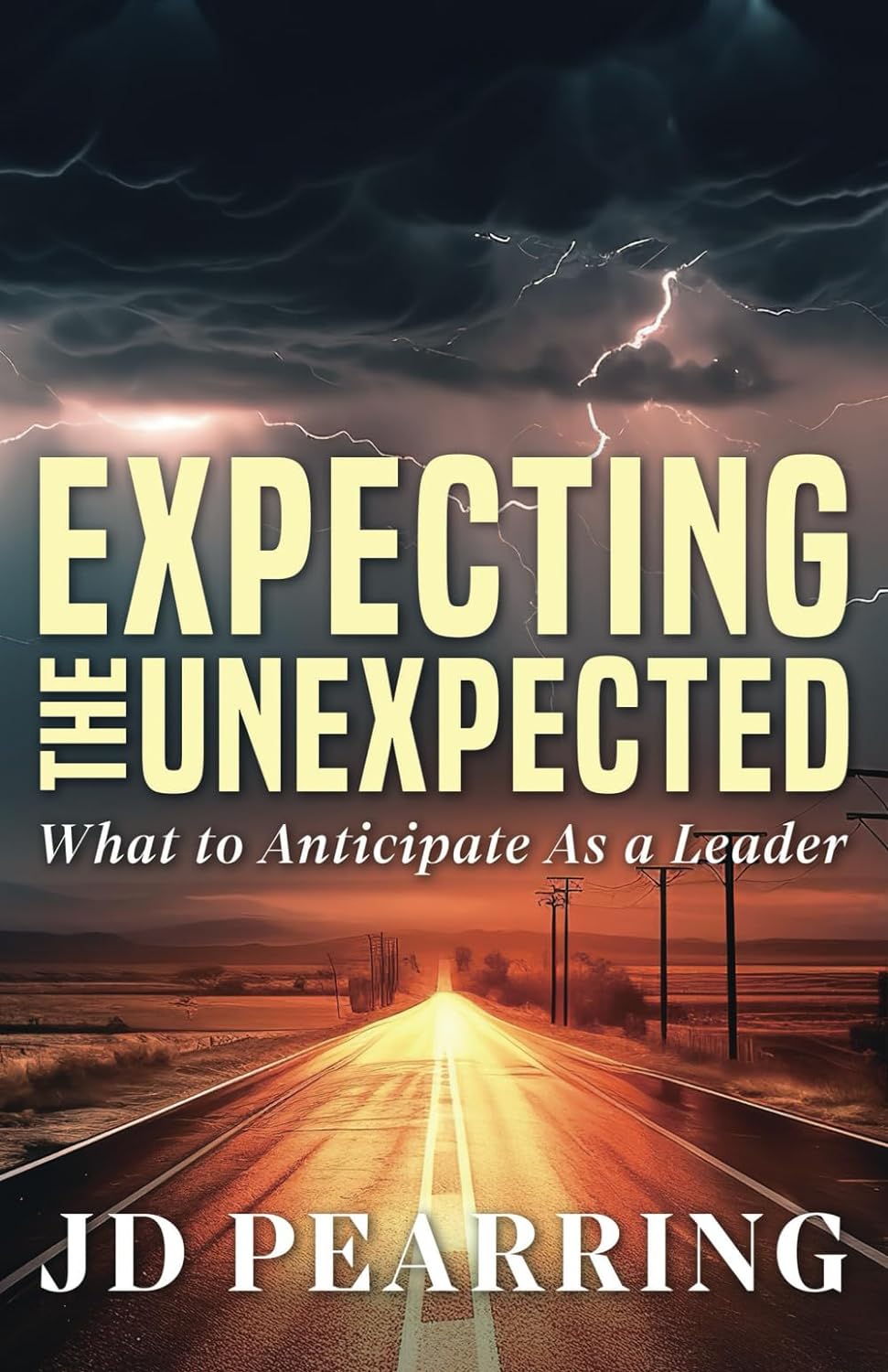
Expecting the Unexpected by JD Pearring

Many leadership books focus on the act of leading, as though by sheer will, one can create success with no unanticipated outside interference. Anyone who has ever been in a position of leadership, however, knows this isn’t true. There are dozens of things that can come out of nowhere and derail your efforts toward reaching your goals. In his excellent new book Expecting the Unexpected, JD Pearring catalogs eighteen of these actions, feelings and events that we do well to be looking out for. He talks about anticipating these things as you go about your leadership duties, but the book is also useful in hindsight as you reflect on ways that each of us could have handled these negative influences better.

JD combines personal anecdotes, stories and scripture to structure each chapter. From these, he offers several ways to deal with the unexpected as it comes. The option to give up, quit, surrender, etc. is mostly missing from his suggested actions. Instead, by applying scripture to each type of event, leaders are encouraged to overcome in the best moments, or endure with faith in the more challenging instances. The Big Challenge conclusions to each chapter range in application from simple [don’t quit] to character challenging [serve in obscurity]. Depending on your situation, some will be more helpful than others.

Take some encouragement. It is out there for you.

JD Pearring

Expecting is a book to keep on a lower shelf for reference in the future. You may not be experiencing discouragement (now), but chances are you will at some point. Pull the book out, turn to chapter(s) on discouragement (and smears and complaining and fools and so on) and let JD’s wisdom get you back on track. This is a good book for new leaders who have yet to experience these troubles, as well as more seasoned leaders who have seen them all. I plan to use this material in coaching relationships with renewal leaders who often find themselves overwhelmed by these negative effects on the health of their church, as well as negatively affecting their leadership. Don’t miss this book.

Blessed by What Others Have Missed

What Others Have Missed

In my 2023 reading review, I mentioned I purchased many of my books from the used marketplace. When I do so, I always try to purchase the best condition possible, balancing the used price against the purchase of a new volume. When the book arrives in my mailbox, many times I cut open the vinyl package to find a book in better condition than expected; in several instances, the book has never been opened and is clearly unread. This is exciting for sure, but always makes me wonder why the original owner purchased the book but never found the time or the interest to read it. In some cases, the book may have passed through multiple owners before arriving in my office, no one having opened it along the way. In the picture that accompanies this essay, you see the cover of Tim Keller’s book “Jesus the King” adorned with a small orange Goodwill sticker. The excellent book was unopened when I received it and folded back of the covers for the first time, but before that it had touched down in at least two places. Someone had someone had originally purchased it, I presume interested in the content, but for whatever reason they had never got around to reading the book, eventually piling it in with a number of other books and donating it to Goodwill, where it was priced and put out for purchase. Drawing no interest in the store, the volume was scooped up by Thriftbooks and, listed in excellent condition, I purchased it for a price less than the new equivalent, opened it, read it and entered it into my library.

Because I’ve read the book, I know the value of the content beyond the little information offered in the back–cover blurb. As I handle the book, I wonder, why did someone purchase the volume only to relegate it to the “to-be-read” pile long enough to later discard it, all of its insight unrealized. Looking at my own piles of books waiting to be enjoyed, it makes me wonder if the topic was no longer of interest. Perhaps a more insightful book had come into the owner’s possession. It might’ve been a time constraint, something all readers are familiar with. To gain the most from a book, new or used, demands intentional reading. It requires that we mull over the author’s ideas. It demands that we consider the notes and references, in many cases, we need to add our own marginalia, footnotes and summaries. Maybe life had made demands on the first owner that made the challenge of this book impossible to surmount. Whatever the reason or cause, I benefit from discovering what others have missed.

I don’t remember what prompted me to purchase Keller’s book, whether it was a serendipitous search result as I looked for another specific book, or, as is most often the case, it was added to my reading list through a footnote or endnote in another book. Whether the condition had been like-new as I received, or well-loved, as many other books I’ve purchased have been, I am enriched because I opened the cover and read and considered the words and spent the time to think about where the ideas fit in my life, what previous knowledge hook they attach to. Not every volume will be a treasure. Some of our own books, that we purchased new, excited to read them, don’t hold up past the first couple of chapters. They find their way to the ARC or Goodwill, and later perhaps to Thriftbooks as a part of a volume purchase. In those cases, someone may pick up your book, look at the unfolded spine or the stiffness of the hardcover binding and wonder why you didn’t read the book, why you lost interest, what interrupted your reading time. Whatever the reason we pass the book on, it’s good to know that someone else may get the chance to discover what we missed.

Review: The Loveliest Place by Dustin Benge

Why is More Important Than How

A Christian who has spent any length of time in the Church knows that she can appear less than beautiful when subjected to human scrutiny. Bickering, division, scandal – all of these things and more wound her and leave scars and many within seem to care little about the damage done. But when we pause and consider the view from God’s perspective we’re humbled. He looks upon the less-than-faithful, worldly, gospel-possessing but imperfect Church and He loves her unconditionally because, to Him, she is the most beautiful thing He has fashioned. To read Dustin Benge’s love letter about the beauty of the Bride of Christ is to be moved to repentance for one’s lack of similar vision.

The Loveliest Place is a beautiful book and one that I will be rereading regularly. Theologically deep, the depth is contained in a heartfelt paean to love the Church in the same way God does. Benge systematically presents the unique treasures that have been entrusted to the body and the eternal value that God assigns to them. Dare we consider of less value, or worse, abuse these privileges through apathy or ignorance. I was deeply captivated by page after page or prose that encouraged my vision to lift to a higher perspective, to look past the scars and stains and see the Church as her Creator does. The theology can wait for a second reading if the first pass draws us back to the beauty of the Bride.

The Loveliest Place should be on the shelf of every pastor, elder and dedicated church member. I find it much more powerful than any crop of ministry ‘how-to’ books because it gives the important ‘why’ to everything we do in the Church. Understanding the reason why the Church is so valued by God gives the motivation for everything we do (or don’t do) as people blessed to be part of the Bride. In the introduction, the earth is turned and the reader is confronted with our own attitudes as Benge challenges, “Chosen by God the Father, purchased by Christ the Son, and empowered by the Holy Spirit, the church should be cherished and recognized as ‘dear’ by all who call her home.” Reflecting on what we encourage, discourage, allow or ignore gives us our commitment to this truth. Perhaps our prayers need to return to the ‘why’ of the church, to the reason that we want to treasure her and her members.

A Review of “A Dozen Things God Did with Your Sin” by Sam Storms

Christians often perceive God dealing with sin in a binary fashion. He forgives sin, or he holds people accountable for sin and judgment. It’s difficult to argue with that equation because it is factually correct, but it doesn’t encourage much in the way of meditation. This new volume by Sam storms seeks to broaden our perception of what God does with our sin. He does so by enumerating 12 different facets of forgiveness that give us weeks and months of scripture and devotion to draw our souls deeper into the love and goodness of God’s grace.

As an example of the depth that the reader is encouraged to explore, Storms steps to either side of the key point: God forgives you of your sin. On one side of that truth lies the fact that the forgiveness that we enjoy came about because God laid our sin upon his son, Jesus. This draws our devotion from simple gratitude at being forgiven, to considering the cost of that grace. Bringing those two truths together deepens our gratitude and makes it less likely that we will take it for granted. On the other side of forgiveness is the truth that God has cleansed us of our sin. This draws us to an entirely other meditation and degree of gratitude. Not only have we been judicially redeemed, the Christian is washed clean and set apart. As with the previous thought, we are again drawn away from cheap grace.

After giving a dozen positive truths about what God has done with our sin, Dr. Storms adds an important chapter about three things that God does not, and will never do with our sin. I found this chapter to be very important in light of discussions I’ve had with people through the years. Lacking a firm hold on the concept of forgiveness, well-meaning Christians have looked at God’s grace in the same way that we might be tempted to look at human grace, as though it could be rescinded at anytime. Storms makes clear through scripture that this is definitely not the case.

This book is excellent reading for the individual Christian, but I can see this being the basis for a small group or a discipleship relationship study. Each of the topics he touches on can create an opening for a brother or sister to open up and share their concerns with the answer close at hand. Put this book on your reading list today.

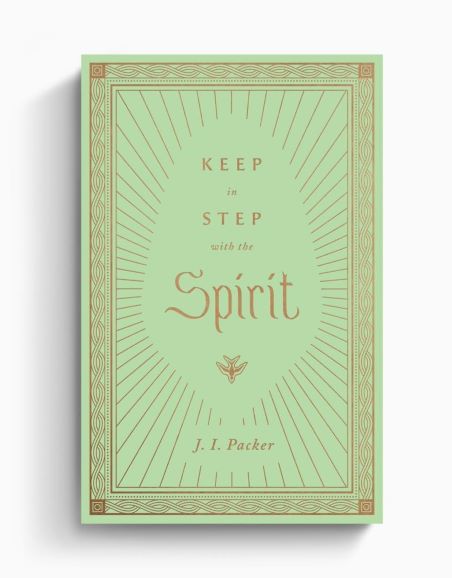
Keep in Step with the Spirit by J.I. Packer

The Missing Element

In a blurb commending the book, Ray Ortlund says this about J.I. Packer, “When we face a debated theological topic, we need a guide who has no ax to grind, who is fair, honest, reasonable, and—above all—carefully biblical. We Christians do debate the ministries of the Holy Spirit. But we have a reliable guide in J.I. Packer.” I read that in opening the second of my 10 out of 5 books from 2021, and found small dispute with Ortlund on this point: Packer does take sides in debate. In the volumes that have enriched me, Mr. Packer always takes the side of the biblical text. Unlike so many other authors, he does not read his theology back into the text, instead allowing his position to be discovered inductively. This trait (exhibited by so many of our senior scholars and theologians) makes reading a pleasure and his positions trustworthy.

If we live by the Spirit, let us also keep in step with the Spirit. Galatians 5:25

So Packer enters the theological scrum concerning a biblical understanding of the person and ministry of the Holy Spirit. His aim in this book is to restore the centrality of the Holy Spirit in the Church, a ministry that is often tossed and torn between the intellectualism of theologians and doctrine and unrestrained charismatic practices. Packer envisioned the book as a corrective to these extremes, a biblical call to Christians to restore the place of the Spirit and His gifts in their faith and lives. Unlike other authors that plant both feet in their camp and refuse to consider positions other than their own, Packer takes a much more irenic tone, insisting that the Bible speak louder than he does.

A point that Packer makes that is important for the reader to engage is that the Holy Spirit is not a discrete ministry on His own. The Spirit is inseparable from the Godhead and will always act in concert with the Father and the Son. He mediates Christ (John 16:14) to us. All the Spirit’s power and gifts are  Jesus working through the Spirit in us. It is in the self-effacing nature of the Spirit’s ministry that we gain the perspective to evaluate spiritual claims attributed to the movement of the Spirit. He will always be directing attention back to the Son, and anything that does not achieve that end is to be considered much more carefully.

The mediation of Christ to His people involves the Spirit in spurring on holiness in their lives. We often refer to this growth using the term sanctification, and it is yet another idea that gets drawn to the edges of the Church. In some quarters it is a practice through which we grow intellectually through Bible study and discipleship. At the other side of the yard, the term sanctification points to a growing perfectionism in behavior. Packer draws the idea back to the center, saying that holiness in the Bible is evidenced by growth in the fruit of the Holy Spirit. It is the Spirit conforming us to Christlikeness and our pursuit of holiness is governed by our beliefs about the Spirit.

Packer takes this axiom to his examination of modern charismatic theology and practices, giving support where appropriate and critique where warranted. This evaluation includes a valuable chapter on different schools of thought and practice pursuing holiness. This part of the book is valuable from two different directions. First, when we locate our generalized tribe within the chapter it helps the Christian to see where their beliefs on this subject derive from. The reader that approaches the text fairly finds a second benefit in learning where other tribes have come from as well, preventing some of less loving criticisms that find their way into our speech. It seems to be Packer’s hope that brothers and sisters in Christ will find their own attitudes becoming as irenic as the one he displays in his words.

Keep in Step with the Spirit is a valuable contribution to the church and written at a slightly above popular level. It is worth every effort in working your way through the text, bible close by so you can read the many references in full context. More than reading the text and placing the book on your library shelves, let it affect your meditation on the Holy Spirit and His work in your life. He was never meant to be divisive within the Church. His ministry is to draw us all closer to Christ as we grow together in the Lord’s image. If this book contributes in some small way to unity within the body, Packer’s efforts will be the blessing it was intended to be.

Sparking a Movement

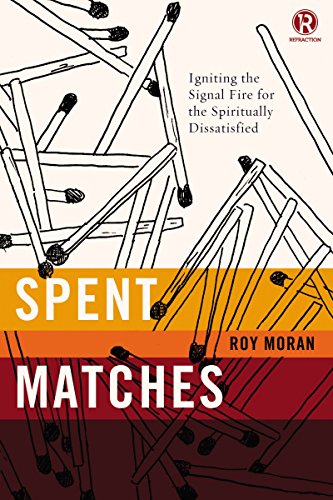
A summary of Spent Matches by Roy Moran

The Christian church has used a range of participatory metrics to evaluate her success in the modern era. Conversions, baptisms, the number of people present in worship: we fastidiously record these numbers throughout the year and then pore over them at year-end leadership summits. We define success as an increase in these totals; failure, plateau or decline. The analysis of these numbers governs the design and direction of the programmatic functions of the church. Leaders will tweak the edification programs to push for a more active evangelism, believing that transferring more information will make more effective evangelists. But how often are these same leaders referring to the commission given to the Church by her Lord to check the validity of their choices?

As Roy Moran states in his invaluable book Spent Matches, not often enough. The flaw in these metrics of success is that we no longer live in an era where information transfer to our neighbors and friends is effective in igniting their interest in God and His grace. To state this is a more colloquial fashion: the lives that surround the typical evangelical church are not the least bit interested in knowing what goes on inside. What people respond to is running into a radical life, one that is radically committed to Jesus and His teaching. Telling people what we believe puts their hypocrisy radar on full alert (as they have become conditioned to do in all areas of life). Living what we say we believe makes us stand out from the rest of the world clamoring for attention in the lives of our family, friends and neighbors.

It can be tempting to read the book as the outline for implementing a program, particularly because it includes ‘suggested’ outlines for meetings in the closing chapters. Mortify this temptation by slowly considering the imagery of the dire condition of the Church Moran paints at the beginning of the book. He suggests that our metrics should show the declining influence of modern Christian practice, likening the condition to a burning oil drilling platform surrounded by miles of churning sea. In the modern day we have two choices, jump or fry. To stay on our current platform is to die slowly on a long slope of decline. To jump is the join a movement back to the first principles of the Lord’s commission for His community of followers: make disciples who make disciples.

Moran is not the only author to put this idea into print. The Trellis and the Vine by Colin Marshall and Tony Payne leads to a similar conclusion, and has been influential in many churches by offering a ladder down from the burning platform. Moran is more forceful. We must jump and return with fresh eyes to the text of Matthew 28:18-20 and stop the bifurcation of the Gospel movement. Following a declaration of the expansive authority given to Him as the basis for the commission, Jesus commands His Church to “Go therefore and make disciples of all nations” (ESV). The command to baptize these new disciples into the family and to teach “them to observe [obey] all that I have commanded you.” The Church has been obedient to this commission, but the methods have resulted in a bifurcated gospel practice where we separate life from faith. We have defined discipleship as an education process (information transfer) and then convinced ourselves that discipleship precedes evangelism (“sharing our faith”). The outcome of this process? Disciples never feel ready to evangelize others, so we double down on teaching them, hoping that someday their ship will launch. All the while, the platform burns.

The myth of preparation-perfection that plagues the information-transfer Church is refuted by reading the verses in the passage that are not a part of the memorized commission. The audience for the Lord’s command is His remaining eleven disciples, some of whom worshipped, but some of whom doubted! Perfection was not to be the enemy of progress, as Jesus commanded them to jump from the platform into the unknown. As Moran says,

“Jesus didn’t exhibit any sense of alarm indicating this was out of the ordinary or unusual. He was quite comfortable with a team that didn’t have it all together. In fact, He was comfortable commissioning people who not only lacked complete faith but were confirmed doubters.”

This is a catalyzing moment in the book, setting in relief the encouragement to jump and ignite a new movement within the Church, disciples who make disciples as they go along, each edifying and encouraging the other rather than relying on subject-matter experts that students feel they have to imitate before moving on the Mission. The Lord does not expect to create a class of mission-minded within the Church, specialists who carry on the Commission while others sit and watch. To be a Christian is to be a disciple, one involved in daily learning what it means to be a follower of Jesus and then putting that into practice. Moran’s take on John 15:8 (“By this my Father is glorified, that you bear much fruit and so prove to be my disciples.”) is accurate and puts our current process is stark relief:

“Jesus’ hope was that it would be normal for His followers to make disciples as they lived out a dangerous message that would divide families ad heal the brokenhearted, challenge the well-off and encourage the impoverished, transform the oppressors and bring freedom to the oppressed. To fail to make disciples would indicate followers weren’t connected to Jesus and the heart of His mission.”

Owning this concept is the spark of a movement that puts away information transfer and replaces it with community life. Jesus did not commission us to be taught principles about Himself, he said we were to be taught and then apply what he commanded. This obedience is the missing part in most programs in the modern Church; we are never challenged to show what we’ve done with what we’ve learned and so we never do. This is the source of the apathy we see in the pews. We have more information than we can possibly process at our fingertips, but scarce few opportunities to put it into practice and fewer still partners in the discipleship life holding us accountable. The discipleship patterns that Moran suggests through the book aim to fill this vacuum.

A fair number of churches today claim Acts chapter 2 as their model, seeing a return to the ancient church as a solution to moribund Christianity. The component missing in many is the discipleship pattern given by the Lord’s example and command: disciples, however imperfect, who make other disciples (who repeat the process) in community. This is what will capture the imagination of a world that has long ago become inured to the invitations of the Church. I invite you to read the book a few times and see if you are tempted to jump from the platform into the raging sea of the culture, trusting the Lord’s promise for our weakness, “I am with you always, to the end of the age.”

Book Review: Church by A.W. Tozer

We Are the Body

For many Christians, the Church that Pastor Tozer describes in this new collection is almost a foreign entity given the diluted experience that they have each week. Tozer had a deep love for God and His Church, and it pours forth on the pages of this newly published collection. Many of the words have been previously published but Moody Publi418289shers has assembled new topical collections of these and other unpublished works on themes important to the modern church. The ‘Church’ collection is inspiring reading as Tozer speaks of the importance of Christ’s Bride, not criticizing for long, but rather, reminding the reader of the world-changing purpose of the assembled Christians.
For those familiar with Tozer’s writing, each chapter is the expected gem. His holiness and earnest devotion to God’s Church is not sanctimonious, it draws the reader deeper and deeper in an invitation to the same devotion. The Church is not a social organization, a club to which we can give passing notice. It is the living, breathing organization through which God works to affect the spiritual transformation of His world. Tozer can be both gentle and firm as the moment dictates and, in both instances, the reader is encouraged to commit themselves and be likewise.

If you are new to Tozer, consult the classics alongside this volume: The Pursuit of God and  are good primers. If Tozer has long been on your reading list [as he has mine] you will savor his words and be encouraged in your faith and your ministry, as you probably expect

Fitted with the Gospel of Peace

The apostle Paul describes the tools of spiritual warfare in the new covenant world, naming it the Armor of God in the final chapter of Ephesians. In verse 15 we encounter a phrase unique in the Bible when he speaks of feet fitted with readiness, the readiness coming from “the gospel of peace”, a phrase found only here in the Greek New Testament. Paul gives this command as the foundation of our spiritual armor, steadying our life as each of the component parts works together.

This imagery echoes back to the messenger of peace prophesied in Isaiah 52: How beautiful on the mountains are the feet of those who bring good news, who proclaim peace, who bring good tidings, who proclaim salvation”.  Though barefoot, this messenger carried the ‘good news’ of peace to those in exile that restoration would be on the way, that their long bondage would be ending. He shouts a message from the mountaintops that peace had been made with the King, enmity had ended. For the reader [hearer] of Paul’s epistle, this imagery could not be missed and was, in fact, amplified by the Apostle’s magisterial writing in Romans.

“For if, when we were god’s enemies, we were reconciled to him though the death of his Son, how much more, having been reconciled, shall we be saved though his life!”  Romans 5:10

“Therefore, there is now no condemnation for those who are in Christ Jesus, because through Christ Jesus the law of the Spirit of life set me free from the law of sin and death.” Romans 8:1

Those set free by Christ know this peace. The Gospel brought this peace and emboldens the peacemakers. The good news sent from the King to the exiles brought hope and in Jesus, the message came to life. As believers have embraced the message, they have surrendered their sovereignty to the true Sovereign. The announcement of the treaty that followed the Lord’s sacrifice gave definition to peace. Knowing, truly knowing, the peace that comes of the gospel propels the freed soul to share this good news with others. We want those around us to know the same freedom, to enjoy the same peace.

The blessing that comes of the gospel of peace is likewise twofold. We are blessed in salvation and in knowing the peace with God that the forgiveness of sins provides. Blessings are also inherent in the calling to proclaim the good news of peace. To be entrusted with such a precious task and message is to feel the love of God, to know the trust of the King.

“How beautiful on the mountains are the feet of those who bring good news…” Isaiah 52:7