A Word for My Brother & Sister Pastors

image

Prophetical-Priestly Ministry by Darius Salter

It’s fascinating how things fall into your lap when you least expect them. Serendipity is the word often used to describe favorable circumstances like this when you discover something grand has come your way unexpectedly. Christian sagacity trends not towards luck though, but instead, toward an understanding of the work of the Father and Spirit in concert. Salter’s book landing in my hands was just such an event.

Prophetical-Priestly Ministry was published in 2002 to little fanfare. A quick search for reviews of the book comes up short; it is ignored on Amazon and the single entry at ChristianBook.com is a restatement of the title. The silence is understandable. The book is not about how to grow your church, new ways of reaching post-moderns, or new secrets of the life of Jesus. These books fly off the shelves into pastoral libraries. Books that serve as correctives such as this are often ignored. And I believe, ignored at the peril of the pastor and their church.

Salter’s message to pastors is simple: return to your core responsibilities. Speak the prophetic word of God into the lives of your congregation rather than feeding them messages about how to have their ‘best life now.’ Stand as the priest for God’s people rather than their cheerleader or worse, their manager. He says “Prophet-priests specialize in diseases of the soul; sin, despair, depression, loneliness, alienation, anger, hostility, pride, greed, avarice, addiction and fear. The list is almost endless. Of course, these sicknesses eventuate in the systemic evils of ethnocentricity, nationalism, exploitation, oppression, and racism.” The message in this thin volume calls us back to the service of the congregation and gets us away from parading around selling books or conducting seminars on how to fill more seats in the sanctuary.

The author critiques the current ‘worldly’ ministry that he sees all around the American landscape (in 2002 and worsening since). The Church has gotten entrapped in the self-fulfillment culture and, in some cases, has moved away her first love. God is a second thought in the worst of these environments. The ministry has become enablers. We promise spirituality while allowing our people to remain in their materialistic, pluralistic lifestyle. The gospel becomes a casualty of the latest charity initiative or small group study topic.

I didn’t go looking for this book. It appeared in a weekly-specials email and something moved me to purchase it. Initially, it arrived and made its way to the book shelves to be read later. I picked it up after a time and was immediately struck by the message that the Spirit brought to bear through Brother Salter’s words. I was stopped cold when the Spirit brought my feeble ministry efforts up against those of Francis Asbury,

For the elect’s sake, Asbury ceaselessly uttered the Word through Scripture reading, prayer, exhortation, teaching, and family worship. Every overnight stay would involve spiritual examination of the residents and subsequent catechism. There would be no idle words. “My mind was powerfully struck with a sense of the great duty of preaching in all companies, of always speaking boldly and freely for God as if in the pulpit.” This included calling “the family into the room and addressing this pointedly one by one concerning their souls.”

One by one; when was the last time you (or I) sat even our immediate families down and questioned them concerning their spiritual welfare? Have we gone home by home and addressed these concerns with our faith families? Why not? Because we have succumbed to the Western individuality of the culture and we respect the personal nature of a person’s faith more than we do the calling we have received to be a priest and prophet.

Brothers and sisters, now is the time for a new awakening within the Church. Not the watered down awakening of “spirituality” in its myriad forms but for us to stand upon the walls ahead of our flock, intervening for them with God and speaking His word into their lives not matter how difficult. Find this book, read it, absorb it, and let the Spirit work it all out in your ministry.
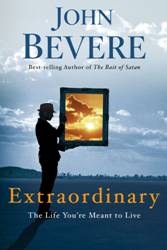
Extraordinary is Within Your Reach

No eye has seen, no ear has heard, no mind has conceived what God has prepared for those who love him. (1 Cor 2:9)

The latest by John Bevere, Extraordinary, takes off in a flash from that fundamental truth and winds through 200+ pages of confrontation and encouragement demanding that the Christian see the gift of grace as more than just fire insurance. Believers empowered by the Holy Spirit were not meant just to be saved in order to hang on by their fingertips until the end. Bevere exhorts the reader on every page to realize that they were redeemed for extraordinary purposes and that all of the power needed for this new life has been vested in them by their Redeemer. The question that is unspoken but living on every page is, why? Why are we willing to settle for the ordinary when the remarkable is within our grasp?

John Bevere Extraordinary

Extraordinary is a collection of short chapters, each touching on a specific area of Christian living. Bevere has an urgency to his writing as though he can’t wait to get the next thought down on the page and you sense this as you read. You can’t wait to see how a thought plays out and then you stop, confronted by the truth of the Scriptures that you have either passed over or conveniently set aside. More than once in each chapter I found myself opening my Bible to the verse or passage referenced and finding a new truth revealed.

Island Man and Christ’s continued question “Where is your faith?” are just two of the illustrations that will cause you to stop reading and consider your own life. So many of us have taken the promises of Jesus into our heads but they have not made their way into our hearts. He promised life-altering, world-changing, universe-shaking power through the Spirit and yet, we more often than not live as thought these promises were only for the Disciples or for a class of super-Christians alone in their monastic retreats. Bevere’s voice jumps from the page to grab you and shake your complacency away, cajoling and coaching you to take this power seriously and to live a life worthy of the sacrifice made on your behalf. Unlike the Island Man, we need to grasp the potential of what we’ve been given.

Don’t miss Extraordinary. You will be able to read it quickly but you will soon find yourself going back with your pencil to mark certain pages and sentences. Your bible will get a workout as well as you find new truths and see familiar ones in a new light. All of this will be wasted though if you just read the book. As St. James said of the truths in the Scriptures, “it is a message to obey, not just to listen to. If you don’t obey, you are only fooling yourself.” Read and then act.


For more information about this book, Extraordinary.

Randy Alcorn Addresses the Toughest Issue : If God is Good

clip_image001[4]Christians and Atheists alike voice the same question over and over again; if God is good then why are evil and suffering so prevalent? The believer may be led to think that the life of the Christian is to be free of pain and suffering only to find that, in most cases, the opposite is true. The Atheist uses the reality of struggle and horror as a foundational argument against the existence of God only to discover adversity strengthening the belief of the followers of Jesus. Is suffering a punishment for sin or an experience that God could readily remove from the world? Is there a bigger picture seen by the Creator of the universe where our troubles serve a larger purpose that we simply cannot see? Randy Alcorn enters this swirling discussion with his excellent new book If God is Good and the core challenge to the reader, what if suffering is God’s way of asking us to trust Him?

The problems of evil’s existence and the suffering of human beings are extraordinarily complex subjects but Alcorn has devoted 500 pages to examining the problems from numerous different angles. He looks at evil and suffering from the perspective of a believer and as a nonbeliever and examines these problems historically, theologically, and philosophically. Alcorn’s writing is what sets this book apart from denser scholastic examinations. He writes for the Christian struggling to understand why God allows evil and suffering to continue in the world. Each of the topical sections is divided into short chapters that address a single issue or question making the book a go-to resource that the reader can open to a specific topic and begin to find the answer.

Randy writes with a pastoral heart and an eye for connecting the truths of Scripture with vignettes of real life. Readers can often encounter a verse such as Isaiah 48:10—See, I have refined you, though not as silver; I have tested you in the furnace of affliction.For my own sake, for my own sake, I do this.–and be unable to understand how it applies to their lives. Would God actually do this? Would he actually allow us to suffer pain and strife for His glory? When the pain is so close and personal, this seems to be anathema but this is where the book shines. Alcorn’s special talent lies in finding just the right illustration to bring the truth home and he puts that talent to great use throughout these chapters. For example, by showing how the pain of the death of a missionary looks up close, Alcorn can then pull us back to see the effect that he or she had on numbers of people who witnessed their faithfulness and came to know the God they worshipped and embodied.

This is a must-have book for anyone who questions the issue of suffering. This will find a prominent place on my shelf so that I can refer to it often. It is accessible, well structured, and so moving that I often could only read short sections before putting it aside to think about what I had just read. If you have been fortunate enough to have avoided struggle and strife in your life, reading this book will prepare you for the inevitable moment in which it arrives because it will. If your life has been marked by great tragedy, struggle, pain, and suffering, read this book alongside your Bible in order to understand how your pain serves God, His eternal plan, and His glory.

For more information about If God is Good, go here.

Bruce Wilkinson says You Were Born for This

clip_image001For most Christians, to serve God is an ongoing desire of the heart that can languish in secret for years. We have in our minds and hearts that we will serve Him whenever and wherever he calls. We daydream about the these encounters, gradually raising the heartbreak quotient that will shade the moment. We’ll gladly help the downtrodden, the persecuted, or those who just need a little help as long as it doesn’t require risk on our part.  We wait and we wait on God but sometimes act out of our own conscience when he doesn’t seem to be forthcoming with any tasks for us.

But what if we’re just missing the message? What if we stopped sitting idly by waiting for God to deliver miracles and took to heart the messages our pastors have been teaching us for years, that we are the vessels through which God wants to work?

 What if this is what we were born for?

In Bruce Wilkinson’s new book You Were Born for This he takes us on a journey of revelation where, right off the bat, we discover that miracles are much more than the overwhelming workings of God in which seas are parted and thousands are fed from meager supplies. They are, as Wilkinson writes, the everyday appearances and interventions in the lives of the people that God loves. In our initial steps, the first idea that we take to heart is that you and I are intended to be the delivery mechanism for these miracles.  The journey of miracles is about learning to recognize the subtle nudges and signals that God sends our way and then having the courage and the confidence in His power to deliver the gifts that He’s sending.

You Were Born for This is not a cultic, Course in Miracles type of book. It is about how you and I can actively participate in the delivery of everyday signs of God’s love to others who have come to His attention.  Wilkinson lays out seven keys that are necessary to our active participation.  The first four, the Miracle Light Keys, are those that we need to internalize in order to participate in this life and miracles.  The last three, which Wilkinson calls the special delivery keys, applied to very specific needs such as forgiveness, money, and a life’s purpose.

I was initially skeptical as I read the book for the first time.  As I read and thought about the first four concepts a second time, I came to realize that this was the life that I had preached and written about for many years.  For example, the Master Key uses your fervent prayer to God asking to be sent to serve another.  We have all delivered this prayer up to heaven in the abstract but, more than likely, we have not made this a daily affirmation.  Wilkinson shows how, if we integrate this intentional practice into our daily routine, we become more and more receptive to the gentle nudges and whispers that God sends to move us as servants.  The other three Light Keys follow logically from this concept.  Once you have expressed your willingness to serve, the People Key aligns your heart with God’s agenda and expels any lingering desires for the glory of the miracle. You turn over your heart to Spirit and rid yourself of any thoughts that miracle you are going to deliver is from you instead of God. With proper humility, Wilkinson says that you are ready to approach the final step, the Risk Key, which builds in you the ability to be intentional about taking risks in faith. It is your commitment to God that, despite your fears and hesitancy,  you will trust in His power to deliver the miracle that He wants to send.

You Were Born for This is a volume that you will keep on your desk or nightstand for many months as you ponder and practice the concepts. Wilkinson’s stories of the miracles he has been privileged to be a part of will get your heart pounding to partner with God in the same types of situations. You may be skeptical at first, hesitant to dive in thinking that the material might be some kind of Gnostic text or a light-weight treatise on how to change the world but give it a chance. Read it through a couple of times and then put it aside and think about it some more. Read the Bible and then come back and see if what Wilkinson is saying isn’t true. Better yet, decide that today is the day that you will say to God “Please, send me!”

For more information about this book:

You Were Born for This


Bruce Wilkinson introduces his new book

No Fakin’ and Shakin’ Here – Holy Roller by Julie Lyons

clip_image002Sister Johnson had a way of cutting through the mess. I found this out after I started teaching a Sunday-school class, replacing the previous teacher who quit unexpectedly. Standing in front of a roomful of adults, I asked a question: “Why do we sin?”

Sister Johnson, who was in her sixties, piped up as soon as the last word left my mouth.

“Because we want to.”

At that moment, a thousand volumes of Christian theology were rendered redundant.

Holy Roller is two parallel stories; the birth and growth of a black Pentecostal church and its pastor and a white writer who unknowingly stumbles into its midst and discovers that the heart of the faith she has been seeking in her life beats within this unfailingly honest body. Julie Lyons skillfully intertwines her story with that of the The Body of Christ Assembly and Pastor Frederick Eddington. Many churches attach the label ‘spirit-filled’ to their biographies but you often discover little of His presence once you in the walls of their meeting hall. Pastor Eddington and the Assembly on the other hand are true believers in the power of the Spirit and demonstrate the power of His work over and over in the life of the church and community beyond its crumbling walls.

Lyons weaves the story of her early ‘faith of facts’ with the charismata of the Spirit driven Church. The dichotomous church life of her early life is familiar to many evangelicals, a church experience where one is said but another is done. Cynicism of some measure had set in when she proposed a story to her editor about churches on the fringes of South Dallas and their ministry in the midst of a crack cocaine crisis. As she passed by numerous small churches with their lights turned out she finds herself in front of the tiny, ramshackle house that strained to hold the Holy Spirit’s work. A young girl (?) points out Pastor Eddington to Julie and she asks the questions that will quickly transform her life.

“Do you pray for crack addicts?”

“Yes” replied the pastor.

“Are they getting healed?” asked Julie.

“Some are.”

The story that follows in Holy Roller is a multi-threaded page-turner rooted in a faith that takes the promises of power in the Holy Spirit at face value, believing the Bible and its promises of transformed lives and demonstrating for the world to see that these things are indeed true. It is not a Christianity of constant theological argument over arcane points or concern with the finer points of Greek exegesis where the truths are analyzed but not necessarily applied. Lyons tells the story of moving from one world to another as she witnesses the changed lives she spends time with in becoming a part of the Body of Christ Assembly and the challenges that came with the shift.

Transformation is the heart of the story. Frederick Eddington moving from psychologically challenged man to pastor. His wife Diane changed from a party girl to the first lady of the church and Julie and Lyons who were exposed to new racial relationships and faith founded in the living Spirit. As expected, the integration is not always easy and significant challenges are recorded for all of the people we encounter. The common thread linking them together is a profound trust in the power of Christ to make things right, even if it doesn’t happen overnight. The average American evangelical reading this book is going to come to one of two conclusions as the pages are read. Either they will continue to view the Pentecostal church in a low church light and with considerable skepticism or they will view the evangelical church and its lack of Holy Spirit power as needing a restorative dose of reformation itself.

Mrs. Lyons is transparent in documenting her personal struggles alongside the challenges she encounters as a member of the church. She has done a stellar job of telling all of these disparate stories while passing a connecting thread through all of them. I became deeply enmeshed in the lives she reveals to us and spent a good deal of time contemplating the sometimes weak power of the Spirit in my own faith life. At the conclusion of the book, I was immediately set to reread it again and consider how I have personally viewed the work of the Spirit and consider whether I desire more of Him or more arguments over the Arminian/Calvinist divide. I’m pretty sure the Holy Ghost is going to win.


More information on the book can be found here.

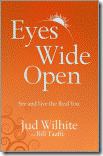
Eyes Wide Open by Jud Wilhite

clip_image001

Pastor Jud Wilhite knows what it means to have the harsh light of reality washing over you twenty-four-seven. Serving in Las Vegas, he sees life in the unrelenting light of the desert sun and the dusk to dawn burn of the casino neon and in the revelatory power of these beams, it makes it very difficult to hide the real you behind the mask that so many Christians tend to don. In his encouraging book, Eyes Wide Open, Wilhite pens a wide-ranging spiritual guide to putting aside the disguise intended to show people how we have it all together and to look in the mirror and see what God truly sees in us. He challenges us to open our eyes and our heart and see the person that God loves without reserve.

The title can lead you to think that Wilhite might have filled the pages with positive, image affirming messages but as soon as you start to read, you find much, much more. His plain spoken spiritual leadership guides the reader through a series of ‘openings’ meant to expose different aspects of our person, character, and behavior to the self-image that God wants us to see rather than the poor, guilt-burdened person that we paint for ourselves. You don’t need to read from page one to the end. Each of Jud’s chapters can stand on its own and you can choose to explore the aspect of life that most applies to you.

Pastor Wilhite asks pointed questions that can orient the way in which you approach the book. He asks you to consider yourself before God and how that image affects the nature of your relationship. Are you a performer, trying to work your way into His heart? Do you believe in your heart that God already loves you personally, despite your flaws and less than holy behaviors? Do you believe that God turns away from you if your prayer life is spotty, your faith on a roller coaster, and deep down you aren’t quite sure of everything? These are tough questions, hard realities that challenge each of us in what we believe about the bond between God and us. Wilhite worked hard to ensure that thumbing through the engaging chapters challenges every answer that you might come up with, especially if you insist upon continuing to claim a negative perspective.

Each essay is brief and pointed and can be good for igniting specific prayer, meditation, and journaling. He asks you see yourself in the characters that populate the stories from Dog Chapman, Evil Kneivel, and Johnny Cash to the myriad people that Jud himself has encountered on the ministry field he serves in Las Vegas. With each page, you stop to think about your own self image, about the way that the image that we often develop for ourselves is much different that the image that the Bible teaches us that God has of us. Turn the page and Pastor Jud is there asking if today is the day that you want to lay yourself wide open to seeing the real you, the you that your Father sees and loves unconditionally. When your eyes are wide open, a different life unfolds in front of you.

For more information, Eyes Wide Open

Digg This

The Think Big Manifesto by Michael Port

image

I trusted Seth Godin up to this point. I valued his insight and when he said something is a must-read it seemed like a good investment of time. But now, after investing the day I spent reading The Think Big Manifesto, I’m wondering if my trust was misplaced.

Port has written the perfect Seinfeld book. Heavy on the platitudes and soaring rhetoric, it fails to move the reader to action. Here’s an example:

To think big is to know what we stand for and let it guide us in everything we do; to maintain our integrity in the face of a world filled with slack thinking, lazy habits, and flexible principles; to imagine the possibilities of the world and go out and do them –build a business, green the environment, rid the streets of crime, reengineer the foster care system, write a novel, run a marathon, protect animal rights, raise a child, become a vegetarian, join a nonprofit board, fight hunger and poverty, redesign our educational system, foster a peaceful and tolerant community, and the list never ends.

On the other hand, now that I’ve typed that paragraph maybe I do understand what the book is about. It is 166 pages of an idea that could have been expressed on one—Think Big.  Let me save you some dough.

Use your God-given imagination and the power that He has vested in you and get excited about the possibilities that surround you. Right a wrong. Care for somebody—anybody. Develop an attitude of submission. Make something that didn’t exist until your heart and soul brought it to life. Live fully. (Oops, that last one is a platitude.)

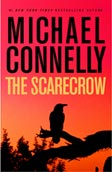
The Scarecrow

imageAs soon as I’m done writing this post, I’m going to change all of the passwords in my life, take down my blog, get off of LinkedIn, and remove my faculty Insite page. The methodical cool with which the Scarecrow drills through his victim’s lives to discover the keys to their electronic existence is better than any scared straight intervention you may have seen. Now I just have to figure out a way to remember x35LJss3011zTU09…and oh yeah, never visit any web site that you find on Google.

In Connelly’s latest The Scarecrow, he brings back the unlikely team of reporter Jack McEvoy and FBI Agent Rachel Walling whom we last looked in on in The Poet. At the end of days at the dying LA Times, Jack decides to write one last front page story before his furlough. As he begins to assemble his notes, Jack finds the murder of a dancer being pinned on a banger from the projects is not all it seems. As it would for all of us, the research begins at the keyboard where the evil lies in wait.

The trail leads into the deserts of Nevada and Arizona and into the unseen world of the hardened data center. The denizens of the server farm are frightening in new way as you sit back to think about the digital trail you left this morning. Did you actually think that the things you were looking at and reading were secret? Do you look for the lock icon when you start to type in your credit card number? Do you really trust it? Piecing together the clues left all over like a messy desk, the criminal minds here are able to shut down an entire life. In Jack’s case, as he begins to nose around where he shouldn’t he finds his credit cards canceled, his phone turned off, and his bank account drained.

Here’s where the trouble starts with this book. Connelly lets McEvoy deal with these things far too casually. Where most of us would be apoplectic if any one these three events struck us, Jack just motors on as if they were a minor inconvenience and, the way his new cards appear the next day, they seemed to be. While the story and plot are good, too many things in this tale are convenient or just too simple. I won’t even touch on the knife fighting skills of the reporter when up against a remorseless, psychopathic murderer.


Connelly never disappoints in his story telling and The Scarecrow is the perfect summer read. The tease of Walling and McEvoy Investigations Inc. holds a lot of promise. Something to think about while we wait for Harry Bosch to reappear in the Fall.

The Disappearance of God by Al Mohler

clip_image001

Tolerance has become the most important measure of one’s character in our modern era. Modern tolerance is not simple endurance; it is the required subversion of your beliefs and moral standards whenever they appear to impinge upon the beliefs and morals of another. In the era of the “Me” god there is no greater offense than to stand firm on a position, especially one rooted in traditional Christian belief, and deign to judge the beliefs and practices of another person and the truthfulness of their claims.

In The Disappearance of God, Dr. Al Mohler laments the way in which a culture that is enamored of this new tolerance has made inroads into the Church. As the Church has capitulated to the demands for her doctrine and moral requirements to be softened, Mohler effectively makes the case that cancer has begun to eat away at the very things that were meant to set Christians apart in the world. Worse yet, he says, the loss of muscle threatens the gospel as a viable message in the culture, rendering it as nothing more than a truth among other truths.

Dr. Mohler does not simply issue a roll-call of various ills that have visited the Church and leave it at that. He calls for an immediate triage to stop the further decay within the body and to sort out the issues that must be addressed in order to restore the power of the gospel claims and the power of the Body of Christ to once again affect the surrounding culture rather than continued to be diminished by it. In order of priority, the church must first regain a sense of which doctrinal issues are of primary importance to the restoration of authenticity within the Church and second, the members of the body must regain the intellectual strength necessary to engage in this discussion and fight to restore the authentic doctrine.

The book addresses a variety of gospel-weakening issues that have infiltrated the Church and which have varying abilities to permanently disfigure the face that She presents to the world. Mohler points to the loss of the notion of sin and the softening of the modern Church’s doctrine of Hell and eternal perdition as two of the fundamental positions on which leaders and their congregations must regain their footing. Certainly, both of these doctrines are contrary to the prevailing culture and a strong affirmation makes the Church less palatable in a tolerance-driven society. He challenges our desire to be loved by the world which leads us to put these difficult challenges aside and to restore our understanding of who we belong to and His demands of us.

The Emerging Church and their doctrinal slide towards extreme liberalism are also subjected to Mohler’s critique. While the Emergent movement was ignited by a desire to better conform the Church to modern cultural expectations, that formation allowed postmodern notions of truth to color their doctrinal positions as well. Mohler critiques the doctrinal development of Emergent thinker and leader Brian McLaren as representative of much of the whole. McLaren’s definition of generous orthodoxy as wide ranging and allowing for an unlimited spectrum of philosophies fails to address the opposite side of his arguments in that this spectrum essentially denies the existence of absolute truths.

Dr. Mohler has produced another outstanding polemic against the further decay within Christ’s Church. He encourages the reader on page after page to recognize the doctrinal malleability that we have allowed to creep into the Body and affect our witness to the world. Aligned with his early call to develop our own theological muscles, Dr. Mohler doesn’t provide the answers to challenges he issues. He provides a succinct classification of the problems, now it’s up to you and I to follow through and get the Church back on track. The first step is a thorough read of this book.

For more information on this book, click here.

Digg This