
A Rolling Stone Sings of God’s Love || Warren Rachele
[Originally published in the Times-News during the Time of Covid, 2020]
The most familiar verse in the Bible reads “For God so loved the world, that he gave his only Son, that whoever believes in him should not perish but have eternal life.” Jesus says this to a man who is trying to understand the Messiah. He went on to describe his mission in the next sentence, “For God did not send his Son into the world to condemn the world, but in order that the world might be saved through him.” Life and love are the essence of Easter.
When Jesus said these memorable words, his crucifixion was still some distance in the future and the way God would ‘give’ the son still a mystery. The degree of sacrificial love that motivated the gift, however, was not. The two letters of ‘so’ describe the great extent to which God loved the creation and all in it. The love would not be measured in a blanket forgiveness and not in requiring the rebellious humans to earn it. Instead, the promise of forgiveness and salvation would be fulfilled by one perfect sacrifice, a sacrifice that was pure and unblemished, a sacrifice that human effort could not attain. The price of redemption would be the life of the Son of God, the Messiah Jesus.
The love of Easter is not merely an emotion. Emotional love is subject to change, it can be influenced by circumstance, it can be lost in an instant. The love that God has for his creation is none of those things. It is a facet of his character, a state of being. God’s love for the world is unchanging and unwavering. It cannot be earned nor can any human action result in its termination. The measure of this love is nearly beyond human ability to understand. Despite this, the full measure of God’s love is seen in the most horrific act in history, the crucifixion the Messiah Jesus.
How is this love? The rebellion of humanity in the earliest days of history create a chasm between creator and creation so wide that it cannot be bridged by any human effort. God, loving the world and its inhabitants so deeply, longs to close this divide, to be united in peace once again. He knows that without action on his part, his creatures are lost. In their pitiful state they cannot make restitution or pay a sufficient penalty, and try as they might humanity can never leap, fly, swim or find any way of transporting themselves to the other side. If this dark expanse is to be crossed, it will have to be done by God himself.
The paradox of the good news is that God, in the depths of his love, takes it upon himself to pay this penalty owed by humankind. His holy nature does not permit the option of dismissing the charges, a penalty is due in equal measure to that holiness. No human work can make a dent in that debt and so, out of an immeasurable love, God sends His Son to be the payment for the debt. The sobering truth in that good news? The debt could only be satisfied by sacrifice, the blood of Jesus on the cross paying the cost in full.
This ‘giving of his son’ would become the measure by which love is measured. As the cross grew nearer, Jesus described its heights, the personal challenge for his followers, telling them that “Greater love has no one than this, that someone lay down his life for his friends.” More than a challenge, his followers realized the judicial change that would be brought about, they would be friends and no longer enemies of God. The gulf would be bridged and the lost would be able to make their way home.
If it ended at the cross, this love would be unmatched. God had a higher expression of love to give though. The debt paid on the cross became the new life of Easter morning when the Messiah rose from the tomb. The perfect judge who paid the penalty himself rose as he had assured, condemnation behind and new life in full ahead. Easter became two parts of the same story, horror and celebration, mourning and joy. The rise of the sun on Easter morning brings all the promises of the Savior to light. Forgiveness came through the cross for those who would believe. For his friends, Jesus’ death became life in full. No greater love has ever been shown, nor will it be again. The love of Easter assures us of that.


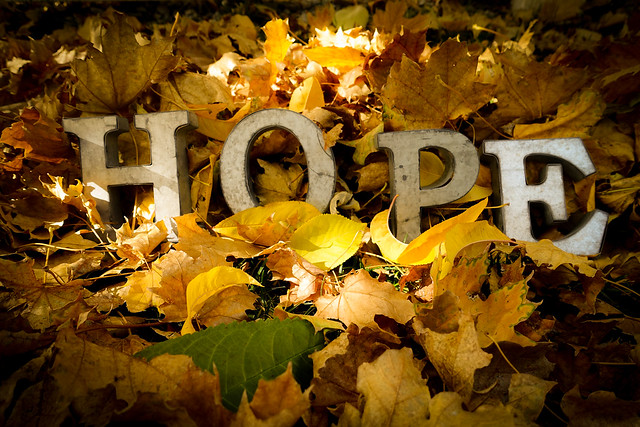 Varying degrees of hopelessness are an accepted part of life in our world. Better stated, hopelessness has marked life since the moment that rebellion against God entered the mortal plane. Hope requires a foundation, and when it is vested in the ever shifting, rapidly changing, only marginally trustworthy structures of the human world, that foundation can crumble in an instant. Claiming hope while secretly wondering when the ground beneath our feet will give way is no hope at all.
 LOVE | ACCEPT | FORGIVE