So Many Good Books in 2024

And A Couple of Lousy Ones

“When I have a little money, I buy books; and if I have any left, I buy food and clothes.”
― Desiderius Erasmus Roterodamus

The calendar turns to January, a new year begins, and once again, it’s time to review my reading for the past year. There are fewer books overall this year and a fair number of books were “read” by listening to them (shown on the list as (A)). The count was an intentional choice on my part. Seeking better books and spending more time with them took precedence over the filling of shelves. In looking at the selections of paper versus audio books you can see how I approach each medium. The overwhelming majority of my theological reading is done in paper form so that it can be notated and readily accessed once entering the library. The books I “read” in audio form enable me to explore my diverse interests and engage a variety of topics. It’s also my chance to enjoy my guilty pleasures of Jack Reacher and Harry Bosch novels while working in the garden. In many cases, the audio book inspired me to purchase a companion paper copy as I wanted to give it a second read with a pencil and straightedge in hand. Good marketing Amazon!

“Where is human nature so weak as in the bookstore?”
― Henry Ward Beecherr

A practice that has encouraged multiple reads and improved my understanding of complex material is the making of book notes. These notes are generally thoughts derived from the highlighting and marginalia in a book. Their purpose is to record the most important aspects of a piece of literature in a form that  can serve me for research and writing purposes without having to search my shelves for an idea contained in my reading. I make these notes in Evernote so they are searchable and easily referenced when needed. It is a time-consuming process, but the benefit is priceless; I am rethinking through the material in the book as I make each note, and this process has been beneficial in building depth to my understanding of the selected topics. If this sounds like a benefit you would like to have for yourself, you need not start at this depth. Start by making chapter notes in the empty spaces in your current read. Summarize each chapter on the last page to see what you’ve learned. Outline the book on the blank pages in the back to see if you’re tracking with the author’s thoughts. Make the book your own.

When I have completed each book, I record the date of completion and my rating in the front cover before placing it into my library. My rating system is simple. Books rated 5 of 5 are the best. These are books that are memorable pieces of writing that deserve to be read, notes taken and thought about. Those rated as 4s are also worthy of reading and notation, but perhaps just once. The middle tier is a 3, and this is simply a good book. Those rated as 2 or below come with a warning. Don’t waste your time. Also, don’t ask to borrow these books as they do not have a home in my library. There were only a couple of 10s this year and one was a reread from years past. A 10 is an invaluable book, a must-read that I would recommend to anyone and everyone interested in the topic. Anything noted as (x…) means that it was reread. I intend (someday) to reread all of my Lee Child and Michael Connelly, having moved many of them from state to state. How many books do you have in this category?

TitleAuthorRating
Being God’s ImageImes10
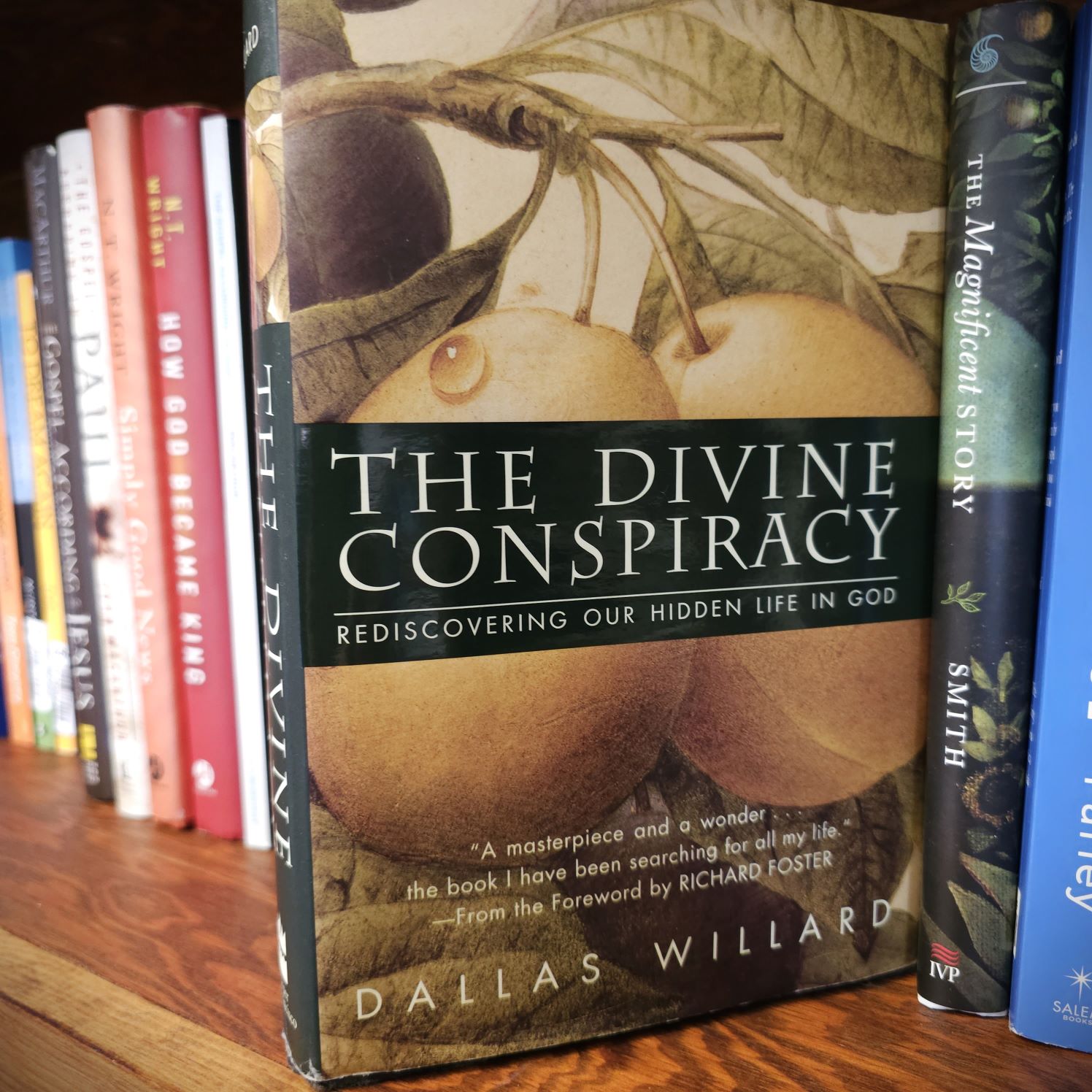
The Divine Conspiracy (x2)Willard10
The Shaping of Things to Come (x2)Frost5
Embracing GraceMcKnight5
Gospel Fluency (x2)Vandersteldt5
Practicing the WayComer5
Unlimited Grace (x2)Chapell5
Transforming GraceBridges5
Rejoice and TrembleReeves5
The Mission of GodSchell5
Scripture is SupremeChester5
Covenant & God’s Purpose for the WorldSchreiner5
A Resilient Life (A)MacDonald5
The Art of LivingEpictetus4
Jesus the King (x2)Keller4
Someday is TodayDicks4
By Grace Alone (x2)Ferguson4
The Grace of GodStanley4
The PracticeGodin4
The Promise of GraceChappel4
Renewal for the 21st CenturyWerning4
How to PrayTorrey4
All it Takes is a Goal (x2)Acuff4
Knowing the SpiritHinn4
The Ministry of the Missional ChurchVan Gelder4
StormCymbala4
The Essence of the Church (x2)Van Gelder4
FactfulnessRosling4
Forgotten Ways HandbookHirsch4
The Kingdom of GodSchreiner4
The Forgotten Ways (x2)Hirsch4
ReJesus (x2)Frost4
The Death Christ DiedLightner4
The SecretChild4
The Lord’s SupperWaters4
SacrilegeHalter4
The Creative ActRubin4
Excellence Wins (A)Schulze4
The Black Echo (A)Connelly4
Mind Shift (A)McManus4
Unreasonable Hospitality (A)Guidara4
Choose Your Story (A)Hall4
Trillions (A)Wigglesworth4
It’s Never Too Late to Begin Again (A)Cameron4
Missional CommunitiesMcNeal3
HandmadeRogowski3
The Difficult Doctrines of the Love of GodCarson3
Writing for Busy ReadersRogers3
Church Turned Inside OutBerquist3
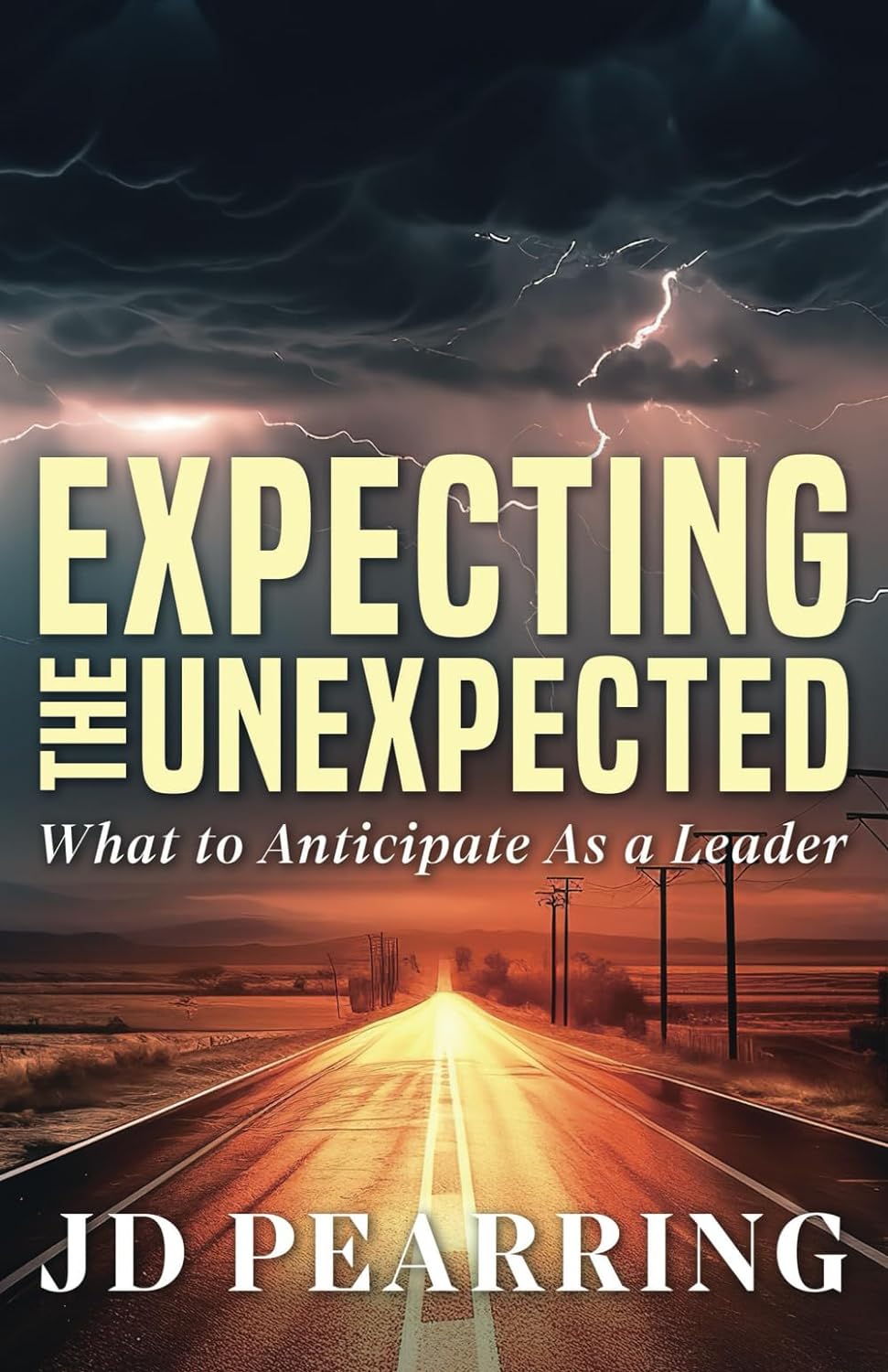
Expecting the UnexpectedPearring3
Who Needs Theology? 3
Twelve and a HalfVaynerchuk3
Strangest SecretNightengale3
RevivalGaines3
Everything IsManson3
Primal FireCole3
If Only You Would AskRogers3
The Mission Always WinsBolsinger3
Shaped by God’s Heart (x2)Minatrea3
Apostolic PrioritiesRichards3
Missional Map MakingRoxborough3
Words MatterBallard3
Redeeming the RoutinesBanks3
AndHalter3
The Focus ProjectEqualman3
Sharpening the Focus of the ChurchGetz3
Hell Yeah or NoSivers3
Praying the PsalmsBrueggemann3
Running Blind (A)Child3
Co-Active CoachingKimsey3
Nothin’ But A Good Time (A)Beaujour3
The Last Array (A)McManus3
Chasing Daylight (A)McManus3
The Perfect Story (A)Eber3
The Miracle Morning (A)Elrod3
The Creative Curve (A)Gannet3
Love People, Use Things (A)Millburn3
Butcher’s Work (A)Schechter3
Drowning (A)Newman3
Goals and Vision Mastery (A)Brown2
Unlikely Thru-Hiker (A)Lugo2

Watch Your Blind Side

Expecting the Unexpected by JD Pearring

Many leadership books focus on the act of leading, as though by sheer will, one can create success with no unanticipated outside interference. Anyone who has ever been in a position of leadership, however, knows this isn’t true. There are dozens of things that can come out of nowhere and derail your efforts toward reaching your goals. In his excellent new book Expecting the Unexpected, JD Pearring catalogs eighteen of these actions, feelings and events that we do well to be looking out for. He talks about anticipating these things as you go about your leadership duties, but the book is also useful in hindsight as you reflect on ways that each of us could have handled these negative influences better.

JD combines personal anecdotes, stories and scripture to structure each chapter. From these, he offers several ways to deal with the unexpected as it comes. The option to give up, quit, surrender, etc. is mostly missing from his suggested actions. Instead, by applying scripture to each type of event, leaders are encouraged to overcome in the best moments, or endure with faith in the more challenging instances. The Big Challenge conclusions to each chapter range in application from simple [don’t quit] to character challenging [serve in obscurity]. Depending on your situation, some will be more helpful than others.

Take some encouragement. It is out there for you.

JD Pearring

Expecting is a book to keep on a lower shelf for reference in the future. You may not be experiencing discouragement (now), but chances are you will at some point. Pull the book out, turn to chapter(s) on discouragement (and smears and complaining and fools and so on) and let JD’s wisdom get you back on track. This is a good book for new leaders who have yet to experience these troubles, as well as more seasoned leaders who have seen them all. I plan to use this material in coaching relationships with renewal leaders who often find themselves overwhelmed by these negative effects on the health of their church, as well as negatively affecting their leadership. Don’t miss this book.

Once Again

Rethinking the Divine Conspiracy

I recently took The Divine Conspiracy off my shelf to look up a reference for a project I was working on. I read the paragraphs I was searching for, then the surrounding pages, and then the full chapter—context, of course—and to my delight, I found a new book in my hands. Captivated by Willard, I reread the book in its entirety, and found that it was not the same volume I had read better than twenty years ago. Had the text changed in the shelf-bound years? Obviously not. Rather, as Heraclitus once opined, I was not the same person. I wonder now, what other wisdom awaits on these shelves?

“No man ever steps in the same river twice, for it’s not the same river and he is not the same man.”

Heraclitus

Reading anything more than once today is a radical idea. The firehose of electronic communication, our ever-growing to-be-read piles of books (nearly 100 as I look over) and our bias toward the new makes the practice of rereading the stuff of fantasy. This may or may not be an accurate observation, but, if it is, we’re poorer for it. As the philosopher said, we are not the same people when we return to a book 20 years later, let alone two weeks later. Our thinking affected by what we read, we have lived life in the intervening period. To return to an author’s work is to have tested their theses, applied their suggestions, lived their propositions or, to the contrary, ignored them altogether. Either way, we’re now able to agree or disagree, take out our pencils and argue in the margins, perhaps even decide to remove the book from our library.

“Master those books you have. Read them thoroughly. Bathe in them until they saturate you. Read and reread them…digest them. Let them go into your very self.”

Charles Spurgeon

Willard’s book was one of many that I have reread a second and third time in the past couple of years. When I first read it, I found it difficult to understand and, fitting my level of spiritual maturity, I couldn’t apply it. The reading process for me was to read it, say that I had read it and watch the dust cover spine fade on my bookshelf. I knew the book was important—because my seminary professors told me it was—but it was not important to me. I had no ability to interact deeply with Willard’s vision of our participation in The Kingdom Among Us.

Two decades later, however, the prose that I had once merely consumed was now something to be savored. I aligned with the author’s views on the kingdom gospel. I had wrestled with the biblical texts he referred to, built up the stamina and muscles needed to hold most of the points of his discussion in mind as I worked to understand his conclusions. I was a more mature disciple now, ready for the meat, having grown on the milk of my earlier years. No longer was I the same person who opened the cover and I am, even now, a different person, having reread the book again before returning to its spot amongst the others occupying the shelf.

For the past few years, I’ve made it an annual tradition to publish my reading list from the previous year. These lists have averaged around 90 books each, with an increasing number of rereads a part of those lists. The value of rereading is tempering my pace thus far in the current year as I slow down to interact more with the authors and their ideas. Marginalia and pencil lines are more common now, as are literature notes and summaries in Evernote. Fewer and better seems to be my new reading style, trading a high book count for a more engaged interaction with books of value.

Many a thoughtful reading has shed new light on other older volumes. Time spent with John Franke and Darrell Guder opened up my older books by Roxborough and Hirsch for me; Scot McKnight brought Jeff Vanderstelt off the shelf for a gospel conversation. Growing spiritual maturity and a developing recall of what I’ve read spur on this relational cycle of growth. The flood of published books urges us to consume and shelve, but is this rapid turnover leaving us undernourished? Might we grow more by an intentionally slower style of rereading and engaging? Let me study the question some more.

Blessed by What Others Have Missed

What Others Have Missed

In my 2023 reading review, I mentioned I purchased many of my books from the used marketplace. When I do so, I always try to purchase the best condition possible, balancing the used price against the purchase of a new volume. When the book arrives in my mailbox, many times I cut open the vinyl package to find a book in better condition than expected; in several instances, the book has never been opened and is clearly unread. This is exciting for sure, but always makes me wonder why the original owner purchased the book but never found the time or the interest to read it. In some cases, the book may have passed through multiple owners before arriving in my office, no one having opened it along the way. In the picture that accompanies this essay, you see the cover of Tim Keller’s book “Jesus the King” adorned with a small orange Goodwill sticker. The excellent book was unopened when I received it and folded back of the covers for the first time, but before that it had touched down in at least two places. Someone had someone had originally purchased it, I presume interested in the content, but for whatever reason they had never got around to reading the book, eventually piling it in with a number of other books and donating it to Goodwill, where it was priced and put out for purchase. Drawing no interest in the store, the volume was scooped up by Thriftbooks and, listed in excellent condition, I purchased it for a price less than the new equivalent, opened it, read it and entered it into my library.

Because I’ve read the book, I know the value of the content beyond the little information offered in the back–cover blurb. As I handle the book, I wonder, why did someone purchase the volume only to relegate it to the “to-be-read” pile long enough to later discard it, all of its insight unrealized. Looking at my own piles of books waiting to be enjoyed, it makes me wonder if the topic was no longer of interest. Perhaps a more insightful book had come into the owner’s possession. It might’ve been a time constraint, something all readers are familiar with. To gain the most from a book, new or used, demands intentional reading. It requires that we mull over the author’s ideas. It demands that we consider the notes and references, in many cases, we need to add our own marginalia, footnotes and summaries. Maybe life had made demands on the first owner that made the challenge of this book impossible to surmount. Whatever the reason or cause, I benefit from discovering what others have missed.

I don’t remember what prompted me to purchase Keller’s book, whether it was a serendipitous search result as I looked for another specific book, or, as is most often the case, it was added to my reading list through a footnote or endnote in another book. Whether the condition had been like-new as I received, or well-loved, as many other books I’ve purchased have been, I am enriched because I opened the cover and read and considered the words and spent the time to think about where the ideas fit in my life, what previous knowledge hook they attach to. Not every volume will be a treasure. Some of our own books, that we purchased new, excited to read them, don’t hold up past the first couple of chapters. They find their way to the ARC or Goodwill, and later perhaps to Thriftbooks as a part of a volume purchase. In those cases, someone may pick up your book, look at the unfolded spine or the stiffness of the hardcover binding and wonder why you didn’t read the book, why you lost interest, what interrupted your reading time. Whatever the reason we pass the book on, it’s good to know that someone else may get the chance to discover what we missed.

2023 Reading List

“A room without books is like a body without a soul.” – Cicero

My 2023 reading list has finally been tallied and it contains 97 books read in the past year. Though electronic media dominates, there is a special value to the slower pace and tactile experience of reading a book. For pleasure or knowledge, the engagement of mind (and soul) and eyes and fingertips with the paper and the binding and the slipcover creates a bond with yourself and the ideas contained within. This intimacy is also why bad books are especially offensive to us; the personal investment we’ve made in the selection and the purchase and the preparation to read the book spins up our expectations to the point where bad writing is an insult. One of the most valuable permissions that I’ve received in life is to not finish books. Life is brief and forcing yourself to finish something that turns out to be of little value is a waste of your time. Pass the book on and select another from the ever-growing pile of yet-to-be-reads.

I purchase a good many of my books used (yea Thriftbooks!). Apart from saving money, the book you receive has a story to tell. Many have never been read, like they had been languishing in someone else’s yet-to-be-read pile before being abandoned. The dust jacket may have a faded spine, but you still get to enjoy the satisfaction of opening the covers for the first time, feeling that resistance as the cover and spine loosen up for the first time, ready to share the author’s insights with an excited reader. It’s a delight to receive copies  used by note-takers like myself. Do I agree or disagree with the marginalia? I’ve discovered heartfelt prayers and prayer lists in the front and back covers from and for people I’ll never meet but I feel apart of as I read them, wondering how they were answered. Few underline with pencil and ruler as I do. Some freehand with ballpoint pen, or worse, use garishly colored highlighters. Here too is a telling practice. When nearly every sentence is highlighted, which of the author’s thoughts were truly valuable?

“Read the best books first, or you may not have a chance to read them at all.” – Henry David Thoreau

I record each book in my journal as I complete it, writing the date of completion and my rating in the front cover before placing it into my library. My rating system is simple. Books rated 5 of 5 are the best, memorable pieces of writing that deserve to be read, notated if applicable and thought about. Those rated as 4s are also worthy of reading and notation, but perhaps just once. Threes are just good books and there an awful lot of those. Those rated as 2 or below come with a warning. Don’t waste your time. Also, don’t ask to borrow these books as they do not have a home in my library. You will notice a handful of books at the top of the list rated as 10. These are invaluable books and ideas that I would recommend to anyone and everyone interested in their topics. You’ll notice a number of titles in the list followed by a notation like (2x). This means that the book was reread during the year. How many books do you have that fall in that category?

TitleAuthorRating
Fresh Encounter (3x)Blackaby10
The Gospel Precisely (2x)Bates10
Why the Gospel? (2x)Bates10
Missional ChurchGudder10
Be My WitnessesGudder10
No Easy Road (2x)Eastman5
Simply Good News (3X)Wright5
King Jesus GospelMcKnight5
Becoming the Gospel (2x)Gorman5
A Praying Church (2x)Miller5
The Mission of GodWright5
Bearing God’s NameImes5
How to Hear GodGreig5
A Community Called AtonementMcKnight5
Fan the FlameCymbala4
The Travelers GiftAndrews4
48 Laws of Spiritual PowerViola4
Smarty BrevityVande Hei4
Sin, The Savior and SalvationLightner4
The Grace MessageFarley4
The Coffee BeanGordon4
Church Revitalizer as Change AgentCheyney4
The Psychology of MoneyHousel4
Salvation by Allegiance Alone (2x)Bates4
Romans ZECNTThielman4
Beautiful ResistanceTyson4
Revitalize (2x)Davis4
How to Start a RiotStorment4
Courage is CallingHoliday4
Creating a Missional Culture (2x)Woodward4
Missional Theology (2x)Franke4
Missional Renaissance (2x)McNeal4
Subversive MissionGreenfield4
Flickering LampsBlackaby4
Case for KetoTaubes4
Status and CultureMarx4
Built from ScratchMarcus4
6 Habits of GrowthBurchard4
Punk ParadoxGraffin4
How I Built ThisRaz4
The PerfectionistsWinchester4
Measure of a ManGetz4
The Permanent RevolutionHirsch4
The Faith of LeapFrost4
Radical Praying and PreachingRavenhill4
CuesVan Edwards4
The Power of Group PrayerCarney3
Can These Bones Live (2x)Henard3
MercyBaldacci3
Enjoy Your Prayer LifeReeves3
Our Iceberg is MeltingKotter3
Racing the LightCrais3
Longing for Revival (2x)Choung3
Praying for One Another (2x)Getz3
PrayerBunyon3
GoHunter3
Bully PulpitKruger3
Passion in the PulpitVines3
How to ChangeMilkman3
The Magnificent JourneySmith3
Put Your In the ChairPressfield3
Life Together in ChristBarton3
The Eye TestJones3
HabitsSincero3
There’s HopeMcIntosh3
What About Lordship SalvationBing3
Romans BECNTSchreiner3
Investigating Lordship SalvationWeierbach3
Hearing God’s VoiceBlackaby3
Faithful FaithMoore3
Breaking the CurseKinner3
Introducing the Missional Church (2x)Roxburgh3
No Plan BChild3
The Mission of Theology & Theology as MissionKirk3
The Church’s MissionLeeman3
StoryworthyDicks3
Insights on CommunionRenner3
City on FireWinslow3
Come to the TableHicks3
The Present Future (2x)McNeal3
Knowing ChristFargo3
It’s Not How Good You AreArden3
The PARA MethodForte3
Prayer RevolutionSmed3
Gather God’s PeopleCroft3
Sentness (2x)Hammond3
Holy SpiritYoung3
Into the VoidButler3
SoundtracksAcuff3
The Lighthouse EffectPemberton3
Hunting LerouxShannon3
Free BillyWinslow3
Help Thanks WowLamott3
Freaky DeakyLeonard3
The Upper Room DiscourseHenry2
Lifeless to New LifeBrown2
Greatness MindsetHowes2

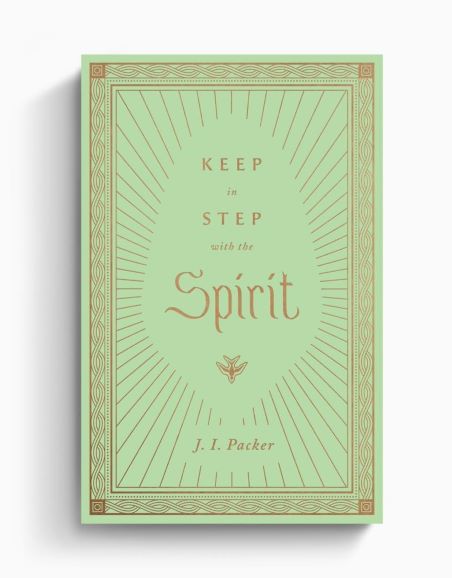
Keep in Step with the Spirit by J.I. Packer

The Missing Element

In a blurb commending the book, Ray Ortlund says this about J.I. Packer, “When we face a debated theological topic, we need a guide who has no ax to grind, who is fair, honest, reasonable, and—above all—carefully biblical. We Christians do debate the ministries of the Holy Spirit. But we have a reliable guide in J.I. Packer.” I read that in opening the second of my 10 out of 5 books from 2021, and found small dispute with Ortlund on this point: Packer does take sides in debate. In the volumes that have enriched me, Mr. Packer always takes the side of the biblical text. Unlike so many other authors, he does not read his theology back into the text, instead allowing his position to be discovered inductively. This trait (exhibited by so many of our senior scholars and theologians) makes reading a pleasure and his positions trustworthy.

If we live by the Spirit, let us also keep in step with the Spirit. Galatians 5:25

So Packer enters the theological scrum concerning a biblical understanding of the person and ministry of the Holy Spirit. His aim in this book is to restore the centrality of the Holy Spirit in the Church, a ministry that is often tossed and torn between the intellectualism of theologians and doctrine and unrestrained charismatic practices. Packer envisioned the book as a corrective to these extremes, a biblical call to Christians to restore the place of the Spirit and His gifts in their faith and lives. Unlike other authors that plant both feet in their camp and refuse to consider positions other than their own, Packer takes a much more irenic tone, insisting that the Bible speak louder than he does.

A point that Packer makes that is important for the reader to engage is that the Holy Spirit is not a discrete ministry on His own. The Spirit is inseparable from the Godhead and will always act in concert with the Father and the Son. He mediates Christ (John 16:14) to us. All the Spirit’s power and gifts are  Jesus working through the Spirit in us. It is in the self-effacing nature of the Spirit’s ministry that we gain the perspective to evaluate spiritual claims attributed to the movement of the Spirit. He will always be directing attention back to the Son, and anything that does not achieve that end is to be considered much more carefully.

The mediation of Christ to His people involves the Spirit in spurring on holiness in their lives. We often refer to this growth using the term sanctification, and it is yet another idea that gets drawn to the edges of the Church. In some quarters it is a practice through which we grow intellectually through Bible study and discipleship. At the other side of the yard, the term sanctification points to a growing perfectionism in behavior. Packer draws the idea back to the center, saying that holiness in the Bible is evidenced by growth in the fruit of the Holy Spirit. It is the Spirit conforming us to Christlikeness and our pursuit of holiness is governed by our beliefs about the Spirit.

Packer takes this axiom to his examination of modern charismatic theology and practices, giving support where appropriate and critique where warranted. This evaluation includes a valuable chapter on different schools of thought and practice pursuing holiness. This part of the book is valuable from two different directions. First, when we locate our generalized tribe within the chapter it helps the Christian to see where their beliefs on this subject derive from. The reader that approaches the text fairly finds a second benefit in learning where other tribes have come from as well, preventing some of less loving criticisms that find their way into our speech. It seems to be Packer’s hope that brothers and sisters in Christ will find their own attitudes becoming as irenic as the one he displays in his words.

Keep in Step with the Spirit is a valuable contribution to the church and written at a slightly above popular level. It is worth every effort in working your way through the text, bible close by so you can read the many references in full context. More than reading the text and placing the book on your library shelves, let it affect your meditation on the Holy Spirit and His work in your life. He was never meant to be divisive within the Church. His ministry is to draw us all closer to Christ as we grow together in the Lord’s image. If this book contributes in some small way to unity within the body, Packer’s efforts will be the blessing it was intended to be.

2021 Reading Reviewed

My 2021 reading list is composed of 78 books I read during the year. It’s the value I’ve always placed on reading and the compilation of my annual list that made a recent article stand out to me. In the November/December 2021 issue of Success magazine, it says that “American adults spend less than 10 minutes per day reading printed materials, compared to a whopping 7 hours and 50 minutes of screen time.” If correct, this statistic reflects the greatest loss we might suffer as people; to develop through the collected wisdom of the written word. The article continues, saying “The benefits of reading are far-reaching, with research showing bookworms experience less stress, reduced risk of depression, lowered blood pressure and improved sleep.” These benefits are probably true, but interacting with written ideas expands your own wisdom and knowledge, an invaluable exercise.

As I record each title in my journal, I add a rating of 1 to 5. Those rated 5 of 5 are the best, memorable pieces of writing that deserve to be widely read. Three books at the top of my list stand out because their rating exceeds the boundaries, rated as 10 of 5 stars. These 3 books would make a list of must-read volumes for Christians. Perhaps I’ll touch on each of these in separate posts to pique your interest. The books at the bottom of the list rated 2 stars are not worth your time, falling short of their promise (or, in the case of Dr. Flowers’ book, it’s potential). The other note you’ll notice on this list are those books marked 2x, indicating they were read twice or a second time with years of separation. As I look at these volumes, I’m tempted to add Henderson’s book Old Paths, New Power (read twice last year) to the 10 of 5 list. If revival interests you, this is a good place to start.

Make a list of your own for 2022. It might just motivate you to read more and build a growing library of wisdom and ideas.

Fresh EncounterBlackaby10
Spent MatchesMoran10
Keep in Step with the SpiritPacker10
How to Take Smart NotesAhrens5
Strengthening the Soul of Your LeadershipBarton5
Praying with PaulCarson5
The Law of InnocenceConnelly5
RevivalEdwards5
Come Down, LordEllsworth5
Praying for One AnotherGetz5
Stop Loving the WorldGreenhill5
Rediscover ChurchHansen5
Old Paths, New Power (2x)Henderson5
Ego is the EnemyHoliday5
Effortless (2x)KcKeown5
Famine in the LandLawson5
When You PrayLindell5
The Trellis and the VineMarshall5
21 Days of Breakthrough PrayerMaxim5
Why Elders?Merkle5
Calling on the Name of the LordMillar5
Digital MinimalismNewport5
A Voyage for MadmenNichols5
Transforming WorshipNoland5
PrayerOnwuchenka5
How Do I know if I’m Really Saved?Ortberg5
DeeperOrtlund5
Praying in PublicQuinn5
How to Think Like a Roman EmporerRobertson5
Qualitative ResearchSensing5
The Case for KetoTaubes5
Whatever Happened to Worship?Tozer5
Dangerous CallingTripp5
Do You Believe?Tripp5
LeadTripp5
In the Day of Thy PowerWallis5
How Can I Be Sure I’m a Christian (2x)Whitney5
How the Bible Describes ElectionBulow5
Skip the LineAltucher4
The Message of RuthAtkinson4
Chasing the ThrillBarbarisi4
Exegetical Commentary on RuthBlock4
Common Sense InvestingBogle4
The ChurchClowney4
The Soul of PrayerForsyth4
A Craftsmans LegacyGorges4
Continuous RevivalGrubb4
Transforming PresenceHenderson4
Reclaimed ChurchHeward4
Praying TogetherHill4
LaterKing4
The Kind of Preaching God BlessesLawson4
How to Worship a KingNeese4
Spiritual GiftsSchreiner4
Disney’s LandSnow4
What Does it Mean to be Saved?Stackhouse4
AuthenticVan Doren4
Pray in the SpiritWallis4
Radical ChristianWallis4
Introducing Practical TheologyWard4
Researching Practice for Missions and MinistryCameron4
True CommunityBridges3
EcclesiologyBrown3
Small GiantsBurlingham3
Intercessory WorshipEastman3
UpstreamHeath3
How to Pray in a CrisisHenderson3
Steering the CraftLeGun3
FrictionlessLemieux3
The ResetRiddle3
Made from ScratchTaylor3
A Creative MinorityTyson3
The Imperfect DiscipleWilson3
UnmaskedNgo3
God’s Provision for AllFlowers2
Man UpKevilian2
Quick Start Writing GuideNash2

Book Review: The Unsaved Christian by Dean Inserra

A Mission Field Nobody Wants to Engage

The presence of the unsaved thinking of themselves as Christians has been a reality forever. In the gospel of Matthew, Jesus himself warns against putting stock in a false conversion saying, “not everyone who says to me, Lord, Lord will enter the kingdom of heaven.” Jesus says it, but the state of the modern church is often resistant to hearing and heeding the admonishment. As author Inserra relates, cultural Christianity has embedded itself deeply in the Church, its comforting lack of accountability enveloping people in a warm embrace of false belief.

Inserra structures is excellent book along the lines of a missionary guide for an unreached people group. The interaction that he shares at the beginning of the book with his seminary classmate sets a challenging tone. While Pastor Inserra looked at his brother’s assignment to Northern California as an incredible challenge (the land of proud unbelief), his brother turned the table to warn him against the assumptions that came with an assignment to the Bible Belt. This bracing moment is when he began to really examine the reality of faith amongst those who proclaimed a belief in Christ as a part of their everyday life. Examination proved that this belief was anecdotal in some cases, cultural in most of them and simply a part of being a citizen of the South for many. The chapters of the book that follow the analysis give the reader excellent study points for ways in which to approach each of these groups and more.

“Unsaved” is a quick read but not shallow. As someone involved in ministry, I can see a face to go along with each of the belief types that he describes. This personalization gives the reader the opportunity to think through the conversation that you want to have in the way that you want to approach that person. It didn’t begin the book with high hopes because I thought it was simply stating the obvious, but Inserra has performed a valuable service for Christ’s church, saying the hard things that need to be said in love.


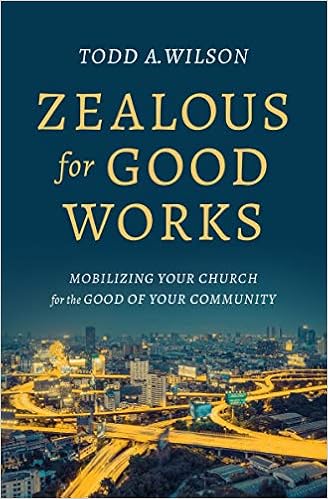
Book Review: Zealous for Good Works by Todd Wilson

Pastor Wilson turns the Church’s attention to the much quoted but less applied New Testament epistle of Titus and its core message. The Spirit inspired the author of that letter to not only leave his worker Titus on the Greek island of Crete to organize the Christians there, but gave the principles by which he was to do so as well. Using as his objective that the Church be the city on a hill that Jesus describes in the Sermon on the Mount, Wilson leads the reader through the points of Paul’s letter and helps us to understand how his marching orders for Titus apply to the Church today.

For such a brief book the value is immense. Wilson expertly exegetes the equally brief letter and helps the reader to see the big idea in each of the passages. ‘Zealous’ is not a gnostic promise (Jabez et al.) of discovering some new hidden secret, but rather, it is an eminently practical look at the principles that Paul gave to Titus that address many of the shortcomings of the Church in our age. Three that are discussed in the book are the poor level of discipleship, the chasm of credibility (that is, the difference between what we say and what we do) and the effect that these have on how we apprehend the missional opportunity ahead of us.

Read ‘Zealous’ with your bible close by. It is likely you have read Titus multiple times (if you are picking up a books such as this) but much of that reading has been focused in the Eldership requirements. Wilson deftly leads the reader to see that Titus contains so much more practical application for the Church beyond those instructions. For example, Wilson stops us in a passage often seen as preamble, Paul’s greeting in 1:1-4 to point out the importance of preaching and the power of the gospel. The gospel is both the content and the power of preaching something that can be missing in today’s environment of therapeutic deism. A city on hill is not built on the pillars of making people feel better where it teeters and shifts with every new personal demand. It is founded on the unchanging glory of the gospel of Jesus Christ.

The only disappointment I had with the book was that it was over so quickly. The more I think about it though, the length of the book is exactly right given the brevity of the profound instruction in its source. I have a new hunger to dig into Titus and preach it in the future. In the meantime, the study guide included at the back of the book is a bonus for church leaders seeking to present their people as salt and light in the world. Buy this, read this and read it again.