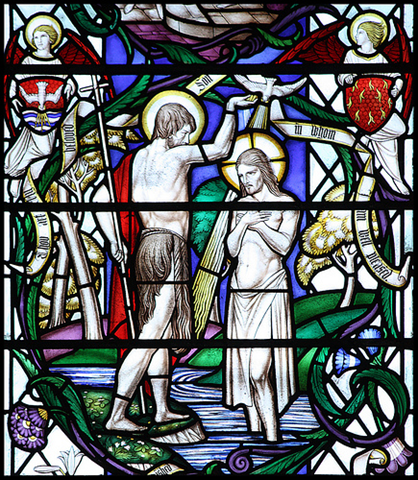
The Ordinance of Baptism

image

Then Jesus came to them and said, “All authority in heaven and on earth has been given to me. Therefore go and make disciples of all nations, baptizing them in the name of the Father and of the Son and of the Holy Spirit, and teaching them to obey everything I have commanded you. And surely I am with you always, to the very end of the age.” Matthew 28:18-20

With this commission our Lord instituted the rite of baptism as practiced by the Church since. In the centuries that have passed, the Church has interpreted the rite’s meaning, effect and administration in myriad ways. It has provided moments of unmatched joy for participants and their beloved, and it has also evoked bitter division within the Body.

Christian discuss and divide over the mode and meaning of baptism, over who the appropriate subjects of the rite are and even what the effect of the baptism is. Catholic theology insists that the rite of baptism causes regeneration, making it a necessity for salvation. The Reformation division is rooted in these sacramental ideas and insistence that salvation is by faith alone. Therefore, the predominant belief in the Protestant church is that the rite is symbolic in nature and that it is practiced out of obedience to the command of the Lord.

Understanding the practice of baptism requires careful research and exegesis. Other than the command to practice the ordinance, there are no explicit instructions for administration, purpose or effect in the New Testament. The doctrine of a church is therefore devised from existing belief, historical practice and what can be understood in the text. Understanding this, baptism should be looked at as a non-critical doctrine and one that should not be a cause of division, though it remains so.

A series of posts will follow this in the coming weeks. The first will explore the predominant Protestant position of a believer’s only baptism, administered by immersion. A word study of Baptizo is a necessary component for understanding the practice of immersion versus affussion, and that will follow these initial posts. We will then explore infant baptism and the theology behind that doctrine. The objective of these posts is not to advocate for a single position but to explore and discuss the theology behind a doctrine that we often take for granted. I’ll look forward to interacting with readers on this topic.

Grace and peace to you..

image Lawrence OP
Psalm 85 – Will You Be Angry with Us Forever?

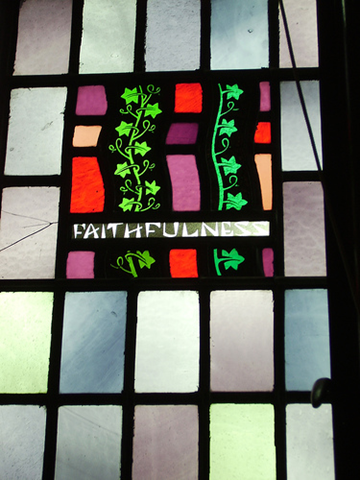
imageLove and faithfulness meet together; righteousness and peace kiss each other.

Faithfulness springs forth from the earth, and righteousness looks down from heaven.

The Lord will indeed give what is good, and our land will yield its harvest.

Righteousness goes before him and prepares the way for his steps. (Psalm 85:10-13)

To speak of the Lord’s blessings in this language can only come from a heart that has know their absence. To live in the bliss of constant blessings is to come to see this as the normal state of things, the way it should be. Our corrupted souls begin to take it for granted and even begin to look for greater expressions of the love; ‘Manna again?!’

Restore us again, O God our Savior, and put away your displeasure toward us.

Will you be angry with us forever?

Will you prolong your anger through all generations? (vv 4-5)

At the other end of belief is to see God as perpetually angry and unwilling to forgive our iniquities. Many among us believe that God remains angry at them for something that they’ve done, said, thought, etc. and that their sin is so far beyond the pale that there is no forgiveness. We must find a way to convey the message of love and faithfulness expressed in the sacrifice of our precious Lord and Savior. God is anything but angry, His love is an invitation back into His arms. It is to know what a life of blessing looks and feels like.

Grace and peace to you.


image by perfesser

Psalm 84 – Better is One Day in Your Courts

imageEven the sparrow has found a home,

and the swallow a nest for herself, where she may have her young–

a place near you altar, O Lord Almighty, my King and my God.

Blessed are those who dwell in your house; they are ever praising you.

(Psalm 84:3-4)

The effusive praise of God is condensed and made sweeter by this imagery. The swallow finds the tiniest niche in the joinery of the temple, perhaps a shelf before the Holy of Holies or a forgotten corner of the courts. She will build her nest in which her most valued things—still yet to come—will live and have their being. She is unconcerned with comfort or position, she only wants to be in proximity to the place of her creator.

The psalmist extends this same willingness to praise from the lowest place, just to be near to Him. In this familiar refrain, he cries out that he would mind the door of the house of God just to be in the house:

Better is one day in your courts than a thousand elsewhere;

I would rather be a doorkeeper in the house of my God than dwell in the tents of the wicked. (v10)

Life in Christ requires the choice, to dwell ever closer to the Holy God or wallow in muck and mire. He leaves the choice to us.


Grace and peace to you..

image by kvjrkrao

Beyond Opinion by Ravi Zacharias

imageZacharias guides this apologetics compendium in a different direction from other, more cerebrally oriented works. Beyond Opinion approaches the defense of Christianity from a personal angle, saying that our lives, and the witness they present, are the strongest  apologetic argument that we can make in favor of the truth of Christianity. In this goal, Zacharias and his co-authors succeed wonderfully.

In any multi-author work, an inconsistency from chapter to chapter is the norm but not so in this volume. An expert editing touch makes the work flow across all of its 338 pages. Zacharias organizes the apologetic approaches by grouping different situations and challenges that the Christian faces. First, he touches on challenges that are voiced by different social and religious groups and the the answers that the reality of Christianity offers in response. The logical answers are provided, but the emphasis is on backing up the words with action.

The section devoted to making the apologetic answers personal by internalizing them is a challenge to read and apply. The theological and philosophical discussions are excellent but the addition of a few steps of down-to-earth application instruction would have gone far in making these chapters more approachable. Zacharias’ closing chapter on the work of the Church in strengthening the apologetic minds of her members is the strongest in the book. Moved to the front of the volume, it would serve better as a primer before jumping into the details of the following chapters.

Though it is wide ranging in its coverage, the book whets the appetite to explore the individual areas in greater detail. One would not be prepared to defend the faith against the challenges of Islam, for example, by consuming the chapter on the topic. You will, however, gain just enough knowledge to guide your study further in order to present the exclusivity of Christ in the best possible light. Your apologetics library benefits from the inclusion of this fine book, providing as it does the touch points needed to drive your study in many different directions.

I’m thankful to Thomas Nelson for providing this review copy.

Psalm 83 – That the Name of Israel Be Remembered No More

imageMay they ever be ashamed and dismayed; may they perish in disgrace.

Let them know that you, whose name is the Lord —

that you alone are the Most High over all the earth. (Ps 83:17-18)

An imprecatory psalm is not a rare find as you pore over the pages of the Psalter. Again and again, Israel cries out to Yahweh to destroy the enemies arrayed against her, for His own good! In 83 as elsewhere, the Israelites look out at their borders and see, what to them must have been, the entire world turn enemy. They find no hope within and raise prayers of violent redemption to God. Save us, they intone. Save us so that the world will see that You are God!

Wasn’t that supposed to be the witness of Israel herself?

In covenant relationship, Israel was to stand as an example of the good that comes from being the chosen of the Most High over all the earth. They’re repeated failures to do so are found in the same pages of the Old Testament that continue their pleas for the destruction of others. To read both Ezekiel and the Psalms at the same time is to read the same story from two different perspectives. The words of God who directs the punishment of Israel by her enemies go unheeded.

Is it possible we do the same today? Do we ask the Lord to remove the consequence of sin from our lives while continuing to ignore the demand for holiness that the Spirit reminds us of regularly? We fail to see the corrections that come into our lives as being delivered by the same One from whom we seek relief. We might do better to review the history before us in the pages of Scripture, and learn more about the way God works. Rather than prayers for relief, we should pray for insight into that in our lives that is displeasing to our Lord.


Grace and peace to you..

image by xdop

Reveling in Our Limitations

image“A man’s got to know his limitations.” Harry Callahan

“As you cannot do what you want, want what you can do.” Leonardo DaVinci


We are encouraged to do big things and address the great problems of our time. Poverty, AIDS and war all cry out for our healing touch and, more often than not, we throw ourselves into projects aimed at eradicating these evils only to get frustrated at our progress. Huge organizations are built to plan the attack, organize the foot soldiers and send them into the field to bring the fight to these enemies. The problems are fought from the top down, only rarely reaching the bottom where the problems truly affect the lives of fellow human beings.

What if you turned your calling upside-down and attacked the problem from the bottom up? Instead of viewing the problem you are called to affect, you realize that your best hope for accomplishing anything is at the individual level, one on one with a person who is affected by the problem. No organization needed, no massive plan of attack necessary. Address one person and find out how to help that person. Revel in the ministry to the individual. Throw yourself completely into the life of that person and be satisfied with any progress that you help initiates in that life. Jesus expended his energies on individuals. He healed one person at a time, looking into their eyes as he did so, even though he had the ability to snap His fingers and cure all of the ills of the world at once. The individuals cured became examples of His power among their neighbors.

We all want to change the world. As DaVinci says, there are things we may want to do but cannot because of the scale or our capabilities or any number of other reasons. We could, however, influence change in one person. Perhaps, we should be reveling in these small opportunities.

Psalm 82 – Defend the Cause of the Weak and Fatherless

image“They know nothing, they understand nothing.

They walk about in darkness; all the foundations of the earth are shaken.”

Psalm 82:5

At the heart of this psalm lies a truth that has not changed since the first human leader stepped up and began to exercise control over others. All leaders, whether they believe in Him or accept His hand in control of their ascension. God is intentional in placing specific people in particular positions of authority to arrange His course for history.

Israel cries out to God for justice, asking why He does this. They ask “How long will you defend the unjust and show partiality to the wicked?” (v2). The demand justice from Him, “Defend the cause of the weak and fatherless; maintain the rights of the poor and oppressed. Rescue the weak and the needy; deliver them from the hand of the wicked.” (vv 3-4) Israel wants to know why God allows those He has placed in authority to abuse that position and injure His people.

Why indeed? Is there consequence for godlessness? Is God the only one who can reach out and lift up the weak and fatherless?

Grace and peace to you..


image by Stuck In Customs

Psalm 81 – If You Would But Listen to Me

image

Hear, O my people, and I will warn you—If you would but listen to me, O Israel!

You shall have no foreign god among you; you shall not bow down to an alien god.

I am the Lord your God, who brought you up out of Egypt.

Open wide your mouth and I will fill it.  (Ps 81:8-9)

When we encounter verses such as this in the Bible, two things occur. We wonder how it is possible that Israel could waver in their loyalty to Yahweh. After all, they were in such immediate contact with His miraculous redemption and knew His power intimately. How does one turn away from that?

As we read in the Old Testament, apparently very easily.

“But my people would not listen to me; Israel would not submit to me.

So I gave them over to their stubborn hearts to follow their own devices. (vv 11-12)

The second that occurs is that the Spirit within speaks to us and reminds us of our own stiff neck. The fact that the Spirit speaks to you in moments of temptation to disobedience or disloyalty puts you in the same immediacy. You have within yourself the intimacy with God that Israel shared through words and common experience. All you have to do is listen.

You know the transformation that God has wrought in you. He has released you from bondage to your Enemy, freed you from the constraints of a corrupted heart. All He asks is that you listen, that you follow His ways.

That’s not so hard, is it?

Grace and peace to you..


image by b rosen

Psalm 80 – Restore Us, O Lord God Almighty

imageRestore us, O God;

make your face shine upon us, that we may be saved. (Ps 80:3)

This plea for restoration  echoes three times in the psalm, and it is very familiar to readers of the psalter. Israel pleas for God’s love to return to her and to save her from her enemies. In many of the preceding psalms we have heard this same petition sounded on an individual basis, as the king asks to be relieved of the many enemies who come against him. The corporate plea is of the same timbre, how long God? How long will your punishment last?

Israel’s petition takes the path of covenant reminders. She reminds God of what He has done for her in the past, reminding Him of her special status in His eyes. Yes, we’ve been bad God. Yes, we’ve deserved punishment. But how much God? How long will you punish us for the sins of our fathers?

Sounds familiar doesn’t it?

Though we are forgiven of all, past, present and future, we are not given to license. Should our choices lead to consequence, we ask our Lord for relief. How long, we ask. How long must we suffer the consequence of our choice? We often follow the same pattern in pleading for relief. We remind God—as though He has forgotten—how he saved us. We remind Him of all that He has done to change our circumstance. We may even try to convince God that all of this punishment makes Him look bad.

We rarely see Israel and her unfaithfulness in ourselves.

Grace and peace to you.