Trusting the Renewed Future

Revitalization leaders may not be the leaders of the renewed church. Read that sentence a second time. The pastor who leads a church through the process of revitalization to new life, may not be the leader that God chooses to lead that now stable and flourishing church into the future. The unique gifting and pastoral heart needed to bring a church from decline to health may not always be the same gift set and disposition needed to serve a church in healthy times. For this reason, the Revitalizationist should commit to two principles in their renewal ministry. First, commit to building leaders for the future and second, commit to leadership development and discipleship as an integral part of your renewal work.

The pastor who leads a church through the process of revitalization to new life, may not be the leader that God chooses to lead that now stable and flourishing church into the future.

Both of these principles should apply to every leader in every ministry. Every leader in every level of God’s church should commit to naming and training the next generation of leaders, and do so with a self-sacrificial attitude. The overarching principle that should guide this commitment is to always do what’s best for the objectives of the church. Even in a healthy and flourishing body, there should be a plan in place for a pastoral transition to ensure that the church continues to be a blessing to its community going forward. Church renewal requires a special pastoral temperament and a different gift mix. In your commitment to doing what’s best for Christ’s church, a vision of that congregation in a healthy state may reveal that a different leader would be a greater blessing for the future. During the stresses of revitalization, it is also tempting to set this aside and worry about new leadership after the church has returned to health. You might say that there’s too much work to do, that there is not time to be training someone under fire, but, in reality, there’s no better time to raise up leaders for the future.

Your commitment to identifying, recruiting, and discipling young leaders during a revitalization blesses those people with a unique experience. These leaders will have opportunity to be in the thick of the ups and downs of the renewal process and they will be experience ministry that they may never see anyplace else. Developing leaders can be exposed to those things that brought about the decline in the church, learning to differentiate between internal causes and external demographic changes. In being exposed to these things, the leader will have opportunity to look critically at the ministry direction and efforts in the years before revitalization started, and learn how to avoid any of the pitfalls in the ministry they will lead in the years ahead. Young leaders can be discipled in biblical church structure, worship and discipling people on their own. The revitalization pastor needs to look at this as a unique opportunity to shape the leadership for flourishing.

Committing to working yourself out of your current call is a test of your faith. If you have discerned that God called you to revitalize, won’t you also trust that God has plans for your future as well? It might be mildly disconcerting to consider that eventuality after all the love, labor and heartbreak devoted to renewing the church, but we remember who we serve and who that renewed church belongs to. The relationship between Apollos, St. Paul and God is a useful meditation [1 Corinthians 3:6-7]. The Revitalizationist pastor is not alone in this either; these principles should guide every level of leadership within the church. Wartime elders and ministry leaders in the trenches of the renewal process should also commit themselves to discerning and raising up the elders and ministry leaders of the future. For all involved, could there be a greater blessing than being used by the Lord to bring new life into his church and then, if called to do so, to step back and simply be a part of the chorus that praises him for what he’s done?


The North American Baptist Conference has four principles that guide ministry throughout their churches. These principles [called End Goals by the NAB] are interwoven and intended to be understood as a whole. Ministry flows through each of the principles to form a holistic, missional philosophy of the Church in the world. The thoughts above are an interaction with End Goal 3: NAB Churches will develop spiritual leaders. In an article written by Executive Director Harry Kelm, the following appears:

As a conference, we must be committed to identifying, encouraging, equipping, and engaging the emerging spiritual leaders God is raising up. We invest in these emerging leaders by encouraging the growth of their abilities and the godly use of their giftedness. |Onward Spring 2023

Besides church planting, these principles should also guide revitalization efforts. As with the church plant, the legacy church has a place in being and proclaiming the gospel to their community. Use the principles to evaluate the alignment of your church’s ministry and leadership with the vision embedded in the Goals. Teach them and shape your efforts to reach your community and the world with the love of Christ and the hope of shalom.


Reconnecting the Church

It is all too easy for a church to discover one day that they have become disconnected from their block and the surrounding neighbors. Like Adam in the 1999 film Blast from the Past, church members can poke their head out of the cocoon of the sanctuary to discover that everything has changed. The people, places, practices that were once familiar are gone and the neighborhood no longer resembles what they remember. The change appears total, and it’s scary. God’s people could shake their fists and retreat into the safety of the familiar, but this betrays the mission. A missional outlook sees the community change in a different light, as an opportunity. Revitalization can come to church and community alike when they honor Jesus by getting reacquainted and reconnected.

The most common measure of demographics is ethnicity and culture, and these are the first important baselines for the church to review. Many places have changed in their ethnic composition over the years, a change not always paralleled in the church. If the declined or plateaued church does not reflect the surrounding neighborhood, we find an opportunity in asking why? In older churches, where people lived in the parish boundaries of their church, this question went unexamined. As transportation became personal and movement away from cities and towns became commonplace, many churches have declined because the remaining congregation now commutes to church. Their only connection with the neighborhood is parking there on Sunday morning. The radical solution is to move back into the community, but, barring that, the first missional step to take is to find ways to integrate our lives with the people of the neighborhood.

Demographics extends beyond race, ethnicity and culture. Income disparities can also arise that separate the congregants from the neighborhood. The missionally-minded church can serve this neighborhood, and therefore their neighbors, being careful not to hurt as they help. Embracing mission in this context is within the reach of every church, regardless of their size. It can range from the provision of basic needs (Matthew 25) to supplementing the education of the neighborhood children by tutoring to helping the adults to become proficient in English. Each of these touch-points offers a gospel opportunity; your life of service reaching over barriers embodying the gospel. As we build trust in the neighborhood, it sees the church as a part of the community, and a new season of growth might take the place of decline.

Seek good, and not evil, that you may live; and so the Lord, the God of hosts, will be with you, as you have said. Hate evil, and love good, and establish justice in the gate…but let justice roll down like waters, and righteousness like an ever-flowing stream.

Amos 5:14-15; 24

As the declining church embraces the missional calling, we have to recognize that the missio dei involves more than crossing racial or ethnic or socio-economic boundaries. We must remember that the ultimate objective of God’s redemptive plan is the restoration of wholeness in creation, the return of shalom. As we engage with our church’s role in the redemptive plan, we must be prepared to engage with injustice in the many forms that have injured our fellow image-bearers. We engage by devoting ourselves to listening and learning about those areas where unrighteousness—as defined by God—has been visited upon our neighbors. After hearing, the church is blessed by opportunities to act in their interest. This might be the most challenging and demanding aspect of a church on mission, but it is also one most likely to express the immense love of God for those trampled by the fallen nature of humankind through the ages.

There are very few churches left who only see their neighbor as someone who looks like themselves. There are equally few churches who don’t recognize the missional call to love that neighbor in both word and deed. It can be challenging to cross cultural boundaries, especially those that the church has ignored or denied through the years, but it can also be enormously rewarding. The promise of the new heaven and new earth is one of all people together enjoying the return of shalom. The promise for our neighborhood is found in a church that embodies the promise of Christ to unite all peoples, regardless of worldly differences – “neither Jew nor Greek, slave nor free, male nor female,… All one in Christ Jesus.” [Galatians 3:28]


The North American Baptist Conference has four principles that guide ministry throughout their churches. These principles [called End Goals by the NAB] are interconnected and intended to be understood as a whole. Ministry flows through each of the principles to form a holistic, missional philosophy of the Church in the world. The thoughts above are an interaction with End Goal 2: NAB Churches will seek opportunities to engage cross-culturally. In an article written by Executive Director Harry Kelm, the following appears:

The church – the body of Jesus Christ – is to be a people of God that consists of many nations and ethnicities. John 17 tells us that though we are different from one another, we become one in Jesus. Engaging in cross-cultural ministry is embracing the diversity found in our oneness as God’s people. Onward Spring 2023

In addition to church planting, these principles should also guide revitalization efforts. As with the church plant, the legacy church has a place in being and proclaiming the gospel to their community. Use the principles to evaluate the alignment of your church’s ministry and leadership with the vision embedded in the Goals. Teach them and shape your efforts to reach your community and the world with the love of Christ and the hope of shalom.

On (the Same) Mission?

So, your church is missional. Your pastor talks about it. The website says it; you know it; we’re on mission! Great, but what mission? Is everyone on the same mission? Our tendency within the Church is to assume that everyone is speaking the same language, that we all understand what we mean when referring to mission. From that assumption we believe that our commonly held definition leads to mutual participation and that we’re all seeking the same goals. But how often do we stop to check this?  

Make every effort to keep the unity of the Spirit through the bond of peace. | Ephesians 4:3

Sorry, I may have misled you. I’ve broken every rule of ‘Smart Brevity™’ because this post is less about the missional church than it is the unity within that church. In one form or another, every church is living out their interpretation of the mission of God and there’s danger there. Two or more ideas of what defines the mission can create two or more factions within the body that compete with each other. Those factions will have different ideas of prioritization and practice and those differences might sow division as either side decides that their interpretation is truer and worthier of allegiance. God rarely (never) blesses division of this sort.

Building unity around a mission begins with defining terms. The foundation of unity begins with a definition that views God as missional in His character; as Missiologist David Bosch writes, “mission is not primarily an activity of the church, but an attribute of God.” When we locate mission as a defining characteristic of God, it orients the church to view it as a movement from God toward creation, with the church functioning as a participant in that mission. Our theology of mission (the missio dei) sees God having a desire to engage with creation, and this shapes our interpretation of the biblical narratives about the intervention of God into human history. To say that another way, we see the mission of God in the calling of Abraham, in the sending of Jesus, in His atoning death on the cross, and in his installment as king. The church’s understanding of how our missional God has already been at work answers the question of how we are to define mission within the body.

Jesus’ church is sent into the world with a mandate to continue HIS mission in the power of the Holy Spirit. His commission to those who are “in Him” is well known [Mt 28:18-20], but less well known is what it means to be “in Him.” More than just a ticket to salvation, to be united with Christ is to take part in His role, reflecting the glory of God [Rom 8:29; 1 Jn 3:2]. Our mission is to be a visible sign of the Kingdom by our proclamation of the gospel in word and deed. These deeds, the practical outworking of our understanding of mission, include our habits of discipleship in the ways of Jesus and extending that discipleship to our community. When the church’s missional objectives are structured with this theological framework in view, we become single-minded in bringing Kingdom life to the community, and our definition of mission is focused and, in that clarified missional definition, there is freedom. As the missional church proclaims and lives out the meaning of God’s redemptive activity in any number of context particular ways, our neighbors are blessed by the example we provide, and are invited into their own participation in redemptive kingdom.

If we anchor our theology and praxis of mission to the bible’s definition, we can avert most instances of division between good-hearted Christians. The ministry choices and direction of a church can all be evaluated fairly by looking to see if they align with the story of the Bible and the ultimate redemptive aim that it reveals. Does this mean that there’s only one way that a missional church can proceed? Not at all. As the church comes around to a shared definition, our question of application shifts from what we want to do to what God wants to do through us. Go and be.

Measuring Surprise and Delight

One of the great surprises for gardeners is the volunteer, those that blossom in unexpected places. Sometimes delightful, like the beautiful poppies that arise in my tomato beds, and sometimes not; the virtual maple forest that germinated in my backyard one spring required a lot of undesirable labor. The hundreds of little saplings were not all that surprising given the countless seeds that had dropped in the grass beneath the tree the fall before, but the flowers that sprout in the vegetable frames far distant from the flower beds are a welcome wonder. As every gardener knows, the appearance of these plants is not attributed to my work or intention; birds or wind or the coats of the dogs had serendipitously been the sowing agent that brought these joys to my soul.

There’s a similar joy found in the ministry of believers blossoming in unexpected places. What makes these unexpected joys stand out is that they are not where we expected them, and they’re  measures of spiritual movement that a stagnant church easily misses. Many churches measure their health and ‘success’ using a yardstick marked out in segments labeled attendance, budget and programs. When the pews and offering plate are full, and the program schedule grows more and more crowded, we celebrate ministry. When the opposite is true and fewer seats are occupied and the budget constrained, these measures of success move the pointer into the red. A sense of failure rises, soon followed by discouragement. This can lead to an unfortunate blindness to the power of God at work, especially where we least expect it.

Wild abandon is the natural state of the forest and the volunteer doesn’t stand out among its equally random neighbors. The volunteer in our garden is surprising because of its location. The seed that falls to the ground and germinates, even if carried a distance on the wing, is doing what it is designed to do, creating after its own kind [Gen 1:12]. If we as Christ followers are faithful in discipling others, we too will reproduce after our own kind and the fruit they bear (Rom 7:6) will be the natural result. This is the genius of God in making soul shaping a normal part of life and not a program. We teach by living out our beliefs (Dt 6:6-8; Mt 28:19) and shaping hearts as we walk along and when we lie down and when we rise.

We’ve become accustomed to looking for ministry results as an outcome of a program. If we have the right music and preaching style, worshippers will come. We pour into the children and teenagers so that they make it successfully to adulthood. Our discipleship, more often than not, has a start and end date where success is measured by a completed workbook. We need to look deeper though; we need to spy out the volunteers that have been carried by the wind to unexpected places. By the design of the Lord, this is where the measure of a spirit-guided heart is going to be found.

What of the ministry that a transformed heart started that now serves the community? What about the bible study conducted by folks who take their discipled souls south for the winter? Your ministry plan didn’t have a bullet point for either one of those activities. What of the fellowship that surrounds an elderly member who is by themself and refuses to let them be alone? This is the work of the heart surrendered to the Lord. Success is not measured by programs, the Lord measures it by heart and if your discipleship is transforming hearts, you never know where the spirit is going to take them next. Your church is never commanded to be the biggest or have the most programs. It is called to be faithful in shaping the hearts of Jesus’ people and then trusting Him to put them to work in the places we least expect.

3 Signs Your Church Needs Spiritual Renewal

A church may be filled to overflowing week after week, with visitors regularly adding to the attendance and pushing the numbers ever higher. The generous giving of all those people may account for a budget that builds a grand edifice and fills it with the latest technology to stream the pastor’s message around the globe. During the week, there may be programs scheduled every day, enough to fill the family’s wide and varied interests. From the outside, the church gives the appearance of success, and yet, it might be a valley of dry bones on the inside.

Despite the external measures of health that many churches use–attendance, budget and program reach–it may be the case that internally the church is in deep need of spiritual renewal. The same metrics used by a baseball team to judge success are not the same measures that determine the spiritual vitality of a church. We measure her health on a different scale and by a different authority. The Church’s health is measured in the spiritual life of the people of God. Here are three signs that point to a need for renewal within a church.

3. Discipleship Does Not Transform

The outcome of disciple-making is the third measure of spiritual health. Discipleship should transform. To disciple is to affect the obedience of a Christian and shape their spiritual lives as their Christlikeness grows. Influenced by the world, much of discipleship has become knowledge acquisition in programmatic chunks. People, for example, participate in a program on improving marriage, fill out the study guide, have a potluck at completion and put the book on their shelves. Very few marriages are transformed, but, hey, the participants can recite from memory 5 bible verses about relationships. If the discipleship within a church does not transform the lives of Christians, it is not serving the needs of a body on mission.

 2. Worship is Not Inspired

Any worship where there are performers and an audience is most likely not inspired. If no one is convicted of their rebellion while singing choruses of God’s incredible grace, spiritual vitality is diminished. This measure of inspiration requires keen insight because it’s possible to confuse emotion with spiritual practice and they might look a lot alike. Singing 5 prom-songs to Jesus can lead the ‘worshipper’ to a feeling of euphoria without once drawing attention to the lingering sin of a “wretch like me.” Singing praises to God or praying over the congregation or even standing to read the word of God should give a spiritual lift as we see and hear and feel the grace of God. At the same time that we are in awe of His mercy, we should be convicted of our own spiritual condition in His presence. Worship that does not remind us of the undeserved grace that redeems the Christian from destruction is empty.

1. The Church Doesn’t Pray Together

As Leonard Ravenhill said, no man and no church will be greater than their prayer life. Praying together, voicing our praise and petition and penance aloud in the hearing of other Christians is a unique and transformative experience. It’s also an experience most likely to be avoided by church members, and the lack of congregational prayer is usually (but not always) indicative of little individual prayer. If the Lord Jesus relied on prayer to carry Him through life, who are we Christians to say that we don’t need this discipline in our lives? The lack of a vibrant prayer life is the greatest sign that spiritual renewal is needed.

The encouraging news is that none of these traits are fatal. God encourages even the slightest move toward Him, rewarding the Christian with a new sense of spiritual depth. If this spiritual growth is recognized, it has the effect of becoming self-motivating, drawing the whole church into the life-giving practices. As the church is drawn toward a transformative discipleship that includes a vibrant life of prayer and deep, God-glorifying worship, the dry bones of the church click and clack as they come to life. The vine grows and bears fruit. The church is invigorated and returns to the gospel mission. The world is changed. Isn’t this worth it?

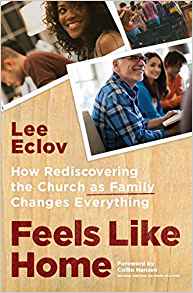
Book Review: Feels Like Home by Lee Eclove

Let me say this up front, this belongs in every pastor’s library and should be read regularly. Pastor Eclov has given the Church a necessary corrective to the attractive, grow bigger at all costs attitude that can become the dominant outlook in your church. This was not the intent of the Lord when he handed Peter the keys; we were not to adopt the worlds values and methods in the hope that we might be able to ‘share’ the gospel with those who come to the show. The Lord’s plan was to live the gospel, joyful and sacrificially, showing (not telling) what Jesus has brought about in our lives together.

Eclov emphasizes the community of believers over the show. The Church is to be family, celebrating and worshipping and bearing one another’s burdens, all in testimony to what Jesus has done for us. This is the picture of church St. Francis had in mind when gave that famous proclamation to ‘Preach the Gospel at all time times, and if necessary use words.’ Though unsaid in the book, Eclov’s guidance reminds the church that the Gospel is not just for evangelizing, it is for us to give to one another to lift, to calm, to encourage, to love.

Church as home, church as family. Reminders of the sometimes forgotten nature of ministry that Pastor Eclov walks through in encouraging chapter after convicting chapter. Growth for growth’s sake is not a biblical guiding principle, church as family is. Read this excellent book (ignoring the mid 70’s cover art) and then prepare to read it again, little by little. Thank you Lee.

Doing Good or Doing Well

11982286463_f7b221c1d3_k

The Metrics of Mission

Measuring the performance of a missional church community is not performed using the same yardstick as many modern churches utilize. While the paramount measure of success in some church circles is bottoms in seats, the missional church evaluates their adherence to the missio dei by how many seats are provided for bottoms. Rather than making a mission of increasing the budget year over year, a missional community will consider the percentage of their budget turned around into the mission field. Tallying the noses of the churched kids who attend a VBS is one number, taking the VBS under various guises to the unreached children of the area is an entirely different count. In every missional metric the priority is reaching, touching and influencing the lives of our neighbors with the truth and reality of the gospel.

As Willow Creek discovered years ago, the metric used to evaluate success doesn’t always align with God’s intention for the church. Their numbers in terms of attendance and conversion were staggering by any measure but the culture that generated those numbers also came at a high cost. As the adage goes, they were a mile wide and an inch deep. “Go and make disciples” had reduced to “baptize them”, a crucial measure but only half the mission. The Commission is holistic and intended to build a self-replicating community of believers who will join the cycle and further the mission.

The missional church may never attain the size of a market-entertainment-self help driven church. That will always be more attractive to the itching ears of our time. The missional body will grow, perhaps not as numerically quickly, but in a more important aspect, they will grow spiritually. The numbers in this world may not impress but the results in the Kingdom ahead will be staggering.

image by Roland Tanglao

Slow Your Roll

Enjoying the Gift of A Slower Pace of Change

slow

For those of us accustomed to a rapid rate of change, things should happen yesterday or at the latest, this afternoon. Finding oneself in a land where change occurs slowly can fool the pilgrim into believing that it isn’t occurring at all. Frustration and even thoughts of failure can ensue unless the eyes and heart are awakened by the Spirit to recognize the gift of the slower pace.

For a variety of reasons, ministry in a rural context moves a slower pace. Serving an agricultural region helps you to learn to appreciate a slower, more considerate pace to life. From the first seeds planted in the spring to the harvest in the cool of autumn, little can be forced or imposed on a field. The farmer must be observant and aware of how all of the components of life are interacting on a day to day basis and then respond when necessary to maintain the equilibrium needed to produce the harvest. Conditions change. Life intervenes. Any number of things must be kept in balance as the crop transforms slowly from fragile seedling to robust stalks of grain ready to be reaped.

Ministry in this context is going to occur at the same pace and any attempt to impose or force a faster pace is going to be doomed to failure. God’s people in this context are prepared to initiate change in the seed form but not in the planting of full grown specimens from the nursery. They will allow incremental change that can then be nurtured along and monitored, but radical-turn-things-upside-down change will be rejected. Leading change demands that you acknowledge and respect this.

The gift of the slower rate is in the increased success of the initiatives. A slower rate enables the careful consideration of the incremental steps rather than surveying the train wreck and then trying to go back and see where the engine slipped off the rails. It allows God’s people to acclimate to change at the same rate that they see God at work on the fields that surround them. It allows for greater glory in God’s name as His people celebrate the small successes along the way rather than the final big bang of the conclusion.

The ministerial gift is in allowing the Spirit to turn one’s internal dial back from 10 to 2. It allows the small steps and relaxed pace to allow you to look every more closely for where He is at work in the process. The greater gift perhaps is that it allows us to savor God’s pace of redemption in us as individuals and in the world as a whole. Where we might have liked to see the sanctification occur in full yesterday, in His economy it takes a lifetime.

Image courtesy Martin Deutsch

Far from the City

cityFar from the bustle and concrete byways of the city lies a place of mystery to many people. Though geographically this place dwarfs the footprint of the cities, suburbs and exurbs, its inhabitants are but a fraction of their population. This place is known by many names, some derogatory and insulting, some more indicative of the labors that take place there…

The countryside, hinterlands, sticks, farm country,yokeldom and hickdom, the tall corn…

Those who live in this area by choice or calling are similarly caricatured. They are simple, unsophisticated, a bit rough around the edges and lacking the panache and polish of the urban and suburban brothers and sisters. Their tastes tend toward gingham, heavily laden plates, trucks and events involving livestock.

Of course, none of these are true and all of them are true.

People are people regardless of their proximity to the urban core. They live, love, sin and repent. They are theologically complex and in some cases, artless. Some have a desire to know the Shalom, the peace of a life lived in God, The Peace and others choose their own path to peace.

It is in this rural context to which I’ve been called to minister. The challenges are unique and complex despite the stereotypes and little in my formal training prepared me to engage this culture. Yet minister I do because these are God’s people and I love them. To be their shepherd is a privilege that I do not take lightly. They have taught me much and from their ovine counterparts that I pass each day I am enlightened.

Much is made of those with sufficient fortitude attempt a ministry in the inner city as though this is the ultimate ministry field, filled with dangers and challenges unmatched in any other ministry field. We rightly admire those whom God has called into these stations but we should also avoid denigrating those who God has placed in the suburbs as well. The tract home holds its share of unique problems as well.

God calls some of us into the countryside to minister. We worship with top-notch musicians and deeply spiritual people whose prayers move your soul. We preach with all the fervor and sophistication of our urban cohort. We marry and we bury and we equip His people to minister on their own. We are not here because we were unable to make it elsewhere or because we are running away from something, we are here because we are obedient to God’s calling upon our lives.

We are here because we love God’s people and His people are here.

The Life Men Want

Man Alive by Patrick Morley

It’s the kind of question that men either ask themselves when they’re alone or refuse to confront altogether. “… would you be willing to go up while everyone else is going down?” The deeper question is whether a man will live a life of meaning, do something important, leave a mark on this world. For men who ache to have this life, Patrick Morley offers this encouraging guide, ‘Man Alive’.

Men will appreciate the short bursts of challenge on these pages that are followed by quiet moments that encourage reflection. The peaks and valleys of the text confront the groups of men who congregate at either end of that spectrum. Those who spend their entire lives nestled in the security of reflection without ever tasting the adventure that awaits them outside the door and those whose adrenaline needle is pegged all the time. These men avoid searching the depths of their character, fearful of what they might find there.

Men were created to know God, to fill the yearning for His presence by living a life of action and reflection in equal measures. Morley outlines the primal needs that lie at the soul-core of every man and inspires them to break out of their culturally bound shells to be what their Father intended for them to be. More than just a series of adventures, ‘Man Alive’ holds up a mirror that reflects the soul deficits of nearly every man and challenges him to look that image right in the eye and be more.