School of Prayer Day Two

WithChristInPrayer

[In which we follow the Andrew Murray classic With Christ in the School of Prayer]

Yet a time is coming and has now come when the true worshipers will worship the Father in spirit and truth, for they are the kind of worshipers the Father seeks. God is spirit, and his worshipers must worship in spirit and in truth.”  (Jn 4:23-24)

Jesus spoke these words to the Samaritan woman at the well, lovingly teaching her the New Way of things. Worship is not constrained by time or place as so much of our Western culture has come to believe. Proper and worthy worship must be aligned with God’s nature which is spirit. It is also in truth, which, in the gospel of John is closely aligned with Jesus (cf 14:6). It will only be through Jesus that we learn to properly worship and pray as a part of that worship.

The Samaritan woman cannot immediately grasp what she is being told and are not automatically able to approach the throne in prayer properly. We need the Spirit through whom Christ will instruct us. He has not left us simply with a set of instructions to follow in the Bible but the Lord has also provided us with a paraclete, a helper who will guide our practice. When we have received this gift is when we are able to pray in spirit and truth, or at least, to begin to.

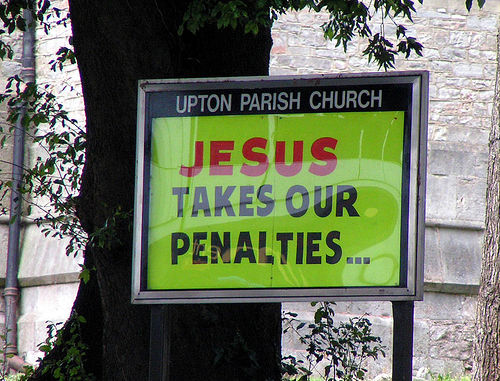
The Penal Substitution View of Atonement

image

The dominant view of the Atonement among modern Evangelicals is the Penal Substitution view. Simply defined, this view says that God the Father, because of His immeasurable love for humanity, sent His Son to die to satisfy the demands of his justice. In doing so, Jesus Christ took the place of sinful humanity and once and for all was the atonement for all our sins. There are several key elements that support this theory but at its core is the notion that sin results in the just penalty of death (Rom 6:23) and that, in love, Christ died in our place (Rom 5:8). His death took the penalty for our sin (Rom 3:25-26) satisfying the demands of the Father’s justice.

Historical Development of the View

Early church fathers such as Clement of Rome, Ignatius, and Athtanasius included the idea of vicarious sacrifice in their understanding of the atonement but it was Augustine who synthesized the various themes into a comprehensive view of the Atonement. The penal substitution view became fully developed with the Protestant Reformers starting with Luther and then Calvin who formalized the ideas of Augustine into a cohesive whole.

We can use Calvin’s structure to understand the different aspects of vicarious sacrifice as he organized the idea through the use of three key theological concepts. Propitiation portrays Christ’s work in its Godward aspect. Through His sacrifice as our substitute Christ satisfied the demands of a just God: “The meaning, therefore, is, that God, to whom we were hateful through sin, was appeased by the death of his Son, and made propitious to us.” (Ref Rom 5:11 Calvin, Institutes II, xvii, 3). The idea of redemption encapsulates the humanward focus of Christ’s work on the Cross. (“Death held us under its yoke, but he in our place delivered himself into its power, that he might exempt us from it. This the Apostle means when he says, “that he tasted death for every man,”” (Heb. 2:9) ibid, II, xvi, 7). Lastly, to speak of reconciliation is to bring into view both the Godward and humanward aspects of Christ’s work. His death and resurrection serves to reconcile those who were previously separated by enmity and unholiness. (“These words (1 John 4:10) clearly demonstrate that God, in order to remove any obstacle to his love towards us, appointed the method of reconciliation in Christ.”, ibid II, xvii, 2).

Calvin also made a significant contribution to the understanding of atonement through his exegesis of Christ’s mediatorial work in the three offices of prophet, king, and priest. (cf. Institutes II 15:1-6) As prophet, Jesus proclaimed the grace of God and He assists the Church in her proclamation of the gospel message. Jesus the King rules over, guides, and protects the Church and as Priest, He expiated her sins by His sacrifice and even now intercedes on her behalf. We must remember that Calvin’s use of Church represents the New Testament view of the Church as the whole body of redeemed believers and not the organization itself. To those outside of the Church, he represents these three offices in name only.

The Necessity of Sacrifice

The violence of this view of atonement has been a challenge to theologians through the centuries and many, especially in modern times, have tried to posit alternative theories that move away from the theory. Why sacrifice was needed by God is necessary to understand in order to grasp penal substitution and this section will outline the conditions that form the answer. First, one must accept the sinfulness of humanity and how seriously God considers that sin. All humanity is sinful and in rebellion toward God (Rom 3:23). How seriously does God view our repeated failures, regardless of severity? Adam and Eve were expelled from the Garden for one sin because His standard is perfection. James 2:11 reminds us that we are evaluated in the same light; a single sin brands us as a lawbreaker (cf Gal 3:10). Humanity requires atonement because of our sin and the fact that it makes us the enemies of God.

Cannot God simply forget about sin? To answer this question requires that we view sin correctly, as an affront to the very character of God. Our sin is not impersonal. The requirements of holiness are not externally imposed. Rather, the norms of the law express God’s character, the beauty and holiness of His person. Because sin violates God’s law (1 John 3:4) it is so heinous because it is personal rebellion against the person of God. To restate this idea, your sin is a personal attack against the person of God, not just an infraction against an arbitrary set of rules that He composed. The personal nature of sin defiles the holiness of God and it requires retribution. His judgment of sin represents His personal anger at sin (Jer 2:13) and human rejection of His lordship.

Sin, by its personal nature, must be atoned for by sacrifice. Therefore, if humanity is to be redeemed there must be a penal substitute if we are to avoid the punishment our sin invites. Into this world, God sent Jesus Christ to be the sacrifice that would take on our sins (Isa 53, cf. Lev 16:21-22 to view the substitution in practice.) Only the appropriate sacrifice is acceptable to the Holy demands of justice and Christ alone fulfills that requirement (Rom 3:25-26) and removes the curse of sin (Gal 3:10-14). Through His sacrifice believers are redeemed (Mk 10:45).

Conclusion

Penal substitution does not represent all that needs to be said about atonement but it is often seen as the foundation of all other theories of atonement because it focuses its attention Godward. It seeks to explain how human beings are reconciled to God and the reasons for the initial discord. God is holy and righteous and must judge the rebellion of those who sin against His Lordship. His love desires to redeem them but his justice requires payment of the appropriate penalty. Christ is the only appropriate substitute unless we are to stand for judgment on our own merits.

Psalm 49 He Will Take Nothing With Him When He Dies

image Do not be overawed when a man grows rich, when the splendor of his house increases;

for he will take nothing with him when he dies, his splendor will not descend with him.

Though while he lived he counted himself blessed – and men praise you when you prosper – he will join the generation of his father, who will never see the light of life.

A man who has riches without understanding is like the beasts that perish. (vv 16-20)

This psalm jumps to our attention as an abrupt shift in style and topic from those we have read up to now. This is a proverb taking the much longer and poetic form of the psalm and intended to be accompanied by the harp. There are two messages contained within the text and each is read differently depending upon which socioeconomic strata the reader approaches from. For the poor, there is assurance. Despite appearances, the wealthy shall not hold an advantage in God’s kingdom and that their wealth shall not substitute for pious lives.

For the wealthy reader who has mistakenly placed their faith and trust in their wealth, the message is more ominous. Since lucre and possessions shall not travel from one plane of existence to the next, it will be of no benefit when facing the God of the universe.

This is the fate of those who trust in themselves, and of their followers who approve their sayings.

like sheep they are destined for the grave, and death will feed on them. The upright will rule over them in the morning: their forms will decay in the grave, far from their princely mansions. (vv 13 – 14)

The next verse points to the only opportunity for salvation from this reality:

But God will redeem my life from the grave; he will surely take me to himself. (v 15)

That is the only promise worth our investment…

Image Per Foreby

With Christ in the School of Prayer

WithChristInPrayer

We are not naturally inclined to the spiritual discipline of prayer. We are able to develop a habit of speaking prayer forms as we hear them from others but the deep communion of a conversation with God. It is something that we must be taught to do properly just as the first disciples were when they said to the Lord “teach us to pray.” South African pastor Andrew Murray left us with a classic primer with which to guide our training in the discipline. With Christ in the School of Prayer was first published in 1885 and has served the Church since as a basic training manual in how to pray and it will do the same for us as we develop our strength in the discipline.

One day Jesus was praying in a certain place. When he finished, one of his disciples said to him, “Lord teach us to pray, just as John taught his disciples.” Luke 11:1

As we have seen we delve into the Scriptures, Jesus was The master of prayer. His communion with the Father, unimpeded by sin as our is, was full and deep and perfect. Where prayer before His ministry was to the majestic God of Israel, now the disciples would have been hearing Jesus address God much more personally, as the Father. They also knew the connection between the power of His ministry and His secret prayer life and they desired this same relationship for their own lives. We, like the disciples, begin our own discipline by petitioning Christ to be our teacher as well.

And so we begin, “Lord, teach us to pray…”

Atonement – The Greatest Human Need

image

“But how can a mortal be righteous before God?” Job 9:2

“The atonement is the crucial doctrine of the faith. Unless we are right here it matters little, or so it seems to me, what we are like elsewhere.” Leon Morris The Cross in the New Testament

For many, bringing up the doctrine of atonement leads to a discussion of whether or not its scope is limited or unlimited. Atonement as a theological topic often ends there, though occasionally the mention of alternative view leads to a vehement exhortation that penal substitution is the only acceptable view on the matter. For something so critical to the Christian life, there is scant consideration of the depth and breadth of views on how and why Christ performed this sacrificial task on our behalf.

My next set of doctrinal posts are going to explore the wide range of views that the Church has held at various times in its history on the doctrine of atonement. Many people will discover that there numerous ways that Christians have understood atonement beyond the most commonly expressed view of Evangelicals, penal substitution. It is important to keep in mind that the various emphases and approaches to understanding atonement may differ on their constructions they all come to the same conclusion: the work of Jesus Christ on the cross reconciled a sinful people and a holy God.

Atonement, in all of its theories and views, is specifically the reconciliation with God over the problem of sin. 1 John 2:1-2 summarize the idea well:

My dear children, I write this to you so that you will not sin. But if anybody does sin, we have one who speaks to the Father in our defense—Jesus Christ, the Righteous One. He is the atoning sacrifice for our sins, and not only for ours but also for the sins of the whole world.

As reconciled people we are at peace with God rather than continuing to be His enemies. Christ’s death has removed the enmity between us and has appeased the wrath of God. The propitiation full satisfied every one of the righteous demands of God, a necessary transaction as His holiness does not allow God to simply overlook our sin. As redeemed humans, Christ has purchased us out of bondage to sin and we become His servants. His sacrifice was the act that allowed us to be declared righteous, pardoning us and ending our separation from God. As John Wesley wrote, “Nothing in the Christian system is of greater consequence than the doctrine of atonement.”


Image kb2qqm

Psalm 48 In the City of Our God

image

Great is the Lord, and most worthy of praise, in the city of our God, his holy mountain.

It is beautiful in its loftiness, the joy of the whole earth. (v 1)

This brief psalm closes the trilogy of praise found in psalms 46, 47, and 48. These were originally utilized in the liturgy of temple worship and they serve(d) the purpose of focusing the people of God of the important characteristics of the Lord they worship. In this prayer, the knowledge of the security that comes from being within God’s city and therefore within His presence is emphasized.

God is in her citadels; he has shown himself to be her fortress. (v 3)

As we meditate on this verse we recognize the core truth that applies to our lives at this moment. Note that where God dwells is not separate from Him, He is the fortress that provides the security. The challenges to the security of Zion come from the four points of the compass in the next four verses but they are rebuffed. There is nothing that can challenge God.

Do we find the same security in knowing the presence of the Holy Spirit in our lives? Is there ‘direction’ from which you are not convinced that God mans the ramparts? We need to come to know that there is no area of our lives that can stand outside of the love and security of God. Areas in which we struggle can be turned over with confidence to God knowing that there is no direction from which a surprise can come for Him. We rest in His security.

Like your name, O God, we meditate on your unfailing love.

Like your name, O God, your praise reaches to the ends of the earth; your right hand is filled with righteousness. (vv 9-10) 


Image by Conor Dupre-Neary

The High Discipline of Prayer

image

“God does nothing but in answer to prayer.” John Wesley

Prayer is the central core of all of the spiritual disciplines. Devotion and practice of the discipline moves us more and more into the state of perpetual communion with the Father that is to mark us as separate from the world. To pray is to change. It is the primary avenue by which the Father molds and transforms us.

A primary truth about the discipline of prayer is that it is both unnatural and natural simultaneously. Putting this discipline into practice requires a concerted effort on the part of the redeemed and a long period of apprenticeship. We must learn from the Master how to pray just as His first disciples did.

One day Jesus was praying in a certain place. When he finished, one of his disciples said to him, “Lord, teach us to pray, just as John taught his disciples.” (Luke 11:1)

The discussion of prayer could take off in so many directions so it will be necessary to limit our attention to a few core topics. This will be a longer series of posts and I hope that some readers will consider the possibility of contributing their own materials so that all of can develop our personal practice of this most important of disciplines.

Image Iulian Nistea

Psalm 47 How Awesome is the Lord Most High

image Clap your hands, all you nations; shout to God with cries of joy.

How awesome is the Lord Most High, the great King over all the earth! (vv 1-2)

The liturgist repeats the words of psalm 47, for the first time calling all nations to worship Yahweh for He is sovereign of everything, not just Israel. If they do not know Him now, one day the word will reach them and his Lordship will be apparent to all. All of this psalm concerns itself with praise for the Lord Almighty. He alone is God and is to be worshipped as such.

The modern reader must place this liturgical psalm in its proper context so as not to misinterpret verse 5. It reads:

God has ascended amid shouts of joy, the Lord amid the sounding of trumpets.

This should not be read as God being anywhere lower than as ruler of the Heavens and Earth. This prayer would have accompanied the movement of Yahweh’s symbolic throne up into the Temple before the final shouts of praise and honor arise from the worshippers.

For God is the King of all the earth; sing to him a psalm of praise.

God reigns over the nations; God is seated on His holy throne.

The nobles of the nations assemble as the people of the God of Abraham, for the kings of the earth belong to God; He is greatly exalted. (vv 7-9)

The current ‘Kings of the earth’ would do well to reflect on this fact.

Image richarddigitalphotos

It’s the Little Things – Christian Hypocrisy

image You lifted your hands in praise, eyes closed as you sang from your heart, reveling in God’s presence. As prayer was led, your head bowed in reverence as I’m sure you poured everything out to the Father. Your voice could be heard affirming the pastor as he preached the message and you were among the first to the Lord’s Table to partake of the bread and wine. Everything about you told the surrounding body how devoutly you take your faith and I’m certain that you are regarded as a model Christian within the congregation.

But the damage had already been done.

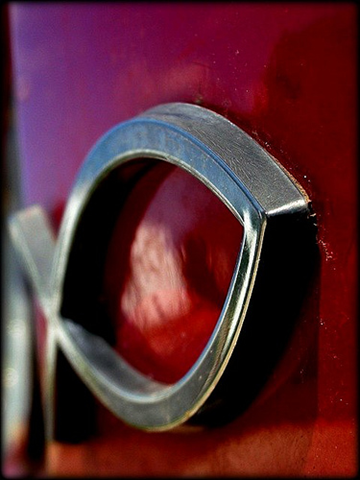
Did you stop to think before you drove into the church parking lot against the one-way sign? Sure, there was probably going to be little outgoing traffic at the beginning of service and if there was you could just pull to the side but that’s not the point. The polished chrome fish on your tailgate marked your allegiance for all to see out on the road. All the people around you on the busy boulevard also watched your shiny fish break the law just to take a shortcut into the church parking lot. They saw the real you and saw a hypocrite.

Sadly, you also made all of us out to be hypocrites.

You see, we proclaim a relationship with Jesus Christ that goes beyond the church walls on Sunday morning. We claim that our lives are constantly being molded and modified by the Holy Spirit. We claim to live in submission to others, sometimes boldly saying that we have a better way of life that we would like to invite others to share. We claim all of that and even try to live it out.

Only to have it destroyed by one small moment where one of us demonstrates that we’re really no different from the rest of the world.

When one of us demonstrates this in the small things (like following the traffic laws) it reflects on the whole Church in the larger things.


Image benlio

Hell and The Fire of Purgatory

image The idea of Purgatory is the last of the major doctrinal positions that Christians hold on Hell and the final things. It is almost exclusively held by the Roman Catholic church with very few Protestant theologians finding the position credible. Purgatory refers to a state or condition where souls come to rest between the final destinations of Heaven and Hell. The soul in purgatory endures a purifying suffering necessary to prepare them for the final judgment. After that day, according the the Catholic theology, Purgatory will cease to exist as its mission will be fulfilled.

The idea of an interim state is not unusual in general Christian theology. It answers the question, “what happens when we die?” The popular idea of immediate ascent or descent does not take into account the scriptural references to a day of final judgment in the future in which some are assigned to perdition and others to glory. Purgatory is the Catholic attempt to explain this state, expanded to include the notion of purification.

The symbolism of purgation is not rooted in Christianity but is widespread throughout all religious history. It is bound up in the distance of holiness between gods and men and in the human desire to approach the gods. The perfection of the gods requires that the human affect some measure of holiness themselves in order to stand in the god’s presence. The holiness is gained by a purifying ritual that takes many forms. As it was adopted in Catholic theology, this purifying process included a measure of punishment for the sinner according to their faults in their earthly life. The punishment is sped along by the mortal intercession of the Church and the sinner’s survivors. Catholics understand human nature as not perfect but not perfectly horrible either. Purgatory grants them an extension on their ability to be perfected for the next phase of eternal life.

What do the scriptures say about Purgatory? Very little if anything at all but we need to understand the Roman Catholic approach to the scriptures and theology in order to understand the formulation of the doctrine. In the Apocryphal book, 2 Maccabees contains a passage that supported the historical development of the doctrine. In the context of the text, some of the soldiers of Judas Maccabeus were wearing idolatrous amulets when they were killed in battle. Judas took up a collection as an expiatory sacrifice intended to release the dead from their sin.

They all therefore praised the ways of the Lord, the just judge who brings to light the things that are hidden.

Turning to supplication, they prayed that the sinful deed might be fully blotted out. The noble Judas warned the soldiers to keep themselves free from sin, for they had seen with their own eyes what had happened because of the sin of those who had fallen. He then took up a collection among all his soldiers, amounting to two thousand silver drachmas, which he sent to Jerusalem to provide for an expiatory sacrifice. In doing this he acted in a very excellent and noble way, inasmuch as he had the resurrection of the dead in view; for if he were not expecting the fallen to rise again, it would have been useless and foolish to pray for them in death. But if he did this with a view to the splendid reward that awaits those who had gone to rest in godliness, it was a holy and pious thought. Thus he made atonement for the dead that they might be freed from this sin. (2 Maccabees 12:41-46)

In the New Testament, some will read in Matthew a similar reference:

And so I tell you, every sin and blasphemy will be forgiven men, but the blasphemy against the Spirit will not be forgiven. Anyone who speaks a word against the Son of Man will be forgiven, but anyone who speaks against the Holy Spirit will not be forgiven, either in in this age or in the age to come. (Mt 12:31-32)

The Catholic reading of this passage points to the possibility of being forgiven in the next world. Protestant theologians (cf Eph 1:21) do not generally share this reading. Catholic theologians will admit that the scripture is ambiguous at best and will also readily state that the doctrine is rooted in tradition rather than sola scriptura. Tradition will cause the Catholic reader to understand these and other passages in the light of the Roman Catholic theology of grace and works.

Conclusion

For the Roman Catholic, purgatory is a final opportunity in death to find our love for God. It is a state of His continuing grace and mercy to continue to seek a way in which the human might be restored to holiness and finally to God’s presence. Mortal intercession can aid those who find themselves suffering in a purification process until the day of judgment when Heaven or Hell will be the only choices remaining.


Image Mike_fj40