
The Offspring at Red Rocks, May 28, 2009

The Offspring, originally uploaded by wrachele.
Coincidental to my posts this week on ethics and morality from the perspectives of Atheists and Christians was this post purporting to provide evidence not just of the existence of a standard for morality within Atheism, but of the superiority of Morals among Atheists. After reading it a couple of times and attempting to give it a fair analysis, I have to say that this piece once again demonstrates the deficit logic of the atheist writers which they attempt to mask with vituperative commentary aimed at discrediting Christianity rather than providing evidence of contrary truth.
The author, ‘Neece’, prefaces her schedule of superiority proofs by providing a telling summary of her foundational knowledge of the Bible and its contents. She says
In my experience, the bible goes on, especially in the old testament, about how to treat people who are different than you. It’s full of hate and cruelty, with some arbitrary rules thrown in. Only a few of those rules are sensible. The rest are about control.
It would appear that she has not spent any measurable time reading and studying the Bible since the Old Testament is not predominantly about ‘how to treat people who are different than you.’ Having studied the OT in depth, I fail to see this as a dominant theme. The author does not provide any citations for us to refer to so we have to assume that she is operating from her impressions of what the Bible contains rather than its actual content. What we find in the OT is God’s movement toward the restoration of His most precious creations. A large part of this restoration is the need for humans to recognize their lack of holiness which prevents their full relationship with God. Is there violence in the OT, without a doubt but is it rooted in hate? No, the violence is a necessary cleansing of unholiness. Uncomfortable to deal with but not about hate of people who might be different.
She goes on to say that addressing the specifics of her problems with the Bible ( I assume NT as well as OT ) because it’s not “worth her time or aggravation.” We can assume that she avoids the details because a) she doesn’t know them and b) the Bible is just a straw man that she is going to knock down in an attempt to portray her personal morality as somehow superior to mine. The pejorative rant that follows gives me no reason to doubt my assumptions,
If you believe that the bible is the divinely inspired word of god, you’re only going to skim this article, find a few points to attack me while you brew up a cup of moral and righteous indignation, and then try to shove your fundamentalism down my throat because you’re scared of people who think for themselves and don’t have blind faith in fairy tales from the Fertile Crescent like you do. You don’t listen anyway, you just find ammunition then viciously attack. What great role models you are. How very christ-like.
Would Christ not correct Neece in her incorrect thinking? Perhaps she should read again how He addressed those who perpetrated incorrect beliefs. She makes an interesting statement,
The atheists who read this probably have already read that awful book, because as a general rule, we need to be more educated on religious matters than those militant religious folks that try to tell us how we should believe.
but apparently it is easier to say than to do. Actually, since she is telling us what we should believe, the burden is upon her to provide the evidence of the correctness of her positions. As you will see, her moral stands appear to be little more than emotional outbursts rather than reasoned, evidential proofs that can be independently verified. In other words, the morals she claims to be superior are of her own making. The logical problem that she fails to recognize in her own statements is that in a world where she is the sole judge of morality, I am also the sole judge of morality for my world. Who is right Neece? You have no position to criticize my morals since, like you, I proclaim them to be superior. Ooops!
Here are the authors reasons for her claim of moral superiority.
1. No god tells me to hate gay people, so I have no reason to hate them. In fact I think if gay people love each other and want to get married, more power to them. Why should we stop love and caring based on gender? I encourage loving and caring any way it manifests itself.
The God of the Bible does not tell me to hate gay people either. The Bible has two statements that address sexual relations that are contrary to the natural order. Since she encourages loving and caring any way it manifests itself, her morality has just come out in support of pedophilia and necrophilia.
2.No god tells me that women are inferior and should subject themselves to men. So I’m equal to a man. Except getting spiders out of the house. He can be superior to me in that department. Oh, and opening jars. He can have that one too.
The God of the Bible does not tell me that women are inferior or to treat them as second class humans. The imago dei infuses each gender and makes both equally valuable to God and therefore me. Since the rest of her statement is just a joke we can assume she has no moral statement to make on this point. Perhaps the author would be better served in her understanding of this issue by further study so that she can differentiate between which ideas are timeless and which are temporal.
3. No god tells me to pray instead of seeking medical attention. I believe in all kinds of scientific research and medicine. I even believe in stem cell research. I also think a woman has a right to choose what to do with her body. This probably goes up under the ‘women are equal’ entry as well, because I think it’s ridiculous that an old man I will never meet gets to decide what I can and can’t do with my body. Oh, and euthanasia should be considered an option, although it would have to be properly done so that no one gets murdered. But come on, if life is so freaking precious, why make some sick and dying person go through agony and humiliation and endure countless medical procedures just to stay alive? That’s insane.
The God of the Bible does not tell me to pray rather than seeking medical attention. (I’m beginning to wonder if the author has ever read the Bible since each of the points so far have just been commonly voiced memes by those who dislike Christianity but know nothing about it.) Without getting into a much longer discussion of abortion, I too believe that women have the right to choose what to do with her body. She can choose not to have unprotected sex. If she does, she has the responsibility to recognize the possible consequences of her activities. Interesting that she jumps to euthanasia. Since her world has no objective judge of right or wrong, who gets to decide when life should end, me or you?
4. No god tells me to hate people who believe in the same god but in a “wrong” way. Ok, that’s just stupid. At thanksgiving dinner my cousin was harassed by the fundamentalist methodists there because she went to 3 different bible camps from 3 different churches. She said, it’s all the same god, why does it bother you so much? I had to agree with her. They’re so hateful and ignorant.
I don’t mean to be offensive but I doubt that the author has the theological chops to get into this discussion. The Bible (as God’s revelation) does not tell Christians to hate one another for believing differently though it does insist on correct doctrine. Christians have multiple levels of doctrine, some essential and some non-essential. If there is disagreement on the fundamentals there is abundant tradition and history that can be examined in order to reconcile the differences. To continue to adhere to a belief contrary to historical doctrine means that one is not worshipping the same God in a different way. That person is worshipping a different God. Examples would have been useful but that is not the author’s style. She should be cautious though about claiming morality and then labeling others “hateful and ignorant.” Her earlier sarcasm toward Christians places her in the first camp while the issues I have addressed thus far threaten to push her into the latter family.
5. No god tells me to be fruitful and multiply, then says that sex for fun is bad, then tells me that only sex between married people is ok, then denies me any kind of way to turn off my insatiable teenage sex drive except to come up with abstinence and praying as a lame solution. Which means that I am all for teaching teenagers and anyone who might think of sex how to be safe and protected. Nothing is more dangerous than ignorance. Proper education and access to prophylactics are real ways to reduce teen pregnancy and the spread of STD’s. Also, as noted above, I also believe that mistakes happen, and so do horrible crimes against women. The morning after pill should be available to girls and women who need them to avoid unwanted pregnancies, and abortions, while not the ideal solution, should be legal and safe. Sometimes they are necessary, and a woman or girl shouldn’t be bullied or forced into carrying a baby to term. Oh, and back to the ‘be fruitful and multiply thing’. I didn’t even have to have kids in the first place because I’m strong enough in myself that I don’t need some namesake to carry on for me or continue to overpopulate the planet simply because a god said I had to, thousands of years ago. Or worse, I am not starving in some third world country, having babies one after the other for my whole short life because the christians forced their god on me long ago and imposed their ridiculous rules and told us stupid lies.
I’m not sure how to address this rant or how this contributes to her case of moral superiority. Again, she demonstrates her ignorance of the whole of the Bible and the sexuality of professing Christians. Have you read the Song of Songs Neece? What biblical morality reinforces is that the sex without relationship that the authors claims to be superior has long term affects on the human psyche. Does your ethical stand allow me to view you as simply a sexual object so long as you are willing? Remember, you and I get to define our own personal morals not matter how they might affect one another. Have you taken your atheism to its eventual and irrefutable nihilism?
6. No god tells me to hate people who look different than me, so I am free to see everyone as equal and the same, just with different packaging. No need to be racist. (Oh, yeah, Hitler was religious. So don’t even bother with that one, christians. He’s yours, not ours.)
Again, I struggle to find any Christian doctrine that tells me to hate people who look different than me. How do we evaluate a moral stand which rests upon nothing but the vapors of an overheated imagination? Hitler (and the Nazis) were actually more driven by their Anti-Semitic views, occultism, and the application of Norse mythology in support of their views of Aryan superiority. I’m glad that we finally agree on an ethical standard in the lack of need to be a racist.
7. No god tells me to start a war over another land having the wrong god or the wrong types of people (see the one above), so I don’t have to support pointless wars that justify some ridiculous ancient prophecy or for other silly reasons, like god talking directly to the leader of my country. (Don’t even get me started on how scary that is. At least he’s gone now!)
These “moral” reasons seem to be getting worse and worse in the logic. Since she doesn’t provide any sort of citation, it is difficult to discuss this ethical stance intelligently. From her clues we can assume that she is referring to Iraq and President Bush. Perhaps Neece, you can provide evidence of the reasons you give for the initiation of this war being based in a) having the wrong god, b) the wrong types of people, c) ancient prophecy, and d) various silly reasons. Ethically, war is a difficult and long conversation. I would refer you to my posts on the four main positions that Christians take with regard to war and then you can challenge the ethics of one or all. Until then, we’ll have to dismiss this immature statement.
8. No god makes promises to me about being a martyr, so I have no reason to strap a bomb to myself and blow up a train station or whatever kills the most innocent people.
Since the life of the Atheist has no ultimate meaning other than the fact that you took up space and resources on the planet for a period, the author is correct in her assertion that she has no reasons for blowing herself up. Since the Bible does not condone this, we’ll have to assume that she is referring to the Koran as the source of this direction. The trouble here is logical, how do you judge the morals and ethics of those who blow themselves up since, as the author propounds, each to his own. Their moral standard is as good as yours so don’t be hateful.
9. No god makes open-ended promises that will never come true about armageddon and going up to heaven soon, so I am responsible about the environment, and try my best to have a small impact on the planet, and also support research into making things better for everyone through science and smarter living.
The “morals” discussion has obviously degraded. Is the author trying to make the point that Christians don’t take creation care seriously because we are simply waiting out the rapture or something? This assertion display’s a profound ignorance of what is going on within the Body of Christ so it would be uncharitable to be critical. I’ll offer this; since Christians do not know the time or the date of the end of the world (despite some cultic claims) we also seek to live in a healthy world and to that end, there are many Christian scientists seeking ways to live smarter. Remember though, should I choose to live a morality of waste and obscene consumption, you have no right to be critical since there is no objective way to determine right or wrong.
10. No god promises eternal life to me, so I understand that this life is precious. I take personal responsibility seriously, and I live my life the best way I can because it’s the only one I’ve got. I value the lives of others too, for the same reason.
Actually, God does promise eternal life to you but you have chosen to turn down that offer. You are free to do so.
Here is the final repetition of the logical problems with the author’s manifesto. Her initial thesis is that her personal morality (and that of all atheists) is superior to that of Christians. She has not proven that thesis or provide any evidence that supports her assertion other than her angry, meandering statements. Logically, she would like us to read the statements as follows (using the last paragraph as an example):
Given these logical inconsistencies, how can I place any confidence in her system of morality? She provides no evidence of her assertions and no objective source on which we can judge the validity of her moral arguments and yet she spends hundreds of words professing their superiority to a moral system thousands of years old. Sadly this represents much of the Atheist argument. It represents the continued desire to be one’s own god and to set ethical standards of their own without judgment by others. I believe Charles Manson held to this same argument.
Neece, you say “Yeah, I’d say most atheists are definitely morally superior to religious fundamentalists.” I’m sorry to be the first to point this out to you but you have failed to make points sufficient to support this assertion. Being a free-thinker is fine but it comes with the responsibility to be support your positions when challenged by other free thinkers. I don’t think you’d be very happy in a world where each of us also gets to determine morality for ourselves based upon what we each think is best.


Bristlecone Tangle, originally uploaded by wrachele.
These trees (some over 1600 years old) have watched over the great plains from 13,000 feet in the Rockies since well before we celebrated Memorial day.

At the root of our discussion of ethics is the notion of freedom. A single proposition which summarizes the idea is this:
If I am to make moral choices, I must be free to do so. If I am not free in some sense to do the thing that I choose, I cannot be responsible for the outcome.
The freedom that I’m talking about is qualified. My choices are limited by physical laws. I cannot fly no matter how hard I wave my arms around. My choices are limited by my natural abilities. Though I may desire to a rock star, the limits of my talent on the guitar are going to have a limiting effect. Finally, my choices may be constrained by legal or social constraints. The choice I make may be possible but I cannot pursue them because they are legally or socially prohibited.
We must also consider two philosophical ideas in order to construct our conclusions. The first is Determinism. In its simplest form, determinism is the notion that everything has a cause. In other words, all events are effects caused by earlier events. If this idea is true, all future events are unalterable and fixed and the agents (us) cannot be held morally responsible for them. We are not free to choose what to do. Reductionism is another idea that is a bit more abstract. If true, reductionism renders the whole idea of personal freedom meaningless because it says that our thoughts and ideas are nothing more than electrical impulses and that freedom of will is an illusion. If moral choices are to make any sense, I have to first believe that a human being is more than just a set of electrical impulses. If not, the impulses win and are their randomness makes them incompatible with moral responsibility.
The first position that you need to come to then is whether or not humans are free to make moral choices, whether for good or for evil. What say you?
Photo by justinbaeder

The next series of posts that I am writing are going to be an exploration of ethics and morality. After taking several days away from the thoroughly depressing study of atheism and its ultimately nihilistic conclusion, I want to focus on a single topic in the discussion to see if we can come to a settled position on the topic. The questions that set the discussion in motion are these:
How do we define ethics and morals and on what basis?
Can there be a definition of good and bad without an ultimate judge of goodness or badness?
What is Ethics?
We start by defining terms. Ethics is commonly defined as the body of moral principles that is held by a culture, group, or individual and which governs their decisions and actions. A moral idea or action is one which pertains to the principles of right conduct or distinguishes between wrong and right. As you can see from these simple definitions, there appears to be considerable gray area to be explored. I’ll look forward to hearing your thoughts and contributions on the subject.
Image by PSD

I have seen a wicked and ruthless man flourishing like a green tree in its native soil, but he soon passed away and was no more;
though I looked for him, he could not be found.
Consider the blameless, observe the upright; there is a future for the man of peace. (vv 35-37)
Psalm 37 presents a compilation of wisdom regarding the clear differences to be noted between the righteous and the wicked. It voices a warning against succumbing to the temptation of taking the easy way out that might involve gray areas in our behaviors. The first verses set the tone:
Do not fret because of evil men or be envious of those who do wrong; for like the grass they will soon wither, like green plants they will soon die away. (vv 1-2)
Every day we see those around who are not followers of Christ but who seem to be blessed. They have money, possessions, and good health while members of our own church are suffering. They may even boast of how they gamed the system or gained their fortunes in illicit ways while those who walk the narrow path scrape by, month by month. Two temptations present themselves; the invitation to follow them in their unrighteous behavior and worse, the temptation to abandon the narrow path because we do not see God correcting the unrighteousness in His world.
The psalmist addresses these issues, knowing the attraction of turning one’s face from the goals. We must remember to consider all things in terms of God’s time rather than the limited perspective of our few years here in this world. We tend toward demanding immediate action and justice whereas God is more expansive in his timekeeping. He views things eternally, knowing that His perfect justice will be visited upon every human being.
A little while, and the wicked will be no more; though you look for them, they will not be found.
But the meek will inherit the land and enjoy great peace. (vv 10-11)
This psalm is a great soul-strengthener when you have moments of temptation. Keep the eternal in mind and refuse to succumb to the fleeting moments of this life. Trust in Him and and His righteousness.
The days of the blameless are known to the Lord, and their inheritance will endure forever. (v 18)
Photo by Aldrin_Muya

An oracle is within my heart concerning the sinfulness of the wicked;
There is no fear of God before his eyes.
For in his own eyes he flatters himself too much to detect or hate his sin. (vv 1-2)
The psalmist appears to have appended the introductory verses of this psalm onto the glorious praise that follows as a sudden flash of inspiration into knowing the hearts of the wicked. He clearly understands the root of the problem with the God haters. It’s not that there is anger with God, it’s simply that they love themselves more.
The more you investigate the beliefs and practices of the atheists, the more one discovers that their God hatred is rooted in their self love. Their denial of any evidence presented to them empowers their lordship over the world. They of course deny this and overtly proclaim their happiness, satisfaction with life, the greatness of their existence. They flatter themselves into continuing their false belief, labeling themselves ‘free thinkers’ and better adjusted than the believer. Me think they doth protest too loudly.
The praise of the truth does not need to be forced.
Your love, O Lord, reaches to the heavens, your faithfulness to the skies.
Your righteousness is like the mighty mountains, your justice like the great deep.
O Lord you preserve both man and beast. How priceless is your unfailing love. (vv 5-7)
Photo by Aussiegal

All activity, creative or otherwise, begins with motivation. There is nothing that spontaneously occurs without a motive energy behind it and the creativity within you is no different. When you sing, write, paint, shape, photograph, or devise a new idea, each action began with the firing of energy placed by God as a part of the image dei within you. While the spark will fire and ignite the motivation, the response is ours to make.
God created but what was His motivation? He was not in need of anything. He did not require the acclaim that would come from such a magnificent achievement. What God did desire was an expression of His love. Love is the foundation of creation and its initial perfection. Love sees it fullest expression in the fellowship that the Creator now has with his creation.
When we utilize the creative spark imbued in each of us, it is also an expression of love. We bring the divine image out for others to see when we bring our gifts to life in creative practice. Your motivation is not glory or acclaim but the audience of one for whom your creation is the most precious thing. Some people will say that they are not motivated to create, that they lack the spark. With the divine image within, we have to ask ourselves not why we don’t have the spark but rather, what we are allowing to smother it.
Photo by Akbar Simonse
Sam Harris poses this question, “One wonders just how vast and gratuitous a catastrophe would have to be to shake the world’s faith?” He goes on in support of this question; “The Holocaust did not do it. Neither did the genocide in Rwanda, even with machete-wielding priests among the perpetrators. Five hundred million people died of small-pox in the twentieth century, many of them infants. God’s ways are, indeed, inscrutable. It seems that any fact, no matter how infelicitous, can be rendered compatible with religious faith.”
Yes, one wonders that belief continues despite a purported lack of evidence.
Mr. Harris, why hasn’t the evidence of there being no God changed the religious views of billions of people through the number of centuries that you might want include in consideration? Why, if the evidence is so apparent, so powerful, and beyond question, does Atheism not represent the dominant worldview? That is the question that you must answer before excoriating the belief of others, whether or not they are able to slake your cynically formulated demand for apologetic proof.
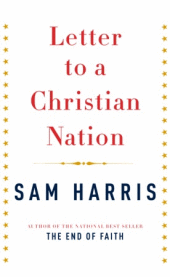 As I have done more in-depth reading in the Atheist corpus I have discovered major differences between the modern rationalists (as they like to be called) and the elder members of their cohort. The younger generation is consumed with the rant at the expense of careful argumentation. Their approach is scattered, throwing out this and that in an attempt to create a blizzard of thoughts and words so impenetrable that it is impossible to refute them. An interesting exercise is to read non-professional reviews of the literature such as what one might find on Amazon and read the glowing paeans highlighting the lucid arguments and the irrefutable ideas of the author and then wonder what book these readers have read. Many of them read like freshman essays attempting to expound on the student’s first exposure to Nietchze; they appear to have read the book but do not have a sufficient grasp of the philosophy—or religion in the case of this book—to be able to critique beyond simple praise. They like it but don’t know why they like it.
L’enfant terrible Sam Harris offers nothing in his execrable little pamphlet that furthers the Atheist cult. That this book sold numerous copies is not surprising as it perfectly fits the currently acceptable cultural intolerance of Christian belief. As is the script for the new Atheists, Christians are caricatured as irrational, sexually repressed yokels unable to process any thought beyond the flannel-graph images of the animals marching two by two into Noah’s Ark. The reader is given an early glimpse into Harris’ logical approach just a few pages in when he says “The fact that my continuous and public rejection of Christianity does not worry me in the least should suggest to you just how inadequate I think your reasons for being a Christian are.” (p. 4) Let’s see:
P1: I reject Christianity continually and publically
P2: It doesn’t worry me in the least
C: Your reasons for being a Christian are inadequate
How does this work in support of the remaining pages of the book? That he does not believe in the tenets or evidence provided in support of Christianity is sufficient for a Christian to doubt the truth and reality of the living God and the sacrifice of Christ? I will try the same exercise:
P1: I do not like Brussels Sprouts and will tell everyone who listens (even though there is sufficient proof of their nutritious nature)
P2: That this might hurt my mother’s feelings doesn’t worry me in the least (because she is the only person I know who likes them)
C: No one should eat or even see Brussels Sprouts
Harris believes himself to be serious minded yet his approach to the topic at hand is cavalier and simply caustic. He is an angry man and attempts over and over to portray Christians in the same light. Harris hopes that by shouting relentlessly and not giving his opponents an opportunity to interject that he can make his point and somehow walk away victorious. For example, his handling of scripture is to pick a handful of particularly violent passages out of the Bible and then present them as the whole of scripture. The first thing that a freshman bible student is taught in hermeneutics is how to properly handle the texts and the primary rule is context, context, and context. Harris pulls out a trio of passages that he says direct parents to kill their disobedient teenagers. Neither a biblical scholar nor a Hebrew linguist, Harris attempts to make these verses stand alone which they do not. He does not delve into the semantic ranges of the English words he reads and their source in the original languages. He does not place the scriptures in context, immediate or larger. He does nothing except say ‘see, the bible says kill your kids. Let’s get rid of religion!’ Irresponsible at best, a failing grade in any religious studies class at worst.
Harris does not move much beyond this approach throughout the entire book. His tools are mockery and hyperbole which excite the Atheist community but simply look childish and silly when read by the educated and astute Christian. Sam would like a world free from all religion where each accidental creation is free to make his or her own morality. When my moral system interferes with his life in that world, Sam would happily agree that we can both be right and simply suffer the consequences without complaint. Mr. Harris attempts over and over to portray God and those who believe in Him as evil and the source of the problems of the world. I suggest that he look in the mirror. He and I are the source of the problems in the world. The free will that God has imbued his creatures with allows that we can choose to believe in Him or hate him as Mr. Harris does. Choices have consequences.

