Ethics Week

image

The next series of posts that I am writing are going to be an exploration of ethics and morality. After taking several days away from the thoroughly depressing study of atheism and its ultimately nihilistic conclusion, I want to focus on a single topic in the discussion to see if we can come to a settled position on the topic. The questions that set the discussion in motion are these:

How do we define ethics and morals and on what basis?

Can there be a definition of good and bad without an ultimate judge of goodness or badness?

What is Ethics?

We start by defining terms. Ethics is commonly defined as the body of moral principles that is held by a culture, group, or individual and which governs their decisions and actions. A moral idea or action is one which pertains to the principles of right conduct or distinguishes between wrong and right. As you can see from these simple definitions, there appears to be considerable gray area to be explored. I’ll look forward to hearing your thoughts and contributions on the subject.

Image by PSD

Digg This

Psalm 37 – Turn From Evil and Do Good

image

I have seen a wicked and ruthless man flourishing like a green tree in its native soil, but he soon passed away and was no more;

though I looked for him, he could not be found.

Consider the blameless, observe the upright; there is a future for the man of peace. (vv 35-37)

Psalm 37 presents a compilation of wisdom regarding the clear differences to be noted between the righteous and the wicked. It voices a warning against succumbing to the temptation of taking the easy way out that might involve gray areas in our behaviors. The first verses set the tone:

Do not fret because of evil men or be envious of those who do wrong; for like the grass they will soon wither, like green plants they will soon die away. (vv 1-2)

Every day we see those around who are not followers of Christ but who seem to be blessed. They have money, possessions, and good health while members of our own church are suffering. They may even boast of how they gamed the system or gained their fortunes in illicit ways while those who walk the narrow path scrape by, month by month. Two temptations present themselves; the invitation to follow them in their unrighteous behavior and worse, the temptation to abandon the narrow path because we do not see God correcting the unrighteousness in His world.

The psalmist addresses these issues, knowing the attraction of turning one’s face from the goals. We must remember to consider all things in terms of God’s time rather than the limited perspective of our few years here in this world. We tend toward demanding immediate action and justice whereas God is more expansive in his timekeeping. He views things eternally, knowing that His perfect justice will be visited upon every human being.

A little while, and the wicked will be no more; though you look for them, they will not be found.

But the meek will inherit the land and enjoy great peace. (vv 10-11)

This psalm is a great soul-strengthener when you have moments of temptation. Keep the eternal in mind and refuse to succumb to the fleeting moments of this life. Trust in Him and and His righteousness.

The days of the blameless are known to the Lord, and their inheritance will endure forever. (v 18)


Photo by Aldrin_Muya

Digg This

Psalm 36 – Your Faithfulness Reaches to the Skies

image

An oracle is within my heart concerning the sinfulness of the wicked;

There is no fear of God before his eyes.

For in his own eyes he flatters himself too much to detect or hate his sin. (vv 1-2)

The psalmist appears to have appended the introductory verses of this psalm onto the glorious praise that follows as a sudden flash of inspiration into knowing the hearts of the wicked. He clearly understands the root of the problem with the God haters. It’s not that there is anger with God, it’s simply that they love themselves more.

The more you investigate the beliefs and practices of the atheists, the more one discovers that their God hatred is rooted in their self love. Their denial of any evidence presented to them empowers their lordship over the world. They of course deny this and overtly proclaim their happiness, satisfaction with life, the greatness of their existence. They flatter themselves into continuing their false belief, labeling themselves ‘free thinkers’ and better adjusted than the believer. Me think they doth protest too loudly.

The praise of the truth does not need to be forced.

Your love, O Lord, reaches to the heavens, your faithfulness to the skies.

Your righteousness is like the mighty mountains, your justice like the great deep.

O Lord you preserve both man and beast. How priceless is your unfailing love. (vv 5-7)


Photo by Aussiegal

Digg This

Theology of Creativity : Motivation

image

All activity, creative or otherwise, begins with motivation. There is nothing that spontaneously occurs without a motive energy behind it and the creativity within you is no different. When you sing, write, paint, shape, photograph, or devise a new idea, each action began with the firing of energy placed by God as a part of the image dei within you. While the spark will fire and ignite the motivation, the response is ours to make.

God created but what was His motivation? He was not in need of anything. He did not require the acclaim that would come from such a magnificent achievement. What God did desire was an expression of His love. Love is the foundation of creation and its initial perfection. Love sees it fullest expression in the fellowship that the Creator now has with his creation.

When we utilize the creative spark imbued in each of us, it is also an expression of love. We bring the divine image out for others to see when we bring our gifts to life in creative practice. Your motivation is not glory or acclaim but the audience of one for whom your creation is the most precious thing. Some people will say that they are not motivated to create, that they lack the spark. With the divine image within, we have to ask ourselves not why we don’t have the spark but rather, what we are allowing to smother it.

Photo by Akbar Simonse

Digg This

Atheist Certainty vs The Reality

Sam Harris poses this question, “One wonders just how vast and gratuitous a catastrophe would have to be to shake the world’s faith?” He goes on in support of this question; “The Holocaust did not do it. Neither did the genocide in Rwanda, even with machete-wielding priests among the perpetrators. Five hundred million people died of small-pox in the twentieth century, many of them infants. God’s ways are, indeed, inscrutable. It seems that any fact, no matter how infelicitous, can be rendered compatible with religious faith.”

Yes, one wonders that belief continues despite a purported lack of evidence.

Mr. Harris, why hasn’t the evidence of there being no God changed the religious views of billions of people through the number of centuries that you might want include in consideration? Why, if the evidence is so apparent, so powerful, and beyond question, does Atheism not represent the dominant worldview? That is the question that you must answer before excoriating the belief of others, whether or not they are able to slake your cynically formulated demand for apologetic proof.

Digg This

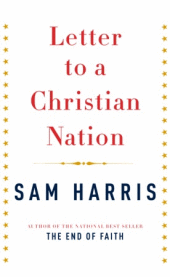
Letter to a Christian Nation from Sam Harris

image  As I have done more in-depth reading in the Atheist corpus I have discovered major differences between the modern rationalists (as they like to be called) and the elder members of their cohort. The younger generation is consumed with the rant at the expense of careful argumentation. Their approach is scattered, throwing out this and that in an attempt to create a blizzard of thoughts and words so impenetrable that it is impossible to refute them. An interesting exercise is to read non-professional reviews of the literature such as what one might find on Amazon and read the glowing paeans highlighting the lucid arguments and the irrefutable ideas of the author and then wonder what book these readers have read. Many of them read like freshman essays attempting to expound on the student’s first exposure to Nietchze; they appear to have read the book but do not have a sufficient grasp of the philosophy—or religion in the case of this book—to be able to critique beyond simple praise. They like it but don’t know why they like it.

L’enfant terrible Sam Harris offers nothing in his execrable little pamphlet that furthers the Atheist cult. That this book sold numerous copies is not surprising as it perfectly fits the currently acceptable cultural intolerance of Christian belief. As is the script for the new Atheists, Christians are caricatured as irrational, sexually repressed yokels unable to process any thought beyond the flannel-graph images of the animals marching two by two into Noah’s Ark. The reader is given an early glimpse into Harris’ logical approach just a few pages in when he says “The fact that my continuous and public rejection of Christianity does not worry me in the least should suggest to you just how inadequate I think your reasons for being a Christian are.” (p. 4) Let’s see:

P1: I reject Christianity continually and publically

P2: It doesn’t worry me in the least

C: Your reasons for being a Christian are inadequate

How does this work in support of the remaining pages of the book? That he does not believe in the tenets or evidence provided in support of Christianity is sufficient for a Christian to doubt the truth and reality of the living God and the sacrifice of Christ? I will try the same exercise:

P1: I do not like Brussels Sprouts and will tell everyone who listens (even though there is sufficient proof of their nutritious nature)

P2: That this might hurt my mother’s feelings doesn’t worry me in the least (because she is the only person I know who likes them)

C: No one should eat or even see Brussels Sprouts

Harris believes himself to be serious minded yet his approach to the topic at hand is cavalier and simply caustic. He is an angry man and attempts over and over to portray Christians in the same light. Harris hopes that by shouting relentlessly and not giving his opponents an opportunity to interject that he can make his point and somehow walk away victorious. For example, his handling of scripture is to pick a handful of particularly violent passages out of the Bible and then present them as the whole of scripture. The first thing that a freshman bible student is taught in hermeneutics is how to properly handle the texts and the primary rule is context, context, and context. Harris pulls out a trio of passages that he says direct parents to kill their disobedient teenagers. Neither a biblical scholar nor a Hebrew linguist, Harris attempts to make these verses stand alone which they do not. He does not delve into the semantic ranges of the English words he reads and their source in the original languages. He does not place the scriptures in context, immediate or larger. He does nothing except say ‘see, the bible says kill your kids. Let’s get rid of religion!’ Irresponsible at best, a failing grade in any religious studies class at worst.

Harris does not move much beyond this approach throughout the entire book. His tools are mockery and hyperbole which excite the Atheist community but simply look childish and silly when read by the educated and astute Christian. Sam would like a world free from all religion where each accidental creation is free to make his or her own morality. When my moral system interferes with his life in that world, Sam would happily agree that we can both be right and simply suffer the consequences without complaint. Mr. Harris attempts over and over to portray God and those who believe in Him as evil and the source of the problems of the world. I suggest that he look in the mirror. He and I are the source of the problems in the world. The free will that God has imbued his creatures with allows that we can choose to believe in Him or hate him as Mr. Harris does. Choices have consequences.

Digg This

Psalm 35 Vindicate Me in Your Righteousness

Vindication and Righteousness

Contend, O Lord, with those who contend with me; fight against those who fight against me.

Take up shield and buckler; arise and come to my aid.

Brandish spear and javelin against those who pursue me.

Say to my soul, “I am your salvation.” (vv 1 – 3)

New Testament Christians (those whose main reading is done in the NT) encounter a violent plea such as this from the psalmist much differently than those who spend equal time in both testaments. The psalmist—and the psalter—calls for violent retribution on a divine scale from Yahweh against those who would persecute him. Again, our modern ears trouble us. Is it right to call down fire and destruction on our enemies in the light of Christ’s instruction to love our enemies and to offer the other cheek to insults?

Perhaps we read the psalm too literally as an imprecatory piece. In the same way that we may use a journal or even our prayer life to ‘vent’ and release our personal frustration at whatever our current situation might be. The cry for justice softens a bit to seek vindication in the verses that follow.

May those who seek my life be disgraced and put to shame; may those who plot my ruin be turned back in dismay.

May they be like chaff before the wind, with the angel of the Lord driving them away; may their path be dark and slippery, with the angel of the Lord pursuing them. (vv 4-6)

So maybe Yahweh, you don’t destroy them with the Javelin but just chase them away and shame them for their false accusations. David claims innocence to the charges that his enemies are bringing against him. He has done nothing to deserve the troubles that have come his way and asks that Yahweh resolve this. He promises praise in return,

may ruin overtake them by surprise—may the net they hid entangle them, may they fall into the pit, to their ruin.

…then my soul will rejoice in the Lord and delight in his salvation.

My whole being will exclaim, “Who is like you, O Lord? You rescue the poor from those too strong for them, the poor and needy from those who rob them.” (vv 8-10)

The danger of schadenfreude leaps to mind. Shall I praise the Lord for the misfortune of others? They have fallen into their own trap after all. This is a psalm to consider carefully. It may not be one of our favorites because it raise such an uncomfortable quandary for us but those moments and hours of discomfort ultimately strengthen our bond with God. Take the psalm to Him in prayer and allow the Spirit to search your heart to discover both the right and wrong reasons that exist there.

Photo by Richard the Lyin’ Hearted

Digg This

National Day of Prayer

image

Though the folks who usually read these posts are already men and women of prayer, I hope everyone will make a special effort to focus their prayer today on things that are good for the nation in which we are blessed to live. For guidance on specific areas of attention, click over to the National Day of Prayer website.

I’m adding a special prayer for my fellow pastors. More and more each day I see them succumbing to the lure of celebrity and their ministry is becoming less about God and more about themselves. Service to God and His church was never meant to be an avenue to personal glorification so my prayer will be for more humility and less limelight.

Digg This

Why I Am Not A Christian – Four

Bertrand Russell Why I Am Not A Christian Part Three here…

IV. Having stated how much he likes the maxims previously discussed, Russell then proposes to give evidence of the deficient teaching of Jesus. He prefaces the list with a quick, derisive statement of doubt as to whether or not Jesus ever existed but given the evidence in support of His existence, I will not address that proposition here. The core charge against the wisdom of Jesus centers for Russell around the statements that Jesus made regarding the imminence of His return and the reality that it did not occur. Christians are mindful that Jesus said that no one knows the hour of future events (Matthew 24:32), including Jesus himself. Russell then demands an accuracy of Jesus which He did not demand of himself. He offers a selection of verses in which Jesus says that various events will not transpire prior to his return (Matthew 10:23; Matthew 6:34; Luke 9:27). Again, context provides us with the clear meaning of Jesus’ words and we discover, unsurprisingly that Russell again demands a literalist interpretation that favors his disdain of Christ’s wisdom. For example, in Matthew 10:23, Jesus says “When you are persecuted in one place, flee to another. I tell you the truth, you will not finish going through the cities of Israel before the Son of Man comes.” Does Jesus propose a specific deadline for His return? Certainly not in this verse as it refers to the incomplete nature of the Jewish mission, understandable in Matthew who tends to focus on the obstinacy of Israel. Perhaps Russell would have been better off to reserve his judgment of Christ’s wisdom (based on his flawed reading) in light of his earlier appreciation for Jesus’ maxims in the Sermon on the Mount.

In his final attempt to diminish the person and character of Christ, Russell turns to presenting his argument in support of a defect in the moral character of Jesus. He roots this evaluation solely in Christ’s belief in Hell. Why this was not an issue with God (the Father) earlier in the essay is not mentioned. Russell makes this interesting statement,

“I do not myself feel that any person who is really profoundly humane can believe in everlasting punishment.” (pg. 17)

This belief, combined with a supposedly “vindictive fury against these people who would not listen to His preaching” combine for Russell to bring Christ’s morality into question. As evidence of this assertion, Russell points to Jesus saying “You snakes! You brood of vipers! How will you escape being condemned to hell?” (Matthew 23:33) This verse is yet another example of a single verse being pulled from its larger context because it has the right combination of words to make the philosopher’s point. In the whole of chapter 23, Jesus is condemning the leaders of Israel because their intransigence has led their people astray. This is not an example of Jesus being personally insulted. The leaders of Israel had been given the Law and the Prophets and in the mind of Jesus, they had no excuse for their continued disobedience other than their own stubborn hearts. Condemnation is a consequence of decision, not a capricious punishment by Jesus.

The author rehearses a further litany of disconnected instances which support Jesus’ lack of morality: putting the demons into the swine, cursing the fig tree, encouraging the amputation of the hand that steals and leads you into sin. Properly handled, none of these verses even comes within a hair of evidencing the immorality of Christ. Russell would like the reader to accept these vignettes at face value but what he ends up doing is putting his own lack of ethics on display. To have the ability to read and research the theology and biblical context of the verses that he abuses for his own ends and to not do it appears to make one purposely ignorant. To further use this mishandling of scripture to mislead others into believing a false worldview is an example of the type of leadership that led Jesus to issue such vehement epithets. Russell failed to see the irony.

Conclusion

Bertrand Russell is described as a fine logician and philosopher. His essay, which became the title of a collection of related pieces, Why I Am Not a Christian makes his case based on two premises:

P1 The Existence of God is Dispute

P2 Christ is not the wisest and best man

C Christianity is false and therefore I am not a Christian

Unfortunately, this essay provides supporting evidence for neither of these premises, and because of this the conclusion proposed cannot be evaluated as true. Given the minimal research that would be necessary to properly place the bible verses in their proper context and to address the supporting arguments against God’s existence, one must wonder why a more honest treatment was not given. I understand why the Atheists are so enamored with the essay. It is quotable and the gravitas of the senior philosopher lends it an air of unassailability. On the other hand, the unethical approach that omits rather than substantiates leads me to question the intention of the author. I suppose I will be able to make a better judgment after digging further into the other essays contained in this volume. More damaging than my lack of confidence is that he has established a baseline which the current Atheist writers have elected to follow in the breezy style with which they toss arguments of eternal importance around.

Digg This