Psalm 76 – He Is Feared By The Kings Of The Earth

image

From heaven you pronounced judgment, and the land feared and was quiet–

when you, O God, rose up to judge, to save all the afflicted of the land.

Surely your wrath against men brings you praise, and the survivors of your wrath are restrained. (Ps 76:8-10)

Political correctness would tear psalms such as this one from the pages of the Bible. A cheer for the God who destroys enemies and brings rulers to heel? This sounds so foreign because we want a God who stands off at a distance and rolls His eyes at our interpersonal and international battles. No longer does God favor one nation over another or even condone the exclusivity of one religious path.

In Judah God is known; his name is great in Israel.

His tent is in Salem, his dwelling place in Zion.

There he broke the flashing arrows, the shields and the swords, the weapons of war. (vv 1-3)

Modern Christianity is personal. We call it our faith but do not extol its superiority over all others. Why not? We have here in the scriptures proclamations of God’s choice of Israel as His people and the Temple as His dwelling place. Dare we not say the same thing? God has chosen us in Christ and our soul is His dwelling place? Is this defeat for all competing belief systems?

Grace and peace to you..


image by musumemiyuki

Predestinarians Make Exceptions

imageFriends of irony: check out the discussion here as the Predestinarian Tribe talks about choosing a church. Hasn’t God already determined all actions that we will take? Why is the choice of a church somehow outside of this predestined course?

Note: notice that all of the requirements have to do with finding a church with the “proper” theological framework. Shouldn’t requirement number one be to find a church where God is present?

Jesus Manifesto by Leonard Sweet & Frank Viola

imageSweet and Viola say this somewhere near the midpoint of their new book, Jesus Manifesto: “Get a fresh glimpse of your incomparable Lord, and you will be emboldened to stop spending your life on yourself. Connect with Him who is life, and you will be empowered to deny yourself, live beyond yourself, and live outside yourself.” Herein is the key idea behind the author’s call; the Church and her members have abandoned their life in Christ in favor of creeds, theological constructs, and self-help. Rather than sermons, service, and self rooted in ‘having my best life now’ or ‘the me I want to be’, Manifesto insists on every page that we return to a Christianity rooted in Christ, from Alpha to Omega.

The call for Christians to return to our first love is all encompassing as befits the all-in-all that Sweet and Viola remind us that Christ inhabits. It is this need to remind us of our first love that drives the book. The authors reach far and wide to examine the myriad ways in which Christians have substituted self-esteem, moral improvement, theology, social justice and a whole host of other things for Christ. Jesus has been reduced to the titular center of the church. Our movement away from Him in an imagined exchange between Jesus and Peter. Does Christ ask Peter, upon his restoration, to build a leadership program, improve the self-esteem of His followers, or help them to try harder to be Christ-like? No. Jesus asks His friend Peter, “Do you love me?”

Along the entire span of Alpha to Omega there is but one question to answer about Jesus, “Do you love me?”


Thomas Nelson graciously provided this book for review.

Psalm 75 – It is God Who Judges

image Close your eyes and think of the hymns and choruses you sang at church last week. We love the Lord, We trust the Lord, We worship the Lord..I would dare say that few, if any, reflected the sinfulness of humankind or echoed the realities of Hell throughout the sanctuary.

But it is God who judges: He brings one down, he exalts another.

In the hand of the Lord is a cup full of foaming wine mixed with spices;

he pours it out, and all the wicked of the earth drink it down to its very dregs. (Ps 75:7-8)

Has the worship leader ever invited you to sings these words toward the altar, to raise this tune to God in worship? Unlikely. To modern ears this sounds hateful and judgmental and these are two adjectives that have become hidden in the Church. The reality of God’s final judgment and the separation of the sheep and goats has become unspeakable in our meetings but we must ask, do we have the luxury of softening God in this fashion?

We do no one any favors when we talk of a Jesus who will love despite our many faults yet will not judge. We lie if we do so. This psalm may appear to revel in the coming destruction of the wicked but it is in truth, a praise song. It is a song of trust, not an imprecatory hymn. Israel trusted beyond their present, visual circumstances that Yahweh would have the upper hand. We must express this same trust in the Lord and, in doing so, express to those who risk destruction that there is another way. We praise Him for His love and His loving justice.

Grace and peace to you..

image stevec77

She Loves You Ya, Ya, Ya

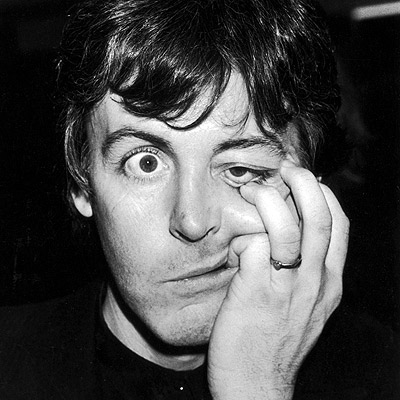
Paul McCartney Paul McCartney flashed his hip bona fides last week when he took a cheap shot at the intelligence of former president Bush, igniting peels of laughter throughout the White House and those in attendance. An immediate demand for an apology was made but the silence of the has-been bassist is loud and clear. What do you suppose Sir Paul would say if Screeching Weasel were playing a show at Buckingham Palace and Ben referred to the Queen as a ‘tossing Limey’? Probably nothing, right?

Aside from his arrogant boorishness, do we really care what wisdom Sir Paul has to offer?

Hey Jude, don’t make it bad…

Continue reading “She Loves You Ya, Ya, Ya”

Psalm 74 – Rise Up O God and Defend Your Cause

image

Where do you turn when everything around you has crumbled to ruin? Whether or not it aligns with reality, we’ve all felt at least as though everything was gone. Trouble has a way of compounding in our minds until all we can see is ruin.

Little has changed throughout history.

The psalmist was looking about and saw nothing but ruin. His people were in exile, the temple lay in ruins, and the promised land taken from them. Everything that they had built their self identity upon had been snatched and the psalmist cries out in desperation for Yahweh to restore them.

Why have you rejected us forever, O God?

Why does your anger smolder against the sheep of your pasture?

Remember the people you purchased of old, the tribe of your inheritance, whom you redeemed—Mount Zion, where you dwelt.

Turn your steps toward these everlasting ruins, all this destruction the enemy has brought on the sanctuary. (Ps 74:1-3)

We meditate on these verses and, with a little perspective from time and distance, we answer back. You failed to keep up your end of the covenant! Why do you cry out to God we say, when you know you were responsible for the ruin that your life has become.

And then that moment of self-realization hits us.

We too are responsible for those black nights in which it appears that all is in ruin and that the Lord has abandoned us. Is it more likely that someone two-thousand years distant from us will look back on our plea and say, what is wrong with you? You are the one who moved away from God, not He from you. 

Grace and peace to you

image usonian

Ted Haggard (mis)Interprets James

imageAfter doing immeasurable harm to the brothers and sisters of New Life Church, the members of the National Association of Evangelicals, and to the Church of Jesus Christ at large, Ted Haggard is again placing himself into a leadership position as he plants the new St. James church in Colorado Springs. The new body draws its name from the Epistle of James from which Haggard quotes verse 2:17 “..faith by itself, if it is not accompanied by action, is dead.” and witnesses to the number of times in the past three years that he and wife Gayle have been the recipients of love in action. This is a noble application of the verse Ted, but what is the definition of faith? Is it to sin boldly so as to receive more grace?

Apparently he didn’t read any further in the book. Verse 3:1 of this practical letter says “Not many of you should presume to be teachers, my brothers, because you know that we who teach will be judged more strictly.” There’s a higher standard Ted, a standard for those who influence the lives of so many others. “We all stumble in many ways.” (3:2) How true! None of us is sinless but we pursue holiness with a vigor that is unmatched.

And we do it every day to the furthest extent of our Spirit-led abilities so that when we step up to pulpit we have the integrity to look into the eyes of those that God has seated before us and to speak the Gospel into their lives…

…without having to worry about our hidden lives being revealed.

Are those who take to seats in St. James church going to know that Haggard has been pursuing holiness rather than drugs and sexual liaisons? What accountability will he have this time that he did not before? The nagging question that burns in the minds of many right now is whether or not the standards of holiness will be relaxed to accommodate the very behaviors that precipitated his previous fall. Will the standards be such that God will be present when the body is gathered?

As a brother in Christ I take seriously my responsibility to Ted. I love him and extend all measure of grace to him and his family and pray for nothing but redemption in his life. I believe that the Lord’s grace has blanketed and forgiven his sin and worked to knit together the Haggard family and make it whole. On the other hand, I don’t believe that he should be stepping back into the pulpit and leading a new body at this time. Had he placed himself under the leadership of another pastor and the accountability of another Elder board for some time to demonstrate a restored soul and measure of integrity this move would make sense but not this way. If God has called him back to the pulpit then I’m moving out of the way as fast as I can. If Ted has called himself back to preaching, it’s my responsibility to take his measure in accordance with the scriptures.

“Consider it pure joy, my brothers, whenever you face trials of many kinds, because you know that the testing of your faith develops perseverance. Perseverance must finish its work so that you may be mature and complete, not lacking anything.” (James 1:2-4)

Radical Strength from the Discipline of Solitude

Then Jesus was led by the Spirit into the desert to be tempted by the devil. After fasting forty days and forty nights, he was hungry. The tempter came to him and said, “If you are the Son of God, tell these stones to become bread.” (Mt 4:1-3)

image

Dallas Willard reminds us that “solitude is the most radical of the disciplines for life in the spirit.” Until we have developed the discipline of seeking out solitude we cannot know the full presence of God unfettered by the myriad distractions of life. We pray and our thoughts wander to the other things on our desk or the sound of the neighbor’s dog barking. We worship but break the communion with the spirit by focusing instead on the bright shirt worn by the man three rows ahead. Submission is weakened by ego and meditation interrupted by scattered thought. The Christian who separates herself into the desert finds herself distanced from these enemies of discipline and completely open to the descending presence of the Lord.

The benefits of solitude extend to our other spiritual disciplines. The account of Christ entering the desert to be tempted is often read quickly to get to the temptations but this does a disservice to the text. We take note of the fact that Jesus seeks out the solitude for forty days before being tempted. He immerses Himself in the full presence of his Father and the Spirit to build the strength necessary to face the tempter. He fasts, removing all external influence so that he is single-mindedly prepared to face whatever will come. We can learn from this to build our own spiritual muscle. In solitude we know nothing and no one other than God. He becomes our sole center without any opportunity for distraction.

Our desire for solitude will be misinterpreted by others. Our friends and loved ones will want to know why we seek to be apart from them but we must be diligent in pursuing our life of discipline. Ultimately, the Father deals with each of us individually and corporately but we are not free to substitute one for the other. We must be willing to walk away into the desert leaving companionship and distraction engendered by those who surround us even though they have our best interests at heart.

Grace and peace to you..

image flydime

Seeking Solitude

“Let him who cannot be alone beware of community….Let him who is not in community beware of being alone. . . .Each by itself has profound pitfalls and perils. One who wants fellowship without solitude plunges into the void of words and feelings, and one who seeks solitude without fellowship perishes in the abyss of vanity, self-infatuation, and despair.”  Dietrich Bonhoeffer Life Together

image

Christians tend to think of solitude in spatial terms, as a place where one can be alone. The spiritual discipline of solitude approaches it as an attitude, as a state of mind. As we apprehend inward solitude we dispense with the normal fear of being alone because we know that we are not alone. We are in the presence of our Savior and as we are quieted our hearing is enhanced. We seek solitude as our Lord did to hear the quiet voice of the Father in the breezes that swirl around us.

Modern culture is especially hostile to solitude. Not only are we bombarded everywhere at every moment with dozens of noise and distractions, our constant connectivity has made us ever more reliant upon our ability to communicate with words. We struggle with silence, Foster reminds us, because it strips us of the power of our words. Without our words we feel out of control and as though we are unable to justify ourselves.

One of the primary fruits of seeking solitude is that we will become free to let God be our justifier. Stripped of our feeble language we must trust in the God who is our rock, our defender and redeemer. We start with small steps seeking out little moments of peace in which we deliberately commune with God. We learn to trust the silence and let go of our need for words. A place of solitude can be sought out to not only be quiet, but to place ourselves far from others as our lifeline recedes in the distance. Alone in the silence, we have no way to hide among the rocks and can truly be confronted by God.

image anoldent