Sauntering into the Sanctuary

image

After expressing his displeasure at improperly brought worship ( see Nadab and Abihu – Lev 10 ), God commanded that the following steps be followed in meeting Him on the Day of Atonement.

  1. Locate a young bull
  2. Locate a ram
  3. Bathe thoroughly
  4. Put on the linen tunic
  5. Put on the linen undergarments
  6. Tie the linen sash around waist
  7. Put on the linen turban
  8. Locate two goats without blemish
  9. Locate another ram
  10. Sacrifice the bull for the atonement of the priest and his household
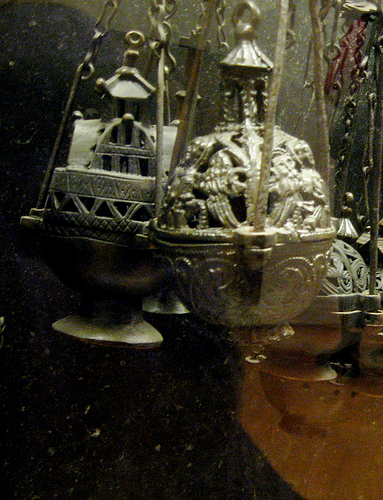
  11. Light a censer get two handfuls of incense
  12. Take these implements behind the curtain
  13. Put the incense in the censer to create fragrant smoke, protecting the priest from direct sight of the Ark and the presence of the Lord
  14. Sprinkle the bull’s blood seven times
  15. Bring the goats to the entrance of the Tent of Meeting
  16. Cast lots to determine which goat will be the scapegoat
  17. Sacrifice the goat whose lot fell to the Lord
  18. Repeat steps 11 to 14 with the goat’s blood
  19. The priest will go to the Altar
  20. Sprinkle blood of both the bull and goat on the Horns of the altar seven times
  21. Bring the scapegoat out
  22. Lay both hands on the goat’s head, assigning all of the sin of the nation to the goat
  23. Another man will take the goat and shoo it away into the desert
  24. The priest will return to the Tent of Meeting
  25. Remove the linen garments
  26. The priest will bathe and dress in his regular clothes
  27. Sacrifice the burnt offering for himself
  28. Sacrifice the burnt offering for the people
  29. Burn the fat of the sin offering on the altar
  30. The man who released the goat will bathe and wash his close before returning to camp
  31. The remains of the bull and goat must be taken outside of the camp and burned
  32. The man who burns the remains must bathe and wash his clothes before returning to camp

The meticulous and precise nature of these worship instructions should cause us to pause and consider the way in which we will enter God’s presence this Sunday. Do we toddle in with no more thought than if we were buying a gallon of milk?

There is great privilege in being the children of God, but also great responsibility.

Grace and peace to you.

image jacsonquerubin

Psalm 108 ~ Awaken the Dawn

imageMy heart, O God, is steadfast; I will sing and make music with all my soul.

Awake, harp and lyre! I will awaken the dawn. I will praise you, Lord, among the nations; I will sing of you among the peoples.

For great is your love, higher than the heavens; your faithfulness reaches to the skies. (Psalm 108:1-4)

In a short cry for physical aid, the psalmist calls us centuries later to consider the urgency of our spiritual motivation. Are we driven to rise in the darkness, to awaken the dawn in fervent worship? Do we linger in the comfort of our bed, seeking additional moments of slumber, delaying our appointment with God until a more convenient moment? Many are the nights in which the Lord beckons us awake, seeking our company and wanting to share a moment of communion with us. How will we respond?

Grace and peace in the Spirit of the Lord to you.

image kotcha

Church is Not a Spectator Sport

Why Church Matters by Joshua Harris

image“…When your heart begins to beat for God’s glory and God’s people and you begin to glimpse His longing to visit you, Sunday changes. Actually, it becomes something extraordinary. Something sacred. Something essential.”

Let’s get this out of the way right up front; this is a delightful gem of a book that belongs in the hands of every person sitting in the pews on Sunday. Distracted by something that happened at home. Bored by the preacher. Perturbed at the fact that the praise team went astray from the hymnal again. All of these feelings and more are brought into the church for the most important hours of the week, and we wonder why our body doesn’t seem to be more dynamic, activist or interesting.

Could it be us?

It is far too easy for modern Christians to view church from the perspective of a shopper or spectator says Joshua Harris. Our attitude is what can the church do for me or does this church serve my needs. With a little review of the Bible and our hearts, he says, we can ask different questions: what can I contribute to this church or for what purpose did God place me and my family in this church? In seven brief chapters, Harris provokes Christians to view the bride of Christ in a different light, understanding how important the privilege of worshipping and serving together is.

There are a number of volumes that delve into this same topic in much greater depth but that is not the purpose of this volume. Harris has written a conversational book, quick to read and digest that will get the reader thinking. If you don’t see yourself on one page, read a few more paragraphs and you will see something that reminds you of an attitude that may have flirted with. Pastor Harris is looking you in the eye and asking you to think differently. Think about what it means to be a part of a family where you are important, missed when you are absent and cared for when infirm.

I am grateful to Waterbrook Multnomah who provided this book for review.

Of Pastors, Private Jets and Being a Watchman

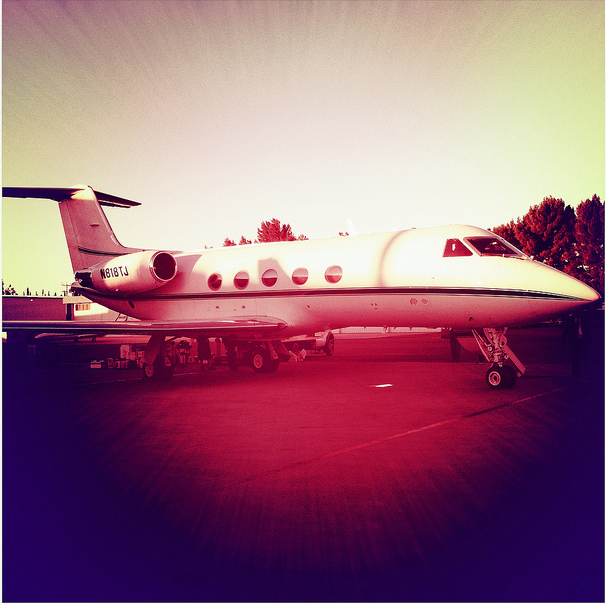
imageI flew in to our prayer meeting this morning on my private jet. A car service whisked me from the airport to the doors of the sanctuary at 5:55, just in time to hear the first notes of the hymns that were raised by the choir before setting the day’s prayer concerns before the congregation. Two hours later I rose from my kneeling position, noting that I was the first to leave of the hundreds of souls gathered, convicting me all over again of my accountability for the spiritual welfare of those God has brought me to shepherd.

Okay, that wasn’t my reality, but it might have been some pastor’s morning!

The truth is I drove my 12 year old creaky pickup truck to the church, arriving at 5:30 to turn on the lights, open the doors and start the computer and projector to display the concerns of the church for the gathered. I don’t do this for my glory or to be noted as a servant. I do it out of love for my God and my church. (We, your pastor included, don’t do this for our glory or to be noticed. We do it out of love for God and Church.) We do what we do out of love for you.

imageThe book of Ezekiel can be a tough read, but it can be a convicting read as well. Turn to chapter 33 and read it with your pastor in mind. He is called to be the Watchman, accountable to God for your spiritual welfare. God has called him or her to warn you of the roaming lion or the sweeping sword.

But if the watchman sees the sword coming and does not blow the trumpet to warn the people and the sword comes and takes the life of one of them, that man will be taken away because of his sin, but I will hold the watchman accountable for his blood.  (vv 33:6)

Few pastors who take passages like this seriously would do what they do, giving sacrificially of their lives for you in return for 30 pieces of lucre. One need only turn the page to the next chapter to see a warning against taking on the role of spiritual shepherd strictly for material gain or personal status. As the prophet records:

This is what the Sovereign Lord says: Woe to the shepherds of Israel who only take care of themselves! Should not shepherds take care of the flock? (vv 34:2b)

Pastoring with love and humility, I wish you grace and peace.

Learning to Kneel – Three

image

So God created man in his own image, in the image God he created him; male and female he created them. Gen 1:27

The first two chapters of the Bible are a commanding call to worship. In these verses we experience the beginnings of God’s revelation of Himself to His creation, a revelation that drives us to our knees as we encounter it. The first words of revelation point us to recognizing the person, presence, power, plan and purpose of God. As our personal relationship with God intensifies, our instinctive response is to worship.

The person of God is revealed through the creation account. It reveals that God is a creator, fashioning something (everything) from nothing. He shows himself to be sustainer, life giver, lover and provider. God’s divinity is on display; no greater being commanded Him to create or what to create. He acts of His own volition. He reveals Himself to be desirous of relationship with another like Him, thus man.

The presence of God reveals that we were created in such a way that we might be aware of His constant presence. Dulled senses can allow us to avoid recognizing it but it grates against our created state. When we allow ourselves to notice the presence, our natural response is to worship.

The power of God is revealed in the magnificence of His creative process. He spoke, it happened. He created, He review and He blessed. All creation sings His worship. Have you ever seen a sunset, the waves against the coast or the intricate society of an ant hill and not seen creation bless its creator?

The plan of God is revealed in His creation. Time propels the plan forward. It demonstrates a God that is moving creation toward an objective. The Bible reveals the objective, a new creation of Heavens and earth. Worship is our part of this plan.

The purpose of God is revealed and that purpose is communion with humankind. He created us with balance as our natural state: labor/rest, worship of the creator/enjoyment of the creation. The purpose is to have companionship with His creation and to have it respond appropriately.

The person, presence, power, plan and purpose of God in creation call us to a single response, worship.

Grace and peace to you.

image Lawrence OP

The Spirit Comes Bearing Gifts

imageThe wind blows wherever it pleases. You hear its sound, but you cannot tell where it comes from or where it is going. (John 3:8)

Doctrine regarding the spiritual gifts is a generally accepted component of the life of the Church. It is recognized that the Holy Spirit empowers redeemed individuals with abilities useful to building up the Body. Individual Christians may be the recipients of one or more of these gifts, evidence of the work of the Spirit in their lives.

Minor intramural skirmishes occur over the enumeration of the gifts and whether Apostle, Teacher-Pastor and prophet are gifts or offices. When it comes to the miraculous gifts – tongues, prophecy and knowledge- however, hard lines are drawn between those who interpret the Scriptures to say that these gifts have ceased and brothers who insist that the Spirit continues to grant these gifts today.

If the boundaries surrounding this theological disagreement were hard and fixed, the various positions would not demand discussion. The problem that arises again and again however, is that the fluid nature of the boundaries creeps from non-essential territory into the categories of core doctrines. The cessationist position may insist that belief in the continuation of gifts shows a sloppy doctrinal position that they assume is present in other facets of one’s theology. A Pentecostal segment of the body states unequivocally that without evidence of glossolalia, your very redemption is in question. Each represents an extreme, but both affect the witness of the Church.

In a series of posts to follow, we will look at four general positions along the continuum of belief. In general, the positions break out as follows:

  • Cessation – The miraculous gifts have ceased being given.
  • Pentecostal/Charismatic – The miraculous gifts continue to be given.
  • Open & Cautious – The gifts may be given by a sovereign spirit as He desires. Their issue is not normative.
  • Third Wave – The proclamation of the Gospel is always accompanied by “signs and wonders”

Grace and peace to you.

Rumors of Faith

image

Are we simply content to watch the American church limp into eternity? Are you ready to drift through the rest of your life, lulled and softened by our comfort and ease?

Darren Whitehead and Jon Tyson, the authors of Rumors of God, surveyed the landscape of the American church and pronounce it still alive beneath the surface. Finding niches of active faith in unexpected places, they see life where many say none exists.

Many have proclaimed the ‘Church’ in America dead or drifting. From some vantage points, this might be the perception that an observer would gather. But crawl under the hood, kick the worn tires and turn the key to the slow-revving starter and you gain a different view; the Church in His people is more than alive and well.

Whitehead and Tyson collect a series of illustrations together, finding signs of vigor in the individual faith of Christians across the Church. Separating these individuals from the Church in its catholic sense creates a false impression though. The heart of the Church, regardless of how we segregate into individual assemblies, is the movement of the Spirit within His people. Perhaps a perspective gained from churches not so far removed from the norm would present a more vibrant body of Christ.

I’m grateful to Thomas Nelson who provided this copy for review.

Psalm 107–Do Tell

image

Let the redeemed of the Lord tell their story – those he redeemed from the hand of the foe, those he gathered from the lands, from east and west, from north and south. (Ps 107:2-3)

The culture that we have developed within the Church puts an emphasis on the shiny, clean you. Reborn, redeemed? Give effusive thanks for that, Christian!

Let them give thanks to the Lord for his unfailing love and his wonderful deeds for mankind for he satisfies the thirsty and fills the hungry with good things. (vv8-9)

The psalmist reminds us, however, of the value of recounting the journey prior to redemption. Others benefit directly and indirectly from the journey, from seeing the hills and valleys overcome. They gain a deeper perspective on redemption when they see sin beaten, sin removed, sin forgiven and washed clean. The psalmist tells of the wandering, the failure, the enslavement, the loss and greed—all forgotten by Yahweh in an instant when His people focused their devotion on Him.

Let the one who is wise heed these things and ponder the loving deeds of the Lord. (v43)

Grace and peace to you.

image Lewis & Clark College

Learning to Kneel–Two

imageDoes the grace, mercy and love of God preserve us from suffering the same fate as that visited upon Nadab and Abihu? Do we no longer heed the words of Moses paraphrasing his experience?

Among those who approach me I will show myself holy;

in the sight of all the people I will be honored. (Lev 10:3)

Worshippers read this passage and cannot help but  wonder why God would refuse to be worshipped. The young priests added incense to their censers, lit them and swung them back and forth, spreading the pleasing aroma heavenward.

Only to have it received by Yahweh as the stench of death.

So offensive was the smell to God that he sent fire down the same path that the smoke travelled, instantly killing the priests as one might remove an annoying gnat. So rapid was the response to the impropriety of worship that Aaron, the mouthpiece of Moses, is struck silent.

In our modern worship mindset we ask, why would God be offended at their worship? Why would God be offended at any worship? The passage is silent about God’s reasons, nor are we in a position to demand explanation. God alone sets the standards for worship. We can speculate as to the details of the breach. Perhaps they entered the sanctuary unprepared to worship or came at an inappropriate hour. The fire that lit the censers may have been improperly sourced or unholy. The incense might have been similarly profane.

We don’t know the reasons for God’s offense in the case of the priests, but the encounter must cause us to reflect upon our own worship. Are we equally impious?

The words of Moses are a warning to communities stretching into our own day. We must learn to worship properly so that we may worship properly. 

Grace and peace to you.

image moria

A House Divided

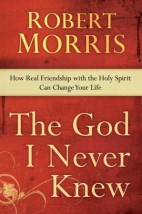
The God I Never Knew by Robert Morris

image

Pastor Robert Morris adds to growing library of works about the often misunderstood and sometimes forgotten third member of the Holy Trinity. This book is his attempt to clear away some of the mystery and confusion that surrounds God in this person.  This volume succeeds wildly on one level, but struggles to find its footing on another.

The first half of the book having to do with the reality of the Holy Spirit and His work is a good addition to the growing attention the Spirit is receiving. It is scriptural and doctrinal, and does a superior job of presenting the reality of the Spirit to a church that is desperately in need of an outpouring of the Spirit’s power. In addition to the fine explication, Morris applies the truths to our daily lives in way that makes us desire more and more of the Spirit.

Sadly, the second part of the book doesn’t hold up the expectations set out in the first. After adhering close to the Evangelical median in his discussion of the reality and work of the Spirit, Morris tips into a scattered series of chapters about separate Baptisms in the Spirit and the miraculous gifts. An extensive presentation of these topics is beneficial to have, but the way in which the author strikes, fires off an anecdote and then moves on is less than satisfying.

Inconsistency aside, The God I Never Knew can serve as a fine introduction to the Spirit or a reminder of the power that He brings to the believer. Some will find the theological diversions unnerving, but understanding the doctrines contributes to the growth of all Christians.

I’m grateful to WaterBrook press who supplied this copy for review.