Peace Makers

Peace is the aim of war. With such an important intention, we must commit ourselves then to carefully defining the word. What is peace? By what standard do we infuse the word peace with meaning? A philosophical approach to defining peace may consider many competing values to derive meaning for the term. The Christian must see only shalom.

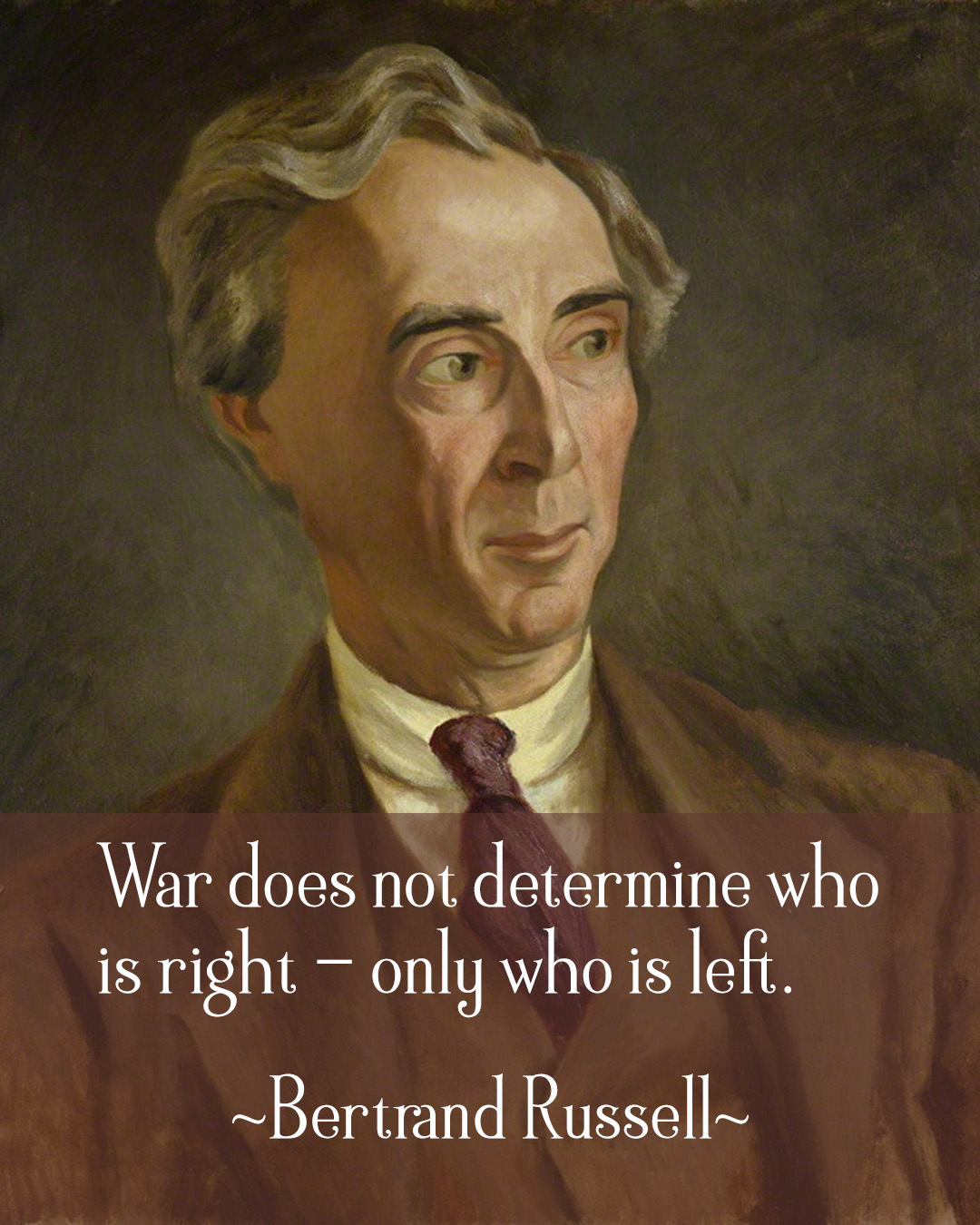
The defeat of an aggressor may win peace, but surrendering to an attacker may also result in the same peace. Going to war to overcome existential evil may bring about the conditions for peace. Ceding territory or sovereignty might be the seeds of peace. How we define peace, and the experience of gaining or having peace, draws from almost infinite perspectives of winners and losers. Peace as the aim of war is a complex topic. As we work to understand the relationship between war and peace, we often conclude, as President Lyndon B. Johnson did, saying, “In modern warfare there are no victors; there are only survivors.”

The nuance required in thinking about a definition of peace demands a careful approach and the use of wide-ranging sources. If peace is the aim of war, can we have in mind a condition that is simply defined as the cessation of kinetic conflict? Is tranquility or calm composed solely of the absence of rancor? A simple explanation of the term will probably default to a dictionary definition that says peace is calm in personal circumstances and a state of concord or harmony when mentioning the topic in the geopolitical sphere. But what—we must continue to ask—will we do and not do to achieve this experience of peace? What cost will we pay? Is tranquility achieved through “any means necessary” an acceptable approach? Philosophy gives us myriad arguments from which to build our understanding and definition and the range of perspectives will lead to many a rabbit hole. Some philosophers will proffer the notion that seeking peace through any level of violence, destruction, and the loss of human dignity needed is acceptable to success. Peace—declared in these terms­ ­—as an aim justifies a full display of might. We will also have to consider an equal number who say that peace is best achieved only through pacifism in all its range of meanings. One-sided definitions are common, but are they ideal?

Christians should derive their description of peace from different sources. The Bible is to be the primary reference, and the definition will expand through the teaching of God’s people through history. Two words primarily define peace in the Bible: shalom in the Hebrew and eirene in the Greek language texts. Shalom is a state defined by much more than the absence of conflict. It carries the meaning of completeness, of a state where everything is as it should be. The word shalom carries the weight of God’s design for the world He made being ‘good.’ It is the shalom that is disrupted by the Fall in the Garden, and it is the restoration of shalom that is the aim of God’s redemptive work in history. Eirene carries the same definition in biblical Greek as a noun, but key texts use the word to describe those who pursue peace. Jesus famously declares “Blessed are the peacemakers [ερηνοποιοί]”, blessing those who actively pursue peace in conflict to the good of all parties. Devoting oneself to the pursuit of peace brings the soul into accord with the heart of God in Jesus as Paul writes in Colossians; “For in him all the fullness of God was pleased to dwell, and through him to reconcile to himself all things, whether on earth or in heaven, making peace [ερηνοποιήσας] by the blood of his cross.” (1:19-20)

Shalom and its cognate, eirene, have their root in the heart of the God of Peace [Romans 15:33; 1 Thessalonians 5:23]. This means that any definition we use must reflect the holistic concern that God has for all of creation. There are no winners or losers in war in God’s vision of peace. There are only image-bearers on both sides whom He wants to have an all-encompassing peace. And this peace is multifaceted. It is tranquility and security that are matched to justice and wholeness. The defeated need to be treated justly, as this gives them their sense of security. This security contributes to the tranquility in which they rest, not having to be constantly seeking to right injustice at the hands of the aggressor. A life of serenity is possible through the restoration of and provision for human dignity. Ensuring this justice and maintaining this dignity is the responsibility of the victor. God demands of His people that they live out his heart of shalom.

To speak about war, we must be clear about our definition of its aim, peace. Peace as an aim of engaging in war should govern the decision to go to war and the manner in which we fight in war. The choice to go to war, particularly as an aggressor, must include the consideration of how the violence will conclude in such a way as to ensure the dignity of the defeated people. Many people may read this prescription as idealistic to a fault, especially in this day and age of weapons that can effectively destroy the world many times over. Christians are not given the option to view this humanizing perspective as unrealistic. We must pursue every aspect of life, including war or surrender, with the heart of God as our primary source of definition and our guiding principle.

Gideon Grows Weaker Still

Gideon was surely puzzled at God’s move to weaken his army, the band of men who were going to save Israel. Yahweh instructed Gideon to diminish his force by sending all those who were trembling in fear to go home, leaving the army twenty-two thousand men lighter. As he watched the men file away, Gideon surely thought that God would be satisfied until the word came from Yahweh, “There are still too many men.”

image

The fearful, hesitant Gideon is faced again with the challenge to trust Yahweh in his weakness. He is far from the bold warrior of legend, being dragged against his will into this leadership, God has diminished the force that has followed him and now, Yahweh demands further attrition from his forces. While thoughts of turning and running back to Ophrah must have coursed through his mind, the Judge follows the Lord’s lead and invites his men to the spring for a drink. It is here that Yahweh will sift them out for him.

Yahweh will sort out the fighters based on the way they drink; some like dogs, plunging their face into the water and others, lifting the water to their vigilant faces and drinking from their cupped hands. Does God favor one method over the other? Contrary to many who have interpreted the scriptures through the centuries, the text does not give us this option. Yahweh’s method and choice of the warriors is purely his arbitrary choice and we must respect it. Certainly, Gideon does. In the arbitrary nature of the decision is the secret that God wants to convey; the 300 are not a sign of Israel’s strength, they are a sign of her weakness in the face of Yahweh, the one who can truly save.

This episode in the Gideon cycle explains so much in our own lives. How many times have we followed the leading of God only to find Him putting up barriers in our way, weakening us? Probably more than we would like. In some cases, we find that after we have accepted one barrier or humbling we find another one put in our way. We question whether or not we are truly following the proper leading. Perhaps the question should be, are we thoroughly dependent on God? Are we still hoarding some of the glory for ourselves?

Nothing to Lose by Lee Child

Hope and Despair Lee? Hope and Despair?

The West is riddled with little towns and the remnants of other one-time settlements and they often have interesting names. Many of them point to historical or geographical facets of the community that someone, sometime thought were important. Cripple Creek for example, was said to be named by a rancher whose calf was crippled by an ill-timed jump over a creek as a result of an accidentally discharged six shooter. Bombay Beach was going to lure vacationers from the French Riviera to the edge of the Salton Sea until the salt-in-the-sea combined with torrential rainfall in the 70s overtook man’s ambitions. Given the long, long list of colorful place names that Lee Child could have used to place his latest Jack Reacher thriller in, he settles on the imaginary neighbors Hope and Despair. [CLICHE ALERT…CLICHE ALERT…CLICHE ALERT]

image Reacher and his toothbrush are traversing the country from Maine to San Diego when his hitchhiked ride drops him on the road to a company town named Despair. He makes note of an important marker found where city or county lines meet, the change in the roadway. The road from Hope is smooth, well built, and recently blacktopped. At the expansion joint where Hope relinquishes the thoroughfare, the road becomes pitted, worn out and obviously constructed at minimal expense. Upon walking into town, Jack notices immediately that this was not a town with a huge tourist draw. Sitting in the only cafe he can find, Reacher is pointedly ignored by the waitress until the welcoming committee notices him. As they surround him, not to give him the key to the city but to tell him to leave, their fate is sealed. Those of us who know Jack Reacher know that the fastest way to broken bones and contusions is to tell him to do something without an adequate explanation.

The rest of this fast paced thriller follows Jack as he seeks to discover the reasons why people are so adamant about keeping non-locals out. Utilizing a temporary romance in next door Hope, Reacher learns more than he wants to know about the recycling plant that is the center of life in Despair. In the course of his nosing around we are exposed to Reacher’s/Child’s feelings toward the Iraq war as the snooping intertwines depleted uranium, army deserters, veterans brain injuries, the end-times, and preacher/town hoss. These positions might counter your own but, if you can put that aside, this is a typically good Lee Child effort. Reacher is himself throughout, able to take on and defeat multiple assailants, strangely attractive to women, and tack sharp in his detective skills. Once you are drawn into the story, you won’t stop until you cross the 400 page mark.

I’m hoping that the cliches were simply the result of Child wanting to make his anti-war stand through his hero Jack Reacher and that the next book will return to the generally smart character and fantastic pacing. If you haven’t met Jack yet, I would recommend starting with either Bad Luck and Trouble or The Hard Way to get a better feel for his personae before you draw any conclusions from this effort alone.

Cue Anti-Flag – Depleted Uranium is a War Crime

Christians and Nonresistance

Many times in the discussion of Christians and their attitudes toward war, nonresistance and pacifism get tumbled together as a single doctrine without distinction. In fact, nonresistance has numerous facets which make it unique from the doctrines of pacifism. Nonresistance appears to take a broader view of one’s responsibility as a citizen of a country and of the kingdom when it states that Christians should strive to avoid conflict as a daily practice but may, in times of war, serve their fellow citizens through military service in a noncombatant role. Matthew 5:39 gives the doctrine its name;

But I tell you, Do not resist an evil person. If someone strikes you on the right cheek, turn to him the other also.

This verse can lead a reader astray into thinking that the Lord has called His followers into a passivity in the face of evil but there is much nuance that confers a more positive and active sense to the command. The Christian’s initial order of business upon regeneration is to begin the process of separating him/herself from the world and its ways, including the common use of force to accomplish the objectives of living. The Christian also begins to develop an awareness that they are citizens now of a different kingdom of a higher order while being sojourners in the world. Behavioral expectations come from the former to be practiced in the latter.

Jesus said, “My kingdom is not of this world. If it were, my servants would fight to prevent my arrest by the Jews. But now my kingdom is from another place.”

While we sojourn here in this world, the Lord does not however command us to disengage from it. On the contrary, we are obligated to use spiritual means to bring blessing and do good for others (Rom 12:17-21). This said, the most crucial component of the new thinking of a regenerate person is to be directed toward the recognition of a new citizenship and the outward display of that privilege. Through the differences that are to be noted in Christian behavior, an evangelistic awareness is created among non-Christians, attracting some back to the Cross. They are at the center of God’s will and demonstrate their full faith in such. Some may have to pay with their lives for the privilege of following the Lord while others may be rescued by supernatural means. In either case, the testimony that remains will bear witness to greatness of God.

The distinction between nonresistance and pacifism comes in the interpretation of a couple of points. The first is the separation of the Church from the state. The commands of the Bible are written to the regenerate believers who, through their belief, obligate themselves to following and applying these commands. The pacifist will say that because violence is prohibited for the Christian, it is therefore prohibited for the government as well. Second, while Christians are citizens of God’s kingdom and look forward to eschatological restoration of that kingdom again on earth, they retain a responsibility to the state in which they live. The citizen must meet their obligations to support the state (Rom 12:1-7) (except as armed combatants) trusting that the end of the age will come at its appropriate time and usher in the new. This important distinction allows the nonresistant Christian to serve their government in non-combative roles for the common good.

The unbelieving world gives no credence to the doctrine of nonresistance because it is so contrary to the thinking and practice of the unregenerate. It appears that many fellow Christians also share this disdain of Christians who seek to follow the path of nonresistance. Those against the doctrine posit three objections against it. First, they point to Israel as a warring state as recorded in the Word of God. It is to be noted that Israel was a state of the world and an unregenerate people following a different set of commandments. Second, there appears to be a contradiction between the commands of Christ and his call to nonresistance. Critics point to passages such as Matthew 10:34 “Do not suppose that I have come to bring peace to earth. I did not come to bring peace, but a sword.” Careful exegesis shows that this passage focuses on spiritual division and not war; the same practice usually clears up the confusion surrounding other passages (Luke 22:35-38, 22:50). Finally, there is difficulty in defining the correct relationship of believers to civil government. This is perhaps the most challenging argument against the practice, sometimes leading to charges of hypocrisy. Romans 13:1-7 can be referenced as defining the proper relationship.

Christians and Pacifism

The church is the spiritual, social, and political body that gives its allegiance to God alone. As citizens of God’s kingdom, we trust in the power of God’s love for our defense. The church knows no geographical boundaries and needs no violence for its protection…As disciples of Christ, we do not prepare for war, or participate in war or military service. The same Spirit that empowered Jesus also empowers us to love enemies, to forgive rather than to seek revenge, to practice right relationships, to rely on the community of faith to settle disputes, and to resist evil without violence. “Confession of Faith in a Mennonite Perspective”

The Anabaptist tradition within the larger Church is perhaps the most well-known body of pacifist believers, though the practice is not confined to these Christians. Pacifism, the refusal to engage in military action or violence in revenge or defense, is a radical practice. In the larger world of non-believers, Just War, and increasing violence, the refusal to visit violence on those labeled ‘enemies’ immediately sets one apart from the society norm and expectation. The radicalism extends to our physiological makeup; when we are about to become the victim of a violent act our body and mind naturally seek to act in self-preservation, even to point of exterminating the threat. The Christian who follows the path of pacifist action must strongly apply their allegiance to Christ alone at the expense of their citizenship in the state and more importantly, they must train their mind and body to submit to the suppression of its natural response to react to violence. Dr. Buschart records,

“Anabaptists were the most violently persecuted Christian movement of the sixteenth century, being pursued by both Roman Catholic and Protestant forces, in conjunction with civil authorities. Consequently, Anabaptists were were confronted by the demand to practice in the most radical ways this practice of nonresistance, and many practiced the principle to the point of suffering a martyr’s death.” Exploring Protestant Traditions

The source of the practice of Christian pacifism is deeply rooted in the Gospel. From the mountainside, Jesus said in contrasting the old and new ways  “You have heard that it was said, ‘Eye for eye, and tooth for tooth.’ But I tell you, Do not resist and evil person. If someone strikes you on the right cheek, turn to him the other also.” (Mt 5:38-39) Later in the garden he  cautioned Peter “Put your sword back in its place, Jesus said to him, for all who draw the sword will die by the sword.” (Mt 26:52). The Old Testament, often derided as being blood-soaked and hyper-violent, is not neglected either. Micah speaks eschatologically, pointing us forward to the era of the Christ  when he says “They will beat their swords into plowshares and their spears into pruning hooks. Naiton will not take up sword against nation, nor will they train for war anymore.” (Micah 4:3)

Over and above the words of Jesus, the pacifist follower will point to the life of the Lord as being completely non-resistant and peace seeking in His lifestyle. With Christ as our center and our revelation, believers are to develop their ethics, morality, and behavior from His example and teaching. These will often run counter to the demands of the state but we are called to be theological thinkers, examining the decisions that we must make in the light of our higher priority membership in the kingdom of Christ. It is to this that our primary allegiance is required teach the pacifists.

The early Church is historically pacifist and there is scant, if any, evidence of early Christians engaging in warfare. There was a gradual acceptance of military service through the centuries with noted objectors – such as the Anabaptist movement – here and there through the records. In our modern era we see the pacifism practiced in Martin Luther King who confronted the violence he encountered with an equally vehement non-resistance. King worked from five principles which fit human bio-social understandings effectively into the notion of Christian pacifism:

  1. Nonviolent resistance is not for cowards as it requires more strength to stand without retaliation.
  2. The non-violent resistance is not intended to humiliate the attacker but to establish love and understanding.
  3. Non-violent resistance is focused on evil, not the people performing the evil act
  4. You must be willing to suffer without retaliation.
  5. The external lack of violence is to be matched with an internal peace.

John Howard Yoder has a prodigious body of work that is rooted in this ideal. He says that we cannot kill other people for whom Christ died. We are to live the first commandment of the Lord, to love Him with heart, mind, and soul and to love our neighbor in the same way. Violence toward them for any reason is seen as contrary to this command.

Despite its inherent attractiveness, pacifism is not without its critics. Some say it is unrealistic in today’s world or that Christ’s words were hyperbole and not meant to be directly applied in this case. Theologians examine the word of Jesus in the light of Paul’s later commands that we be good citizens of the state in Romans 13, going so far as to see this as allowing military service as a part of this obedience. Another argument against the pacifist system is that our own non-violent capitulation may expose us and our neighbors to a greater violence. In this position, our refusal to act does not demonstrate an effective love for neighbor by the absence of our protection. In other words, Justice cannot be restored without the Christian’s action and ethics.

“Again, Jesus said, “Peace be with you! As the Father has sent me, I am sending you.”  John 20:21

War and the Christian

In the pantheon of evils that are a part of the human experience, war and the destruction and carnage that follow in its wake rank in the uppermost tier of wickedness. War has been a constant of human history and, despite the promise of the transforming power of Jesus Christ, we are warned (Matthew 24:6) that it will be with us until the eschaton. Given these twin dynamics of the horrific and the constant, the Christian worldview is forced to confront the issue and settle a position from which we determine our thoughts and actions in relation to the act of war. The Christian is under competing pressures that obtain from the Lordship of Christ and our membership in society. Shall we declare ourselves to be conscientious objectors when the country that supports the foundation of our religious liberty is under attack? Can we determine for certain that a war is just, and thus appropriate to engage in for the follower of Christ? These questions just begin to enunciate the concerns that a spirit led Christian must wrestle with in approaching the desires for peace and the reality of war.

There is a great body of work created by  Christian thinkers to which we can turn to begin to develop our own thinking and what will follow in the coming weeks is a series of posts surveying the variety of positions. In general we will encounter four schools of thought: engaging in the Just War, offensively approaching a Preventative war, the Nonresistance role as a noncombatant, and ultimately Christian pacifism. A quick read of the last sentence tells us right away that Christianity has engaged the full range of philosophy toward war, from full participation to absolute prohibition. If asked, can you define your position such that it will not wither in the face of challenge?

The Bible of course is the ultimate resource from which we develop our beliefs and even a cursory knowledge of the text shows us that war has been a reality for God’s people since they became such. Early in the OT we encounter mentions of war and as God’s people coalesce around their movement into the Promised Land they are told that they are going to have to fight the current residents to take possession of the land and later, take up a defensive mindset in order to retain it. All this of course, at the behest of Yahweh who generals and guides the battle Himself. Is God therefore in support of war, despite the destruction and loss of life that follow? What of the words of Christ that even non-Christians can quote to ‘turn the other cheek’ toward the face of evil? Is God of two minds? Certainly not, but the complexity of thinking about war and how the Christian should think about the topic should be obvious by now. As difficult as it is however, the demands of the Gospel and our allegiance first and foremost to our Lord and His will should cause us to soberly and carefully determine the most correct position to take.

“War is a poor chisel to carve out tomorrow.” ~ Martin Luther King