
Category: Uncategorized
Sharing a Vision of Revitalization
Carry the Fire
The challenges and complexities intrinsic to church renewal demand a single, shared vision for the revitalization to have a hope of being successful. Whatever contributed to the decline will have left lasting marks and lingering infirmities. The culture at large will continue to ignore or outright denigrate the Church and her practices. Countless uncategorized factors will actively impede the renewal process. To maintain momentum and direction against these headwinds, a church determined to find new life must have a single vision of its new life shared among all those who commit themselves to the journey. Everyone must own the collective vision, and leaders must carry that vision and when darkness and doubt close in, raise it as a torch to push back the threatening shadows and light the way forward.

Photo by Kevin Finneran on Unsplash
A clear vision, shared by the church, encourages continued forward movement even when various hurdles present themselves on the way. A shared vision recognizes that obstacles are not limited to external factors alone, there are various internal realities that can hamper the pace of renewal. Years of decline are almost always evidenced by limited or depleted resources. A vision of renewal will need to be narrowed in the early segments of the journey so that these limited resources (monetary, human, etc.) can be marshaled and dedicated to the near-term goal. The renewing church also cannot be everything to everybody. A shared vision enables us to say (without constant turmoil) what we are called to be and also what we are not called (at this time) to be. The renewal vision serves as a touchpoint for everyone as the horizons can be easily pointed out, obstacles recognized and agreed upon and the goal(s) used as an ultimate authority when alternative directions present themselves.
Developing a statement that can support these requirements is not a simple task. A vision for revitalization must consider the Bible’s purpose for the Church, the Holy Spirit’s intent for your church, and the local context in which Christ has planted you. A vision for revitalization is a tool that will be put before the Renewal cohort as often as possible. Unlike countless church vision statements, it will not be printed, framed and placed on the lobby wall and then forgotten. The shared vision is rehearsed, again and again, in the same the Bible repeats mention of God’s goodness, His grace, His love; participants need to be reminded of the reasons they are laboring, committing their time and resources, perhaps even suffering. Another important facet of developing the renewal vision is that it need not be “once for all time”, the authors can be comfortable viewing the vision as temporal. The church can develop a vision for the first leg of the journey (return to “health”, address the issues that led to decline, et al.) and then discard it in favor of a vision of the next horizon. Taking this attitude enables the renewal journey to be envisioned as a series of intermediate goals leading to longer and longer horizons, making each one eminently reachable.
A shared vision is much more powerful written in that light; if the vision is to be owned by each member of the revitalizing church, write it in community. The composition of this group includes the members of the congregation, to be sure, but also the living Word of God, His Holy Spirit and a composite view of the neighbors blessed by the new life of the church. The vision must be biblically grounded which automatically narrows the scope of the vision as to the purpose of the Church and, unless an immediate move out the location is in the cards, the vision must also consider the local conditions, people and realities that the church is meant to serve.
Writing the renewal vision as a collective exercise leads to the likelihood that everyone will take spiritual ownership of the statement, and that they will be spiritually dedicated to the vision and the Giver of the vision. Ideally, as the renewal vision takes the form of spiritual commitment, the body will recognize the necessity of praying together and praying deeply. The renewal group must not be satisfied with perfunctory prayer asking for blessing and guidance at the writing sessions. Renewalists must pray deeply together seeking to be shaped and emboldened and committed to reaching the goal of the vision. They must pray to be changed as needed to accommodate the demands of the changed realities. The group must pray to be fully sacrificial in their own comfort, their own wants, and perhaps with their own treasure. It is essential that the renewal cohort pray together to experience the guidance of the Holy Spirit as one. They need to hear the laments of those who have lived through the decline, the heart-hopes of those who see a glimmer of new life, even the struggles of those who are having a hard time with the changes that accompany the journey. Prayer is not an optional adjunct to the renewal process and it cannot be limited as a requirement for the pastor and elders alone. It is essential that the first commitment of the church, especially when desiring renewal, is to be a praying church. We must always keep before us the quote of Matthew Henry, “When God intends great mercy for His people, the first thing He does is to set them a-praying.”
Prayer is fueled by scripture and the congregation journeying toward revitalization should commit to collectively read and study God’s word, alone and together. The effect of regular immersion in the bible is well documented (“a lamp unto my feet”) for personal growth. Bringing this individual study together in a group setting deepens our understanding of the Bible’s story as we gain insights from one another, seeing truths revealed by the Holy Spirit to another. Renewal reading and study build renewal confidence as we collectively believe that what God has powerfully done in the past, He can easily do again (Hab 3:2). Deeper knowledge of what God reveals in the Bible makes the travelers more sensitive to what they are seeing and experiencing on their current spiritual journey.
The power of a shared vision for the renewal of a church is undeniable. As the leaders step out ahead, taking determined steps to lead the life of the body back to vitality, the vision lights the path, imbues confidence, and serves as the true north for aligning the map and plans. Leaders will need to be consistently rehearsing the vision before the renewal cohort, reminding them of its importance and painting a picture of where they are headed. When a glimmer of light is seen on the horizon, the leader must point out the sometimes-faint light for all to see. The leader must be guide and interpreter on the journey, pointing out landmarks and teaching their importance. He or she should be sensitive to making note of where God is at work in the life of the church and making sure that these events are memorialized. There is little more powerful than pointing out how God is working through or blessing or clearly guiding a church. Placing these divine interactions in the context of the shared vision builds the encouragement for the next step, the next week and the next year.
The Greatest Love
A Rolling Stone Sings of God’s Love || Warren Rachele
[Originally published in the Times-News during the Time of Covid, 2020]
The most familiar verse in the Bible reads “For God so loved the world, that he gave his only Son, that whoever believes in him should not perish but have eternal life.” Jesus says this to a man who is trying to understand the Messiah. He went on to describe his mission in the next sentence, “For God did not send his Son into the world to condemn the world, but in order that the world might be saved through him.” Life and love are the essence of Easter.
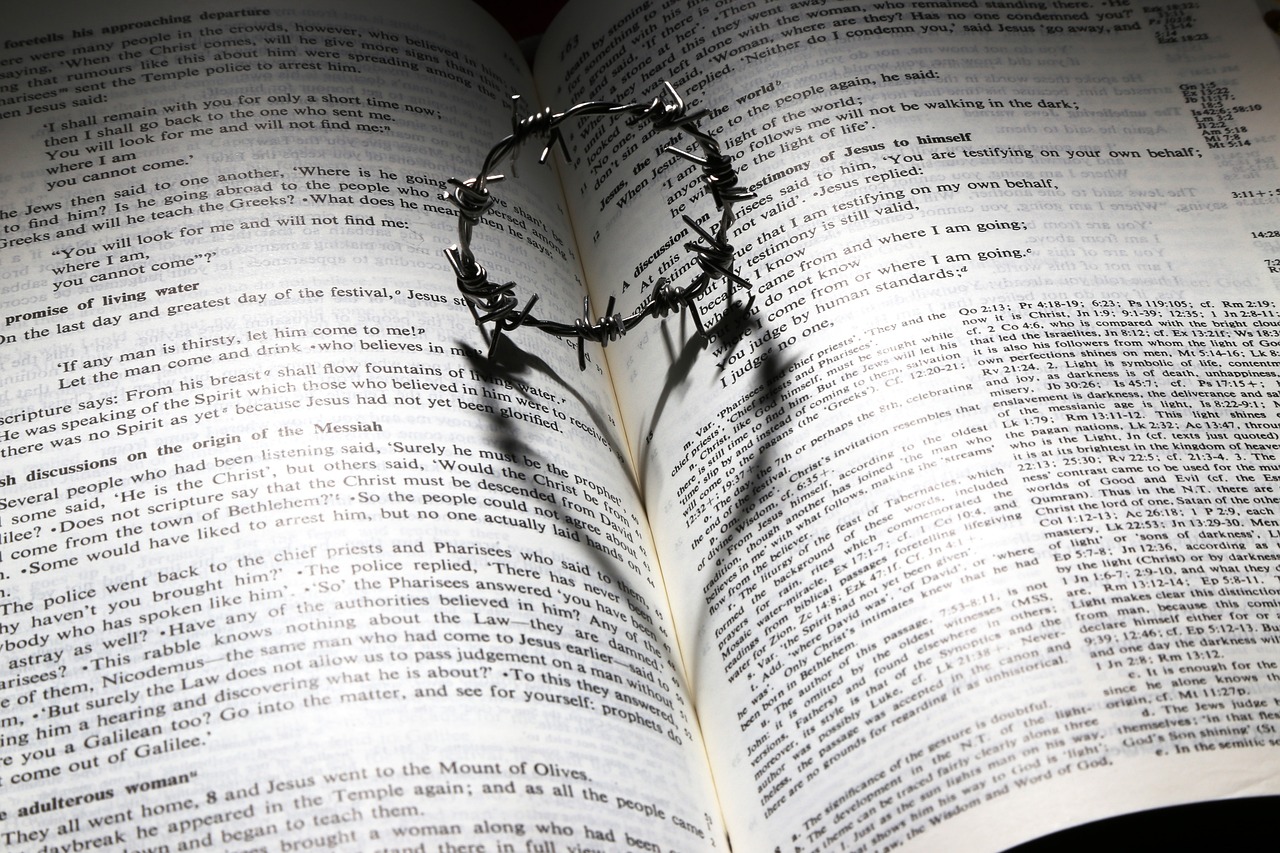
When Jesus said these memorable words, his crucifixion was still some distance in the future and the way God would ‘give’ the son still a mystery. The degree of sacrificial love that motivated the gift, however, was not. The two letters of ‘so’ describe the great extent to which God loved the creation and all in it. The love would not be measured in a blanket forgiveness and not in requiring the rebellious humans to earn it. Instead, the promise of forgiveness and salvation would be fulfilled by one perfect sacrifice, a sacrifice that was pure and unblemished, a sacrifice that human effort could not attain. The price of redemption would be the life of the Son of God, the Messiah Jesus.
The love of Easter is not merely an emotion. Emotional love is subject to change, it can be influenced by circumstance, it can be lost in an instant. The love that God has for his creation is none of those things. It is a facet of his character, a state of being. God’s love for the world is unchanging and unwavering. It cannot be earned nor can any human action result in its termination. The measure of this love is nearly beyond human ability to understand. Despite this, the full measure of God’s love is seen in the most horrific act in history, the crucifixion the Messiah Jesus.
How is this love? The rebellion of humanity in the earliest days of history create a chasm between creator and creation so wide that it cannot be bridged by any human effort. God, loving the world and its inhabitants so deeply, longs to close this divide, to be united in peace once again. He knows that without action on his part, his creatures are lost. In their pitiful state they cannot make restitution or pay a sufficient penalty, and try as they might humanity can never leap, fly, swim or find any way of transporting themselves to the other side. If this dark expanse is to be crossed, it will have to be done by God himself.
The paradox of the good news is that God, in the depths of his love, takes it upon himself to pay this penalty owed by humankind. His holy nature does not permit the option of dismissing the charges, a penalty is due in equal measure to that holiness. No human work can make a dent in that debt and so, out of an immeasurable love, God sends His Son to be the payment for the debt. The sobering truth in that good news? The debt could only be satisfied by sacrifice, the blood of Jesus on the cross paying the cost in full.
This ‘giving of his son’ would become the measure by which love is measured. As the cross grew nearer, Jesus described its heights, the personal challenge for his followers, telling them that “Greater love has no one than this, that someone lay down his life for his friends.” More than a challenge, his followers realized the judicial change that would be brought about, they would be friends and no longer enemies of God. The gulf would be bridged and the lost would be able to make their way home.
If it ended at the cross, this love would be unmatched. God had a higher expression of love to give though. The debt paid on the cross became the new life of Easter morning when the Messiah rose from the tomb. The perfect judge who paid the penalty himself rose as he had assured, condemnation behind and new life in full ahead. Easter became two parts of the same story, horror and celebration, mourning and joy. The rise of the sun on Easter morning brings all the promises of the Savior to light. Forgiveness came through the cross for those who would believe. For his friends, Jesus’ death became life in full. No greater love has ever been shown, nor will it be again. The love of Easter assures us of that.
Once Again
Rethinking the Divine Conspiracy
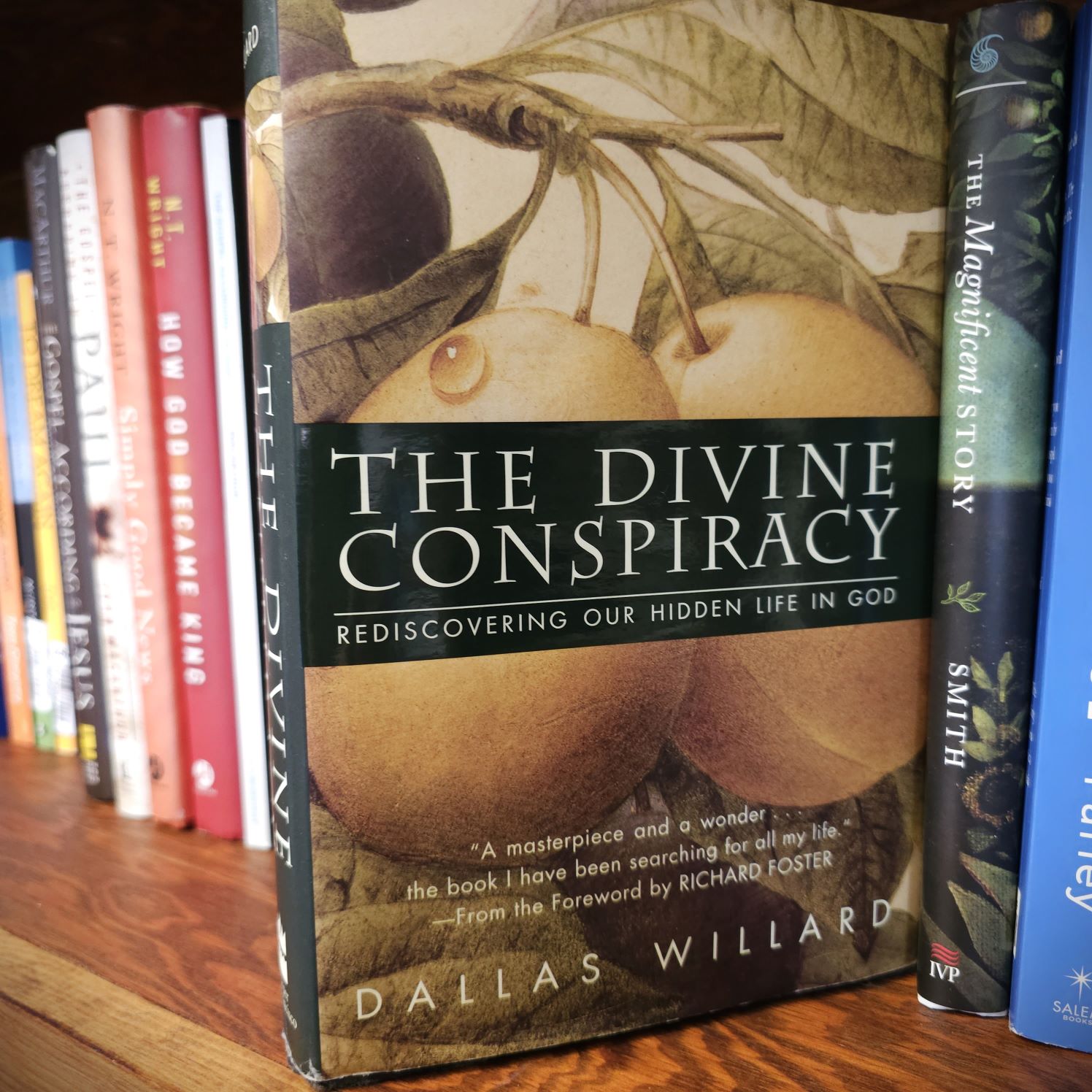
I recently took The Divine Conspiracy off my shelf to look up a reference for a project I was working on. I read the paragraphs I was searching for, then the surrounding pages, and then the full chapter—context, of course—and to my delight, I found a new book in my hands. Captivated by Willard, I reread the book in its entirety, and found that it was not the same volume I had read better than twenty years ago. Had the text changed in the shelf-bound years? Obviously not. Rather, as Heraclitus once opined, I was not the same person. I wonder now, what other wisdom awaits on these shelves?
“No man ever steps in the same river twice, for it’s not the same river and he is not the same man.”
Heraclitus
Reading anything more than once today is a radical idea. The firehose of electronic communication, our ever-growing to-be-read piles of books (nearly 100 as I look over) and our bias toward the new makes the practice of rereading the stuff of fantasy. This may or may not be an accurate observation, but, if it is, we’re poorer for it. As the philosopher said, we are not the same people when we return to a book 20 years later, let alone two weeks later. Our thinking affected by what we read, we have lived life in the intervening period. To return to an author’s work is to have tested their theses, applied their suggestions, lived their propositions or, to the contrary, ignored them altogether. Either way, we’re now able to agree or disagree, take out our pencils and argue in the margins, perhaps even decide to remove the book from our library.
“Master those books you have. Read them thoroughly. Bathe in them until they saturate you. Read and reread them…digest them. Let them go into your very self.”
Charles Spurgeon
Willard’s book was one of many that I have reread a second and third time in the past couple of years. When I first read it, I found it difficult to understand and, fitting my level of spiritual maturity, I couldn’t apply it. The reading process for me was to read it, say that I had read it and watch the dust cover spine fade on my bookshelf. I knew the book was important—because my seminary professors told me it was—but it was not important to me. I had no ability to interact deeply with Willard’s vision of our participation in The Kingdom Among Us.
Two decades later, however, the prose that I had once merely consumed was now something to be savored. I aligned with the author’s views on the kingdom gospel. I had wrestled with the biblical texts he referred to, built up the stamina and muscles needed to hold most of the points of his discussion in mind as I worked to understand his conclusions. I was a more mature disciple now, ready for the meat, having grown on the milk of my earlier years. No longer was I the same person who opened the cover and I am, even now, a different person, having reread the book again before returning to its spot amongst the others occupying the shelf.
For the past few years, I’ve made it an annual tradition to publish my reading list from the previous year. These lists have averaged around 90 books each, with an increasing number of rereads a part of those lists. The value of rereading is tempering my pace thus far in the current year as I slow down to interact more with the authors and their ideas. Marginalia and pencil lines are more common now, as are literature notes and summaries in Evernote. Fewer and better seems to be my new reading style, trading a high book count for a more engaged interaction with books of value.
Many a thoughtful reading has shed new light on other older volumes. Time spent with John Franke and Darrell Guder opened up my older books by Roxborough and Hirsch for me; Scot McKnight brought Jeff Vanderstelt off the shelf for a gospel conversation. Growing spiritual maturity and a developing recall of what I’ve read spur on this relational cycle of growth. The flood of published books urges us to consume and shelve, but is this rapid turnover leaving us undernourished? Might we grow more by an intentionally slower style of rereading and engaging? Let me study the question some more.
2023 Reading List
“A room without books is like a body without a soul.” – Cicero
My 2023 reading list has finally been tallied and it contains 97 books read in the past year. Though electronic media dominates, there is a special value to the slower pace and tactile experience of reading a book. For pleasure or knowledge, the engagement of mind (and soul) and eyes and fingertips with the paper and the binding and the slipcover creates a bond with yourself and the ideas contained within. This intimacy is also why bad books are especially offensive to us; the personal investment we’ve made in the selection and the purchase and the preparation to read the book spins up our expectations to the point where bad writing is an insult. One of the most valuable permissions that I’ve received in life is to not finish books. Life is brief and forcing yourself to finish something that turns out to be of little value is a waste of your time. Pass the book on and select another from the ever-growing pile of yet-to-be-reads.

I purchase a good many of my books used (yea Thriftbooks!). Apart from saving money, the book you receive has a story to tell. Many have never been read, like they had been languishing in someone else’s yet-to-be-read pile before being abandoned. The dust jacket may have a faded spine, but you still get to enjoy the satisfaction of opening the covers for the first time, feeling that resistance as the cover and spine loosen up for the first time, ready to share the author’s insights with an excited reader. It’s a delight to receive copies used by note-takers like myself. Do I agree or disagree with the marginalia? I’ve discovered heartfelt prayers and prayer lists in the front and back covers from and for people I’ll never meet but I feel apart of as I read them, wondering how they were answered. Few underline with pencil and ruler as I do. Some freehand with ballpoint pen, or worse, use garishly colored highlighters. Here too is a telling practice. When nearly every sentence is highlighted, which of the author’s thoughts were truly valuable?
“Read the best books first, or you may not have a chance to read them at all.” – Henry David Thoreau
I record each book in my journal as I complete it, writing the date of completion and my rating in the front cover before placing it into my library. My rating system is simple. Books rated 5 of 5 are the best, memorable pieces of writing that deserve to be read, notated if applicable and thought about. Those rated as 4s are also worthy of reading and notation, but perhaps just once. Threes are just good books and there an awful lot of those. Those rated as 2 or below come with a warning. Don’t waste your time. Also, don’t ask to borrow these books as they do not have a home in my library. You will notice a handful of books at the top of the list rated as 10. These are invaluable books and ideas that I would recommend to anyone and everyone interested in their topics. You’ll notice a number of titles in the list followed by a notation like (2x). This means that the book was reread during the year. How many books do you have that fall in that category?
| Title | Author | Rating |
| Fresh Encounter (3x) | Blackaby | 10 |
| The Gospel Precisely (2x) | Bates | 10 |
| Why the Gospel? (2x) | Bates | 10 |
| Missional Church | Gudder | 10 |
| Be My Witnesses | Gudder | 10 |
| No Easy Road (2x) | Eastman | 5 |
| Simply Good News (3X) | Wright | 5 |
| King Jesus Gospel | McKnight | 5 |
| Becoming the Gospel (2x) | Gorman | 5 |
| A Praying Church (2x) | Miller | 5 |
| The Mission of God | Wright | 5 |
| Bearing God’s Name | Imes | 5 |
| How to Hear God | Greig | 5 |
| A Community Called Atonement | McKnight | 5 |
| Fan the Flame | Cymbala | 4 |
| The Travelers Gift | Andrews | 4 |
| 48 Laws of Spiritual Power | Viola | 4 |
| Smarty Brevity | Vande Hei | 4 |
| Sin, The Savior and Salvation | Lightner | 4 |
| The Grace Message | Farley | 4 |
| The Coffee Bean | Gordon | 4 |
| Church Revitalizer as Change Agent | Cheyney | 4 |
| The Psychology of Money | Housel | 4 |
| Salvation by Allegiance Alone (2x) | Bates | 4 |
| Romans ZECNT | Thielman | 4 |
| Beautiful Resistance | Tyson | 4 |
| Revitalize (2x) | Davis | 4 |
| How to Start a Riot | Storment | 4 |
| Courage is Calling | Holiday | 4 |
| Creating a Missional Culture (2x) | Woodward | 4 |
| Missional Theology (2x) | Franke | 4 |
| Missional Renaissance (2x) | McNeal | 4 |
| Subversive Mission | Greenfield | 4 |
| Flickering Lamps | Blackaby | 4 |
| Case for Keto | Taubes | 4 |
| Status and Culture | Marx | 4 |
| Built from Scratch | Marcus | 4 |
| 6 Habits of Growth | Burchard | 4 |
| Punk Paradox | Graffin | 4 |
| How I Built This | Raz | 4 |
| The Perfectionists | Winchester | 4 |
| Measure of a Man | Getz | 4 |
| The Permanent Revolution | Hirsch | 4 |
| The Faith of Leap | Frost | 4 |
| Radical Praying and Preaching | Ravenhill | 4 |
| Cues | Van Edwards | 4 |
| The Power of Group Prayer | Carney | 3 |
| Can These Bones Live (2x) | Henard | 3 |
| Mercy | Baldacci | 3 |
| Enjoy Your Prayer Life | Reeves | 3 |
| Our Iceberg is Melting | Kotter | 3 |
| Racing the Light | Crais | 3 |
| Longing for Revival (2x) | Choung | 3 |
| Praying for One Another (2x) | Getz | 3 |
| Prayer | Bunyon | 3 |
| Go | Hunter | 3 |
| Bully Pulpit | Kruger | 3 |
| Passion in the Pulpit | Vines | 3 |
| How to Change | Milkman | 3 |
| The Magnificent Journey | Smith | 3 |
| Put Your In the Chair | Pressfield | 3 |
| Life Together in Christ | Barton | 3 |
| The Eye Test | Jones | 3 |
| Habits | Sincero | 3 |
| There’s Hope | McIntosh | 3 |
| What About Lordship Salvation | Bing | 3 |
| Romans BECNT | Schreiner | 3 |
| Investigating Lordship Salvation | Weierbach | 3 |
| Hearing God’s Voice | Blackaby | 3 |
| Faithful Faith | Moore | 3 |
| Breaking the Curse | Kinner | 3 |
| Introducing the Missional Church (2x) | Roxburgh | 3 |
| No Plan B | Child | 3 |
| The Mission of Theology & Theology as Mission | Kirk | 3 |
| The Church’s Mission | Leeman | 3 |
| Storyworthy | Dicks | 3 |
| Insights on Communion | Renner | 3 |
| City on Fire | Winslow | 3 |
| Come to the Table | Hicks | 3 |
| The Present Future (2x) | McNeal | 3 |
| Knowing Christ | Fargo | 3 |
| It’s Not How Good You Are | Arden | 3 |
| The PARA Method | Forte | 3 |
| Prayer Revolution | Smed | 3 |
| Gather God’s People | Croft | 3 |
| Sentness (2x) | Hammond | 3 |
| Holy Spirit | Young | 3 |
| Into the Void | Butler | 3 |
| Soundtracks | Acuff | 3 |
| The Lighthouse Effect | Pemberton | 3 |
| Hunting Leroux | Shannon | 3 |
| Free Billy | Winslow | 3 |
| Help Thanks Wow | Lamott | 3 |
| Freaky Deaky | Leonard | 3 |
| The Upper Room Discourse | Henry | 2 |
| Lifeless to New Life | Brown | 2 |
| Greatness Mindset | Howes | 2 |
Wide or Deep: A Missional Measuring Rod
Soul Metrics | Warren Rachele
As we shepherd the Lord’s struggling churches toward health, attendance is often the ruler by which we measure success and the progress of our efforts. This metric is the most common measurement, and attendance is often the pastor’s answer to most questions about the vitality of a church. From this perspective, any increase in attendance is viewed as a sign of health, and, conversely, to plateau or lower that number becomes an indicator of decline. This is a broad-brush indicator though. We have to remember this implicit fact: dropping attendance in church is a symptom, not the malady. With that axiom in mind, the revitalization-minded leader should lead the church toward a proper diagnosis before administering any remedy. Something precipitated the decline in attendance, and that reality (or realities) should guide the first actions on the return to health.

After taking the temperature of the church, we will probably find other indicators of sickness. We can bundle the most common warning signs found in struggling churches into a pair of broad categories –lack of spiritual depth and diminished or non-existent community gospel impact. Examining the patient, it’s easy to see the connection between the two; shallow Christians reflexively turn inward, but this doesn’t need to be fatal. Both conditions are reversible through diligent and intentional missional leadership. Deepening discipleship will contribute to the Christian’s sense of a need for a growing missional presence in the community, and this will pave the way for natural congregational growth.
Let’s turn our attention to being a gospel presence in the community. The sad reality is that many troubled churches no longer reflect the community in which God has planted them. Demographically or materially, the remaining membership of the church does not mirror the neighborhoods around the church. Any number of cultural changes may have taken place over the life of the church’s ministry. Perhaps the neighbors surrounding the church, who once spoke predominantly German or English, now speak Spanish. Traditions, once heavily influenced by European culture, find the parish filled with Asian celebrations and culture. In some cases, the demographic changes have caused unacknowledged distance with the neighbors, the original membership moving away from the neighborhood because of the blessing of prosperity, creating a commuter church where the members drive in on Sunday morning but no longer have any connection to the people around the building during the rest of the week.
Changing the metrics of revitalization begins with measuring the depth of missional integration in the parish before counting noses in the sanctuary. If this reach is too small to measure, congratulations! You have a wide-open field in which to minister. If your church is aware enough to know that they have become disconnected, call that a bonus! The first steps are easy. Find out who lives within the church’s spiritual reach and what their felt needs are. You may discover that the neighbors are demographically different in socio-economic or cultural ways, but remember always, they are also fellow image bearers who want to know peace, want their children to succeed, and want to be loved. Start your exploration (ethnography = fancy word) from the point of what you have in common rather than from the deficit point of all the differences that divide you.
From the not-so-scary point of “things we have in common with our neighbors,” you can see a variety of ways of being the gospel to them. It might mean that you learn to speak the neighbor’s language, learning at least to say “hola mi nombre es warren” or ask about their well-being (como estas). All people value their children, so help them with their reading and schoolwork, give them a place to gather after school. These and a hundred other things lessen the disconnection with the neighborhood and make you neighbors again. As you forge these relationships, you become a trusted presence in the neighborhood. Without even knowing it, you become the good news to those who the Lord Jesus loves and wants to rescue.
Measure these interactions, counting every opportunity to be a missional presence to the image bearers of the parish as a success. Measure the increasing depth of presence in the neighborhood and every moment in which you can meaningfully touch the lives of the people who live there, in both good times and challenge. Value this because it is these relationships that open the door to the broader gospel rescue story. Value these because these are metrics that matter.
Do You Want Spiritual Vitality?
The Principles New Life in Your Church
Spiritual formation and the Missio Dei often suffer in a church that is plateaued or in decline. The inner life and a Great Commission footing fall prey to the “more pressing” concerns of survival and whether the church will make it to next Sunday. But for the leader with a heart and vision for restoring the vitality of a body, these essentials of congregational life are the seeds and spreading roots of revitalization. Men and women of God who will look clear-eyed at the challenged spiritual condition of a church will not look for hope in process and programs, but in the biblical calls to develop Christlikeness and a servant’s heart. How do we do that? The answers are contextual to a particular church, but working from principles rather than programs can guide and motivate the first steps back to health.

Dry bones can live…
The revitalizationist will probably find that the principles of church health have become secondary concerns of the congregation in stasis or retreat. Where the kinetic energy of events and programs might seem to solve a church’s issues, the immediate blessings of doing something will fade quickly unless they come to rest upon a foundation of spiritual vitality. The pastor or lay leader seeking to renew a declining church should be prepared to set short-term gains aside and devote themselves and those under their leadership to restore spiritual health from the bottom up. Churches in the North American Baptist Conference [NAB] are blessed by a set of guiding principles that invite all member congregations to take them as their own. For the revitalizer, these are four principles that provide an outline for restoring areas of church life that can lead a church back to life. The principles [called End Goals by the NAB] are simple, biblical and direct:
- Churches will be missional and formational
- Churches will engage their neighbors cross-culturally
- Churches will be committed to raising up the next generation of leaders
- Churches will keep ‘all the nations’ in their ministry scope
Applying these principles as the foundation of a renewal plan addresses the wide variety of causes and symptoms of decline. Consider the church planted decades ago in a neighborhood or borough of the city. Over the years of faithful kingdom service, the church experiences declining membership and attendance. A census of the remaining membership shows most people not living in the immediate area and the makeup of the church no longer aligning with the changing demographics of the surrounding neighborhood. The reasons for these disparities are many and varied, but the underlying principle is much easier to find; the church has not consistently loved their neighbors as themselves. Now, this doesn’t have to be interpreted in a negative sense or assigned any nefarious motive. Every church with a history can identify with slowly changing surroundings, while the congregation carries on in the memory of their more fruitful days.
The temptation of the church is to have an event, intending to connect with their new neighbors. No doubt the Holy Spirit can produce fruit from this occasion. For longer term health and growth, however, the better choice is to put in the work of prayer and teaching to build a missional culture and an attitude of welcome for the church’s neighbors. Over time and with a commitment to the principles of spiritual health, the body of believers can become more naturally missional, not relying on special events to be a part of the life of the neighborhood. Consistently applying the principle of cross-cultural ministry to the church’s teaching and practice can be used by the Spirit to create a new sensitivity to the needs and issues of those who live within the parish of the church, resulting in open hearts and welcoming arms.
We’ll look at each of these principles individually as tools of renewal in the weeks ahead. If you are a part of the NAB family, be encouraged that our leadership has prayerfully given the conference a consistent set of guidelines for our collective ministry. One of the great blessings of these end goals is that they are applicable to all ministry contexts, from the church planter to the missionary and to the legacy churches that are seeking new life.
The Authority of True Revival
The short of it is that revival involves a qualitative change, and not a mere quantitative change. It is not a bit more renewed energy, but more like life from the dead. The thing we would notice first is not that there would be more churches, although there would be more churches, but rather we would notice the fact that the flavor of everything would be different. The aroma would be different. The air would be different. Life from the dead is always different.
Moscow’s (Idaho not the Motherland) own Doug Wilson. Read the whole thing at the link below.
Source: The Authority of True Revival
No More Prayer Ministry

Cancel your prayer ministry. Do away with scheduled prayer meetings and seasons of special prayer focus. End the prayer chain and your email list.
Blasphemy? Unchristian advice? Neither! Each of these activities is an important part of the life of the Church, the ‘House of Prayer’ our Lord and the Bible command us to be. It’s the granularity that damages the whole. A prayer ministry, for example, is a segmentation of that spiritual practice within the holistic life of the Christian. The result is that prayer becomes just one among many activities that the believer can choose from in their life of discipleship. In our hurried, over-scheduled lives, prayer becomes a choice on the schedule.
One that often loses out to other choices.
When the Apostle Paul commended continual prayer to the believers in Thessalonica, he placed this emphasis within the spectrum of a complete life. While 1 Thessalonians 5:17 (pray without ceasing) often finds its way onto throw pillows and coffee cups, the Apostle was much more intentional in emphasizing that prayer is an irreducible part of life. The complete passage reads, “Rejoice always, pray without ceasing, give thanks in all circumstances; for this is the will of God in Christ Jesus for you.” [1 Thessalonians 5:16-18] Do we schedule “rejoicing” meetings? Do you need to receive an email reminder to be thankful? Most likely ‘no’ on both, so why prayer? The answer is hard to type and harder to hear: because many churches and Christians have not made prayer central to their identity.
Prayer should be as natural a part of our lives as is breathing. The culture identified with Christ’s Church should be a culture of prayer. The Lord modeled continual, natural prayer with the Father during his time in the world. While he set off times of quiet communion, Jesus did not schedule prayer time with his disciples separate from the ongoing ministry they pursued. It was a natural part of the life of discipleship. If we study the relationship between Jesus and his guys, we come to recognize how our separation of spiritual activities has affected the church. Prayer should not be a separate ministry; it must be the air that we breathe as we become more Christlike. Prayer should define our culture.
It is better to let the work go by default than to let the praying go by neglect. Whatever affects the intensity of our praying affects the value of our work…Nothing is well done without prayer for the simple reason that it leaves God out of the account.
E.M. Bounds
This is easier said than done. A culture of prayer for an individual or a church requires extraordinary commitment, from yourself personally or from the leadership within the body of believers. It will feel unnatural at first and this will cause hesitation, grumbling and questions of motivation, but you must persevere to find the blessing. We must model spontaneous prayer at every opportunity. A good place to start is the Sunday gathering, where everyone can use their gifts and seek an audience with the Lord on behalf of the body. Prayer as a regular part of Christian fellowship can strengthen those relationships. Pray for your brother aloud as he confides his struggle to you. Pray immediately–not say you will pray–for the family in crisis. As prayer becomes second nature over time, it will also become more comfortable and natural. We won’t see prayer as a separate part of the whole where participation is subject to the whims of choice. Prayer will not be a ministry, we will rightfully see it as ‘the’ ministry. The culture will change. Your church will change. You will change… and be blessed for it.
You Are Made to Worship
What was I created for? What is the purpose of the Church? The answer to both questions is the same; we are made to worship. Check out our video that begins a new series on the practical theology of worship.
 LOVE | ACCEPT | FORGIVE