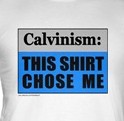
Views on Divine Election: Traditional Calvinist

The key to understanding the Calvinist notion of divine election rests in shielding the sovereignty of God from any effectual interference by humankind. Election to salvation is rooted purely in the sovereign grace of God and it is unconditional in every aspect; it does not rely in any way on the behavior, belief, or action of the man or woman on which it is visited. Calvin says:

We shall never feel persuaded as we ought that our salvation flows from the free mercy of God as its fountain, until we are made acquainted with his eternal election, the grace of God being illustrated by the contrast—viz. that he does not adopt all promiscuously to the hope of salvation, but gives to some what he denies to others. It is plain how greatly ignorance of this principle detracts from the glory of God, and impairs true humility. (Institutes III, xxi, 1)

Calvin is quoted in a different context restating this principle a bit more starkly:

Predestination we call the eternal decree of God, by which he hath determined in himself what he would have to become of every individual of mankind…eternal life is foreordained for some, and eternal damnation for other. Every man, therefore, being created for one or the other of these ends, we say he is predestined to life or to death. (Cyclopaedia of Biblical, Theological and Ecclesiastical Literature ‘Calvinism’)

The Calvinist view of election has three facets; it is unconditional, individual, and infralapsarian, and scriptural references abound in support of each of these ideas. When election is referenced in this discussion, the Calvinist has in view a salvific election, one that produces salvation from perdition. This is an important but often overlooked distinction because theology also recognizes that there is an election to service and many theological disagreements balance on the recognition of this fine point. Careful exegesis is required then when stating unequivocally that one’s theological position is absolute; remember, context must always be considered when referring to a single verse in support of a tenet. Let’s look at each of the facets on their own.

Election is Unconditional

The U in TULIP represents election as unconditional; God graciously elected some to be saved according to His sovereign will without respect to their individual qualities, characters, or choices. This means that the choice was not conditioned on something that humans would do or the choices they would make, their behavior (good or bad) or any unique characteristic that might separate them from those who are bound by their sin and headed to perdition. Unconditional election is forwarded as the position that brings the greatest glory to God. Because salvation requires no human agency from start to finish God appropriately receives all of the glory for the transaction.

Scripture: Eph 1:3-6, Rom 9:10-16, John 17:2,6

Election is Individual

Election to salvation is done on an individual basis by God, bypassing one while selecting the next. While scripture speaks of God choosing a people, the Church, or a bride, this election is composed of the collective individuals who are recipients of His grace. This deeply theological concept contributes in a much greater sense than just scholastically. The joy that the recipient feels is heightened by the idea that God the Father has elected them as an individual. They are not a faceless part of the whole but a known entity to the God of the universe.

Scripture: John 6:37, Acts 13:48

Election is Infralapsarian

The question that remains in examining the Calvinist view of election has to do with the timing, or sequence of God’s decrees. The matter to be answered is when did God decree that salvation would be granted to the elect, before or after the decree to allow the Fall. Calvinist theologians can indicate disagreement on this point, some leaning toward Supralapsarian timing while others take the Infralapsarian view. The orders of each are:

Supralapsarianism (Decree of Salvation/Reprobation precedes the decree to allow the Fall)

  • The decree to save some and condemn others
  • The decree to create both the elect and the reprobate
  • The decree to permit the Fall of both classes
  • The decree to provide salvation only for the elect

Infralapsarianism

  • The decree to create human beings
  • The decree to permit the Fall
  • The decree to save some and condemn others
  • The decree to provide salvation only for the elect

Of the two, the dominant position through Calvinist history has been the Infralapsarian position though the issue is often left in an indefinite state that allows for a melding of the two positions. Once again, the theological desire to protect the sovereignty and the moral integrity of God is foremost in the conduct of this intramural argument. When searching the Scriptures for support, an important cue to remember is that when election to salvation is seen, it must logically follow that the need for that election is driven by a humankind that requires saving.

Scripture: Acts 13:48, Rom 8:29-30

Conclusion

The unconditional nature of election to salvation is key to the entire Calvinist theological framework. When contrasting this system with others, much of the debate hinges, knowingly or unknowingly on understanding the true positions of competing theologies with regard to election. It is incumbent upon us then to glorify God through our devotion to proper scholarship before engaging in any form of definitive declaration as to the validity or illegitimacy of positions not our own.

Solus Christus

Other Views on Election

Calvinism & Arminianism: Election 2007

The sotereological frameworks of Calvin and Arminius have been widely debated since their codification and there remains today an ongoing kerfuffle, especially in hyperventilated world of the blogosphere where anonymity often shields the purveyors of ideas from having to support them by examining their underpinnings. The positions taken are often of the ‘I’m right because my beliefs are beyond challenge’ sort and any engagement usually degenerates (with proper Christian faux-humility – e.g. ‘forgive me for disagreeing’, ‘we pray you’ll come to understand your error’, etc.) into disagreement without adequate consideration of the opposing position. What I often discover being left out of these C&A spats is any discussion of one of the fundamental differences between the two schools of thought, the concept of election. Because an understanding of divine election is so critical to being an educated participant in the debate, my contribution to the conversation will be to outline the different positions that are taken, starting with the classical Calvinist and Arminian positions.

God is glorified and our faith enriched when we all contribute to the conversation and I would encourage anyone who has something to add to do so. That said, I have but one requirement and that would be that sources and citations be included with your statements. This helps all who read the threads to follow up and explore our points further AND it prevents us from furthering mythological positions that have no actual support. As an example, the Arminian position is often misrepresented on several points. For one, there is a meme that winds up in many posts that states Arminian theology as seeing humankind as less than totally depraved. Though it is completely untrue, this idea is passed from person to person without any real effort made to discover whether or not it is correctly representative of the theology. This lack of scholarship is not glorifying when discussing the matters of God.

So, on with the show…

Saddleback’s Easy Believism: Making a Difference

While Rick Warren and the Saddleback community take a beating for their theology or supposed easy believism, Kay and Rick have done yeomon’s work in using the momentum of their community to address the AIDS issue. Here is a great profile in Good magazine on Kay and the ministry. Many will argue that having perfect doctrine in the non-essentials is the most important thing but, as I read Matthew 25, Jesus does not say examine your doctrine because there will be a test at the end. The only test I see Him mentioning is whether or not we saw Him in the oppressed, the downtrodden, and those in need. Is your theology making a difference? 

Arminian IDLE: A response to Steve Camp

I have tried for a bit now to stay out of the Arminianism-Calvinism debate due to the rancor and division that it creates within the Church but this post on Steve Camp’s site has been eating at me for a few weeks since I first read it. It is typical of the arguments that are arrayed against Arminianism that reveal a lack of thorough scholarship about the subject and a reliance on second-hand or anecdotal evidence, or worse yet, an arrogant dismissal of the soteriological system by associating it with some piece of pop culture.

He starts off on the wrong foot by stating clearly that a thorough examination of the Arminian tenets is not worthy of examination (since they are so obviously wrong?):

Here is the essence of an easy believism gospel. This is not meant to be an exhaustive treatment of Arminianism, but a thumb nail approach.

Simply out of respect for the millions of brothers and sisters whose side of the church you are condemning to perdition, a more respectful approach would be to provide the theologian and quote to which you ascribe the statements you are trying to refute. Instead, we get the anecdotal, ‘I heard this is what Arminians believe’ version. Not the basis for a theological discussion where the eternal souls of men and women are involved. But hey, when you’re right you’re right, right?

I is for Initiated by Man

Camp proposes this fallacious argument:

Initiated by man
Salvation by Arminianism is dependent on man accepting Christ; being a seeker; and responding to the gospel because he chose to do so out of his own free volition. IOW, the A.I. rendering of 1 John 4:19 reads, “He loves us, because we first loved Him.” We were not chosen before the world began (elected); Jesus did not actually redeem us on the cross (particular redemption); and the Holy Spirit didn’t actually regenerate us prior to faith being exercised (1 Cor. 12:3; Titus 3:6-7); or that it was God alone Who must grant to us saving faith to receive Christ as Lord of our lives (Eph. 2:8-9); but Jesus only provided a way of salvation for us at the cross and now sits in the heavenlies waiting for lost people to seek Him, choose Him, find Him, accept Him and “select Him”. This is a picture, beloved, of an impotent Lord–not the great omnipotent Sovereign of the universe.

This is almost a non-starter because of the disheartening rewriting of scripture that the author attempts to attribute to Arminians. I’ve never read Scripture rewritten in any of the Arminian literature so I think Camp needs to provide his source or remove this. Putting this aside, this myth about Arminian theology is simply wrong. Salvation in Arminianism is initiated by the sovereign God, not man. It is God who extends the salvific, prevenient grace to man who is dead in sin. Source please, Steve, where Arminius states otherwise. Suggested reading (by Camp): Ephesians 1:4-14. This passage has to do with election, in which Arminius was in full agreement. The difference between Calvin and Arminius was the basis for election. Where is this discussion?

D is for Dependent on Free Will

The next point is another misstatement of Arminian theology. Arminians do believe in libertarian free will while Calvinists also believe in a form of free will called compatibilist (if they are willing to enter the discussion at all). Why no mention of this? Because it messes up the acronym? Here is what Camp says about this:

Dependent on free will
Man is not so depraved and lost that he cannot, once presented with the right truth by compelling methods, accept Christ by his own merit and choosing. Man is not solely drawn to Christ by the Father (John 6:44), but decides of his own free volition to follow Jesus. We’ve all sung it a myriad of times haven’t we? “I have decided to follow Jesus…” In the Arminian school, man’s will is not so bound and corrupted by original sin or by the penalty and guilt of Adam’s disobedience and sin (Rom. 3:10-18; 5:12-17); nor is he so completely dead in trespass in sin, or by nature a child of wrath (Eph. 2:1-3) as to be restricted from “choosing Christ” as his Savior.

Oops, more reference to election (John 6:44) meant to infer that Arminius did not support election when, if the time is taken to fully understand the theology, you discover that Arminian theology does accept and believe in the sovereign election of God. His second statement regarding the lesser depravity supposedly promulgated by Arminians is also mythology. Arminius himself says ” In his lapsed and sinful state, man is not capable, of and by himself, either to think, to will, or to do that which is really good; but it is necessary for him to be regenerated and renewed in his intellect, affection, or will and in all his powers, by God in Christ through the Holy Spirit, that he may be qualified rightly to understand, esteem, conceive, will, and perform whatever is truly good.” (Arminus writings 1:252)

L is for Lip Service is Enough

Here is Camp’s take on repentance:

Lip service enough
Repentance is a verbal assent to the truth–not a change of mind and life. It is, for example, a common sinner’s prayer that I was taught in my church as a child was, “Jesus I believe in You, Jesus I receive You…” and if you really meant it, you’re born again – that’s all it took. (But is that really how someone becomes a follower of Jesus Christ?) You are now free to baptize them, put them on the roll, have them serve in missions; even teach a Sunday School class or go to seminary. No repentance required (the non-Lordship position), just come as you are in the rags of your own righteousness. If you’re really sincere when you said that prayer, you are now a Christian–welcome to the family of God. Compare that with Matthew 16:24-26; Luke 14:25-30.

Wait, is Camp saying that Arminians do not believe in the necessity of repentance? I’m not sure how he supports this unless I missed something in the Calvinist doctrine in which proof of personal repentance generates a special birthmark or something that proves their personal repentance. (Or can the Calvinist too say they have repented while secretly, or not so secretly, be living an unrepentant lifestyle?) If he is referring to the practices of various churches, then that is one thing, but it is certainly not true of the theological system. This is a very irresponsible statement.

But wait again, doesn’t the act of repentance indicate free will (compatibilist or libertarian)? If God in his grace wills me to salvation and yet I continue on without repentance, does that indicate that God failed? Or, am I incapable of sinning further once I have been saved? This is a very complicated discussion that deserves much more than a cutesy toss off.

E is for Evidence is Not Necessary

Again Camp leads the reader down a rabbit hole, away from true Arminian theology:

Evidence not necessary
Once you have made a verbal profession of faith you are saved for eternity. If you bear fruit or no fruit to that end in your life (John 15:1-5) it is deemed as non-essential. If you were sincere in saying your sinners prayer, then you are saved forever – regardless of how you live. Sanctification is divorced from justification and an elective in the school of Arminian theology and gospel preaching–not a necessary by-product of salvation. IOW, a verbal profession of faith secures your “fire insurance.” Carnal Christianity is an acceptable state for some and ultimately leads to an antinomian view of grace. But I like what Dr. Tozer used to say, “to speak of a carnal Christian is to talk of a heavenly devil.” In Arminianism, here is how 2 Cor. 5:17 reads, “if any man is in Christ Jesus he can remain the same; old things don’t necessarily pass away, behold, nothing needs to become new.” Remember the true words of John Jasper: “If you is, what you was, you ain’t.”
Compare that with Titus 2:12; Matt. 7:21-23; Col. 3:1-14.

This argument can certainly be turned back against the Calvinist who believes he or she is elected and therefore the recipient of God’s grace and the gift of eternal salvation, can’t it? Certainly, Camp does not mean to say that there are not deluded Calvinists does he? Arminian theology never contradicts the simplicity of John 15:1-5 or, even better, Romans 8:13. To lump Arminians in with carnal Christianity is a false association. And again with the rewriting of Scripture that no Arminian theologian has ever engaged in just to support his false argument?

I too stand against easy believism that requires no repentance and produces no fruit. Those who propagate such systems of belief will answer to God but Arminius is not one of them. To associate a theology that has an equal amount of biblical support with easy believism is malicious slander that breaks the unity of the Church, not something I would want to face my Lord with.

God Bless you Steve but this is not the way to approach this topic.

Defining Religion in America

Later this summer, I’m teaching a section of Religion in America in our Themes in Religion and Culture curriculum. The course examines the intersection of various religious traditions and the pluralistic culture of America to see how each contributes and affects the cultural religion of this society. In order to contribute to this discussion, students will need to be clear on the boundaries created by their personal definition of religion and cultural religion. Since many very smart people drop by here from time to time, I would like to enlist your help. Can you provide a definition for both of these terms?

Fools, Mockers, and Liars Oh MY! Veering Around Those Reprobate Arminians

I read this post a couple of weeks ago and responded but the brother has yet to elect (how very Calvinist) to moderate the comment. Entitled Are We to Have Any Fellowship with Arminians, the piece troubles me pastorally as it consists of a series of passages that supposedly indicate that the answer is no. Brother Chris, in your view of Calvinism those who adhere to a true Arminian belief system are lost to reprobation. This does not make them fools, mockers of God, or liars. From your perspective Chris, doesn’t your assurance of salvation assuage any concerns you would have in associating with people who love Christ (though He apparently doesn’t receive it.)

Chris, as I mentioned before, I found this other passage in the Bible that you might want to add to your posting:

1 Peter 3:15 But in your hearts set apart Christ as Lord. Always be prepared to give an answer to everyone who asks you to give the reason for the hope that you have. But do this with gentleness and respect…

Peace Chris.

Calvinism, Arminianism and Interior Decorating

If my good friend Donald Trump invited me to his home, I’m certain that I would have the same visceral reaction in person that I have to seeing his pictures of his palaces in the media. I am very much the opposite of the man in our tastes; I tend toward classic lines and a touch of austerity while he tends toward gaudy flash and ostentatiousness. But, since he’s my friend, I would not blurt out, “That is the ugliest gold plated faucet on a marble sink supported by two carved cherubs I have ever seen!” as he shows me the downstairs powder room. Evaluating the long term effects of him enjoying his home and my retaining his friendship, I would probably nod and say that it was very nice, maybe adding that it was not my style if prompted to install a similar room in my house.

This week, perhaps goaded on by the increasing shrillness of modern politics, I was moved to write responses to two posts with Calvinist tags. I felt that each one had either been snarky or inappropriate in their presentation but moreover, they showed an uncharitable attitude toward anyone who didn’t agree with the Calvinist theological system. In other words, the connotation of the words was “We’re right, you’re wrong, so quit being a fool and accept it.” The danger in the increasing obstinacy that is creeping into the Calvinism versus Arminianism debate is that it has much larger implications that affect those outside of details of the debate.

Reading the titles and snippets of posts that appear in Calvinist forums, blog aggregators, or even print media often gives the impression that there is a hubris toward anyone who doesn’t agree. Rather than making a case for the efficacy of the system, the posts taunt and challenge those foolish enough to believe otherwise. But I ask, is this how the Master Teacher taught?

1 Peter 3:15 is taken to heart by many Christians. The problem is that many have only partially memorized and internalized the scripture. “Always be prepared to give an answer to everyone who asks you to give the reason for the hope that you have.” An excellent verse and one that I’m willing to wager that nearly everyone who reads this post will agree with. Except that is not the complete verse. In its complete form it reads:

But in your hearts set apart Christ as Lord. Always be prepared to give an answer to everyone who asks you to give the reason for the hope that you have. But do this with gentleness and respect,

and the last line continues into verse 16:

“keeping a clear conscience, so that those who speak maliciously against your good behavior in Christ may be ashamed of their slander.”

So I ask my Calvinist brothers and sisters, are we speaking and writing with gentleness and respect? Is our conscience clear in that we have fairly and accurately considered both sides of the debate and with full knowledge of both positions, decided in which camp we will plant our tents? Are we charitable in our words, so much so that those who disagree with us are ashamed by their slander?

In an Oprah dominated world where some gnosticism like ‘The Secret’ can dominate the popular imagination do we really want to present ideas that have eternal implications in the form of the the Dave Hunt & James White book ‘Debating Calvinism’ where it looks like nothing more than a name-calling schoolyard rumble. I don’t think so. If we are willing to be kind to others in insignificant matters like their taste clothes or paint color, why are we not willing to also temper our debate when the eternal destinations of others are at stake?

Technorati tags: , , ,

TULIP Taunting: An Unbecoming Challenge

As rancorous as the Calvinist / Arminian debate has become, a recent post at The School of Hard Knox caused me to wait for a few days before responding. I waited because of the frustration and disappointment that it evoked in me. Perhaps it was the author’s intent to be so provocative as to incite a flurry of quick responses either for or against his position. Nothing wrong with that I suppose, blogs are full of cheap jabs written solely to ignite unmeasured response, but this debate pertains to the eternal destination of people’s souls. Calling out those who do not share your theological position with what amounts to taunts of ‘chicken’ or diminution of their abilities to arrive at the correct conclusion has no place in Christian discourse.

What am I referring to? Here is the culmination of the author’s argument for all to accept the Calvinist theological system over the Arminian:

Face it. To reject Calvinism is to reject the whole of Scripture. You know this in your heart of hearts.

There’s one reason why you don’t believe in Calvinism…

You simply don’t want to believe it.

Now, please note that this is an excerpt and you should view the entire post to see it in context but I believe it is fairly presented here. After further belittling any careful exegetical efforts that may have gone into the development of a non-Calvinist position, the author again simply dismisses the possibility that another position could be valid with the childish taunt:

Come on…you know it’s true. Just admit it.

Just admit it, likening the correction of Arminian thought to some kind of addiction treatment. As if that is all that is necessary for those in the Arminian parts of the Body to absolve themselves of their silly fantasy system and come over to reality.

Is this the ultimate state of the discussion regarding these two theological systems? The author makes quite a claim at the beginning of his essay, stating that the positions of both sides are well known:

We know each other’s arguments inside and out and more importantly, we know what Scripture says.

Well, I can agree with that statement in part; both Calvinists and Arminians know what Scripture says. Sadly, what the author fails to recognize is that there is valid exegetical disagreement of how it is to be interpreted. (But I suppose all of those people who don’t agree with him should ‘just admit it’ and get over their stubborn invalid positions.) Further, if one were to sample the extent of knowledge regarding competing theologies, one would find that this is largely untrue. Arminian theology is regularly misrepresented by Calvinist adherents and Calvinism is often misunderstood by Arminians.

He casually throws out some loosely worded proof texts that are supposed to finally persuade the Arminian to cast aside their measured beliefs and come over to the right side. He says for example:

We know Scripture says that those He foreknew He also predestined.

The Calvinist will say yes, scripture says that God’s foreknowledge here represents his election of some to salvation. But wait, says the Arminian, foreknowledge is God’s ability to foresee those who will accept his gift of grace and the election under consideration is conditional upon that fact. Perhaps the best way to resolve this would be to turn to the usage of the word in our Greek New Testaments and discover that it has both connotations as used in NT writings.  Of course, this interpretation is open to further debate but hey, let’s stop all this egghead stuff and ‘just admit it.’

The author’s penultimate dismissal prior to the aforementioned ‘just admit it’ is this:

You don’t want to believe that God has created some for glorification and some are created for damnation. This doesn’t fall in line with your view of what is “fair”.

Indeed, double predestination is a distasteful topic to have to explore. To consider that the God Who is Love creates some specifically for perdition really has less to do with God’s fairness or His sovereignty and more to do with His character and whether one believes that He efficaciously willed the Fall. But then, the discussion must turn to whether or not He is the author of Sin. This seems a bit more complex than ‘just admitting it.’

This post and others like it have no place within the Body. While I support the author and his freedom to believe and write whatever he wishes, we as disciples of Jesus Christ must also consider the greater good before we take off on a rant. There are innumerous other avenues of division besides those generated by Calvin and Arminius that weaken our ultimate witness to a needful world. Taunting from such a precipice leaves one open to a fall and clothes no one, offers no companionship to the imprisoned, will fill no stomach or offer one drop of water to the thirsty, admit it. 

Technorati tags: , , , , ,