
Makarios (great pen name – look it up) has a quick attitude check here.
Author: Warren Rachele
Atheist Manifesto by Michel Onfray
Rant.
Rodomontade.
Petulant Tirade
 Any of these terms could have been used in the title of this volume and been more descriptive of its contents. The jacket proclaims the book to be “an international bestseller” and the recipient of the Times Literary Supplement Book of the Year award, but after reading the contents contained within, one is left to wonder why. This pretentious, overwrought volume contains none of the advertised case against monotheism. Instead, the reader is confronted with Onfray’s ponderous use of unsubstantiated straw men to vent his barely contained hatred for the monotheistic faiths.
When making the argument in favor of one position over another, the proponent offers his evidence and demonstrates by reason how this evidence better coheres to reality than that presented in favor of the opposing position. Onfray offers this:
Hatred of intelligence and knowledge … is codified in the books [of the monotheistic faiths.] (77)
Hatred of science. Monotheism does not really like the rational work of scientists. (81)
Monotheisms have no love for intelligence, books, knowledge, science. Preferring the ethereal over the material and the real, they have a strong aversion to man’s instincts and basic drives. (95)
Hatred of women is like a variation on the theme of hatred of intelligence. To which might be added hatred of everything women represent for men: desire, pleasure, life. (101)
The religions of the book detest women. (102)
Jesus’s existence has not been historically established. (115)
The reader might expect a presentation of the evidence in support of the allegations and yet none follows. The trained philosopher Onfray should be aware of the ‘bare assertion’ logical fallacy and the damage that it does to the gravitas of your argument and yet he commits it over and over throughout the book. If the evidence of the monotheists is inconvenient to his position (e.g. the independent historical records of Jesus apart from the Gospels) he simply dismisses it without providing or at least pointing to the testimony undergirding his stand. By the way, you’ll notice my careful use of citations above so that you, the reader, can determine if I have pulled a reference out of context or to read the surrounding text and determine for yourself if I am wrong. You will not find a single reference throughout the entire text, a deficit especially noticeable when the author when he makes assertions such as the hysteria of Paul (“These are all obvious symptoms of hysteria.” pg 133) and impotence as the source of the theological tenets expounded by the Apostle. Support? Citations? None but we are treated to yet another exclamation point complete with ellipsis to help us catch our breath! (This was true hysteria…a hysterical conversion!” pg 132)
If this were a singular example of the rhetorical style of the Atheist corpus, it could simply be dismissed as the rant that it is. Sadly, the more one reads the literature of the true believers, one finds the style quite common. Sentences are rarely without pejorative adjectives and inconvenient issues are dismissed out of hand. A quick survey of reviews for this book show it receiving glowing praise from the Atheist community. I attribute this to its contribution to the echo chamber in which these arguments foment. Serious scholars should look elsewhere for a coherent discussion.

Psalm 33 ~ May Your Unfailing Love Rest Upon Us

Blessed is the nation whose God is the Lord, the people he chose for his inheritance.
From heaven the Lord looks down and sees all mankind; from his dwelling place he watches all who live on earth —
he who forms the hearts of all, who considers everything they do. (vv 12-15)
A praise psalm for everyone.
The psalmist insists that praise should ring out for the Lord from all, from the nations to the individual hearts of those in the nations. God does not see us in the collective, his eyes roam the planet in search of you and me. Following psalm 32 which described the joy of the person who has confessed his or her sin and has been restored. To unroll the scroll and speak the words of this psalm to life is a reaction sourced deep in the heart of the forgiven.
No king is saved by the size of his army; no warrior escapes by his great strength.
A horse is a vain hope for deliverance; despite all its great strength it cannot save.
But the eyes of the Lord are on those who fear him, on those whose hope is in his unfailing love, to deliver them from death and keep them alive in famine. (vv 16 – 19)
The psalmist helps us to arrange our thinking properly. We praise God less for his actions such as delivering us from our enemies ( which can cause us moments of unease when He doesn’t ) and more for his God’s attributes. If we recognize the source of the deliverance as being rooted in His unfailing love, moments of question are quickly dismissed. Even if we face temporary setbacks, God’s unfailing love is unfolding all around us and we see that even our struggles can be a sign of His love.
The Googleization of Argument

Google, in both its noun and verb form has brought a less rigorous form to the state of discussion. In academic and general conversation, the ability to search Google based on a keyword pertinent to your studies or a thread you are participating grants you the ability to expand your knowledge on that topic. The creation of the hyperlink opens up whole new worlds with regard to pointing readers to your source or support for a point you’re making. The trouble comes in the uncritical use of this facility.
In the largely self-edited environment of the interweb it is incumbent upon you to search further than the page that you want to reference to determine the underlying character of the site before naming it a reliable source of credible support for your point. For example, if I say that we cannot know something about the nature of the world, adding the link that I did leads you to a web site that supports my statement. Obviously, the majority will find the beliefs espoused here to be quite contrary to reality.
Another class of web sites that is often linked to are those in the advocacy category. The site you are reading could be considered an advocate for the truth of Christ. The troublesome links are those that take a completely one sided position on some topic, so much so that they are not to be considered as a single source point of information. The advocacy position should either be revealed or an argument from another source that balances the first should be offered. In a recent discussion a link was offered that was to be considered representative of all Jewish thought on a subject. Unfortunately, just a few moments of searching revealed the extremely narrow theological and philosophical viewpoint of the writers making the opinion worthless in the larger scope of the discussion. Unless the original poster meant to use this opinion to bolster his argument deceitfully, the viewpoint should have been considered and revealed.
If we’re going to discuss anything of importance, it’s crucial that we maintain a standard of credibility. Consider both sides rather than simply rattling off your talking points. Be balanced in the sources you cite. Be nice.
The Google logo is trademarked by Google.
The Joy of Teaching
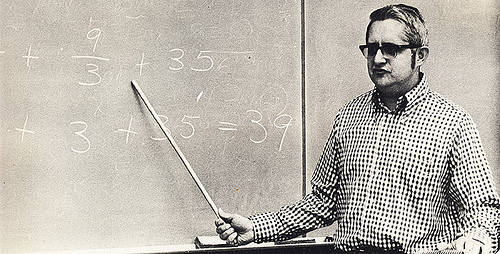 When I think of all the things that energize me and that I would do even if I had all the money I needed and did it for free, teaching is in the top two (preaching the Word is number one.) I’ve been teaching at Regis University for fifteen years and, despite the amount of work involved, I love every minute of it. Teaching someone a skill or an idea that will improve their life and help them achieve whatever objectives they have is one of the better contributions that I can make to the lives of my students.
People ask what it’s like to have bored students and I’m quick to point out that boredom is about 90% the teacher’s fault. It is your job as the teacher to reach ALL of your students and the variety of learning styles that they bring to the classroom. You can’t simply bring your default method (e.g. lecture) to the course and expect everyone to conform to it. You must get to know your students to the best of your ability and meet each of them where they are prepared to be met. You have to care.
Caring is shown in a number of ways but pushing a student to expand their abilities and do their best at all times is one of the most important. Students may not want to be stretched, relying instead on whatever they define their comfort zone to be. When you think about it, your favorite teachers were those who challenged you, weren’t they? The student may erect a hurdle saying that the challenge is beyond their ability but the good teacher is always prepared to leap over these barriers and show the student that they can be successful. They may not thank you this semester but somewhere down the line, the student will always remember someone who believed in them.
photo from foundphotolj’s
Midweek Beauty Break ~ Waiting

Side by Side, originally uploaded by wrachele.
Psalm 32 ~ You Forgave

The confession in Psalm 32 does not strike the modern ear in the same way that it would have the ancient Hebrew’s
Then I acknowledged my sin to you and did not cover up my inquiry.
I said, “I will confess my transgressions to the Lord – and you forgave the guilt of my sin. (v 5)
Our evangelical heritage has trained us to be confessors, to turn our sin over to God for judgment only to receive grace. This is an act filled with danger as we can easily begin to take that grace for granted. Perhaps the next verse should make its way into our journals and our hearts;
Therefore let everyone who is godly pray to you while you may be found; surely when the mighty waters rise they will not reach him. (v 6)
The ominous caution—while you may be found—warns against taking the privilege of confession too lightly. We can slip into a mindset that the all-aware God already knows of our transgressions and has addressed them forthwith. In taking this attitude however, we miss an important component of the confession in the humbling that comes with kneeling before the Judge and confessing. The act of lowering one’s head in respect of God’s lordship is in itself an act of trust that our survival instinct rebels against. To take our eyes off of the One who could potentially take all from us including our lives requires a deep faith in the anticipated outcome.
Better in the future to not risk the heavy hand of God, as Yahweh Himself teaches,
I will instruct you and teach you in the way you should go; I will counsel you and watch over you.
Do not be like the horse or the mule, which have no understanding but must be controlled by bit and bridle or they will not come to you. (vv 8-9)
Trust in the grace of the Lord but do not test its boundaries.
Photo by Wstryder
Saturday is for Nu Bluegrass
Rolling Stone has an article on the new bluegrass that’s worth checking out. They mention one of the better bands, Old Crow Medicine Show who are musically more traditional than O’Death but lyrically thoroughly modern. Check em out.
The Ravenhill Challenge
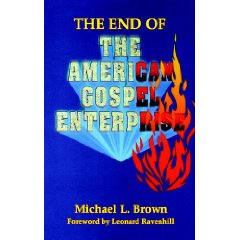
Revival, friends. Revival is what the Church at large needs. Not more buildings or programs. Not more feel-good outreach or books or even pastors. The Church is in desperate need of the fire of revival. That’s what the Ravenhill challenge is all about. The challenge derives from the consistent message of Leonard Ravenhill’s books and preaching and the same thoughts expressed by Michael Brown in his book The End of the American Gospel Enterprise. Go to the site and check out what the folks have started and catch the fire.
Atheist Evangelism
 I’ve recently been involved in extensive discussions with an avowed Atheist which has brought something interesting and saddening to light. Many Christians participate in this forum and have had their beliefs challenged or outright disputed by this man but, rather than addressing the fallacies or misrepresentations of his arguments, I’m alarmed to find that most either respond in a repeated confirmation of their faith or avoid him altogether. No one seems able or willing to confront him and his statements.
Sorry folks but this is not what Peter was thinking when he wrote “Always be prepared to give an answer to everyone who asks you to give the reason for the hope that you have.”
While tolerance of opposing views is important in our civil society, it is more important to have the preparation and ability to address a challenge to your faith that is rooted in the false premise of Atheism. As you have probably noticed, the ‘new atheism’ has been making quite a name for itself in the past couple of years. Harris, Dawkins, and Hutchins are names that have entered the cultural milieu as supposed authorities carrying the truth. They are actively proselytizing for their worldview and the majority of Christianity is unprepared to confront it. They are evangelizing and Christians are content to let it go on without challenge.
No more. We’re going to build muscle and trim fat and confront these falsehoods and point out the logical fallacies that the atheist must rely on make his points.
We’re going to fight for the heart of our king…
UPDATE:
Robert, participating in our dialog below, proposed the discussion of a Hebrew verse Isaiah 45:7. Here is the verse in the original language:


