
Enjoy the poetry over here at Cindy’s site.
Lent 2009 – 30 Steps to the Cross
 But you are a chose people, a royal priesthood, a holy nation, a people belonging to God, that you may declare the praise of him who called you out of darkness into his wonderful light. Once you were not a people, but now you are the people of God; once you had not received mercy, but now you have received mercy. (1 Peter 2:9-10)
Following yesterday’s steps toward the cross, Peter emphasized that the grace of God was intended to build us into a church of the despised. Our comfort zone was not be the measure of the world but the measure of how our sacrifice aligns with that of Christ. He continues today reminding us of our role as a royal priesthood.
We don’t hear that preached much, perhaps because we have allowed that assignment to be abrogated by the vocational clergy. The Pastor is representative of the priesthood for us and we are simply sheep in his flock. What would Peter say about this specialization? Nonsense! As people of mercy we are called to be in the perpetual worshipful service of the one who granted that mercy. Reclaim the mantle and take the demands of the priesthood seriously.

Psalm 30 – Rejoicing Comes in the Morning
 The middle verses of Psalm 30 remind us of why we return to these scriptures for strength and comfort time and time again.
Sing the Lord you saints of his; praise his holy name.
For his anger lasts only a moment, but his favor lasts a lifetime; weeping may remain for a night, but rejoicing comes in the morning. (vv 4-5)
All of the saints of the Lord are called to raise our voices in praise even though their may be fleeting moments in which we believe that our travails overwhelm our ability to worship. David reminds us that life with the Lord will have these peaks and valleys but that the grace of God remains consistent. We need only turn our hearts toward him to rejoice again in His goodness.
The core thought in this psalm is the distinction between death and silence, and life and praise. Despite current circumstances, the question that it drives us to ask is, are we still drawing breath? If so, we can praise God beginning with this simple fact. Once the praise begins, the Spirit will remind us of all of the other things for which we can praise God as well.
To you, O Lord, I called; to the Lord I cried for mercy.
What gain is there in my destruction, in my going down into the pit?
Will the dust praise you? Will it proclaim your faithfulness?
Hear, O Lord, and be merciful to me, O Lord, be my help. (vv 8-10)
… for if I live I praise you…
You turned my wailing into dancing; you removed my sackcloth and clothed me with joy, that my heart may sing to you and not be silent.
O Lord my God, I will give you thanks forever.(vv 11-12)
It is easy to see only darkness when we feel as though the valley has become too deep to ever climb out of but God has a purpose in it. Small graces will visit us, perhaps even those that we might be unaware of but they are cause for praise. We lift our voices despite the darkness for morning will come, just as God promises.
Lent 2009 – 31 Steps to the Cross
 As you come to him, the living Stone – rejected by men but chosen by God and precious to him – you also, like living stones, are being built into a spiritual house to be a holy priesthood, offering spiritual sacrifices acceptable to God through Jesus Christ. For in Scripture it says:
“See, I lay a stone in Zion, a chosen and precious cornerstone, and the one who trusts in him will never be put to shame.”
Now to you who believe, this stone is precious. But to those who do not believe,
“The stone the builders rejected has become the capstone” and “ A stone that causes men to stumble and a rock that makes them fall.”
They stumble because they disobey the message – which is also what they were destined for. (1 Peter 2:4-8)
Sacrifice. The focus of our Lent reflections. With Peter as the vehicle, we can see the progression of ‘less of me and more of you’ in response to Christ and the change that it brings. We turn to Peter’s first letter today and ponder his call to Be the Church. Believers are to build themselves into the Church, the body of sacrifice modeled on their Lord’s oblation. The question we meditate upon is whether we can accept being despised in the same way Christ was. Have we given up enough of self to make this possible or are we still concerned with what men think?
The PowerPoint Alternative
Worship Craft has begun posting a new series on using PowerPoint in worship. Many churches overlook this tool as inappropriate even though many pastors love to punctuate their sermons with it. There are ways to bend it to your will so follow along if you’re interested.
Friday is for Tunez! John Hiatt Gospel
After Angel Eyes, my favorite John Hiatt tune that you’ve heard in a thousand different places but never knew who it was. Enjoy…
]
Lent 2009 – 32 Steps to the Cross

“For, said Peter, “it is written in the book of Psalms,
“’May his place be deserted; let there be no one to dwell in it,’
and,
“’May another take his place of leadership.’ (Acts 1:20)
Peter is continuing the conversation he has been having with the remaining disciples after they had confronted the betrayal by Judas (33 Steps). In Acts we see a Peter who is maturing as the Spirit has confronted his worst tendencies and worked His transformation. The Apostle now turns his attention to filling the emptiness among the Eleven and fulfilling their mission. His use of scripture is a turning point for Peter; he has put aside his raw emotion in decision making and is applying the Word to the situation at hand.
The lesson for us is plain. Our maturity as Christ followers is measured by those moments in which we put aside our self reliance and rely on the revealed Word and the Spirit’s direction in plotting our direction in life. Make note of the twin requirements: we must know God’s Word and discern the Spirit’s guidance. Growth in these areas only comes from devotion to study and prayer.
Do you need to renew your commitment?
Free Lent Artwork
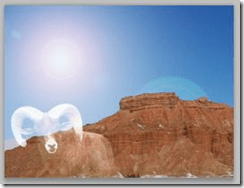
Worship Craft has put up three background images for the second Sunday in Lent. They center around the reading in Genesis 22 and God’s provision of the sacrifice. All of them can be downloaded for free and can be used in worship presentation software or PowerPoint or for illustration. Check it out.
Lent 2009 – 33 Steps to the Cross

In those days Peter stood up among the believers ( a group numbering about a hundred and twenty) and said, “Brothers, the Scripture had to be fulfilled which the Holy Spirit spoke long ago through the mouth of David concerning Judas, who served as guide for those who arrested Jesus – he was one our number and shared in this ministry. (Acts 1:15-17)
We are all hurt by the betrayal of another person at some point in our lives. Young or old, male or female, at some point we are going to feel the sting of someone in whom we trusted is going to let us down and our Christianity provides no bulwark against it. Our reaction, on the other hand, is a measure of the depth of our faith.
We may take as long as Peter did to see God’s hand in the ebb and flow of life. Though the Cross was an unspeakably wicked act on behalf of those who committed it, it fulfilled the plan of God for our redemption. Judas was a part of that plan as Peter would come to understand. Is there a betrayal in your life that you can reflect on today that serves a greater purpose with the benefit of hindsight? Maturity as we see in Peter only comes with this kind of meditation. Devote today to this helpful examination.
Lent 2009 – 34 Steps to the Cross
 Now when Jesus returned, a crowd welcomed him, for they were all expecting him. Then a man named Jairus, a ruler of the synagogue, came and fell at Jesus’ feet, pleading with him to come to his house because his only daughter, a girl of about twelve, was dying.
As Jesus was on his way, the crowds almost crushed him. And a woman was there who had been subject to bleeding for twelve years, but no one could heal her. She came up behind him and touched the edge of his cloak, and immediately her bleeding stopped.
“Who touched me?” Jesus asked.
When they all denied it, Peter said, “Master, the people are crowding and pressing against you.”
But Jesus said, “Someone touched me; I know that power has gone out from me.”
Then the woman, seeing that she could not go unnoticed, came trembling and fell at his feet. In the presence of all the people, she told why she had touched him and how she had been instantly healed. Then he said to her, “Daughter, your faith has healed you. Go in peace.” (Luke 8:40-48)
Peter’s education on the nature of faith took many forms and we can gain much by spending time in those situations where he seems to play an insignificant role. He is with Jesus as the Lord heads toward the home Jairus to heal his daughter. Peter understands this mission and we can almost picture the burly fisherman blocking for The Healer as the crowd pushes in to be closer to Him. Suddenly, Jesus stops and demands to know who has touched him in the crowd. Peter is obviously stunned, wondering how He could ask this question of a crowd that presses in from all sides to be in contact with Him. The fisherman states the obvious.
Jesus knows that this touch was different. It was a touch of faith, a hand reaching out of the crowd that believed that He was the Healer. Peter misses this because he is focused on ‘the mission.’ Any deviation from the journey is unacceptable to him. Jesus knows differently though. He knows that a needy faith encounter can occur at any moment and in any situation. Commitments of faith do not occur only at the altar or when they are programmed. We can learn this same lesson as Peter did. We can train ourselves to be more aware of our surroundings, of those interactions that might not seem significant, and to look for those who need the touch of Jesus.

