Eyes Wide Open by Jud Wilhite

clip_image001

Pastor Jud Wilhite knows what it means to have the harsh light of reality washing over you twenty-four-seven. Serving in Las Vegas, he sees life in the unrelenting light of the desert sun and the dusk to dawn burn of the casino neon and in the revelatory power of these beams, it makes it very difficult to hide the real you behind the mask that so many Christians tend to don. In his encouraging book, Eyes Wide Open, Wilhite pens a wide-ranging spiritual guide to putting aside the disguise intended to show people how we have it all together and to look in the mirror and see what God truly sees in us. He challenges us to open our eyes and our heart and see the person that God loves without reserve.

The title can lead you to think that Wilhite might have filled the pages with positive, image affirming messages but as soon as you start to read, you find much, much more. His plain spoken spiritual leadership guides the reader through a series of ‘openings’ meant to expose different aspects of our person, character, and behavior to the self-image that God wants us to see rather than the poor, guilt-burdened person that we paint for ourselves. You don’t need to read from page one to the end. Each of Jud’s chapters can stand on its own and you can choose to explore the aspect of life that most applies to you.

Pastor Wilhite asks pointed questions that can orient the way in which you approach the book. He asks you to consider yourself before God and how that image affects the nature of your relationship. Are you a performer, trying to work your way into His heart? Do you believe in your heart that God already loves you personally, despite your flaws and less than holy behaviors? Do you believe that God turns away from you if your prayer life is spotty, your faith on a roller coaster, and deep down you aren’t quite sure of everything? These are tough questions, hard realities that challenge each of us in what we believe about the bond between God and us. Wilhite worked hard to ensure that thumbing through the engaging chapters challenges every answer that you might come up with, especially if you insist upon continuing to claim a negative perspective.

Each essay is brief and pointed and can be good for igniting specific prayer, meditation, and journaling. He asks you see yourself in the characters that populate the stories from Dog Chapman, Evil Kneivel, and Johnny Cash to the myriad people that Jud himself has encountered on the ministry field he serves in Las Vegas. With each page, you stop to think about your own self image, about the way that the image that we often develop for ourselves is much different that the image that the Bible teaches us that God has of us. Turn the page and Pastor Jud is there asking if today is the day that you want to lay yourself wide open to seeing the real you, the you that your Father sees and loves unconditionally. When your eyes are wide open, a different life unfolds in front of you.

For more information, Eyes Wide Open

Digg This

The Think Big Manifesto by Michael Port

image

I trusted Seth Godin up to this point. I valued his insight and when he said something is a must-read it seemed like a good investment of time. But now, after investing the day I spent reading The Think Big Manifesto, I’m wondering if my trust was misplaced.

Port has written the perfect Seinfeld book. Heavy on the platitudes and soaring rhetoric, it fails to move the reader to action. Here’s an example:

To think big is to know what we stand for and let it guide us in everything we do; to maintain our integrity in the face of a world filled with slack thinking, lazy habits, and flexible principles; to imagine the possibilities of the world and go out and do them –build a business, green the environment, rid the streets of crime, reengineer the foster care system, write a novel, run a marathon, protect animal rights, raise a child, become a vegetarian, join a nonprofit board, fight hunger and poverty, redesign our educational system, foster a peaceful and tolerant community, and the list never ends.

On the other hand, now that I’ve typed that paragraph maybe I do understand what the book is about. It is 166 pages of an idea that could have been expressed on one—Think Big.  Let me save you some dough.

Use your God-given imagination and the power that He has vested in you and get excited about the possibilities that surround you. Right a wrong. Care for somebody—anybody. Develop an attitude of submission. Make something that didn’t exist until your heart and soul brought it to life. Live fully. (Oops, that last one is a platitude.)

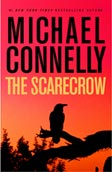
The Scarecrow

imageAs soon as I’m done writing this post, I’m going to change all of the passwords in my life, take down my blog, get off of LinkedIn, and remove my faculty Insite page. The methodical cool with which the Scarecrow drills through his victim’s lives to discover the keys to their electronic existence is better than any scared straight intervention you may have seen. Now I just have to figure out a way to remember x35LJss3011zTU09…and oh yeah, never visit any web site that you find on Google.

In Connelly’s latest The Scarecrow, he brings back the unlikely team of reporter Jack McEvoy and FBI Agent Rachel Walling whom we last looked in on in The Poet. At the end of days at the dying LA Times, Jack decides to write one last front page story before his furlough. As he begins to assemble his notes, Jack finds the murder of a dancer being pinned on a banger from the projects is not all it seems. As it would for all of us, the research begins at the keyboard where the evil lies in wait.

The trail leads into the deserts of Nevada and Arizona and into the unseen world of the hardened data center. The denizens of the server farm are frightening in new way as you sit back to think about the digital trail you left this morning. Did you actually think that the things you were looking at and reading were secret? Do you look for the lock icon when you start to type in your credit card number? Do you really trust it? Piecing together the clues left all over like a messy desk, the criminal minds here are able to shut down an entire life. In Jack’s case, as he begins to nose around where he shouldn’t he finds his credit cards canceled, his phone turned off, and his bank account drained.

Here’s where the trouble starts with this book. Connelly lets McEvoy deal with these things far too casually. Where most of us would be apoplectic if any one these three events struck us, Jack just motors on as if they were a minor inconvenience and, the way his new cards appear the next day, they seemed to be. While the story and plot are good, too many things in this tale are convenient or just too simple. I won’t even touch on the knife fighting skills of the reporter when up against a remorseless, psychopathic murderer.


Connelly never disappoints in his story telling and The Scarecrow is the perfect summer read. The tease of Walling and McEvoy Investigations Inc. holds a lot of promise. Something to think about while we wait for Harry Bosch to reappear in the Fall.

The Disappearance of God by Al Mohler

clip_image001

Tolerance has become the most important measure of one’s character in our modern era. Modern tolerance is not simple endurance; it is the required subversion of your beliefs and moral standards whenever they appear to impinge upon the beliefs and morals of another. In the era of the “Me” god there is no greater offense than to stand firm on a position, especially one rooted in traditional Christian belief, and deign to judge the beliefs and practices of another person and the truthfulness of their claims.

In The Disappearance of God, Dr. Al Mohler laments the way in which a culture that is enamored of this new tolerance has made inroads into the Church. As the Church has capitulated to the demands for her doctrine and moral requirements to be softened, Mohler effectively makes the case that cancer has begun to eat away at the very things that were meant to set Christians apart in the world. Worse yet, he says, the loss of muscle threatens the gospel as a viable message in the culture, rendering it as nothing more than a truth among other truths.

Dr. Mohler does not simply issue a roll-call of various ills that have visited the Church and leave it at that. He calls for an immediate triage to stop the further decay within the body and to sort out the issues that must be addressed in order to restore the power of the gospel claims and the power of the Body of Christ to once again affect the surrounding culture rather than continued to be diminished by it. In order of priority, the church must first regain a sense of which doctrinal issues are of primary importance to the restoration of authenticity within the Church and second, the members of the body must regain the intellectual strength necessary to engage in this discussion and fight to restore the authentic doctrine.

The book addresses a variety of gospel-weakening issues that have infiltrated the Church and which have varying abilities to permanently disfigure the face that She presents to the world. Mohler points to the loss of the notion of sin and the softening of the modern Church’s doctrine of Hell and eternal perdition as two of the fundamental positions on which leaders and their congregations must regain their footing. Certainly, both of these doctrines are contrary to the prevailing culture and a strong affirmation makes the Church less palatable in a tolerance-driven society. He challenges our desire to be loved by the world which leads us to put these difficult challenges aside and to restore our understanding of who we belong to and His demands of us.

The Emerging Church and their doctrinal slide towards extreme liberalism are also subjected to Mohler’s critique. While the Emergent movement was ignited by a desire to better conform the Church to modern cultural expectations, that formation allowed postmodern notions of truth to color their doctrinal positions as well. Mohler critiques the doctrinal development of Emergent thinker and leader Brian McLaren as representative of much of the whole. McLaren’s definition of generous orthodoxy as wide ranging and allowing for an unlimited spectrum of philosophies fails to address the opposite side of his arguments in that this spectrum essentially denies the existence of absolute truths.

Dr. Mohler has produced another outstanding polemic against the further decay within Christ’s Church. He encourages the reader on page after page to recognize the doctrinal malleability that we have allowed to creep into the Body and affect our witness to the world. Aligned with his early call to develop our own theological muscles, Dr. Mohler doesn’t provide the answers to challenges he issues. He provides a succinct classification of the problems, now it’s up to you and I to follow through and get the Church back on track. The first step is a thorough read of this book.

For more information on this book, click here.

Digg This

Argument Adjourned, Atheism and Amorality

image

In his book Why Be Moral, Atheist philosopher Kai Nielsen admits the position that the new, angry Atheists like Sam Harris cannot bring themselves to do, that “Pure practical reason, even with good knowledge of the facts, will not take you to morality.” Bertrand Russell, who above all things devoted himself to attempting to live according to reason alone, admitted that he could not account for morality by this method. If reason cannot complete the equation, where are we left to turn?

In every instance of moral decision, there is an evaluation of the opposite positions of good and bad. Moral affirmation cannot be an abstraction. The person who makes a moral evaluation assumes the intrinsic worth in himself and sees that intrinsic worth in the lives of others. In a world of matter alone, there is no intrinsic worth. A moral framework is necessary for the declaration of right and wrong, one which sets the standard for good and bad.

The existence and continued affirmation of a moral framework can lead us to only one conclusion. God exists and is the provider of this moral framework. We can lay it out as:

P1 Objective moral values exist only if God exists

P2 Objective moral values do exist

C God Exists

The arguments from reason for the existence and practice of morality (without God as the lawgiver) trend along the line of humanity doing things in the interest of the community and cooperation for the good of all. The problem is circular though; with an objective source of good and bad how will the billions of sovereign creatures agree on what is good and bad? Since one life (of matter alone) is of no more value than any other life, why would a person ever do anything but in their own self interest? These questions always lead us back to the top of the page.  


Image by jonathunder

Digg This

Atheism, Amorality, and an Argument Against Again

imageYesterday we left off exploring two important questions that Atheists must answer in a universe composed of nothing but matter:

– When referring to the ‘rights’ of others, where do these rights come from in a world of cellular masses?

– When talking about right and wrong, who defines the meaning of these terms?

Let’s bring another Atheist voice (cheer?) into the discussion. Sam Harris (remember his little book) makes repeated use of moral language throughout his Letter to a Christian Nation. He describes things as good and evil. God especially falls under his moral evaluation as he considers the horrors of the world—disasters, child rape, murder, various evils—and asks why, if there is a God who is presumably good, these evils exist in the world. The trouble that Harris runs into is that, in order to evaluate anything as bad/evil one must have an objectively ‘good’ exemplar. Without that good that all can agree on, who has the authority to define good and bad? Harris? Pol Pot? Stalin? Doug Henning?

This is the main problem that the Atheist runs into when proclaiming their morality and even, superior morality. In order to make such a proclamation, the Atheist must borrow from an objective moral framework in order to make a judgment. Without that framework or its admitted existence, the atheist must defer to his or her feelings to make the call. Bertrand Russell admitted as much,

In a debate with a Jesuit priest, Russell had made a failed attempt to explain the source of his ‘objective’ morality. When the priest asked him how he differentiated between good and bad, Russell answered, “I don’t have any justification any more than I have when I distinguish between blue and yellow…I can see they are different.”

The priest noted “You distinguish between blue and yellow by seeing them, so you distinguish good and bad by what faculty.”

“By my feelings,” Russell replied.

Of course, the follow up question is obvious (but was not asked in order to save face for Russell.) The priest pointed out the corner into which Russell had backed himself by posing this dilemma. “Mr. Russell, in some cultures they love their neighbors; in other cultures they eat them. Do you have a personal preference, and if so, what is it?”

At least Russell is more honest about his agnosticism and the ambiguity of his own views on ethical values than is Mr. Harris. Sam enjoys a morality developed in his own mind but he never answers the question, from where does his intuition as to what is right and wrong come? The Atheist never provides an adequate explanation for how an intuition toward morality can develop from nothing but matter and chemistry.

So, the question we are left with today is, can morality exist apart from a Moral Lawgiver? Discuss amongst yourselves until next time.

Image by Mindsay Mohan

Digg This

Amorality, Atheism, and an Argument Against

image

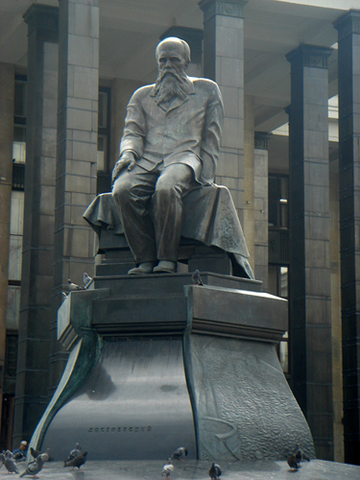
Dostoevsky’s Ivan Karamazov gives voice to a well known idea, that without God, everything is permitted. In an era and culture in which moral relativism is the norm, the very statement of this idea may seem unnecessary; anyone who deigns to judge the actions of another as right or wrong brings the full weight of criticism and labeling against themselves. The Atheist community will point out that they have a morality without God that is sometimes claimed to be superior to that of religious people. The monotheist will claim otherwise, that moral law is sourced in God alone. Can one side or the other adequately defend their proposition or is the discussion really two different discussions, one designed to camouflage its futility?

Watch the language carefully. Professional Atheist David Mills, for example, writes, “I do believe, though, that the terms “right” and “wrong” usually lack a clear unbiased definition when employed by most speakers. Personally, I prefer to label behavior as either “considerate” or “inconsiderate” of someone else’s rights.” (Atheist Universe, 53) Mills uses interesting words here:

– Right & Wrong

– Considerate & Inconsiderate

– Rights

Because most people are unable to attain his level of specificity with regard to the vocabulary of right and wrong, Mills shifts his statement of morality to the more flexible ‘considerate’ and ‘inconsiderate.’ The that cannot escape scrutiny however, is rights. In the atheistic view of the world, nothing is more than a variously evolved collection of cells created by chance. From where do these cellular masses become imbued with rights?

The more sophisticated Julian Baggini presents a similar position; “Morality is more than possible without God, it is entirely independent of him. That means atheists are not only more than capable of leading moral lives, they may even be able to lead more moral lives than religious believers who confuse divine law and punishment with right and wrong.” (Atheism, 37) Baggini leaves us with the same question to be answered, from where do notions of right and wrong come?

Eyes on your own paper and present your answers in essay form.

Dostoevsky image by Mathew.Hickey

Digg This