One of the more popular posts here is my analysis of Scot McKnight’s lengthy article on the warning passages in Hebrews. I recently updated it and you can read the new version here.
The High Discipline of Prayer
“God does nothing but in answer to prayer.” John Wesley
Prayer is the central core of all of the spiritual disciplines. Devotion and practice of the discipline moves us more and more into the state of perpetual communion with the Father that is to mark us as separate from the world. To pray is to change. It is the primary avenue by which the Father molds and transforms us.
A primary truth about the discipline of prayer is that it is both unnatural and natural simultaneously. Putting this discipline into practice requires a concerted effort on the part of the redeemed and a long period of apprenticeship. We must learn from the Master how to pray just as His first disciples did.
One day Jesus was praying in a certain place. When he finished, one of his disciples said to him, “Lord, teach us to pray, just as John taught his disciples.” (Luke 11:1)
The discussion of prayer could take off in so many directions so it will be necessary to limit our attention to a few core topics. This will be a longer series of posts and I hope that some readers will consider the possibility of contributing their own materials so that all of can develop our personal practice of this most important of disciplines.
Image Iulian Nistea
Psalm 47 How Awesome is the Lord Most High
Clap your hands, all you nations; shout to God with cries of joy.
How awesome is the Lord Most High, the great King over all the earth! (vv 1-2)
The liturgist repeats the words of psalm 47, for the first time calling all nations to worship Yahweh for He is sovereign of everything, not just Israel. If they do not know Him now, one day the word will reach them and his Lordship will be apparent to all. All of this psalm concerns itself with praise for the Lord Almighty. He alone is God and is to be worshipped as such.
The modern reader must place this liturgical psalm in its proper context so as not to misinterpret verse 5. It reads:
God has ascended amid shouts of joy, the Lord amid the sounding of trumpets.
This should not be read as God being anywhere lower than as ruler of the Heavens and Earth. This prayer would have accompanied the movement of Yahweh’s symbolic throne up into the Temple before the final shouts of praise and honor arise from the worshippers.
For God is the King of all the earth; sing to him a psalm of praise.
God reigns over the nations; God is seated on His holy throne.
The nobles of the nations assemble as the people of the God of Abraham, for the kings of the earth belong to God; He is greatly exalted. (vv 7-9)
The current ‘Kings of the earth’ would do well to reflect on this fact.
Image richarddigitalphotos
It’s the Little Things – Christian Hypocrisy
You lifted your hands in praise, eyes closed as you sang from your heart, reveling in God’s presence. As prayer was led, your head bowed in reverence as I’m sure you poured everything out to the Father. Your voice could be heard affirming the pastor as he preached the message and you were among the first to the Lord’s Table to partake of the bread and wine. Everything about you told the surrounding body how devoutly you take your faith and I’m certain that you are regarded as a model Christian within the congregation.
But the damage had already been done.
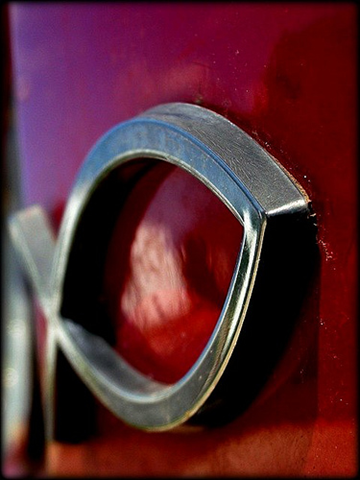
Did you stop to think before you drove into the church parking lot against the one-way sign? Sure, there was probably going to be little outgoing traffic at the beginning of service and if there was you could just pull to the side but that’s not the point. The polished chrome fish on your tailgate marked your allegiance for all to see out on the road. All the people around you on the busy boulevard also watched your shiny fish break the law just to take a shortcut into the church parking lot. They saw the real you and saw a hypocrite.
Sadly, you also made all of us out to be hypocrites.
You see, we proclaim a relationship with Jesus Christ that goes beyond the church walls on Sunday morning. We claim that our lives are constantly being molded and modified by the Holy Spirit. We claim to live in submission to others, sometimes boldly saying that we have a better way of life that we would like to invite others to share. We claim all of that and even try to live it out.
Only to have it destroyed by one small moment where one of us demonstrates that we’re really no different from the rest of the world.
When one of us demonstrates this in the small things (like following the traffic laws) it reflects on the whole Church in the larger things.
Image benlio
Hell and The Fire of Purgatory
The idea of Purgatory is the last of the major doctrinal positions that Christians hold on Hell and the final things. It is almost exclusively held by the Roman Catholic church with very few Protestant theologians finding the position credible. Purgatory refers to a state or condition where souls come to rest between the final destinations of Heaven and Hell. The soul in purgatory endures a purifying suffering necessary to prepare them for the final judgment. After that day, according the the Catholic theology, Purgatory will cease to exist as its mission will be fulfilled.
The idea of an interim state is not unusual in general Christian theology. It answers the question, “what happens when we die?” The popular idea of immediate ascent or descent does not take into account the scriptural references to a day of final judgment in the future in which some are assigned to perdition and others to glory. Purgatory is the Catholic attempt to explain this state, expanded to include the notion of purification.
The symbolism of purgation is not rooted in Christianity but is widespread throughout all religious history. It is bound up in the distance of holiness between gods and men and in the human desire to approach the gods. The perfection of the gods requires that the human affect some measure of holiness themselves in order to stand in the god’s presence. The holiness is gained by a purifying ritual that takes many forms. As it was adopted in Catholic theology, this purifying process included a measure of punishment for the sinner according to their faults in their earthly life. The punishment is sped along by the mortal intercession of the Church and the sinner’s survivors. Catholics understand human nature as not perfect but not perfectly horrible either. Purgatory grants them an extension on their ability to be perfected for the next phase of eternal life.
What do the scriptures say about Purgatory? Very little if anything at all but we need to understand the Roman Catholic approach to the scriptures and theology in order to understand the formulation of the doctrine. In the Apocryphal book, 2 Maccabees contains a passage that supported the historical development of the doctrine. In the context of the text, some of the soldiers of Judas Maccabeus were wearing idolatrous amulets when they were killed in battle. Judas took up a collection as an expiatory sacrifice intended to release the dead from their sin.
They all therefore praised the ways of the Lord, the just judge who brings to light the things that are hidden.
Turning to supplication, they prayed that the sinful deed might be fully blotted out. The noble Judas warned the soldiers to keep themselves free from sin, for they had seen with their own eyes what had happened because of the sin of those who had fallen. He then took up a collection among all his soldiers, amounting to two thousand silver drachmas, which he sent to Jerusalem to provide for an expiatory sacrifice. In doing this he acted in a very excellent and noble way, inasmuch as he had the resurrection of the dead in view; for if he were not expecting the fallen to rise again, it would have been useless and foolish to pray for them in death. But if he did this with a view to the splendid reward that awaits those who had gone to rest in godliness, it was a holy and pious thought. Thus he made atonement for the dead that they might be freed from this sin. (2 Maccabees 12:41-46)
In the New Testament, some will read in Matthew a similar reference:
And so I tell you, every sin and blasphemy will be forgiven men, but the blasphemy against the Spirit will not be forgiven. Anyone who speaks a word against the Son of Man will be forgiven, but anyone who speaks against the Holy Spirit will not be forgiven, either in in this age or in the age to come. (Mt 12:31-32)
The Catholic reading of this passage points to the possibility of being forgiven in the next world. Protestant theologians (cf Eph 1:21) do not generally share this reading. Catholic theologians will admit that the scripture is ambiguous at best and will also readily state that the doctrine is rooted in tradition rather than sola scriptura. Tradition will cause the Catholic reader to understand these and other passages in the light of the Roman Catholic theology of grace and works.
Conclusion
For the Roman Catholic, purgatory is a final opportunity in death to find our love for God. It is a state of His continuing grace and mercy to continue to seek a way in which the human might be restored to holiness and finally to God’s presence. Mortal intercession can aid those who find themselves suffering in a purification process until the day of judgment when Heaven or Hell will be the only choices remaining.
Image Mike_fj40

Psalm 46 A Mighty Fortress is Our God
A mighty fortress is our God, a bulwark never failing
Our helper He amid the flood, of mortal ills prevailing. Martin Luther
God is our refuge and strength, an ever-present help in trouble.
Therefore we will not fear, though the earth give way and the mountains fall into the heart of the sea,
though its waters roar and foam and the mountains quake with their surging. (vv 1-3)
46 is the first of a trio of psalms that celebrate the security of being God’s people. In the same way that it inspired Luther to pen his well known hymn, the psalm fills all believers with confidence knowing that in God the future is secure despite whatever current circumstances might suggest. The temptation to seek the comfort of the world in surrender is diminished as the knowledge that all is in God’s control with a Holy outcome assured.
Come and see the works of the Lord, the desolations he has brought on the earth.
He makes wars cease to the ends of the earth; he breaks the bow and shatters the spear, he burns the shields with fire.
Be still, and know that I am God; I will be exalted among the nations, I will be exalted in the earth. (vv 8-10)
The words strike the modern ear as jingoistic but this was not the intention of the psalmist. He points to the Lord’s victories as both a warning against attacking Yahweh’s people and as a sign over the walls of Jerusalem that this city belongs to Him. None should be so bold as to attempt to change that ownership and face the certain ruin that follows. God’s voice bellows in the final verse: “Enough! I alone am God and I will be known throughout the world as Lord!”
Let the final words of the psalm infuse your prayers this week, “The Lord Almighty is with us; the God of Jacob is our fortress.”
Image areyoumyrik
Submission to Those in Authority
Submission is among the most difficult of the spiritual disciplines to put into practice. Every time that we place another above self we run the risk that out submission will be abused. The Christian is willing to be obedient to the Lord in this risky venture but we search for limits and these are reached when submission becomes destructive. This point is clear in the words of Christ,
Jesus replied: “Love the Lord your God with all your heart and with all your soul and with all your mind. This is the first and greatest commandment. And the second is like it: ‘Love your neighbor as yourself.’ All the Law and the Prophets hang on these two commandments.” (Mt 22:37-40)
We are challenged by Peter who described a radical submission to wordly authority in his first epistle. He says “Submit yourselves for the Lord’s sake to every authority instituted among men: whether to the king, as the supreme authority, or to governors, who are sent by him to punish those who do wrong and to commend those who do right.” Our submission is a clear sign to the watching world that we see authorities as vested in their position by God. We are obedient up to the point at which the submission is abused and it becomes destructive.
This ‘spiritual authority’ is the key indicator that the modern Christian is alert to. We are deeply aware of the differences found in a world of Christians and those who are antagonistic toward Christ. Are we allowed to refuse to submit in situations where spiritual authority is absent? For the most part, no. We are to emulate the radical submission of Christ to greatest extent we are able until such point that it becomes destructive. Until then, we model the Gentle Soul and pray that their hearts will be touched.
True Prayer is Measured by Weight
Total Annihilation or Eternity in Hell
“’Father Abraham, have pity on me and send Lazarus to dip the tip of his finger in water and cool my tongue, because I am in agony in this fire.” (Luke 16:24)
God is love. (1 John 4:16)
There is a difficult tension that many believers confront when the doctrine of eternal punitive condemnation in Hell is contrasted to the pure love and holiness of God. How could a God of such love and mercy create such a place as the torturous horror of the chambers of Hell? Not only that, how would he condemn his creations to this painful punishment forever? In the course of answering these questions and responding to a call for the reconsideration of the doctrine of Hell, the concept of Annihilationism has been created. This school of thought believes that although not everyone will be saved (cf: universalism), those who are not saved will not face unending punishment. Instead, those not saved will simply cease to exist; they will be destroyed or annihilated. The core belief that supports this modified doctrine is that no one, regardless of the enormity of their sin, deserves eternal suffering.
A form of annihilationism known as conditional immortality states that the human being in his nature is mortal. Those who die unredeemed will be allowed by God to pass out of existence while the believer is granted immortality so that they survive death. A more developed form of this doctrine sees the unredeemed participating in the resurrection but that they will again pass out of existence while the saved enjoy the new heavens and new earth. Another form of annihilation envisions a period of punishment but that it is not eternal. After some measure of time has passed, perhaps in proportion to the sinfulness of the person, the soul finally ceases to exist.
The difficulty with annihilation is that there is little direct support in the Scriptures for the doctrine. The typical annihilationist reads the passages that refer to the final states, specifically those referring to destruction, literally. For example, Matthew 7:13 says:
“Enter through the narrow gate. For wide is the gate and broad is the road that leads to destruction, and many enter through it.
The word destruction is interpreted literally as matter being destroyed, fulfilling the annihilationist’s view of the end state. The Greek word apoleian does not support this literal interpretation but English readers have continued to do so. The annihilationist must also explain the number of passages that support the eternal measure of perdition. Many complex scriptural structures have been constructed to perform this task but the majority of the Church has not been convinced.
Image formerthings
Psalm 45 Your Throne O God Will Last For Ever
My heart is stirred by a noble theme as I recite my verses for the king; my tongue is the pen of a skillful writer.
You are the most excellent of men and your lips have been anointed with grace, since God has blessed you forever. (vv 1-2)
Psalm 45 draws our attention because of its shift in focus. This is not a prayer or plea to God as the preceding entries have been. Instead, it is a song in praise of a Royal on his wedding day. Our view of the psalter is expanded and its application to all of life is made more apparent.
The voice of the first verses also gives us a new appreciation for the author of the song. He is an ‘expert scribe’, similar to profession of Ezra (Ezra 7:6). The scribe is not simply a transcriber of words. He is a learned fellow, observing and cataloging the traditions, literature, and practices of his community. In the instance of this psalm, it appears that he has composed this loving tribute orally and speaks it to the King himself. We will now be more aware of his hand in the rest of the psalter as we continue our exploration.
The application of this psalm has expanded through the ages. This was read as a Messianic text in later Jewish practice and others have found it to be speaking allegorically of the relationship between God and His people. Many have struggled with verses 6 and 7 as the King is referenced as God:
Your throne, O God, will last for ever and ever; a scepter of justice will be the scepter of your kingdom.
You love righteousness and hate wickedness; therefore God, your God, has set you above your companions by anointing you with the oil of joy. (vv 6-7)
In the context of the time, modern readers must appreciate that King was seen as divinely appointed by God and possessed a special relationship because of the selection. This is not to be read as an ascendency to divine status nor as idolatry. The author of Hebrews found in these verses the perfect words to speak of the Son of Man and His person and office (Heb 1:8-9). Christians have interpreted this psalm as a song of love between Christ and His church, a beautiful application of beautiful words.
Image steve46814