
Category: Uncategorized
THERE’S NO I IN INTEGRITY
Integrity is the foremost measure of character between you and me. The dictionary will define integrity as an adherence to a code of values, but even that is ambiguous. Integrity means that you will do what you say you will do and I do what I say I will do. Anything less and the bond between us begins to fray and eventually snap. When it finally breaks it’s much like the rupture of a taut Achilles tendon. The two ends will curl away from each other and must be stretched under great pressure to even come close enough to begin the net back together. There is much pain and a long period of time elapses before the bond is trusted again, if it ever is.

Well, actually there are two. I and I. You and me. Integrity is the foremost measure of character between you and me. The dictionary will define integrity as an adherence to a code of values, but even that is ambiguous. Integrity means that you will do what you say you will do and I do what I say I will do. Anything less and the bond between us begins to fray and eventually snap. When it finally breaks it’s much like the rupture of a taut Achilles tendon. The two ends will curl away from each other and must be stretched under great pressure to even come close enough to begin the net back together. There is much pain and a long period of time elapses before the bond is trusted again, if it ever is.
In leadership, whether in the church or in a secular setting, surveys have demonstrated over and over that the most important character trait in a leader’s integrity. If people are going to follow a leader into battle or into ministry they must know that the leader’s word is rock solid. They do what they say they’re going to do. Always. Without excuses. Even if it requires sacrifice on their part.
They are often misappropriated verse in the epistle of James speaks to the impact that integrity can have.
Show me your faith without deeds, and I will show you my faith by what I do. James 2:18
It is as easy to claim to have faith as it is to pound your chest and claim the solidity of your integrity. Because we do not exist in a vacuum it’s also easy enough for those around us to evaluate our claims of both faith and integrity. If we claim faith in the God of the universe and His Son Jesus Christ but live lives contrary to the obedience and character demanded of a recipient of his magnificent grace that our faith is certainly questionable. In the same way, proclamations of integrity fall on deaf ears when our actions demonstrate that we cannot be trusted. The Christian leader who finds themselves in this position also has a ministry that is over before it starts. God is not going to bless something that begins by bringing dishonor to His name.
Our hope would be to be found like Israel’s leaders Samuel. After having led Israel for decade after decade Samuel stands before all the people and lays himself bare. (1 Samuel 12:1-4) He states without hesitation that if he has wrongly taken anything from anyone he will repay. If he has cheated or oppressed anyone he will make reparation. If he has been less than honest in any of his dealings he will confess and make right any illicit bargain. “I will make it right” are Samuel’s farewell words before Israel and his God.
The people reply “you have not cheated or oppressed us,” and “you have not taken anything from anyone’s hand.” Samuel had integrity.
Our Trials Give Hope to Others
Six Things God Knows About YOU

And He Wants You to Know He Knows…
Christians will rightly spend time coming to know the attributes and Word of God in order to “know” Him better. To develop a relationship with God is to know what he has revealed about himself and come to see how those attributes affect one’s life. There is also a symmetry to relationship and it increases in depth and meaning when we contemplate those things that God knows about us. Not only does God know these things about us,He he also wants us to know that He is mindful of His people in this way.
ONE: He knows how you’re put together. You are not just a random assembly of cells. You are a vessel so unique and valuable that God imprints his image upon you. This is not a licensing deal; God has elected to take an active role in the knitting together of those who will bear the divine image (Ps 139:13; Jer 1:5)
TWO: Because of his intimate involvement in shaping the vessel of his image, the Potter also knows your heart and mind. He knows you to the depth of your personality and soul. He knows what makes you tick and what ticks you off. (Jer 17; 1 Kg 8:39)
THREE: Every corner of your heart is familiar territory to God and there are no shadows obscuring any feeling from His gaze. He knows your joys and triumphs as well as your hurts and troubles and He cares about both. (Ps 56:6; Ps 103:13)
FOUR: God knows your needs even before you can find the words to declare them. This might be a challenge to understand sometimes because, as people, we often are more aware of our surface desires than we are of our deepest needs. God does not struggle with that differentiation and wants to help us to recognize what our deepest and most fundamental needs are. (Mt 6:8)
FIVE: The irreplaceable image of God baked into every human being creates within them a desire to be reunited with the creator. In other words, God knows that you want to know him even before you become aware of that desire. In this knowledge God has commissioned his Spirit to be about the work of heightening awareness and creating opportunity for this reunification to occur. (Eph 1:17-19; John 17:3)
SIX: Your name summarizes the essence of who you are as God demonstrated to Moses with the thunderous “I Am” and God knows your name. You are not a chance occurrence, but rather, an infinitely valuable creation, known and treasured by God. (Is 43:1)
IN ALL THINGS GOD WORKS FOR THE GOOD OF THOSE WHO LOVE HIM : CHARLESTON EDITION
So where was God at work for those who love Him when the shooter in Charleston entered His house and began making martyrs with a pistol?
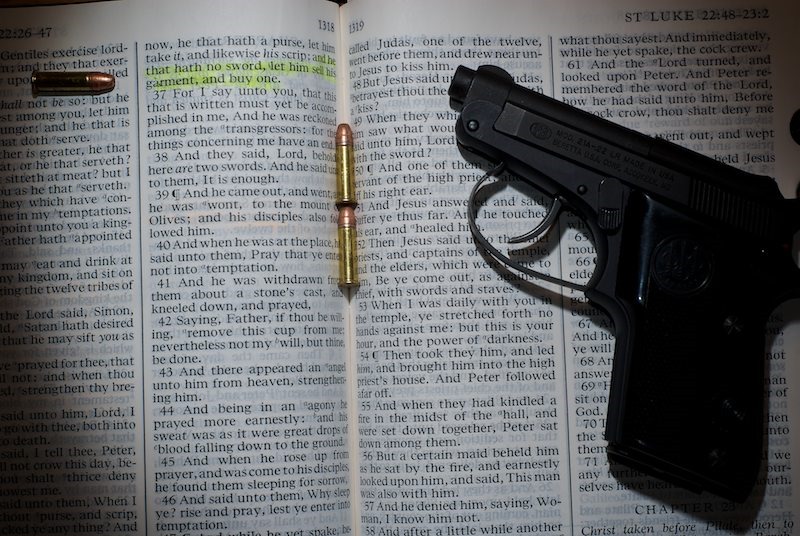
In the title you likely recognized a very familiar passage from Romans often ripped from its context and applied to different life situations indiscriminately. When that happens the meaning of the verse in the larger passage becomes muddled, and even lost. The idea of God working all things for good can adopt a diminished connotation, taking on the secular definition of good — a positive, pleasing outcome.
So where was God at work for those who love Him when the shooter in Charleston entered His house and began making martyrs with a pistol?
The answer requires that you travel back months and years in the faithful journey of the pastor and the disciples of the church who were mindful of preparing their hearts and souls for an event that they never imagined would be visited upon their church. They took seriously what the Lord taught in the Beatitudes and shaped their souls with his command to love your neighbor as yourself. They knew the necessity of recognizing the heart as the wellspring of life and were diligent in prayer and study to strengthen in shape that heart.
The good that God had worked in his people in the AME Church in Charleston was seen almost immediately in the aftermath of the shooting. A feverish news media descended on the crime scene looking high and low for someone who would shout words of racial division or a demand for the scalp of the shooter. Disappointed, all they received from the remaining members of the church were Christ-like words of forgiveness and love for the young man who had made such life shattering decision.
This is a challenge to understand until we grasp what Paul is saying in this verse in its context. The good that God works for is those things that increasingly conform us to the likeness of our Savior. It may be positive things and it may be life-changing events. Both stretch and test our souls in different ways giving the Holy Spirit ample opportunity to shape and mold us into the people that our Father intends us to be.
People whose first impulse is to love and forgive when hateful revenge seems to be the most appealing course.
image by Ken Wilcox
Finding Beauty in the Smallest Places

image by Warren Rachele
5 Ways of seeing God at work

The discipleship of Simon Peter included numerous instances of seeing Jesus address the deepest human needs that He encountered in the power and authority given Him by his Father. When the time came for him to step out on his own he had to do so in faith, trusting that the power promised to him by Jesus would be there. Standing firm on that promise and having seen the power work in the past, when Peter sees the crippled beggar at the Temple gate (Acts 3) he seizes the opportunity literally reach out in trust. “In the name of Jesus Christ of Nazareth, walk.”
Peter acts for two reasons. One, he has seen the power of the kingdom in action by spending time with Jesus. He knows what is possible and has even greater faith in that power since the Resurrection, Ascension and the cacophonous coming of the Holy Spirit. The second reason builds on that experience; Peter is much more spiritually aware than he had ever been and was learning to recognize those instances in which the Spirit was already in the vicinity and at work. The lame man’s deepest need was not a few pennies, it was the redemption of his soul and this is what Peter reaches for.
Your confidence in the Spiritual power implanted within you is built the same way, by observing and remembering the way that the promises have been fulfilled around you. The first and easiest incident that you can catalog is your own salvation. Take out your journal and make note of where you were prior to that move of Kingdom power and follow that by a description of where you are today. No matter the distance from point A and point B, rejoice and trust that the same power that moved you will move others.
Next, look in the lives of your redeemed friends and family. Haven’t they experienced a similar move in soul growth? Perhaps you never took the time to notice? How about prayer? Could it bee that God has answered your prayers (already) and you have not developed enough spiritual awareness to see the sometimes subtle way in which answers are given. Look through your petitions and consider the number of broad or specific ways that God could answer. It may have been in front of you the whole time.
The fourth place to look for God’s work is in your Church. Be careful in instantly equating growth in head count as evidence of God at work. Regardless of the size of the church, the place to look for God at work is in fulfilling the mission He has given His people. Many churches (to borrow a cultural phrase) punch beyond their weight class.
Finally, look back over the past week or month and let the Spirit Himself bring to mind the moments that you missed. Your own “lame man” moment that intersected with your path. The moment when you too could have reached out at said “walk!”
image by Natesh Ramasamy
The Hidden Image of God
 Taking advantage of a glorious winter day, with no wind and the snow having recently melted away, I returned to the hibernating yard to perform a bit of touch up. Leaves missed in the autumn raking gathered along the edges of the grass in intermittent piles, blending with the straw-colored lawn. As the rake clawed the leaves away, a beautiful sight was revealed; the grass protected by leaves from the cold and wind and the low winter sun was as green as deepest summer.
In each person lies the beauty of the image of God, the imago dei. Under perfect conditions it would be on display for all to see. Many people, however, hide it beneath protective layers, or worse, the muck and mire of the world. Receiving the gospel gift sets in motion the first stirring of the outer layers as the image within begins to be revealed. First one layer and then another, as the old is shaken off (Col 3:9). The gospel work continues to remove the covering, conforming the person to the likeness of their Archetype.
Unexpected Gifts
As the Christmas story is retold to ears already familiar with the plot the words can pass without note. The baby, born to a young Mary, is lovingly cradled while Joseph somberly watches, considering the reality of the angel’s promise before him. Silent night, candlelight, the journey home in the cool of the night.
In the midst of the familiar lie unexpected gifts. Joys that we unwrap with special care, not immediately sensing a purpose or application of the gift, but knowing that somehow, someway life changes in the receipt of this present. So it is with the Savior born as an infant.
Faith is required to envision this helpless, vulnerable babe as the Savior of the world. Instead of arriving on angelic wings, a chariot pulled by flaming stallions trailed by legions of armor-clad angels, the hope of all humankind, the Prince of Peace arrives as a baby asleep in an animal trough to be chased by kings, to grow and help His parents to understand who He is; to lead all of God’s people back to their Father.
This growing faith is a gift. We must come to know and learn how to trust in God’s ways since they are often foreign to us. Through Jesus we come to see the Father’s attributes in a way that we can identify with in our feeble human state. Our faith grows and we grow with it. Unexpectedly.
Getting to Harvest
Air conditioning, SUVs and tract homes insulate people from the cycles of the seasons in the city and suburbs. There is a vague awareness of sport changeovers and the need to drive differently, but no longer is the course of life determined by the movement of life from one cycle to another. The All-Wheel-Drive system makes travel possible in both the oppressive heat of the summer and all but the most dangerous of blizzards. People become little masters of their little universes.
 Life in a rural context is much more tightly bound to the turn of the seasons. If it is an agricultural area, the change of seasons signals a shift in ones labors. In other areas, the change may bring isolation due to an inability to travel safely or a lack of work altogether. The cyclical nature of life is not so easily avoided, even in the seat of a well-equipped pickup truck.
Ministering to people requires an understanding of these cycles and all that they bring. Some cycles will be downtime, a maintenance cycle in which church attendance will be regular and discipleship more readily engaged. Spring brings a flurry of activity and a measure of apprehension. Will conditions be favorable? Am I too early or too late? Once the final degree of this cycle has been counted, all hearts turn toward the harvest.
The success or the failure of one’s labors is measured in the final turn of the year. Excitement and apprehension once again make themselves the chief emotions. Many will be out of touch for weeks at a time as the fields are cleared and product shipped to market. One by one, people will sense a cycle of rest coming upon them. Life will slow and as the implements are stored, a fleeting thought will be given to next year.
If we can just make it to harvest…maybe next season will be better…
To minister to your rural parish is to operate within these mindsets. Hopeful but cautious and generally unwilling to look beyond the cycle’s objective, your congregants may not apprehend a long-range vision. In their minds they must make it to the ‘harvest’ before launching into the next season. The potential for conflict exists if the leader fails to consider this perspective in presenting and planning ministry that spans more than one cycle of life.
 LOVE | ACCEPT | FORGIVE