Blue Parakeet 3

BPkeet

Scot McKnight establishes a key idea in The Blue Parakeet mid way through chapter four. He posits that the Bible that God gives us to read is presented as the unfolding story of His ways with His people. When we approach the text as something else, we lose the power of reading the book as a story. In doing so, we lessen its impact on our lives and may even ‘discover’ interpretations that differ from the original intention of the authors or The Author.

Context is everything in reading the Bible as we’ve seen countless times. Context can be viewed as the concentric rings of a pebble in a pond; there is an immediate ring or context, and then one a little further out, and so on. Each of the verses exists in a context of a passage and that exists in a book and so on until we can see that each of the smallest contextual markers contributes to the whole of God’s story. Rather than standing on their own trying to carry the full weight of biblical revelation, the stories contribute to The Story. McKnight gives us a valuable example in asking us to consider our perspective on paying interest on a loan. Many of us have home mortgages or car loans on which we have agreed to pay a certain percentage of interest. We do this as Christians despite the clear biblical prohibition against it in Leviticus 25:35-38. Why? How do we justify dismissing this (and many other) passage when we claim the whole Bible as the Word of God? We do so saying “that was then, this is now” pointing out culturally how our time in God’s story is different from that of the Israelites. We stand correctly in this assertion because we read the Bible as a story with many different eras and cultures represented for the purposes of God’s expression of His relationship with His creation.

The question that we must address is what determines “what was for then?”  If we read for promises and blessings or morsels of law we lose sight of the story and we are tempted to say that ‘this was for then’ and ‘it is also for now’ to everything, despite the obvious cultural differences. Tempering this is the easily remembered device: God spoke to Moses in Moses ways in Moses days, to Amos in Amos’ days in Amos’ ways and to us in our days in our ways. If we are able to read the Bible as story and we understand the thread that runs throughout, we see that same thread running through our own lives in our own modern ways. Each author reworked the bigger story for his audience and we should read what God has left for us in our own context.

I struggle a bit with this chapter. Is it for everyone to decide what ‘was for then’ on their own? Is it only in the context of reading as a community that we can discover that? I’m interested to hear your views on this and on the book as a whole. 

Life With God 5

The reader of Foster’s Life With God might be surprised when they turn the page to chapter five and find the topic, ‘Reading with the Mind.’ This seems at first contrary to the theme of reading with the heart for spiritual formation but a little exploration leads us to discover that reading with the mind is not simply reading for the acquisition and collection of information. It is reading for understanding so that you and I can discover our place in great span of God’s redemptive story. As we engage the messy, complicated, roller coaster story in the scriptures, we find pieces of information that help us to understand who God is, how He interacts with His people, and our individual and corporate purposes in His plan.

We do not want our reading efforts to lead to the amassing of spiritually dead information that leads to pride but no transformation. This was one of the major critiques that Jesus voiced of the religious professionals of his day. They were intellectually deep, knowing the text inside out in all of its nuances but the Spirit was missing. The words were dead without the life giving Spirit of God and lead no one to a transformative experience. In our lives, we read the words under the supervision of Holy Spirit who brings the text to life showing us how to apply and understand the words.

We encounter several genres and a huge historical span of time as we immerse ourselves in the scriptures and find not a systematic and ordered presentation but instead, a messy, complex story of humanity in the presence of God. Recalling the Immanuel Principle is a lens that can focus the hundreds and thousands of lives that we encounter. God says “I am with you” and we read of the lives lived in response to the question, “Will you be with me?” The answers that we see are the struggles that each of us faces in life and the different ways that people have responded to God’s graceful invitation.

How does your Bible reading fit into this idea? Do you memorize bits and pieces of scripture that might pull the verse(s) out of their context? The Old Testament in particular can be a violent story. Does this make you avoid this part of book thinking that it has little application for modern life? I’d love to hear what everyone thinks.

Blue Parakeet 2

Scot McKnight’s excellent book The Blue Parakeet next addresses the question of what the Bible is. His point is that the way in which we approach the Bible deeply affects the truth that we draw from it. This section on The Bible as Story begins with a reminder from scripture as to the way that God speaks to His people in different ages:

In the past God spoke to our forefathers through the prophets at many times and in various ways, but in these last days he has spoken to us by his Son, whom he appointed heir of all things, and through whom he made the universe. (Heb 1:1-2)

Chapter 3 opens with a deliciously applicable illustration. The image below is an autostereogram. When you first look at the picture you see the obvious repetitive abstract pattern. Kind of fall-like, maybe some maple leaves at the bottom.


image


Now, press your nose against your monitor and slowly let your eyes adjust to the picture. As you slowly move away from the image, the picture in the picture begins to emerge. Do you see it? The bird, the donut? It’s easier for some than others but if you scan the web you can find dozens of these kinds of images.

What does this have to do with the Bible? In order for God’s word to take its full three-dimensional presence in our lives, we need to adjust our reading methods so that the picture in the picture reveals itself to us. Just the like the bird in the image seems to become a part of our plane of existence, so God wants to have his words move into our immediate experience.

Reading the Bible as story is what will allows the Spirit to move in this way in our lives. The challenge to us is that we must put away our shortcuts as they tend to obscure the story in favor of deriving other kinds of information. Do any of these hit home with you?

Morsels of Law

We read the Bible strictly as a huge collection of laws. God is portrayed as the impatient and irritable giver of laws and we are judged by how many of these laws we follow and how closely. Our relationship is then defined by how good as citizens we are.

Morsels of Blessing and Promise

If this is our shortcut we read the Bible as a collection of blessings and promise. The tendency here is to pull promising verses out of their context while ignoring the others. The sense of the Christian life that develops from this practice is that it is all good with no troubles clouding the horizon.

Mirrors and Inkblots

We’ve all seen the inkblot cards used in psychological tests. Splat! What do you see? Spronk! Now what do you see? The point is that you will see what you want to see. When you encounter Jesus in the Bible your mind sees someone a lot like you. He thinks and acts the way that you would. It’s amazing…until I talk to you and find out Jesus is more like you! How can this be.

Puzzling Together the Pieces to Map God’s Mind

The Bible is a puzzle that we are challenged to put together. The trouble we run into is that, unlike the boxed puzzle, we don’t have the picture on the lid to help us assemble the thousands of pieces. Without that picture, we have to rely on our imagination and anything that doesn’t fit goes back into the box.

Maestros

Reading to find the maestro answers the question, What Would Jesus Do? If he is the master, all we have to do is to imitate this model of perfection and all will be well.

These are all snapshots that give us an incomplete view of the Bible and the story that God wants to envelope us in. Do you agree with these shortcut descriptions. Is there another that was missed?

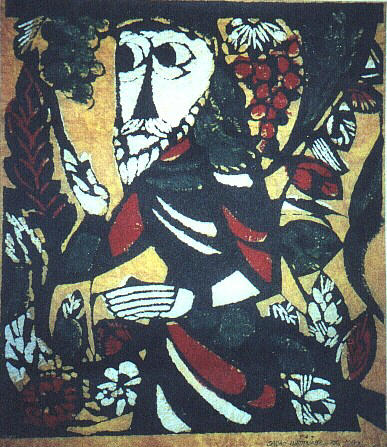
Life With God 3g – I AM The True Vine

image

In the last allegory that we will examine in this series, we find ourselves once again meditating on one of the fundamental truths of our lives; the primary and most important relationship that we must maintain as disciples is with Jesus Christ.

I am the the true vine, and my Father is the gardener. He cuts off every branch in me that bears no fruit, while every branch that does bear fruit he prunes so that it will be even more fruitful.

The image of the vine is sufficiently vivid as to fire our imagination. We receive the life giving nourishment only as we remain connected to that vine. To be separated is to die. It is the vine that has roots deep into the earth, drawing everything it needs from the creation. Some of the branches will make the most effective use of their junction with the vine and bear glorious fruit. Other will only see the connection in the most cursory terms, not drawing on it and simply surviving.

Dead wood is ruthlessly culled by the gardener. It harbors rot and danger to the healthy plant. Pruning of the live branches is nothing to be feared. Without this practice, energy can go into developing the branch’s wood rather than into bearing fruit. Cutting back the branch reorients its growth into the important task of bearing fruit, painful at first but beneficial in the end. Sometimes the branch that appears to have received the harshest cutback can produce the greatest fruit.

Life With God 4

It was this…intention that made the primitive Christians such eminent instances of piety, that made the goodly fellowship of the Saints and all the glorious army of martyrs and confessors. And if you will here stop and ask yourself why you are not as pious as the primitive Christians were, your own heart will tell you that it is neither through ignorance nor inability, but purely because you never thoroughly intended it. ~ William Law, A Serious Call to a Devout and Holy Life

Intent rather than method. A bracing thought for the modern Christian who finds themselves enmeshed in the current intellectual culture of the Church. Spiritual formation is reduced to a set of to-do’s and application. Richard Foster leads us now to develop the proper mindset needed to read the Bible for spiritual formation rather simply information. Life With God locates the next chapter in helping us to draw the distinction between reading the surface of the text and encountering God. The greatest cultural challenge that we face is that we encounter daily the idea that the Bible exists to serve our needs. We are tempted to pick and choose verses that serve our needs while setting aside the context that might challenge our perceptions. When read this way, the Bible becomes a manual for moralism, a behavioral set of scales that substitutes for true relationship with God.

The approach that we can take to engaging the bible to participate in God’s transformation of our souls is called Lectio Divina. Our reading changes focus from breadth to depth. It is a way of encouraging our mind to descend to our hearts so that we are drawn into the love and goodness of God as it is spoken to us through the living Word. Our goal is total immersion in the text so that we a drawn into the story, becoming a part of the words.

There are four elements to Lectio Divina:

  • Lectio – this is the practice of reading with a listening spirit
  • Meditatio – we reflect on what the voice of God speaks to us
  • Oratio – in response to the elation of hearing from God, we pray the scripture in response
  • Contemplatio – most importantly, we contemplate deeply on what changes we will make in our lives in obedience to the Word

Engaging the Bible in this fashion is a challenge to much of what we may have learned. It is not compatible with a daily reading plan which schedules a number of verses so that the book can be completed in a year. We skim over the words that God has for us in our pursuit of the goal. Lectio is a much slower process, immersing us in a single passage, perhaps even a few words or a phrase so that the voice of God can get through to us. It seeps into our heart as we camp on this verse or passage and as our hearts turn, we act in obedience to demonstrate to the world the way of the disciple.

Have you practiced these methods with success? Has there been some culturally or in the Church that works against this method of engaging the text? Let’s talk about this.

Life With God 3f – I AM The Resurrection

image The I Am statement we immerse ourselves in today comes in response to the sorrow surrounding the death of Lazarus. The Lord has purposely waited until His friend had died and begun to molder in a tomb and He arrives in Bethany during the period of deep mourning. Does Martha accuse Jesus when she meets Him saying if He had been here Lazarus would still be alive? Perhaps not angrily but it could have been a question that had swirled between Martha and Mary’s lips for the preceding four days. We ask it ourselves from time to time; where were you God when this or that was happening to me? You could have prevented it or guided me away or, or …

Notice that the Lord does not rebuke  her for her challenge. Isn’t it good to know that God knows us well enough to not take offense at our outbursts? He knows the limitations of our hearts and our understanding. God knows that we can intellectually assent to the idea spoken through Isaiah, ‘my thoughts are not your thoughts’ but in our hearts we push this aside and reveal our innermost anger and hurts. In love, the Lord listens and is compassionate. Like Martha, we can pull out our intellectual reserve and repeat it when questioned theologically during our grief: ‘yes Lord, everything will be well at some point.’ But what about now we wonder, can you help me now?

Jesus said to here, “I am the resurrection and the life. He who believes in me will live, even though he dies; and whoever lives and believes in me will never dies. Do you believe this? " John 11:18

Do you believe this beyond the intellectual point? Immersing ourselves in this I Am brings us to a different point of confidence in this life. We no longer have to simply look ahead to the new life, we have it now in full and we have nothing to fear. Though we may die, we will not die! Making this a part of who we are leads us to follow Martha and Peter in exclaiming ‘Yes Lord, I believe that you are the Christ, the Son of God’ and then living as though we believe it.

Life With God 3e – I AM The Way and the Truth and the Life

Thomas said to him, “Lord, we don’t know where you are going, so how can we know the way?”

Jesus answered, “I am the way and the truth and the life.”    John 14:5-6

Nearly every Christian will have interacted with this passage on some level by the time this is written. What more can be said about this most definitive statement? The complete theology of the book of John is summarized in 14:6 where it serves also to challenge the modern feel-good canard of ‘many paths to God.’ Less discussed is the context of the farewell discourse and, in particular here, the continued lack of understanding that the disciples displayed. These were the men closest to Him, to whom Jesus had shared the greatest intimacy and still they failed to comprehend the trajectory of the Savior’s life as it hurtled toward the cross.

In many ways, our spiritual formation is challenged in the same fashion. We know Jesus intellectually and have the benefit of knowing the full story and yet, it can sometimes be said that we don’t know Him. As we meditate deeply on the details of Jesus, we are seeing the Truth, the ultimate revelation of God, in a form which we can relate to. Transformation comes in challenging our own flawed character to the Truth that we encounter. Christians are privileged in having the indwelling Spirit to leads us in the Life but we must encounter Him beyond the intellectual level. Perhaps the first step is to admit ‘we don’t know where you’re going’ and then follow Him anyway despite our urge to do the opposite.

Life With God 3d – I AM The Gate

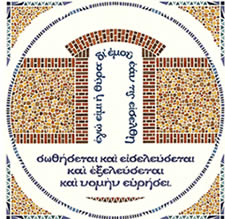
I am the gate for the sheep…I am the gate; whoever enters through me will be saved. He will come in and go out, and find pasture. The thief comes only to steal and kill and destroy; I have come that they may have life, and have it to the full. John 7, 9-10

imageAs we meditate on the Shepherd who will lay down his life for His sheep, these leading verses take on a new emphasis. Describing himself as the gate for the sheep would have painted a much more vivid picture to the first century hearers. A sheepfold might be built without a door or gate, requiring some manner of obstacle placed across the opening to protect the sheep within, both from enemies coming in from the outside and from the tendency of the sheep to wander out from the inside. The shepherd willingly lay across that opening in the dark to protect the sheep within, whether they appreciate it or not.

Are we like the sheep, unappreciative of the sacrifice The Gate? Do we see His presence blocking our path as a hindrance? As we think about how positively we view his willingness as the shepherd to lay down his life for us, we should also view his willingness to ‘pen’ us in when necessary so that we are protected from things that we are unable to see. In the presence of the Good Shepherd, we truly can ‘let not our hearts be troubled.’

Life With God 3c – I AM The Good Shepherd

I am the good shepherd. The good shepherd lays down his life for the sheep. John 10:11

image

We can meditate a good long time on this verse. It strikes our hearts on numerous levels but I’d like to narrow this discussion down to those who have a pastoral calling. If we are following closely in our Master’s footsteps, our call also may be to lay down our lives for the sheep entrusted to us. The wolves can attack at any moment and our calling requires us to be a bulwark. Is your heart being shaped such that you can do this without hesitation?

Can you do it when you sense that not all of the sheep appreciate your willingness to do so? Will your heart be turned to a greater flock if your celebrity grows, taking your protective eye off of those whom God has placed under your care? Can you recover if the wolf somehow infiltrates your flock and scatters them despite your earnest intentions?

It’s one thing to say that you are prepared to do so, yet another to actually do it. We must be certain that our public and private heart are one and the same.

Life With God 3b – I AM The Light of the World

I am the light of the world. Whoever follows me will never walk in darkness, but will have the light of life. (John 8:12)

image

The second I AM statement that deepens our faith is this; Jesus is the illuminator of the darkness. Though we are born into a darkened world in which it is difficult to find our way, we have available to us a source of light that can never be extinguished. We no longer need to stumble.

Once we immerse ourselves in the light, we find it more and more difficult to step back into the darkness. It beckons us and we’re tempted to return to the shadows but the Spirit exerts a greater attraction as our character is molded. Even in those instances when dark overcomes us, the Savior will reach without fear into the shadows to pull His brothers and sisters back.