Contemplating Creation

The heavens declare the glory of God; the skies proclaim the work of his hands. (Ps 19:1)

image Returning to Evelyn Underhill’s Practical Mysticism she suggests that one interested in beginning the spiritual discipline of meditation start “with that first form of contemplation which the old mystics sometimes call the ‘the discovery of God in his creatures.’” Meditating on creation is a contemplative form that lends itself to practice at any moment during the day when you can view the world around you. By focusing on His creation from its grandest examples such as the Sierra Nevada or the Grand Canyon to its most minute in the tiny flowers of the Verbena. You seek to encounter God through the glory proclaimed in all that he created, in whatever form it takes. Allow yourself to meditate on the symmetry of the flower, at the wonder of its shape and color. From the tiny stamens your meditation can move to reflect on the thousands and thousands of types and colors of flower in the creation and glory at the creative mind that brought them all to life. Your soul will find its humility and allow you to commune even closer with your Father.

Meditation and Recollection

image “So slothful, however, is man in all that concerns his higher faculties, that few deliberately undertake this education at all. They are content to make their contacts with things by a vague, unregulated power, ever apt to play truant, ever apt to fail them.”  Evelyn Underhill – Practical Mysticism

The meditative process known in Christian circles as recollection is simple to understand. It is time that you will devote solely to becoming still and silent through intentional action. Taking your thoughts captive into silence is an effort of the will to keep the senses in check and not allow them to stray off onto different avenues. All of the contemplative focus is limited to a single subject, the love of God.

Foster describes the Quaker practice of ‘centering down’, a part of the Quaker meeting practices. The worshiper begins by placing the palms down as a physical indication of one’s desire to give over your concerns to God. The palms down position releases the concern. If you wish to receive from the Lord, the position is reversed with the palms up. The practice continues until you released everything within you and are prepared to commune with the Lord. The centered mind can enter the silence of that communion.

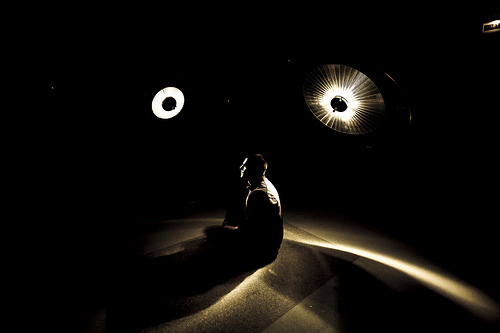
Teresa of Avila was a proponent of these focusing exercises, practicing them daily. She explain that the practice is called “recollection because the soul collects together all the faculties and enters within itself to be with God.” (The Way of Perfection) It may sound mystical but it is not. The disciplines are meant for all people of the Lord and He will grace us with the gifts and abilities necessary for their practice. All we have to do is ask.


Image by Keraoc

Imaginative Contemplation

image

Many Christians are hesitant to engage the spiritual disciplines because they have allowed themselves to be convinced that only the spiritual giants are able to immerse their lives in the practices. Meditation is one of the disciplines that seems to be far out of the reach of the saints. We have a picture in our minds of one sitting cross-legged in a deep state of communion with the divine, completely disconnected from world around them and possessing a peace that you and I cannot seem to find. Looking at this picture we turn away, thinking that we would be unable to attain this state and surrender back to splashing around in the shallows of our life of faith.

Well, erase this image. You have every ability to integrate every one of the spiritual disciplines into your life, starting with meditation. One of the things we learn as we begin to explore meditation is that there are numerous avenues into the practice. One of the easiest ways to begin meditating and linking the mind and the heart is through your imagination. To use the imagination is not to engage in flights of whimsy, forming new stories of our relationship with God based upon our own desires. It is to use the power of your mind to place yourself immediately at the feet of the Master. It is to place yourself in the Upper Room as the Lord speaks to His disciples, you included. Feel how tight the space is filled with people, smell the bread and the wine, see the Lord’s face in the candlelight and watch the shadows dance about the plaster walls. Now, hear the words he speaks:

A new command I give you: Love one another. (John 13:34)

Your imagination will allow you to see his face as he mouths these words. You can look about and see how they strike each of the men present. Judas has gone—would he have recoiled at this statement? Do you? The images of your mind help you to be fully present to the Spirit as He moves the words from your mind into your heart. Have you loved others as the Lord loves you? Do the words pierce your heart or comfort you? Contemplate on the words as the Spirit communicates the truth to you in ways related to your life.

Meditation using the imagination troubles some people as they fear that this sense can be corrupted just as our others can. We have to live with this reality but the question to ask is this; if God can redeem other aspects of our life can He not redeem our imaginations as well? Trust in God and open your mind.


Image by OkaySamurai

Building A Contemplative Spirit

image

The contemplative life of the Christian has nearly vanished within the Church. In many circles, the contemplative has become a person of church history or more dauntingly, has taken on mythical status. The Christian of 2009 involved in Sunday school, small groups, missions, VBS, midweek service and classes can scarcely imagine finding the unscheduled time for quiet meditation. We who shepherd the Church do little to remedy this situation because we have allowed her to become judged by the values of the world. In doing so, the Christian suffers, the Church grows weaker, and the kingdom mission goes unfulfilled.

Soul work starts quietly, learning to hear the voice of God. Meditation moves us from the superficialities of the world and the shallow Christian life into the deep waters of full communion with God. Meditation is the first discipline of change.

The purpose of meditation in the Christian life is to seek out a transformative encounter with the Living God. We meditate in order to hear His voice and, in reflecting on what we hear, to obey Him and His calling on our lives. The Bible clearly portrays God as desirous of our fellowship and the contemplative practices bring us into His loving embrace. As Thomas a Kempis describes it, we are growing into a “familiar friendship with Jesus.” Activity and busyness may make us feel as though we are participating in the Christian life but we are fooling ourselves. We are living our faith like a stone skipping across a lake; tap…tap…tap…splash! We dip our toes here and there and when challenged we have no internal strength to keep ourselves from sinking. Transformed souls come only from those willing to swim far, far out from shore.

Get ready to swim.

Image by Prahkar

Soul Work

image

“Everybody thinks of changing humanity and nobody thinks of changing himself.” Tolstoy

The modern Church, by and large, has cast aside an emphasis on individual transformation in favor of the consumer model that tries to be everything to everyone. Deep relationship with God and the wrenching change that results are replaced with the busyness of classes, small groups, and activities. As a result, the people of God lack a substantial foundation on which to stand when challenges arise or the cross that the Christian is asked to bear becomes too heavy. It’s time for some serious soul work.

I have come that they may have life, and have it to the full. (John 10:10)

The life in full that the Bible speaks of is not about stuff, money, having it easy, or being free from struggle. The life that the Bible describes is one of change; internal change as directed by the Spirit and external change as you become a cooperative friend of God in His work in the world. Our primary calling is to be lifelong disciples, sitting at the feet of our Teacher and freeing up our souls to his transformation. Sometimes it will be easy and other times painful and difficult but we will always be different people as a result. We will be people more in tune with God’s mission, better dialed in to walk into the darkness, and committed to completing the race laid out for us to run.

The spiritual disciplines are the means by which we become more attendant to God and our relationship with Him. They are methods of intentionally bringing ourselves to the feet of the master. Hearing the pastor read a passage once per week or even just reading the Bible once per day are not going to transform us. It takes work – Soul Work – and dedication to muscle through the pain and to push aside the fear to become what God intends for us to be. Anything less than that and we’re just trying to do it on our own. How’s that working out for you?

Deep calls to deep… (Psalm 42:7)


Image by Christ Bartnik

Blue Parakeet 8

BPkeet

If you have been following this series on Scot McKnight’s book The Blue Parakeet or just read the book, you will have arrived at the self-analytical conclusion that you and I don’t do everything the Bible says to do. We don’t do this out of any lack of love for God or simple disobedience, rather, we have read, analyzed, and in light of the traditions that surround us, we have decided which of the hundreds of commands apply to us and which were intended for application in another era. This is the practice of discernment.

Discernment answers the question, why do I not do what the Bible teaches? Each of us within the context of our church community and tradition approaches the answer to this question in different ways. We take God’s word in the light of the Spirit and the context of our immediate community and we hear Him speak to us in our way in our day. The conclusions that we reach and the way that we apply those conclusions reflect the best way in which we understand that God wants us to live out the gospel in our moment. There are dangers associated with this that become evident in practice. Cultic or abhorrent practices can result from individual discernment that does not take into consideration the long held traditions and beliefs that have guided the Church for centuries and that result in ‘new revelations’ counter-cultural to the Church as a whole.

Discernment is a messy process. Many modern controversies demand that we return again and again to the Bible and then prayerfully seek the Spirit’s guidance in how to understand and apply the truths that we find there. The church will decide countless matters that have profound effect on the life of the community. For example, will women preach and teach on Sunday and how will gay and lesbian followers participate in the life of the body. The remaining chapters of Blue Parakeet will address on particularly contentious issue within the body, women’s place in the ministry of the church but the pattern of discernment that McKnight highlights are applicable to numerous other issues. Let’s take a look at one, glossalalia.

 image 

What facts can we begin our examination with? The early Christians spoke in tongues (Acts 2), Paul spoke in tongues quite a bit (1 Cor 14:18) and Christians throughout history  have received the gift of tongues. BUT, because the gift and practice have been limited in their scope to some smaller pockets of the body, a pattern of discernment arose that said that tongues are not for today, they were a sign gift for the first century alone. In spite of this, the Pentecostal movement of the early twentieth century, the charismatic believers and even the Vineyard churches have demonstrated a different pattern of discernment than the rest of the Church saying, ‘that was for then and it is also for now.’

Some with a narrow pattern of discernment will challenge this understanding and yet, the evidence of this practice is difficult to dispute. Is there something in our immediate context that forms our pattern of discernment such that we are unable to accept a truth that others have embraced? McKnight suggests in this example that those who grow up in a body where speaking in tongues is accepted are more likely to receive the gift while others with less experience continue to view it as foreign. Our context affects our interpretation and our discernment and because we have numerous unique traditions and practices to which we have become accustomed we should be cognizant of this fact, not only for ourselves but for understanding others as well.

The Blue Parakeet 7

BPkeet

A collection of laws from Leviticus, chapter 19 includes the following:

19:2 Be Holy because I, the Lord your God, am holy.

19:3 You must observe my Sabbaths.

19:9-10 When you reap the harvest of you land, do not reap to the very edges of your field or gather the gleanings of your harvest. . . . Leave them for the poor and the alien.

19:16 Do not spread slander.

19:19 Keep my decrees.

19:26 Do not eat any meat with blood still in it.

19:27 Do not cut the hair at the sides of your head or clip off the edges of your beard.

19:28 Don’t put tattoo marks on your bodies.

19:32 Show respect for the elderly.

19:37 Keep all my decrees and all my laws and follow them.

So, how’re you doing on keeping this list along with the hundreds of other laws spread throughout the Bible? Most Christians will claim that if the Bible says it, they make their best attempt at following the law.

Except for those they don’t.

The question that we must answer to ourselves is why. How have we come to decide that some of the biblical laws are no longer applicable in our modern day and age? More importantly, how have we come to decide which ones to put aside? There are some who will read the bible within the framework of God’s holiness and His requirements being unchanging and therefore, His laws remain unchanging. This prism does not take into account that despite the unchanging nature of His holiness, God’s will for his people does.

Christians have developed a discernment rooted in Jesus and the New Testament and this way of discerning what applies to our lives and what is to be left to history. This stands us up to accusations of picking and choosing what applies and to some extent, this is true. In fact, the Church as a whole has historically taken this approach to the commandments of the Bible. Our goal then is to identify the patterns of discernment that lead us to the choices we make. Anyone want to start the conversation?


Life With God 8

imageThe life with God drives us to see what  could happen we are faithful doers of the Word rather than just hearers. As Foster begins to wind down his book Life With God, he is emphasizing the ‘why’ of spiritual transformation. He says that “ the quiet power of a life transformed by God is so explosive that it can redirect the course of human events.” When we are deeply enmeshed in a life lived in the immediate and intimate presence of God, we find ourselves with transformed inclinations. Our purposes are driven less and less by personal desire and worldly avarice and more by the subtle whispers that guide our fulfillment of God’s purposes through us.

Coming to this spiritual awareness is the purpose of the spiritual disciplines. Remember, the definition of discipline that we apply to our spiritual nature is the ability to do the right thing at the right time for the right reason. The spiritual practices are not intended for record keeping, that is, we are not rewarded by the measure of their exertion. Rather, the reward for the practice of spiritual disciplines comes in an increased sensitivity to the words of God through which He moves you to action. As Dallas Willard says, we are being prepared to enter a state of unthinking readiness in which we are able to respond despite pressures from outside to act otherwise. When the moment of action arrives, we  move in the Spirit without having to consider the possible societal implications of doing so.

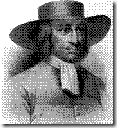
There is a liberating truth that we can come to understand through study and focus on the lives of the saints that have gone before us such as John Woolman (pictured above.) The truth is that we do not become godly by trying to become godly. We become godly as our worldly habits are replaced by holy habits such as love, joy, peace, patience, and kindness. When our character is filled with these traits we will instinctively do the right thing at the right time for the right reason. Our practice of the Disciplines is not intended to change ourselves, that is God’s work. Rather, our practice is intended to open ourselves to His power so that the transformation may occur. This is the principle of indirection.

This principle works by addressing human character issues by attending purposely to the attending spiritual virtue. For example, pride is overcome by intentionally seeking out opportunities to serve others. Over time, this consistent practice puts us in a proper relationship with others, engendering humility within us. Paul mentions this intentional training in 1 Corinthians;

Do you not know that in a race the runners all compete, but only one receives the prize? Run in such a way that you may win it. Athletes exercise self-control in all things; they do it to receive a perishable wreath, but we an imperishable one. So I do not run aimlessly, nor do I box as though beating the air; but I punish my body and enslave it, so that after proclaiming to others I myself should not be disqualified. (1 Cor 9:24-27)

We do not train in the Spiritual Disciplines solely for the sake of training. We train for transformation. The key to this shift in our understanding is to remember that it is God that will provide the transformation, not our own efforts. We must become expectant of the change, sensitive to His whispers that slightly change our mechanics as a coach would do. All of our training and the resulting transformation of our character will reorient us for life in the kingdom of God and our thoughts and attitudes and our behaviors will gradually become radically different from what passes for normal in this world.

Now, that’s not such a bad thing, is it?

Life With God 7

Richard Foster takes a turn now in Life with God: Reading the Bible for Spiritual Transformation’ target=_blank>Life With God to examine the means by which we immerse ourselves in the presence of God. If you are familiar with his earlier classic Celebration of Discipline, this chapter rehearses familiar territory. As each preceding chapter in LWG have led us to see how the mining of the scriptures contribute to an ever deepening acknowledgement of the presence of God, Foster now turns our attention to additional spiritual practices that contribute to strength and trust needed to wade into the deeper waters of a with God life.

For the Christian who has surrendered to the Lordship of Christ, whether it is realized or not, you are already given to life in the presence of God. As Peter wrote:

His divine power has given us everything we need for life and godliness through our knowledge of him who called us by his own glory and goodness. (2 Peter 1:3)

we have life and tools to live it in full but it is required of us that we nurture the intention. Rather than simply applying the transformation that God intends, He expects us to know the struggle and joy of the process of transformation. This striving and participation in the process teaches us lessons in holiness that we could not garner from an immediate transformation.

Practicing the spiritual disciplines is not without risk. The narrow path of the disciplined walk is flanked on both sides by temptations which threaten the integrity of the exercises. On one side, we run the risk of turning the discipline we choose into an end rather than a means. The Pharisees and Sadducees were well known for distorting the Law in this fashion. On the other slope lies the danger of devaluing the disciplines based on the false argument that no work can earn our righteousness, it is freely given. As with most distortions, this argument contains a grain of truth; we cannot earn our righteousness. But grace requires something from us in order to do its transforming work. The spiritual disciplines are the means to this end.

The spiritual disciplines are not onerous or unattainable. They do not enslave us even the term discipline can often take this connotation. The spiritual disciplines lead us on the path to true liberty in Christ as we experience the transformation that he intends to be measured out especially for each one of us. You’re invited into the deep waters. God will be there, all around, supporting you while allowing you to build the muscles needed to swim.