Psalm 88–The Darkness is My Closest Friend

image

Your wrath has swept over me; your terrors have destroyed me.

All day long they surround me like a flood; they have completely engulfed me.

You have taken my companions and loved one from me;

the darkness is my closest friend. (Ps 88: 16-18)

The psalter contains numerous pleas for restoration, salvation and redemption but none as bleak as this. The psalmist lives a life, as it were, knowing only the dark side of God’s presence. Unlike Job who once knew a life of blessing, the psalmist here describes a life of pain and affliction from birth to the day he pens this scroll. The tragedy of his life is of such a degree that it is finally responsible for driving away even his loved ones and companions as he lives with one foot constantly at the edge of the grave.

The casual bible reader will quickly sift through these verses, reading forward to find more uplifting passages, but this would be a mistake.

Individual purpose is never easy to discern with our limited mindset. Why God would burden one of his beloved with such difficulty without respite is beyond our ability understand. And yet, we are called by the scriptures to endure, and even find joy in our travail, trusting that our pain and the darkness we inhabit has a larger purpose in His plan. Our response often echoes the despair that rings in these verses.

But I cry to you for help, O Lord; in the morning my prayer comes before you. 

Why, O Lord, do you reject me and hide your face from me? (vv 13-14)

This is a familiar frustration, that of the prayer that does not reach its audience. We plead and cry out but silence and pain are the only responses we receive. The Tempter whispers in our ear to surrender, to give up the belief that relief is at hand and to curse the One who visits it upon us. We come close, but we cannot do it. God will redeem this pain and bring light to this darkness. It may not be until we have left this plane, but it will occur. So we continue, like the psalmist, to raise our voice…

I call to you, O Lord, every day; I spread out my hands to you. (v9b)


Grace and peace to you.

image Ozan Ozan

Psalm 86–You Are Great and Do Marvelous Deeds

imageThe arrogant are attacking me, O God;

a band of ruthless men seeks my life—men without regard for you. (Psalm 86:14)

While our lives may not be at risk from our enemies, each of us can still identify with the feeling of being vulnerable to threats by others. If our faith is strong, we call out to our Father for relief. If not, we often seek our own retribution, without a thought to how the attacks fit in the grand plan of God’s history. Do we miss an opportunity to turn the other cheek?

As we read through the Psalms we are struck by how deeply rooted in ancient culture and Jewish belief this poetry is. That is, we recognize the provenance of the literature and its history but we struggle to apply the thoughts to our life. The passages that praise God and exemplify total faith in Him are not difficult to seize hold of, but in the light of our current covenant, we are ashamed to admit that we still see our enemies in the same fashion. Publicly we advocate love for them but our private musings are made up of rambling imprecatory thoughts.

The psalmist fills this prayer with stanzas of praise as he seeks relief:

You are forgiving and good, O Lord, abounding in love to all who call to you. (v5)

He is also cognizant of the ultimate outcome of history:

All the nations you have made will come and worship before you, O Lord;

They will bring glory to your name.

For you are great and do marvelous deeds; you alone are God. (vv 9-10)

Christians have and advantage that the psalmist did not; we live in the time of Jesus Christ and the new covenant. We have the end of history written for us in John’s apocalypse. We can live sacrificially toward our enemies, moving toward them rather than seeking the Lord’s hand to snatch us away from trouble. Like policeman and firefighters, we can run toward danger while others run away.

Grace and peace to you..

image klynslis

Psalm 85 – Will You Be Angry with Us Forever?

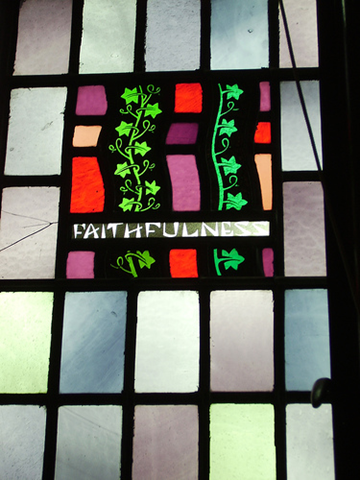
imageLove and faithfulness meet together; righteousness and peace kiss each other.

Faithfulness springs forth from the earth, and righteousness looks down from heaven.

The Lord will indeed give what is good, and our land will yield its harvest.

Righteousness goes before him and prepares the way for his steps. (Psalm 85:10-13)

To speak of the Lord’s blessings in this language can only come from a heart that has know their absence. To live in the bliss of constant blessings is to come to see this as the normal state of things, the way it should be. Our corrupted souls begin to take it for granted and even begin to look for greater expressions of the love; ‘Manna again?!’

Restore us again, O God our Savior, and put away your displeasure toward us.

Will you be angry with us forever?

Will you prolong your anger through all generations? (vv 4-5)

At the other end of belief is to see God as perpetually angry and unwilling to forgive our iniquities. Many among us believe that God remains angry at them for something that they’ve done, said, thought, etc. and that their sin is so far beyond the pale that there is no forgiveness. We must find a way to convey the message of love and faithfulness expressed in the sacrifice of our precious Lord and Savior. God is anything but angry, His love is an invitation back into His arms. It is to know what a life of blessing looks and feels like.

Grace and peace to you.


image by perfesser

Psalm 84 – Better is One Day in Your Courts

imageEven the sparrow has found a home,

and the swallow a nest for herself, where she may have her young–

a place near you altar, O Lord Almighty, my King and my God.

Blessed are those who dwell in your house; they are ever praising you.

(Psalm 84:3-4)

The effusive praise of God is condensed and made sweeter by this imagery. The swallow finds the tiniest niche in the joinery of the temple, perhaps a shelf before the Holy of Holies or a forgotten corner of the courts. She will build her nest in which her most valued things—still yet to come—will live and have their being. She is unconcerned with comfort or position, she only wants to be in proximity to the place of her creator.

The psalmist extends this same willingness to praise from the lowest place, just to be near to Him. In this familiar refrain, he cries out that he would mind the door of the house of God just to be in the house:

Better is one day in your courts than a thousand elsewhere;

I would rather be a doorkeeper in the house of my God than dwell in the tents of the wicked. (v10)

Life in Christ requires the choice, to dwell ever closer to the Holy God or wallow in muck and mire. He leaves the choice to us.


Grace and peace to you..

image by kvjrkrao

Psalm 83 – That the Name of Israel Be Remembered No More

imageMay they ever be ashamed and dismayed; may they perish in disgrace.

Let them know that you, whose name is the Lord —

that you alone are the Most High over all the earth. (Ps 83:17-18)

An imprecatory psalm is not a rare find as you pore over the pages of the Psalter. Again and again, Israel cries out to Yahweh to destroy the enemies arrayed against her, for His own good! In 83 as elsewhere, the Israelites look out at their borders and see, what to them must have been, the entire world turn enemy. They find no hope within and raise prayers of violent redemption to God. Save us, they intone. Save us so that the world will see that You are God!

Wasn’t that supposed to be the witness of Israel herself?

In covenant relationship, Israel was to stand as an example of the good that comes from being the chosen of the Most High over all the earth. They’re repeated failures to do so are found in the same pages of the Old Testament that continue their pleas for the destruction of others. To read both Ezekiel and the Psalms at the same time is to read the same story from two different perspectives. The words of God who directs the punishment of Israel by her enemies go unheeded.

Is it possible we do the same today? Do we ask the Lord to remove the consequence of sin from our lives while continuing to ignore the demand for holiness that the Spirit reminds us of regularly? We fail to see the corrections that come into our lives as being delivered by the same One from whom we seek relief. We might do better to review the history before us in the pages of Scripture, and learn more about the way God works. Rather than prayers for relief, we should pray for insight into that in our lives that is displeasing to our Lord.


Grace and peace to you..

image by xdop

Psalm 82 – Defend the Cause of the Weak and Fatherless

image“They know nothing, they understand nothing.

They walk about in darkness; all the foundations of the earth are shaken.”

Psalm 82:5

At the heart of this psalm lies a truth that has not changed since the first human leader stepped up and began to exercise control over others. All leaders, whether they believe in Him or accept His hand in control of their ascension. God is intentional in placing specific people in particular positions of authority to arrange His course for history.

Israel cries out to God for justice, asking why He does this. They ask “How long will you defend the unjust and show partiality to the wicked?” (v2). The demand justice from Him, “Defend the cause of the weak and fatherless; maintain the rights of the poor and oppressed. Rescue the weak and the needy; deliver them from the hand of the wicked.” (vv 3-4) Israel wants to know why God allows those He has placed in authority to abuse that position and injure His people.

Why indeed? Is there consequence for godlessness? Is God the only one who can reach out and lift up the weak and fatherless?

Grace and peace to you..


image by Stuck In Customs

Psalm 81 – If You Would But Listen to Me

image

Hear, O my people, and I will warn you—If you would but listen to me, O Israel!

You shall have no foreign god among you; you shall not bow down to an alien god.

I am the Lord your God, who brought you up out of Egypt.

Open wide your mouth and I will fill it.  (Ps 81:8-9)

When we encounter verses such as this in the Bible, two things occur. We wonder how it is possible that Israel could waver in their loyalty to Yahweh. After all, they were in such immediate contact with His miraculous redemption and knew His power intimately. How does one turn away from that?

As we read in the Old Testament, apparently very easily.

“But my people would not listen to me; Israel would not submit to me.

So I gave them over to their stubborn hearts to follow their own devices. (vv 11-12)

The second that occurs is that the Spirit within speaks to us and reminds us of our own stiff neck. The fact that the Spirit speaks to you in moments of temptation to disobedience or disloyalty puts you in the same immediacy. You have within yourself the intimacy with God that Israel shared through words and common experience. All you have to do is listen.

You know the transformation that God has wrought in you. He has released you from bondage to your Enemy, freed you from the constraints of a corrupted heart. All He asks is that you listen, that you follow His ways.

That’s not so hard, is it?

Grace and peace to you..


image by b rosen

Psalm 80 – Restore Us, O Lord God Almighty

imageRestore us, O God;

make your face shine upon us, that we may be saved. (Ps 80:3)

This plea for restoration  echoes three times in the psalm, and it is very familiar to readers of the psalter. Israel pleas for God’s love to return to her and to save her from her enemies. In many of the preceding psalms we have heard this same petition sounded on an individual basis, as the king asks to be relieved of the many enemies who come against him. The corporate plea is of the same timbre, how long God? How long will your punishment last?

Israel’s petition takes the path of covenant reminders. She reminds God of what He has done for her in the past, reminding Him of her special status in His eyes. Yes, we’ve been bad God. Yes, we’ve deserved punishment. But how much God? How long will you punish us for the sins of our fathers?

Sounds familiar doesn’t it?

Though we are forgiven of all, past, present and future, we are not given to license. Should our choices lead to consequence, we ask our Lord for relief. How long, we ask. How long must we suffer the consequence of our choice? We often follow the same pattern in pleading for relief. We remind God—as though He has forgotten—how he saved us. We remind Him of all that He has done to change our circumstance. We may even try to convince God that all of this punishment makes Him look bad.

We rarely see Israel and her unfaithfulness in ourselves.

Grace and peace to you.

Psalm 79 – Will You Be Angry Forever?

imageO God, the nations have invade you inheritance;

they have defiled you holy temple,

they have reduced Jerusalem to rubble. (Ps 79:1)

The psalmist writes this opening line from exile. The verses that follow describe the horrors that filled their last visions of the promised land. The dead becoming food for birds, the Temple destroyed, much blood pooled everywhere; there was no end to the desecration of the Lord’s land or people.

And all of Israel knew that they were responsible for bringing it to the land.

How long, O Lord? Will you be angry forever?

How long will your jealousy burn like fire? (v4)

Was it appropriate to question the length their exile from God’s protection? The covenant shaped the boundaries of their relationship with Yahweh. He had upheld His end of the agreement and Israel had, time after time after time, utterly failed at hers. God had no responsibility to restore them to His fold, no covenant requirement to return them to the land and to prosperity.

Except that He loved them, just as He loves you today. Despite your many faults and failures. Despite your tendency to worship at other altars as the mood suits you. Despite the fact that you believe your sin to hide behind and opaque curtain. Despite the fact that your faithfulness to Him is questionable. He still loves you as a parent loves a wayward child.

The conditional structure of the psalm is disturbing to the Christian who is raised on the image of a merciful God. Calling for the crushing and destruction of one’s enemies does not normally occur to us (though we may privately entertain such thoughts.) It is the structure of the requests that trouble us. “Destroy them, curse them” says Israel and then we will worship you forever. Our modern eyes must read this carefully. The acts of destruction and carnage described are, above all, affronts to God. The call for retribution is a call to restore his Holy Name against those who demean it through their acts.

Psalm 79 speaks to responsibility. If we are lacking blessing, we need to return to the shadow of the cross so that, with sun blocked, we can see our own sin more clearly. Repenting, we can seek His mercy and praise Him once again.


Grace and peace to you.

image jamelah

Psalm 78 – In Spite of His Wonders, They Did Not Believe

image It was not unusual for Jewish religious leaders to rehearse their covenant history with God in writing, or verbally in worship. The fickle loyalty of the human heart had loved and loathed with equal vigor again and again throughout the whole of their relationship with God. Typical of this ever changing relationship, the psalmist records this:

Thus he brought them to the border of his holy land,

to the hill country his right hand hand had taken.

He drove out nations before them and allotted their lands to them as an inheritance;

he settled the tribes of Israel in their homes.

But they put God to the test and rebelled against the most high;

they did not keep his statutes.

Like their father they were disloyal and faithless, as unreliable as a faulty bow. (Ps 78:54-56)

Christians often wish aloud to be restored to an age of signs and wonders, claiming that their faith would be impenetrable to doubt if they could just see a single miracle. Saving the miracle of changed lives that surround them for a later discussion, we need only read this psalm or the Old Testament to know that this is bunk. The human heart is, above all else, dedicated to self.

The Christian will say aloud that ‘their heart belongs to Jesus’ but in practice, they are fully aware of the parts they hold back for themselves. We put our faith in God who is unseen and the corruption of our heart is such that we continue to harbor doubt about whether or not He might come through for us. We read our bibles and see that time after time, God has been perfectly faithful and yet we wonder if this is the day when He will not. We wander in a desert of our own making.

There is no such thing as a part-time Christian. Christ lives in us but did not displace us. Paul’s words to the Galatian church remind us “I have been crucified with Christ and I no longer live, but Christ lives in me.” (Gal 2:20) The struggle is internal but must ultimately end in our surrender of the parts of our hearts that we insist on keeping to ourselves. The signs and wonders we seek are inside of us and ready to be displayed only at our own humility. Problem with anger that you want to disappear? Bend the knee and turn it over to Christ in you and see it reworked. Unable to control some personality aspect? Give it to Christ in you and see it changed. Allow the Holy Ghost to completely overtake your heart and the signs and wonders will be before you constantly. Belief will grow to the benefit of all.


Grace and peace to you.

image by kmakice