
Life With God 3f – I AM The Resurrection

image The I Am statement we immerse ourselves in today comes in response to the sorrow surrounding the death of Lazarus. The Lord has purposely waited until His friend had died and begun to molder in a tomb and He arrives in Bethany during the period of deep mourning. Does Martha accuse Jesus when she meets Him saying if He had been here Lazarus would still be alive? Perhaps not angrily but it could have been a question that had swirled between Martha and Mary’s lips for the preceding four days. We ask it ourselves from time to time; where were you God when this or that was happening to me? You could have prevented it or guided me away or, or …

Notice that the Lord does not rebuke  her for her challenge. Isn’t it good to know that God knows us well enough to not take offense at our outbursts? He knows the limitations of our hearts and our understanding. God knows that we can intellectually assent to the idea spoken through Isaiah, ‘my thoughts are not your thoughts’ but in our hearts we push this aside and reveal our innermost anger and hurts. In love, the Lord listens and is compassionate. Like Martha, we can pull out our intellectual reserve and repeat it when questioned theologically during our grief: ‘yes Lord, everything will be well at some point.’ But what about now we wonder, can you help me now?

Jesus said to here, “I am the resurrection and the life. He who believes in me will live, even though he dies; and whoever lives and believes in me will never dies. Do you believe this? " John 11:18

Do you believe this beyond the intellectual point? Immersing ourselves in this I Am brings us to a different point of confidence in this life. We no longer have to simply look ahead to the new life, we have it now in full and we have nothing to fear. Though we may die, we will not die! Making this a part of who we are leads us to follow Martha and Peter in exclaiming ‘Yes Lord, I believe that you are the Christ, the Son of God’ and then living as though we believe it.
Life With God 3e – I AM The Way and the Truth and the Life

Thomas said to him, “Lord, we don’t know where you are going, so how can we know the way?”

Jesus answered, “I am the way and the truth and the life.”    John 14:5-6

Nearly every Christian will have interacted with this passage on some level by the time this is written. What more can be said about this most definitive statement? The complete theology of the book of John is summarized in 14:6 where it serves also to challenge the modern feel-good canard of ‘many paths to God.’ Less discussed is the context of the farewell discourse and, in particular here, the continued lack of understanding that the disciples displayed. These were the men closest to Him, to whom Jesus had shared the greatest intimacy and still they failed to comprehend the trajectory of the Savior’s life as it hurtled toward the cross.

In many ways, our spiritual formation is challenged in the same fashion. We know Jesus intellectually and have the benefit of knowing the full story and yet, it can sometimes be said that we don’t know Him. As we meditate deeply on the details of Jesus, we are seeing the Truth, the ultimate revelation of God, in a form which we can relate to. Transformation comes in challenging our own flawed character to the Truth that we encounter. Christians are privileged in having the indwelling Spirit to leads us in the Life but we must encounter Him beyond the intellectual level. Perhaps the first step is to admit ‘we don’t know where you’re going’ and then follow Him anyway despite our urge to do the opposite.

Life With God 3d – I AM The Gate

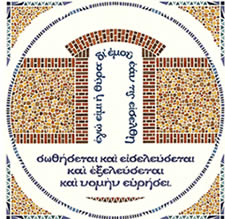
I am the gate for the sheep…I am the gate; whoever enters through me will be saved. He will come in and go out, and find pasture. The thief comes only to steal and kill and destroy; I have come that they may have life, and have it to the full. John 7, 9-10

imageAs we meditate on the Shepherd who will lay down his life for His sheep, these leading verses take on a new emphasis. Describing himself as the gate for the sheep would have painted a much more vivid picture to the first century hearers. A sheepfold might be built without a door or gate, requiring some manner of obstacle placed across the opening to protect the sheep within, both from enemies coming in from the outside and from the tendency of the sheep to wander out from the inside. The shepherd willingly lay across that opening in the dark to protect the sheep within, whether they appreciate it or not.

Are we like the sheep, unappreciative of the sacrifice The Gate? Do we see His presence blocking our path as a hindrance? As we think about how positively we view his willingness as the shepherd to lay down his life for us, we should also view his willingness to ‘pen’ us in when necessary so that we are protected from things that we are unable to see. In the presence of the Good Shepherd, we truly can ‘let not our hearts be troubled.’

Life With God 3c – I AM The Good Shepherd

I am the good shepherd. The good shepherd lays down his life for the sheep. John 10:11

image

We can meditate a good long time on this verse. It strikes our hearts on numerous levels but I’d like to narrow this discussion down to those who have a pastoral calling. If we are following closely in our Master’s footsteps, our call also may be to lay down our lives for the sheep entrusted to us. The wolves can attack at any moment and our calling requires us to be a bulwark. Is your heart being shaped such that you can do this without hesitation?

Can you do it when you sense that not all of the sheep appreciate your willingness to do so? Will your heart be turned to a greater flock if your celebrity grows, taking your protective eye off of those whom God has placed under your care? Can you recover if the wolf somehow infiltrates your flock and scatters them despite your earnest intentions?

It’s one thing to say that you are prepared to do so, yet another to actually do it. We must be certain that our public and private heart are one and the same.

Life With God 3a – I AM The Bread of Life

image The ‘I Am’ passages in the book of John are good immersion points on which to meditate in seeking spiritual transformation. In these statements Jesus declares himself to us, encouraging and deepening our faith and our enhancing our ability to trust Him on a more mature basis. We become what we immerse ourselves in. The first is found in John 6:35;

“I am the bread of life. He who comes to me will never go hungry, and he who believes in me will never be thirsty.”

When we meditate on this verse in a non-theological sense, we hear the Lord speak and the Spirit move. We question the things that we pursue in life that sate only temporarily. We find nothing in our pursuit of food, sex, material things, feelings or challenges that results in anything but a momentary satisfaction that is soon followed by a desire to pursue more. Spiritual fulfillment replaces or subdues these fleeting desires with a permanent fulfillment. For sure, we will want more in the sense of going deeper but we will never hunger to fill the void in our souls that can only be filled by the Holy Spirit. 

Life With God 3

Give ear and come to me; hear me, that your soul may live. Isaiah 55:3

Richard Foster emphasizes the messy reality of the the “I am with you” Immanuel principle in chapter three of Life With God. Reading the Bible with this in mind, one of the transformative themes that we can derive is that the book does more than just tell us about the immediate presence of God. Instead it unfolds for us how embedded the Presence is in every aspect of human existence. Whether we are running toward or away from God, we cannot escape the truth of His pursuit. He calls out, “I am with you” and asks, “Will you be with me?”

Our struggle with Immanuel is often spelled out in the tension between two ideas. We comprehend our value to God in His pursuit of relationships with us and yet, when skies cloud over, we identify equally with the Psalmist’s lament “why, O Lord, do you stand far off? Why do you hide yourself in times of trouble? The space between these two poles is life guided by the choices that we make. In those choices is the ultimate act of spiritual formation, allowing God to perfect His will and His ways in our lives. In the pages of our Bible, we can see how the Living Word transforms countless other human beings and it speaks to us; surrender your will and come into relationship with me! In exercising our freedom to choose to trust in Christ, we open ourselves to transformation in the depths of life with God.

For spiritual formation, we want to read the Bible with two aims. First, we want to engage the story of God’s people who were immersed in God’s immediate presence, whether they were aware of it or not. We read of God pursuing relationship with His creations and of the blessings and consequences of choosing for or against this relationship. In fact we learn from those that have gone before us that turning back to God is not a mechanical transaction, not a rule to follow, it is a relationship.

The second aim that we want to approach the Bible with is hear God as he speaks to us through the Word. The stories that we read are replete with examples of failure and restoration. Human beings are not the most reliable partners in relationship and when we come to this realization it opens up a new horizon in how we view God. Because we are by nature fickle, the transformation that occurs in each of our spiritual lives is a unilateral commitment from our Father. He pursues and transforms. Our task to immerse ourselves in those things that can positively affect our character. It is at this level that the living Word works.

Foster refines this approach to a single statement for modern Christians in saying that the way into this life, the Immanuel life, is trusting in Jesus. The Lord’s words make it simple, “Don’t be afraid; just believe.” (Mark 5:36) Our call is to live the Kingdom life now and not just approach the faith as fire insurance. Our way into the fullness of this life is through character transformation, something that occurs when choose for life in relationships with the Lifegiver and when we immerse ourselves in the Word that changes us into what we were intended to be.

I would love to hear of your experiences of transformation. Have you found any particular scripture verses or story that were particularly meaningful in this process? Let’s share and grow together.

Psalm 5 – Lordship and Mercy

To reach out to God in praise is natural to most Christians. On some level, each of us is grateful for the sacrifice and salvation afforded us by the Creator of all and we find joy in proclaiming this gratitude in words of positive affirmation. We understand that praising God for His greatness, telling Him how wonderful He is is much different than the same interaction on a human level. God’s arrogance is not fed by our praise; our proper relationship to Him is. A common feature that we encounter in the psalms are words of praise, directly addressing God by crying out the magnitude of His awesome nature. Another feature that is more jarring to modern ears are the words that emphasize the fundamental nature of God, His absolute holiness.

You are not a God who takes pleasure in evil; with you the wicked cannot dwell.

The arrogant cannot stand in your presence; you hate all who do wrong. You destroy those who tell lies; bloodthirsty and deceitful men the Lord abhors. (vv 4 – 6)

How often do your prayers, personal or corporate, remind God of His holiness? The psalmist throws a wide net in these two verses that unsettles. “All who do wrong” are hated, lies bring abhorrence. To meditate on these statements brings nearly all of us to the realization that we can easily find ourselves falling into these wide, wide categories. Does the God we praise also hate us? The answer is found in next verses.

But I, by your great mercy, will come into your house; in reverence will I bow down toward your holy temple. (v7)

Only by the mercy of the One we praise can we approach the holy throne. The psalms contrast the people of mercy, God’s people, and those who choose against Him, His enemies. The contrast is less an ‘us and them’ statement as it is a recognition that we are sustained purely by the mercy that God offers. The line between the loved and unloved is very thin indeed. Praise Him.

But let all who take refuge in you be glad; let them ever sing for joy. Spread your protection over them, that those who love your name may rejoice in you.

For surely, O Lord, you bless the righteous; you surround them with your favor as with a shield. (vv 11-12)

Psalm 4 – Answer Me When I Call

How many times have our prayers started with a pleading before the throne?

Answer me when I call to you, O my righteous God. Give me relief from my distress; be merciful to me and hear my prayer. (v1)

A silence in response to our plea can be interpreted as God not hearing our prayers. Our inclination is to look to God and wonder why He ignores us. Shouldn’t we look within first? Is our relationship such that God is inclined to hear from us? Are we living in rebellion and in expectation that God hears us? Before we bank on his righteousness, that is, His promised response to those who love Him, we should be first concerned with the state of our relationship.

David speaks to his enemies in hopes that God hears the travails that he faces. They attack his reputation and disdain his God and still David tries to proclaim the truth to them.

Know that the Lord has set apart the godly for himself; the Lord will hear when I call to him. (v3)

And he beseeches them to put their trust in the right place, to understand that their anger is misplaced in the king. If they search their hearts, David’s enemies can trust that God is willing to reach out to them.

In your anger do not sin; when you are on your beds, search your hearts and be silent.

Offer right sacrifices and trust in the Lord. (vv4-5)

David closes with a cry to God to show His glory, to light the world. Seeing this glory would certainly change one’s perspective, how about yours?

Let the light of your face shine upon us, O Lord. You have filled my heart with greater joy than when their grain and new wine abound. (vv 6b-7)

David closes with a smile, knowing that he will rest peacefully. God may be momentarily silent, but He has things well in control.

Gideon’s Legacy

No sooner had Gideon died than the Israelites again prostituted themselves to the Baals. They set up Baal-Berith as their god and did not remember the Lord their God who had rescued them from the hands of all their enemies on every side. (Judges 8:33-34)

Finishing well may be toughest part of life. Adrenalin and zeal can often set us off on a very high trajectory but if we come crashing back down, it is only the end that people are going to remember. So it is for Gideon. Despite his hesitant start, he served the purposes of Yahweh and gave Israel forty years of peace. The armies of Midian were turned back and the people, including Gideon, were able to settle in and raise families under the watchful eye of the Lord. We’re not told of the religious environment during this time but we can surmise that holiness may not have been an emphasis in the land.

What we read is yet another vignette of God’s amazing grace. Despite the Ephod and its distracting effect on the people, God granted them forty years of shalom when they deserved just the opposite. Should we bank on this as normative? Unlikely. Reading the remaining cycles in Judges shows Yahweh’s grace being constrained to shorter and shorter periods. Applying this to our own lives, we should not raise an expectation of continual grace based on our early efforts for God. Holiness is an ongoing effort that requires our continued attention; without it we risk turning our focus back to our idols and off of God. For His leaders, the emphasis is even greater because the legacy that you leave affects many more people than just yourself.

Reading the Skies

image

An odd event occurred last night as enjoyed a family meal together; out of nowhere, we heard the long building wail of the surrounding emergency warning sirens. Unlike the jarring, ever shifting emergency tones used by the police and fire department which immediately grab your attention and move you to some rapid response, the public warning doesn’t move us quite as quickly. How many people even notice the sound every Tuesday at 11:00 AM?

Why the slow reaction to the warning tones? Much of the passivity comes from two factors that creep into our lives and cultures. First, we become deaf to the sound, like a rattle in our cars that we have heard so often that we have tuned it out. Surrounded by constant noise and other distractions, the odd siren blends into the cacophony of life and doesn’t grab our immediate attention. The second reason that the siren has such little effect is that it tells us nothing without interpretation. Last night, as the siren reached its second crescendo, we followed the people on the surrounding streets out into the backyard. We looked at the thunderheads that had built through the day, scanning in all directions for anything unusual. No hail, no rain, no lightning – nothing but dark clouds and temperatures that had dipped into the pleasant 70s. We turned on the television to a local channel to see if there were any crawls and the talk radio stations continued the lead up to the baseball game. False alarm, who knows, maybe stars were going to fall from the sky.

So, why this observation? Our spiritual lives can become some cluttered by busyness or lack of attention that we can miss the warnings the Spirit springs within us. More importantly, when we do notice the sirens we need to be prepared to interpret the message rather than looking blankly about. Our time in the Bible and in prayer, and the wisdom that we attain by ingesting the teaching of others all contributes to the growth in our interpretive abilities. Our goal is to get the point where the leading edge of the wail causes us to move into action immediately, searching our thoughts and actions to determine exactly why the warning has come at this exact moment. Instead of running blindly outside only find mammoth hailstones falling from the sky, we can make life corrections without suffering the pain that comes from being soul-blind.