Hell, An Introduction

image

C.S. Lewis postulated a view of Hell that says human sin is a person’s way of telling God to go away throughout life. Hell then is God’s way of saying okay, have it your way.

Hell is the final destination of the unrepentant sinner—the wicked—in God’s economy. Sheol, Gehenna, or Hades, all name an eternal condition contrasted with heaven in the Bible. Countless horrific images have been developed to describe the location or conditions of Hell and, no surprise here, many different theological interpretations have arisen through the centuries regarding the idea of Hell. Also unsurprising is the lack of attention Hell receives on Sunday morning. Hell becomes more culturally unpopular as the insistence on tolerance and accommodation works its way into the Church and sermons and teaching shy away from any topic that threatens to bring on the stamp of intolerant.

There are four general views of Hell that persist within the Christian theological community. Some originate in exegetical interpretation while others are more theological in nature. The views are categorized as the Orthodox position (hell is eternal punishment), the Metaphorical view (diminishes the punishment aspect), Purgatory (a place where divine cleansing takes place), and an very open view named the Conditional position which can describe both Universalism and Annihilationism. Separate posts will discuss each of these positions.

The view that the Christian adopts regarding Hell has an effect on numerous other aspects of life. A universalist belief, for example, will remove any sense of urgency with regard to the Great Commission. Though the modern Church may choose to avoid it, Christians who take their faith and theology seriously should not succumb to that intellectual laziness. Join me as we explore the Scriptures.

Image Giampalo Macorig

No Fakin’ and Shakin’ Here – Holy Roller by Julie Lyons

clip_image002Sister Johnson had a way of cutting through the mess. I found this out after I started teaching a Sunday-school class, replacing the previous teacher who quit unexpectedly. Standing in front of a roomful of adults, I asked a question: “Why do we sin?”

Sister Johnson, who was in her sixties, piped up as soon as the last word left my mouth.

“Because we want to.”

At that moment, a thousand volumes of Christian theology were rendered redundant.

Holy Roller is two parallel stories; the birth and growth of a black Pentecostal church and its pastor and a white writer who unknowingly stumbles into its midst and discovers that the heart of the faith she has been seeking in her life beats within this unfailingly honest body. Julie Lyons skillfully intertwines her story with that of the The Body of Christ Assembly and Pastor Frederick Eddington. Many churches attach the label ‘spirit-filled’ to their biographies but you often discover little of His presence once you in the walls of their meeting hall. Pastor Eddington and the Assembly on the other hand are true believers in the power of the Spirit and demonstrate the power of His work over and over in the life of the church and community beyond its crumbling walls.

Lyons weaves the story of her early ‘faith of facts’ with the charismata of the Spirit driven Church. The dichotomous church life of her early life is familiar to many evangelicals, a church experience where one is said but another is done. Cynicism of some measure had set in when she proposed a story to her editor about churches on the fringes of South Dallas and their ministry in the midst of a crack cocaine crisis. As she passed by numerous small churches with their lights turned out she finds herself in front of the tiny, ramshackle house that strained to hold the Holy Spirit’s work. A young girl (?) points out Pastor Eddington to Julie and she asks the questions that will quickly transform her life.

“Do you pray for crack addicts?”

“Yes” replied the pastor.

“Are they getting healed?” asked Julie.

“Some are.”

The story that follows in Holy Roller is a multi-threaded page-turner rooted in a faith that takes the promises of power in the Holy Spirit at face value, believing the Bible and its promises of transformed lives and demonstrating for the world to see that these things are indeed true. It is not a Christianity of constant theological argument over arcane points or concern with the finer points of Greek exegesis where the truths are analyzed but not necessarily applied. Lyons tells the story of moving from one world to another as she witnesses the changed lives she spends time with in becoming a part of the Body of Christ Assembly and the challenges that came with the shift.

Transformation is the heart of the story. Frederick Eddington moving from psychologically challenged man to pastor. His wife Diane changed from a party girl to the first lady of the church and Julie and Lyons who were exposed to new racial relationships and faith founded in the living Spirit. As expected, the integration is not always easy and significant challenges are recorded for all of the people we encounter. The common thread linking them together is a profound trust in the power of Christ to make things right, even if it doesn’t happen overnight. The average American evangelical reading this book is going to come to one of two conclusions as the pages are read. Either they will continue to view the Pentecostal church in a low church light and with considerable skepticism or they will view the evangelical church and its lack of Holy Spirit power as needing a restorative dose of reformation itself.

Mrs. Lyons is transparent in documenting her personal struggles alongside the challenges she encounters as a member of the church. She has done a stellar job of telling all of these disparate stories while passing a connecting thread through all of them. I became deeply enmeshed in the lives she reveals to us and spent a good deal of time contemplating the sometimes weak power of the Spirit in my own faith life. At the conclusion of the book, I was immediately set to reread it again and consider how I have personally viewed the work of the Spirit and consider whether I desire more of Him or more arguments over the Arminian/Calvinist divide. I’m pretty sure the Holy Ghost is going to win.


More information on the book can be found here.

An Invitation to Submission

imageThe spiritual discipline of submission releases the Christian from the ongoing need to get their own way. When you consider the things that we all in one way or another struggle with — judging others, pride, demanding that we be first, etc. –  we discover at the core of each of these the demand that we get our own way in things. Submission is difficult to put into practice because it guarantees we will not get our own way. Letting go of that need/desire is one of the biggest, most challenging steps that the Christian takes.

Submission is at the core of a biblical faith in God. Consider these passages:

“I am the Lord your God, who brought you out of Egypt, out of the land of slavery. You shall have no other Gods before me.” (Ex 20:2-3)  (This includes the god of ME)

“If anyone would come after me, he must deny himself and take up his cross and follow me.” (Mk 8:34)

“So the last will be first and the first will be last.” (Mt 20:16)

Submission is all encompassing. We submit to God and His Lordship. We submit to His Word and obey. We submit to one another within the Body, putting others ahead of ourselves. We submit to the world at large, even if they are not a part of the Body. We seek in every instance to reduce ourselves while lifting others. We do this all in the joy of knowing that our salvation and the new life of today and eternity was purchased with the ultimate act of submission.

The practice of submission is often abused and this abuse contributes to the struggles we have in putting it into practice. A prime rule for practicing submission is that we do so until it becomes destructive. That is, we submit to others until the practice becomes a denial of the law of love and our submission threatens to revert to a slavery outside of the boundaries of the Bible. We are then called to speak out and remedy the situation as best we can.


Image Bruce McKinlay

E.V. Hill and the Soul of Los Angeles

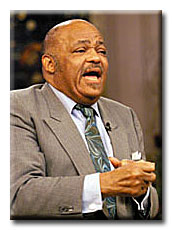
imageThe city still cries for another like Pastor Hill to speak truth in the City of Angels. For over forty years he served the Mt. Zion Missionary Baptist church in the Watts neighborhood of Los Angeles and never drew back from proclaiming righteousness. To learn more about the heart of a true man of God, a good primer is the sermon he preached at his beloved Baby’s funeral. Set aside a few minutes and soak it in…you will be changed.

For the visual generation, here is a good starter link on Youtube:

Psalm 43 – Send Forth Your Light and Truth

image Send forth your light and your truth, let them guide me; let them bring me to your holy mountain, to the place where you dwell.

Then will I go to the altar of God, to God, my joy and my delight. I will praise you with the harp, O God, my God. (vv 3-4)

The Psalmist groans in the face of continued persecution, much as he did in psalm 42. [N.B. Psalm 42 and 43 form a single prayer unit and should be read together.] He begs to be restored into an audience with Yahweh who he will praise. The hope that colors this brief prayer applies now as it did then; praise does not require peace. Praising God requires the long view. We must look beyond our immediate circumstances, whether morass or exultation, and know that in the eternal blueprint that God has for the world he works all things for good.

Why are you downcast, O my soul?

Why so disturbed within me?

Put your hope in God, for I will yet praise him, my Savior and my God. (v 5)


Image Walt Jabsco

Psalm 42 – My Soul Thirsts for God

image

As the deer pants for streams of water, so my soul pants for you, O God.

My soul thirsts for God, for the living God. When can I go and meet with God? (vv 1-2)

Being oppressed by the enemies of God is a theme that abounds within the Psalter. The purpose of the repetition is to give voice to the question that continues to nag us to this day; where is God as trouble closes in around us. Has He abandoned us, do we no longer enjoy His favor? Foolish thoughts, but thoughts we must admit to entertaining.

To fill our minds with the joy of our moments of worship brings comfort and a reminder that God does not forget us. We can be assured that He is always near and worthy of our hope and belief.

These things I remember as I pour out my soul: how I used to go with the multitude, leading the procession to the house of God, with shouts of joy and thanksgiving among the festive throng. (v4)

Meditation on this truth brings the psalmist and us to the same conclusion:

Why are you downcast, O my soul?

Why so disturbed within me?

Put your hope in God , for I will yet praise him, my Savior and my God. (v5)

The oppression and suffering that the psalmist refers to is not of the random type. He recognizes that God’s hand has allowed it, if not brought it upon him. His allusion to the flow from above that washes over him.

Deep calls to deep in the roar of your waterfalls; all your waves and breakers have swept over me. (v7)

The ultimate goodness of God’s totality does not escape him. Ultimately and despite current suffering, praise is the only response to the hand of God.

By day the Lord directs his love, at night his song is with me—a prayer to the God of my life. (v8)


Image bjmccray

Contemplating Creation

The heavens declare the glory of God; the skies proclaim the work of his hands. (Ps 19:1)

image Returning to Evelyn Underhill’s Practical Mysticism she suggests that one interested in beginning the spiritual discipline of meditation start “with that first form of contemplation which the old mystics sometimes call the ‘the discovery of God in his creatures.’” Meditating on creation is a contemplative form that lends itself to practice at any moment during the day when you can view the world around you. By focusing on His creation from its grandest examples such as the Sierra Nevada or the Grand Canyon to its most minute in the tiny flowers of the Verbena. You seek to encounter God through the glory proclaimed in all that he created, in whatever form it takes. Allow yourself to meditate on the symmetry of the flower, at the wonder of its shape and color. From the tiny stamens your meditation can move to reflect on the thousands and thousands of types and colors of flower in the creation and glory at the creative mind that brought them all to life. Your soul will find its humility and allow you to commune even closer with your Father.

Meditation and Recollection

image “So slothful, however, is man in all that concerns his higher faculties, that few deliberately undertake this education at all. They are content to make their contacts with things by a vague, unregulated power, ever apt to play truant, ever apt to fail them.”  Evelyn Underhill – Practical Mysticism

The meditative process known in Christian circles as recollection is simple to understand. It is time that you will devote solely to becoming still and silent through intentional action. Taking your thoughts captive into silence is an effort of the will to keep the senses in check and not allow them to stray off onto different avenues. All of the contemplative focus is limited to a single subject, the love of God.

Foster describes the Quaker practice of ‘centering down’, a part of the Quaker meeting practices. The worshiper begins by placing the palms down as a physical indication of one’s desire to give over your concerns to God. The palms down position releases the concern. If you wish to receive from the Lord, the position is reversed with the palms up. The practice continues until you released everything within you and are prepared to commune with the Lord. The centered mind can enter the silence of that communion.

Teresa of Avila was a proponent of these focusing exercises, practicing them daily. She explain that the practice is called “recollection because the soul collects together all the faculties and enters within itself to be with God.” (The Way of Perfection) It may sound mystical but it is not. The disciplines are meant for all people of the Lord and He will grace us with the gifts and abilities necessary for their practice. All we have to do is ask.


Image by Keraoc

Imaginative Contemplation

image

Many Christians are hesitant to engage the spiritual disciplines because they have allowed themselves to be convinced that only the spiritual giants are able to immerse their lives in the practices. Meditation is one of the disciplines that seems to be far out of the reach of the saints. We have a picture in our minds of one sitting cross-legged in a deep state of communion with the divine, completely disconnected from world around them and possessing a peace that you and I cannot seem to find. Looking at this picture we turn away, thinking that we would be unable to attain this state and surrender back to splashing around in the shallows of our life of faith.

Well, erase this image. You have every ability to integrate every one of the spiritual disciplines into your life, starting with meditation. One of the things we learn as we begin to explore meditation is that there are numerous avenues into the practice. One of the easiest ways to begin meditating and linking the mind and the heart is through your imagination. To use the imagination is not to engage in flights of whimsy, forming new stories of our relationship with God based upon our own desires. It is to use the power of your mind to place yourself immediately at the feet of the Master. It is to place yourself in the Upper Room as the Lord speaks to His disciples, you included. Feel how tight the space is filled with people, smell the bread and the wine, see the Lord’s face in the candlelight and watch the shadows dance about the plaster walls. Now, hear the words he speaks:

A new command I give you: Love one another. (John 13:34)

Your imagination will allow you to see his face as he mouths these words. You can look about and see how they strike each of the men present. Judas has gone—would he have recoiled at this statement? Do you? The images of your mind help you to be fully present to the Spirit as He moves the words from your mind into your heart. Have you loved others as the Lord loves you? Do the words pierce your heart or comfort you? Contemplate on the words as the Spirit communicates the truth to you in ways related to your life.

Meditation using the imagination troubles some people as they fear that this sense can be corrupted just as our others can. We have to live with this reality but the question to ask is this; if God can redeem other aspects of our life can He not redeem our imaginations as well? Trust in God and open your mind.


Image by OkaySamurai

Psalm 42 Have Mercy On Me

image The first collection of prayer poetry in the Psalter closes with David’s repeated plea for healing from a serious illness. He does not wait until the healing is complete before effusively praising Yahweh.

But you, O Lord, have mercy on me; raise me up, that I may repay them.

I know that you are pleased with me, for my enemy does not triumph over me.

In my integrity you uphold me and set me in your presence forever.

Praise be to the Lord, the God of Israel, from everlasting to everlasting.

Amen and Amen. (vv 10-13)

David has walked over this ground many times, penning a prayer for relief from whatever ailment was causing his distress. The preceding handful of psalms were similar pleas for mercy while acknowledging that his illness was directly related to his sin. Stepping outside of himself, he looks in through the eyes of those who are enjoying his travail.

I said, “O Lord, have mercy on me; heal me, for I have sinned against you.”

My enemies say of me in malice, “When will he die and his name perish?” (vv 4-5)

To whom are we going to give our attention? It is all too easy to allow the feelings and actions of others to influence our relationship with God. Their malice may even convince us that God has given up, that he has turned his eyes away from us. When we are in the midst of our battles, when our pit of despair seems to grow deeper by the day, when we may even feel as though all is lost…we must praise. We must flip to this psalm and raise our voices to the heavens and declare that despite current circumstance, we say “Praise to the Lord, the God of Israel, from everlasting to everlasting.”

Amen and Amen.


Image Gio