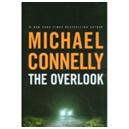
The Overlook by Michael Connelly

The Overlook started life as an interesting experiment by Connelly; he originally published the tale weekly in the New York Times Magazine and then expanded the story to the form that we have on the bookstore shelves. The result of this exercise is mixed. While a new Harry Bosch tale is always welcome, this story comes off as Bosch Lite. Harry seems to be simply going to the motions of breaking in his new partner, antagonizing his superiors, and nursing one more broken heart as he runs into Rachel Walling as the FBI steps all over his case. The trouble is, none of these things are fleshed out, they simply happen and rarely affect the story in any meaningful way. Perhaps the worst thing is, the killer is identified correctly and the story ends. Not typical Connelly style.

Connelly gives us a quick summer read at barely over 200 pages and, although it tastes good, it is less than satisfying when it ends. There are way too many characters who appear, most of whom Bosch is pissed off with, and the alphabet soup that he bemoans as all of the agencies involved appear confuse the reader who must remember whether they belong to the LAPD, the OHS, or the FBI. Maybe I should have made notes inside the back cover. The Bosch series of books is one of my favorite indulgences but, while this was enjoyable, it is not the best.

The Secret – Hidden in Plain Sight

… is Hidden in Plain Sight according to author Mark Buchanan. The Secret is not to get more of yourself and your thoughts into your life, the secret of more is to have more God in your life. Buchanan gives us an eminently practical book about practicing virtue, but with a twist. What he discovers in this exposition based on Peter’s second letter, verses 1:1-9 is that the pursuit of virtue is not the ever constricting legalism that we often see it portrayed as but rather, a freeing, energizing journey meant to give us life in abundance beyond our wildest dreams.

Peter begins the passage by pointing out that the followers of Jesus already possess everything they could possibly need for life and godliness. There is no further education, ritual, or secret handshake – everything you need has already been given to you by the Lord and the indwelling Spirit. Everything you need to have the full, rich, abundant life that you’ve always wanted is yours, all you have to do is recognize it, take hold of it and live. On top of the life that you’ve dreamed of, God offers more as we make every effort to add the seven virtues that follow to this already charmed life.

Buchanan does his usual excellent job of talking about the seven virtues that give us more – goodness, knowledge, self-control, perseverance, godliness, brotherly kindness, and love. Each chapter is a joy to mull over rather than an instruction manual to be followed. Sometimes we see our shortcomings while other times we are pleasantly surprised to see how far we’ve come as we turn the pages. Mark shows his pastoral heart and a good deal of transparency as the words flow from page to page and suddenly, in too short a time, the book ends. It leaves you wanting more, and God is only too willing to meet you in prayer and grant your wishes.

Now that you know the Secret, you won’t have to buy that other book.

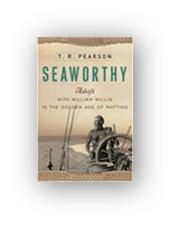
Seaworthy by T.R. Pearson

Adrift with William Willis in the Golden Age of Rafting


I live torn between my two landscape loves, the mountains and the oceans but when it comes to literary choices, I’m a sucker for anything that occurs out on the wide open seas, particularly in a wind-driven craft. The photograph that graces the cover of Seaworthy of an emaciated, but whip strong, William Willis guiding one of his handmade craft out on the loneliness of the ocean is all by itself enough to draw me in. The story the lies between the covers is an adventure like you’ve never read, mostly because Willis embarks upon the solo ocean journeys voluntarily and often against the advice of friends and family. The novelist T.R. Pearson takes us along onboard the various ships and into the various ports of call that Willis visits, often making us feel the salt spray, the tumult of the tides, and the discomfort of being constantly damp.


The tale of William Willis is a little known bit of sailing lore, being the story of a man who at the age of 60 decides to cross the Pacific on a raft made of lashed together balsa logs alone. Unlike the better known Kon-Tiki expedition years earlier which carried a crew and an anthropological objective, Willis made the decision to embark upon his voyage simply because he couldn’t sit still. A love for the open sea combined with an obvious inability to function normally in polite society ignited the passionate pursuit of the trip. Though his wife Teddy is vocally against the trip, she acquiesces too easily in the end, perhaps knowing the Willis has no mechanism within him to comprehend the wisdom of his adventure.


Willis displays flashes of genius to temper his inability to complete his preparations or his need to face danger eye to eye. His days at sea are filled with mundane chores, care for his hernias, seeking peace with his shipmate animals, and questions about the wisdom of his endeavor. When we find ourselves in the chilly water with him after falling overboard, we along with Willis see the raft in the distance and wonder if this is the end, watching the raft lumber along ahead of him just out of reach. We wait cringing as he contemplates some shipboard exploratory surgery with whatever rusty implement he has at hand. We wonder why, in our own lives, we can’t summon the courage to do things just to do them and to prove our mettle only to ourselves.


Pearson takes the reader on two Pacific cruises filled with adventure; the second has Willis leaving port at the age of 70. His prose is an excellent transition from novel to non-fiction and the book is just right in its length. From his early prison break escapade to his last voyage across the Atlantic in a glorified rowboat, the reader is engaged in the life of a most interesting man. Little is said about his wife and we are left to wonder is she too was a bit of a vicarious adventurer, living through her companion and knowing the muse that drove him.


This is an excellent addition to your library. We can only hope that T.R. Pearson treats us to another real life tale somewhere down the line mixed in with his other storytelling.

The Danger in Waking Up to Worship

Labberton comes to the end of The Dangerous Act of Worship with the answer to the question that has been gnawing at the reader from the first page; how? We have been reminded on each page that everything that matters is at stake in worship. The nudge that opens our eyes to see the world as God does comes through worship. Our hearts rent for justice are a result of worship. Labberton repeats his earlier assertion that we are to be people who heed God’s call to live out our worship in such a way that justice becomes an identifying mark, a testimony to Jesus and His transformative power. And yet, we remain asleep, drowsy from a lack of direction. He offers four concrete steps to rousing ourselves.

First, we must decide for ourselves to worship fully and faithfully. Worship is not measured in attendance and praise singing, it must be a way of life. A worshipful life involves full submission to His Lordship, to dying a little bit to gain a bit more of Him. In doing so our eyes open wider and wider, preparing us to…

Second, choose to see the injustice around us that cries out to be addressed by the transformative power of Jesus Christ. As our blurry vision clears, we must make the effort to focus it on the hungry, the thirsty, the imprisoned, and the oppressive forces that put God’s people in those positions. We see it and as an act of worship…

Third, we choose to engage it. It does no good to simply see injustice, to have viewed it for emotional purposes like a painting in a gallery. Unlike walking away from the picture and promptly forgetting the details, Christ’s brothers and sisters should choose to keep the injustice in clear view. We examine it from all angles in order to restore justice to the situation from as many perspectives as possible. Our vision is filled with the needs of others, trusting in God for our own, so that we can worshipfully…

Four, choose to actively love others as Jesus Himself loves them. We will choose to love in full acceptance and in forgiveness. “When we choose to love in the name of Christ for the sake of justice, we allow our compassion to take us to people and to places for the sake of the other person, in advocacy for their need, out of a compassion for their suffering, even when it means sacrifice and suffering for us.”

Is our worship dangerous to our lives as we have known them? If not, the moment to begin is now. We have the promises of the Father for the future but a vocation to fulfill here in this broken world. It is through true worshippers that justice is restored. Labberton concludes with these questions that we must all ask ourselves:

Are we who follow Jesus Christ believing and acting out what God considers the matters of first importance? Or are we, as I fear, asleep to the real passions of God and the real needs of the world? More specifically, do our lives and practices of worship lead us to live in the ways that matter to God?

Peace be with you.

Dangerous Worship of Power

If you haven’t picked up Mark Labberton’s book The Dangerous Act of Worship yet, don’t wait a minute longer. Rather than a how-to, Labberton has crafted one of the finest volumes associating proper worship with justice that I have had the privilege to read. It is a not a book that you will tear through in a couple of days. I labored with this book over weeks because of the repentance motivated by the injustice that my own worship allowed. 

He writes in chapter seven about the proper recognition of power and how appropriate worship speaks to it. Safe worship permits the continuation of power abuse while dangerous worship recognizes the true power in God. Labberton says

Nothing thwarts God’s purposes more than twisted power; nothing renews God’s purposes more than redeeming power.

When we explore the danger of worship, pushing out beyond our safety zones to encounter the true and living God, we are struck by His power. Placed side by side with our feeble and unjust practices of power, we see the injustice wrought by our appropriation of what is not ours. Worship that walks us out into the dangerous desert alone with God realigns our thoughts and actions and helps us to discover that the greatest power is found in emulating the Savior’s self-sacrificial love. How many times has this topic been discussed in our worship planning meetings?

Mark asks us to reflect on each of the Church’s worship practices, from the Call to Worship to the Offering and Benediction. Each gives us an opportunity to reflect on true power, to help us realize that the manmade constructs that we often associate with power are but mere facsimiles of God’s supremacy. The brief section on the Offering is especially powerful, given the often contentious feelings that surround this practice. We live in a culture that sees money as power and, in some cases, worships it. The act of offering our gifts at the altar is a significant release that is often given short shrift in the Church today. Laying down the gift can be an exercise in recognizing the true wealth and it source and the more dangerous we make this the closer we bring our brothers and sisters to the practices of justice that it should engender.

Dangerous Sabbath

In his book, Mark Labberton continues to urge the church toward a reformation in worship that takes the focus off of comfort, stability, and safety and turns its back to the wild and frightening objective of seeking God’s presence that urges us toward a heart for justice. In an interesting turn, the chapter Doing Justice Starts with Rest, Labberton he asserts that rest – in the practice of Sabbath keeping – is essential to empowering the action that he urges on the other pages. To quote, “Scripture’s call to seek justice surely involves action, considerable and costly. But a life that does justice rises out of worship, which starts with rest, is sustained by rest and returns to rest.”

Sabbath keeping is a difficult spiritual exercise in our modern go-go society. To be at rest is often seen through cynical eyes as laziness and a lack of motivation. If we’re not moving and doing, we can’t possibly be accomplishing anything. God wants us to take a different perspective; He wants us to understand that our accomplishments come from Him and that the Sabbath demonstrates our reliance upon His power. God gives us the Sabbath as a boundary, helping us to understand that we can trust in our rest when God Himself took a day off after the greatest creative moments in history. When we practice the Sabbath we finally understand that it is the Father and not us that keeps the world spinning. Worship in its purest form.

When we finally slow down and recognize the providence in which we exist, we find a release that allows our eyes to rise to the One who also rested. Unplugged, our head clears to recognize who we are in the Father’s eyes. We also see who our neighbor is, not in MySpace or WordPress or some other artificial connection, but the living, breathing humans who inhabit our world and the heart of the Father. Imagine if we were all at rest together.

God’s Ground Force by Barbara Sullivan

Often, books about being the Church or how to do Church fly under the radar because they didn’t have the cachet of a well known pastor’s name on the byline. Sometimes they disappear after their first print run and other times they become underground classics like Love, Acceptance & Forgiveness and The Church Unleashed still sought on the second hand market years after they gone out of print. A recent book that has not received the attention it deserves is God’s Ground Force, written by Barbara Sullivan in 2006. The journey from call to full blown ministry as Restoration ministries captivates you from page one as Barbara’s plain-spoken wording invites you to seek out parallels in your own life to her experiences.

The story recounts the variety of growth experiences that formed her church and ministry and gives us many insights on how it affected her family and relationships. Realizing that obedience to God’s call came above all else was the key to her discovery of the ‘more’ in the statement, ‘there has to be more to life.’ By allowing the Spirit to freely guide their choices and actions, the Sullivans have been at the center of a Spirit centered ministry as followers. Contrast this with the marketing approach so many planters take today in which they sense the call but then push the Spirit aside, thinking that once they have been given the assignment they must rely on their own abilities to facilitate the birth and growth of the body.

You can read the book in a day or two but you won’t. At each juncture, you will sense the Spirit prodding you. Perhaps it is with an assignment or a change of course, the secret Barbara reminds us is to turn over the reins to God and let Him run the show. It’s hard to argue with the results she shares on the pages of this fine book. Don’t overlook this one.

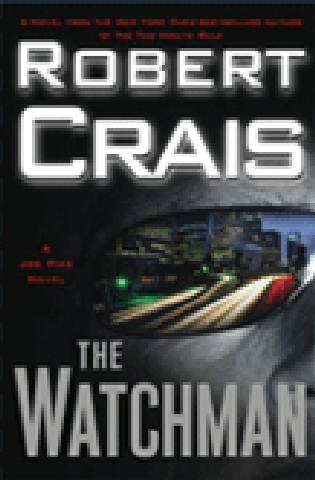
The Watchman by Robert Crais


 Joe Pike in love? Joe Pike stringing together more than three words?

    The man of the perpetual sunglasses and moving forward attitude comes alive in the best Crais novel this year. Pike has been a partner character in Crais’ Elvis Cole detective series where he has served as the hyper-intense specter who appears out of the mist when Cole’s wisecracking can no longer save him from trouble, and he needs both muscle and muzzle. His intensity was known, but this novel fully fleshes out the man Joe Pike.

    The usually silent Pike comes to life as The Watchman, contracted to protect a Paris Hilton-like debutante whose life spirals out of control when she and her Aston Martin are at the wrong place at the wrong time. Crashing into a car that appears to back out in front of her, Larkin Conner Barkley sets in motion an explosive series of events that leads to her being hunted by men with no identification but plenty of bullets. Joe is called in to protect her and he takes the job seriously, despite Larkin’s protestations. The mission always comes first in Joe’s world.

     As with all silent heroes, the biggest mistake that the pursuer can make is to make him angry. After a pair of safe houses are exposed and become shooting grounds, Pike suspects everyone and everything and begins the process of sorting truth from fiction. He enlists Cole to help him exam everyone involved with Larkin and their motives and, together, they peel back the layers to discover who is really behind the threat to Larkin’s life. Every page that is turned pushes Pike forward, following the tattoos on his biceps.

     The Watchman is a fantastic read sure to satisfy. Though Pike has been introduced to us in the Cole novels, spending time with him and his thoughts gives him new depth and dimension to his character. All of the personal background that we had prior to this book comes together now to paint a picture of a man of honor, compassion, and an intensity that burns off of the pages. His interaction with his fellow brigands in the gun shop alone will cause you to play and replay the dialog in your head just to hear the sound of his voice. Joe Pike is a character with a long career ahead of him.

Stay Groovy!


Technorati tags: , ,

A Dangerous Meeting

aslan.jpg C.S. Lewis wrote in  The Lion, the Witch, and the Wardrobe,

“Is he—quite safe? I shall feel rather nervous about meeting a lion.”

“That you will, dearie, and no mistake,” said Mrs. Beaver. “If there’s anyone who can appear before Aslan without their knees knocking, they’re either braver than most or just plain silly.”

“Then he isn’t safe?” said Lucy.

“Safe?” said Mr. Beaver, “don’t you hear what Mrs. Beaver tells you? Who said anything about safe? ‘Course he isn’t safe. But he’s good. He’s the king, I tell you.”

He dangerousworship.gifis good and He is the King and he most definitely is dangerous. Next Sunday morning I’m willing to bet you will sing the praises to the first two but how often have you considered the third?

 I’ve been reading Mark Labberton’s new book The Dangerous Act of Worship for the past couple of weeks. Well, maybe reading is too active a verb. Savoring, contemplating, worshipping, repenting; these are far better descriptions of how a reader will encounter these pages. The book is constructed on the idea that we have lost the danger of worship by turning it into an hour of safety and complacency rather than a way of life. Labberton reorients our thinking to worship as life and how our recognition of God and His place in life must translate into a renewed concern for biblical justice.

I’m going to post further on this book in the days to come. I would encourage you to pick up the book and read it. Join me in a conversation about its ideas and together we’ll kneel at the altar of justice and danger.

Technorati tags: , , , , , ,

No god but God by Reza Aslan

In the current discussion surrounding Islam and its adherents, a charitable work that covers the Prophet, the formation and sectarian split of the faith, and its effects on believers is difficult to come by. There are apologists and fundamentalists on the side of the faith that seek to polish or fortify the image against the stream of diatribes published regularly so finding a work of religious history that speaks with a balanced voice is particularly welcome. Such is Reza Aslan’s book No god but God 

Starting with the polytheistic traditions of the Arab peoples and igniting the story at Kaba (the cubicle containing the deities in Mecca), Aslan begins the story of Muhammad as an orphan dependent upon the largesse of an Uncle for his survival. Before God speaks through him, Muhammad’s reputation is already on the rise as a skilled merchant among the social strata of Mecca. He is able to view firsthand the disparity among the people of the city, some being enriched at the expense of others while poverty is impressed upon others and his mind is occupied with concern over this and the other societal problems brought about by adherence to cultural traditions. 

Islam germinates deeply embedded in this form of Arabian culture when the prophet is seized by the first of the crushing revelations. “Recite” the voice commanded and, as would follow hundreds of times, Muhammad spoke the words that he felt etched on his heart. Collected long after the Prophet’s death, these sayings compose the whole of the Koran. Unlike other sacred texts, the Koran does not present a progressive revelation from start to finish. Instead, we discover that it is the product of the Prophet seeking guidance for addressing specific, timely situations and the revelation he received in response. 

Aslan is a compelling writer and he carries the story of Islam through the Prophet’s life and into the internecine battles that have divided the religion since his passing. The divisions occur along leadership lines (Shiite / Sunni) and belief lines (Suffi). The reader comes to understand much of what the modern world is witnessing in the intra-Muslim violence that is so widespread and we can formulate a response as to why an Islamic reformation is long in coming.  

The latter chapters are especially instructive as Aslan helps us to understand how Islam, in its divided state, combined with imperialist and cultural conditions fomented the radical Muslim so often in the daily news. It is crucial for modern non-Muslims to grasp the intricacies of this religion and its traditions in order to understand its radicalization and Aslan traces these well. Often unknown for example is the hadith, the collected sayings and stories of the Prophet and his early inner circle, that often supplements the surah of the Koran in order to arrive at Islamic positions and beliefs. Were the hadith products of a single author and time with a direct witness relationship to the saying or event? The answer to this and other questions helps us to form a more complete picture of the religion that is front and center on our newspapers every morning.

Technorati tags: , , ,