God So Loved the World III

Lent 2011

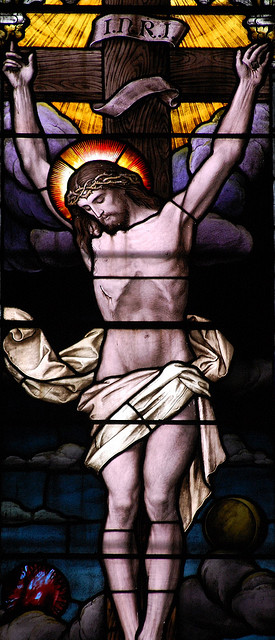
imageFor God so loved the world… John 3:16

The first thing that catches your attention in the verse is the expression of God’s love for the world. We hear or read the word love and it passes over our personal filters for interpretation. Whatever definition for the word dominates our thinking, proper or improper, is applied to the words of the Lord.

Take a moment to let the word tumble over in your mind. What is love to you? Mere infatuation in its immature form? Is there a physical aspect to love? Does the word conjure up negative feelings, borne from bad experiences in the past? All of these impressions color the way in which the word is heard in our hearts and minds, and it becomes our interpretation of God’s love.

Focus on that word alone today. Say it aloud, not to anyone in particular, and let it hang in the air. As it reverberates, let your heart work on it. What does love mean to you? Are there negative connotations that you need to release? God will replace your notions with His own if you will simply expose them. Does your interpretation need maturing? He will show you a deeper love than you can possibly imagine when you are ready.

Grace and peace to you.

image sheknitsone

God So Loved the World II

Lent 2011

For God so loved the world that he gave his one and only Son, that whoever believes in him shall not perish but have eternal life. (John 3:16)

imageThough there is an almost universal familiarity with this verse amongst the Christian family, many forget the speaker and the context of His words. It becomes trite to many, an expression of immeasurable depth and meaning that is reduced to the shallows in which we wade.

Jesus refers to Himself in the verse, following his revelation in the preceding verses of the sacrifice yet to come. In verses 14 and 15, Jesus has informed Nicodemus that He is to be lifted up as the only source of eternal life.

Consider the first few words then, in this context. Rather than the common reflection on the word ‘so’ in its emphatic sense, we can read it directly translated from the Greek as ‘in this way’. Jesus informs Nicodemus, and centuries of readers to follow, that the sacrifice the father is making in seeing His Son lifted up is rooted in love for the fallen and corrupted world.

When we reflect on our personal sacrifice during this Lenten season, this idea informs it. Do we display our love for others in a sacrificial manner? Requited love is easy. Giving of self for the good of others when it is not recognized nor appreciated, not nearly so. Yet this is the disciple’s calling, to follow closely in the shadow of our Savior.

Grace and peace to you.

image fergal claddagh

God So Loved the World

Lent 2011 image

It is a fact of life that the most familiar things in our lives tend to fade to background, receiving little attention and often being taken for granted. We assume we will awaken tomorrow and that our significant others will continue to love us as they have. Our lives in Christ are not exempt from this trend; truths that we are most familiar with receive little meditation.

For God so loved the world that he gave his one and only Son, that whoever believes in him shall not perish but have eternal life.

Verse 3:16 in John’s gospel is recognized as the most familiar verse in the Bible. It was probably the first verse that you committed to memory, and since it pops up at ballgames each week, it is probably has reached the most people outside of the faith community. It is a simple, straight-forward truth, foundational to the Christian life.

When was the last time you spent an extended time of reflection in this verse?

I’m willing to bet that it has been some time, if ever. And yet, this truth lies at the heart of the Lenten season. God’s sacrificial love is evidenced in the Cross and the resurrection of the Savior. It is the promise from which we draw strength in the storm and pass on to our children. It is everything.

My Lenten reflections for this season are going to be rooted in this passage. The Spirit has brought this back to my attention for a reason and the approach to Easter is a perfect time to meditate on its many and varied messages. I hope you will join me.

image mandy jansen

Hurtling Headlong in the Wrong Direction

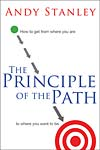
The Principle of the Path by Andy Stanley

image“Cars have problems that can be fixed. Computers have problems that can be fixed. Lawn mowers have problems that can be fixed. But generally speaking, people have directions that need to be changed.”

Prolific author and Pastor Andy Stanley sets out the straight-forward proposition that the path we choose determines our destination. Sounds simple, doesn’t it? And yet, as Stanley recounts in the numerous vignettes that illustrate this principle, many people wind up at a crisis point in life, head in hands, asking “how did I get here?” This is like jumping on I-70 west in Denver and then being surprised when you show up in Utah. Each path leads to one destination.

Stanley’s plain-spoken account of the principle makes you wonder why it needs to be spoken out loud or published. Most people are capable of analyzing the destination of the paths they choose in life. Relationships, finances or health; all of the eventual destinations are determined by the path we choose at the beginning of our journey. More often than not, we can see the destination at the end of that path, and yet, we ignore it to our peril.

The simplicity of the preceding paragraph illustrates my disappointment with this book. The principle that Andy presents is simple and requires little adornment or augmentation, and it would make for an excellent topical sermon. One, maybe two. Repeated over and over and touching on the same handful of life-paths, it becomes repetitious. Each chapter treads the same ground, albeit with different illustrations drawn from the pastor’s life experiences.

I am grateful to Thomas Nelson for providing this volume for review.

Jesus-Shaped Spirituality

image

Mere Churchianity by Michael Spencer, The Internet Monk

What’s your gospel? The late and much missed Michael Spencer confronts us with this question throughout the pages of Mere Churchianity. Separating church life spirituality and a spiritual life centered in the Jesus found in the gospels, Spencer leads us to question which side of the divide we find ourselves on. Without using the phrase, he critiques the kind of ‘cultural Christianity’ that has infected the Church, causing us to stray from our principles. His purpose in writing the book matches that of his postings over the years on his blog, internetmonk.com, to restore Jesus as the first love of the Christian.

Spencer speaks throughout of church-leavers, those souls who have abandoned the structure and practices of the modern church while retaining their love for the Savior. His words are not a polemic pro leaving, but rather, a nudge to have us look at what the church has become and what is driving people away. At the core of his argument is the contrast of a church-shaped spirituality and the Jesus-shaped form. This distinction is stark. The former is shaped by institutional Christianity and all of the influences that have, to varying degrees, softened her and made her palatable to the larger culture. Jesus-shaped spirituality is rooted in the counter-cultural, brutally honest and challenging life and person of Jesus Christ as we know Him from the pages of the four gospel accounts.

Michael devoted himself to a Christianity that was rigorous, loving and had nothing to do with living your best life now. It had everything to do with Jesus, knowing God and a faith that transformed much more than it separated us into walled-off tribes. He walks us through the messy process of finding the Jesus that is sometimes forgotten in the middle of capital campaigns and ski outings for the youth. You will read the book quickly, but the move to the shelf will not be as rapid. The little points here and there on the pages will cause you to return as you think about what he wrote and you find yourself attracted to shedding the churchianity cloak in favor of Jesus.

I’m grateful to Waterbrook Press who supplied this copy for review.

Psalm 98–Rivers Clap Their Hands

image

The Lord has made his salvation known and revealed his righteousness to the nations. He has remembered his love and his faithfulness to the house of Israel; all the ends of the earth have seen the salvation of our God. (Psalm 98:2-3)

God the evangelist. There’s a phrase that we don’t often hear on Sunday mornings. The idea that God who mercifully extends His grace—of which He is the source—also trumpets that message to the world somehow seems to escape us. We take the burden and responsibility for evangelism onto our own shoulders, but fail to look back at the exemplar for the proper way of performing the task.

God the Father announced His love through His chosen people. As His people put their depravity on display over and over, the message was confused. The Suffering Servant would leave no doubt. Christ made salvation known for all the generations that would follow. Our evangelism requires nothing but to display Christ to the world.

Marana Tha!

image macieklew

Psalm 97–All The Peoples See His Glory

imageThe Lord reigns, let the earth be glad; let the distant shores rejoice. (Ps 97:1)

The psalmist declares the fundamental tension in which God’s people exist. We recognize his sovereign rule over all but struggle to understand why He doesn’t exercise it to destroy the evil that is so prevalent. Is there reason for doubt?

Fire goes before him and consumes his foes on every side. (v3)

Confidence is rooted in faith. Faith that one day, all will be restored to its proper condition. Fire will sweep away all that mars creation and out of the tempering flame will come the restored heavens and earth. Nothing, even the mountains, will stand before God in his sweeping restoration.

Let those who love the Lord hate evil, for he guards the lives of his faithful one and delivers them from the hand of the wicked. Light is shed upon the righteous and joy on the upright in heart. (vv 10-11)

Despite what surrounds us, we trust in the God whose sacrificial act demonstrated beyond question His love for us. Look through everything to see the goodness that will be the result of the change. Look to the skies and know that He is good and righteous.

The heavens proclaim his righteousness and all the peoples see His glory. (v6)

Grace and peace to you.

image uncle jerry

Paedobaptism-The Baptism of Infants

image

The doctrine of infant baptism (paedobaptism) has a long and controversial history that extends back in recorded Church history to the early Church fathers, many of whom point to the Scriptures for further historic records. The practice is viewed as a clear extension and privilege accorded by covenant theology (cf. Col 2:11-12). As circumcision marked members of God’s people—including infants—during the Covenant of Works period, so too does baptism serve as the mark of the new members of God’s family under the new Covenant of Grace.

Serving both as an argument for and against the practice, there is agreement that no where do the scriptures specifically ordain the baptizing of infants. This argument from silence offers support (there is no injunction against the practice) and  denial (there is no command to baptize infants). It is this silence that makes the practice controversial in the eyes of many in the modern Church. It also makes doctrinal support difficult to explain, since an understanding requires multiple layers of theology woven together for its foundation.

Paedobaptists divide the history of God’s people into two covenantal periods. The first period began with the interaction of God and His creations in the Garden. Upon their failure to obey, humankind was unable to maintain eternal life on their own. A ‘works’ covenant was established between God and man; so long as man obeyed the rules, redemption would be provided by the sovereign God. All those covered by the agreement were to be physically marked by circumcision, separating them from other peoples of the world. As the Bible records, humankind generally failed to maintain their end of this agreement. The coming of the Savior heralded a new covenant of grace, one in which those who placed their belief and faith in Christ would be redeemed. He gave as a symbol of this covenant the practice of baptism.

The paedobaptist roots their argument in a consistency requirement between the two covenants. In the first period, all of the males of Israel were circumcised, including the infants and children. They were considered full members of the people of God. At the transition to the covenant of Grace, paedobaptists insist that membership in God’s people must still include the youngest in the family since no scripture records instructions to the contrary. Thus, infants are baptized as a sign of their participation in the covenant.

The scriptural thread that connects the doctrine is long, spanning the Bible from the beginning of the story to the epistles circulated among the early Church. God’s covenant with Abraham is marked by circumcision (Gen 17:9-14). This marking is to remain in place until the new covenant (cf. Jer 31:31-34) is initiated by the coming of Jesus (Gal 3:14-4:7). Though inexplicit with regard to the physical marking, the Lord ordains a new rite of membership in the family, baptism (Mt 28:19-20). The book of Acts records the arguments of the Jerusalem council (cf. Ch 15) regarding the need to discard circumcision as the mark of belonging. Paul states in his first letter to the church at Corinth (1 Cor 7:14)  that the children of believing parents are holy (set apart), connecting the meaning of the two rites (Col 2:11-12).

It is important to note at this point a distinction between the Catholic sacrament of baptism extended to infants and the doctrine applied in Protestant churches. The Catholic sacrament is seen to confer grace ex opere operato, that is ‘by the work performed’. In other words, salvation is conferred by the proper application of the sacraments. The Protestant understanding of an infant baptized is significantly different. Any grace conferred to the infant is via the conduit of the parent’s faith, their belief covering the entire family unit.

John Murray argues in his classic book on the subject, Christian Baptism, that “if infants are excluded now, it cannot be too strongly emphasized that this changes implies a complete reversal of the earlier divinely instituted practice…in other words, the command to administer the sign to infants has not been revoked: therefore it is still in force”. [pp 49-50] Bryan Chapell concurs, saying “The absence of a scriptural command to prohibit administering the sign of the covenant to children after two thousand years of observing such a practice weighs significantly against the view that the apostles wanted only those who were able to profess their faith to be baptized.” [Why do We Baptize Infants, pg 16]

Grace and peace.

image alex @ faraway

Psalm 96–A New Song

imageFor great is the Lord and most worthy of praise; he is to be feared above all gods.

For all the Gods of the nations are idols, but the Lord mad the heavens. Psalm 96:4-5

The psalm demands an allegiance as stunning today as it was in the day it was written. Praise the God of Israel as the God of peoples and lands. Dispense with all other gods as they are simply idols, powerless and without meaning. Though we may not carve idols, our age certainly replaces God with other objects of devotion. Observer the lines pouring out of Verizon stores this week to possess and iPhone, the people believing that ownership of this phone would be transformative enough to queue up for hours in the winter cold.

Three calls to action follow the psalmist’s establishment of the authority and omnipresence of God:

Ascribe to the Lord, O families of nations, ascribe to the Lord glory and strength.

Ascribe to the Lord the glory due his name; bring an offering and come into his courts.

Worship the Lord in the splendor of his holiness; tremble before him, all the earth. (vv 7-9)

To what do we ascribe glory and strength, really? To whom do our offerings go? Do we tremble before anything?

Grace and peace to you.

image Truth Will Set You Free

The New Restoration

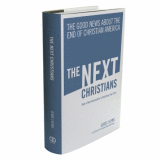
The Next Christians by Gabe Lyons

imageIf I was to awaken you from a deep REM cycle and question your self-identity, how would you answer? Would it be a racial or ethnic label, political or alumni affiliation, or would your respond with the label of any one of the innumerable cultural tribes? If I was to ask this question of a younger disciple of Jesus, author Gabe Lyons asserts that the answer would most likely not be ‘Christian’.  As he says in the opening lines of The Next Christians, many of his generation were and are embarrassed by this label. Not because of Jesus, he is quick to add, but because of the negative cultural connotations that have become associated with the EvangelicalFundamentalLiturgical tribe.

Lyons spends the next two hundred pages outlining the efforts and leadership of a generation of Christ followers intent on restoring two things, the positive image of the Christian label and the influence of that tribe on the larger culture. Far from proclaiming that the Church is dead, Lyons identifies a strata of disciples who are investing their lives in the restoration of Christian transformation of the culture. The intention of the restorers is not to stand aloof from the world and point to its many corruptions from the safety of a sanctuary, but rather, to immerse themselves in the culture and change it from the inside out. The restorers take seriously the salt and light imagery given by Jesus.

There are many parallels between the missional movement popular a few years back and the restorers. The difference that Lyons highlights through the many people he uses to illustrate his points is that the missional Church was a top-down movement that affixed a label to a church in the hopes that members of that church would self-identify as well. The restorers are a distinctly bottom-up tribe, followers of Christ first and foremost who take their influence fearlessly into their vocations. If the Church at large should wish to follow, that would be fine, but the restorers are not waiting on any ordination of their ministry before following their calling.

The Next Christians serves the followers of Christ in two ways. It is an important cultural touchstone for the Church as a whole who need to understand and follow the new leadership that will arise and call them out of their fortresses. It is also mirror that can be used in your personal self-survey. Examine the lives that Lyons highlights. Test them against your theological and cultural understandings. The author doesn’t provide ten steps to becoming a restorer; those steps will be up to you and unique calling that infuses your life. What he does record are the lives of influencers, believers who are restoring one small corner of the world, and re-establishing the Christian label as a positive identifier.

I’m grateful to Doubleday publishers who graciously provided this copy for review.