Friday is for Rawk 3

 This is one of the favorites in my collection. Akira Takasaki of the Japanese band Loudness raging at the now defunct Stone in San Francisco. This band is huge in Japan but only picked up a niche following in the U.S. Technically brilliant, Takasaki is a virtuoso guitar player and the rest of the band keeps up with him. The only drawback for American ragers is that we spoke little Japanese and the phoenetic English that was used in some of the songs was very difficult to understand.

Interesting side note, these guys almost made it to my wedding. Ten minutes more…but alas it was not to be. The singer also showed up back in the Bay Area about a year later looking for a woman to marry so that he could stay in the US, but that is another story…
 

The Danger in Waking Up to Worship

Labberton comes to the end of The Dangerous Act of Worship with the answer to the question that has been gnawing at the reader from the first page; how? We have been reminded on each page that everything that matters is at stake in worship. The nudge that opens our eyes to see the world as God does comes through worship. Our hearts rent for justice are a result of worship. Labberton repeats his earlier assertion that we are to be people who heed God’s call to live out our worship in such a way that justice becomes an identifying mark, a testimony to Jesus and His transformative power. And yet, we remain asleep, drowsy from a lack of direction. He offers four concrete steps to rousing ourselves.

First, we must decide for ourselves to worship fully and faithfully. Worship is not measured in attendance and praise singing, it must be a way of life. A worshipful life involves full submission to His Lordship, to dying a little bit to gain a bit more of Him. In doing so our eyes open wider and wider, preparing us to…

Second, choose to see the injustice around us that cries out to be addressed by the transformative power of Jesus Christ. As our blurry vision clears, we must make the effort to focus it on the hungry, the thirsty, the imprisoned, and the oppressive forces that put God’s people in those positions. We see it and as an act of worship…

Third, we choose to engage it. It does no good to simply see injustice, to have viewed it for emotional purposes like a painting in a gallery. Unlike walking away from the picture and promptly forgetting the details, Christ’s brothers and sisters should choose to keep the injustice in clear view. We examine it from all angles in order to restore justice to the situation from as many perspectives as possible. Our vision is filled with the needs of others, trusting in God for our own, so that we can worshipfully…

Four, choose to actively love others as Jesus Himself loves them. We will choose to love in full acceptance and in forgiveness. “When we choose to love in the name of Christ for the sake of justice, we allow our compassion to take us to people and to places for the sake of the other person, in advocacy for their need, out of a compassion for their suffering, even when it means sacrifice and suffering for us.”

Is our worship dangerous to our lives as we have known them? If not, the moment to begin is now. We have the promises of the Father for the future but a vocation to fulfill here in this broken world. It is through true worshippers that justice is restored. Labberton concludes with these questions that we must all ask ourselves:

Are we who follow Jesus Christ believing and acting out what God considers the matters of first importance? Or are we, as I fear, asleep to the real passions of God and the real needs of the world? More specifically, do our lives and practices of worship lead us to live in the ways that matter to God?

Peace be with you.

For the Common Good

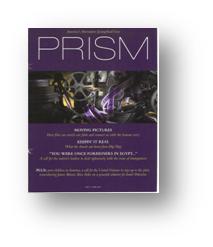
I have an article in the latest PRISM magazine. It talks about the fallout from the Rick Warren invitation to Barack Obama to speak at the Saddleback AIDS conference. My contention is that we as a community led by Jesus need to put aside denominational and perhaps faith differences in order to seek to good of the city (as Jeremiah would put it.) Give it a peek and let me know what you think.

The article PDF is here.

False Assumptions of the Interracial Couple

I’ve managed to alienate a group of brothers and sisters over on another blog by challenging the identity of a church or a Christian that is rooted in any kind of a hyphenated description, Italian-Scottish-English-French-American for example as I would identify my own heritage. While this Balkanization of the American experience is prevalent in the larger culture, my contention was that it had no place in the context of Christ’s church. Gal 3:26-27 says,

You are all sons of God through faith in Christ Jesus, for all of you who were baptized into Christ have clothed yourselves with Christ. There is neither Jew nor Greek, slave nor free, male nor female, for you are all one in Christ Jesus.

While this issue is little discussed outside of a place like the United States where, by definition, every church would be a __________-Church, in a culture where by design the culture is intended to blend by assimilation there should be no hyphenated churches.

Attempts were made to dismiss my position first by challenging the validity of my walk in the _____________-American church. After providing my bona fides there was simply silence. The silence didn’t stir me to respond but one final comment by another poster remains troubling. He says in his final words regarding those of us involved in interracial marriages:

As to the challenging question of interethnic marriage (particularly between White and “other”) it seems important to recognize that any minority person has a bi-cultural identity at some level, or is at least able to function biculturally as interaction with the dominant culture in dominant culture ways is really non-optional. For those in the dominant culture, especially males, even if they are married to a member of a minority group, participation in a minority context is always optional.

I hope I’m reading this wrong, especially in the context of the church. Just like the American experiment was intended to work: a new culture created by the assimilation of immigrant cultures into the larger whole creating a new identity and a release of the old identity, the Church that Christ left was also intended to be made of people who had left their previous identities behind and saw themselves as new people. No hyphens, no dominant culture, no racial division voluntary or otherwise. Those who continue to live in either the American or Christian culture but still retain their primary identity with a hyphen are dividing Christ’s people, not uniting them under a new banner as intended.

What is most troubling is the resentment that this writer holds toward the ‘dominant’ culture and we males that inhabit it. By picturing us as oppressors who can voluntarily flit in and out of ‘minority’ culture while our poor ‘other’ spouses must bow to it without choice he exposes his own racism. My wife was born and raised in a foreign country giving her full right to identify with a hyphen, my child who was born and raised here does not. He is a part of the ‘dominant’ culture, contributing to it the best of both his mother and father’s cultures. What other options does he have or need?

Imagine a Dangerous Life of Worship

Can you remember the first time you started reading the Bible? There were a lot of weird names and miraculous things happening and, whether you finished a single book or the entire Bible, you probably had a pretty good handle of the story because you read most of the words. Now, think about the second, third, or twentieth time you read through a book of the Bible. You began to discover things that you didn’t see the previous times. If you are involved in a bible study, others around you point out things that they saw that are new to you and vice versa. This awakening comes with the expansion of our imagination, growth that is a product of our deepening relationship with the Author of the story. Mark Labberton talks about worship that broadens our imagination in chapter nine of The Dangerous Act of Worship. True worship fires our imagination and enables us to have a more expansive view of our roles in restoring that justice that God wants for His world.

Imagination here is not just fanciful musings on what could be. Worship that brings us closer to the King is worship that fills us with God’s dreams and it leads us to look at people and events and our lives in a different way, discovering things that were not there the last time we looked, just as when we read the Bible over and over again. This process is enabled by our realization that God has placed His repentant children in a new place where we live by His grace power rather than our own contrition and energy. Our participation is ignited through prayer and scripture reading that opens our eyes to those around us. We seek their benefit while trusting in the Father for our own. As our imagination expands in this way we begin to see how God has arranged our intertwining lives such that we can contribute to a restoration of justice in their lives. Worship expands beyond our hour on Sunday to become our lifestyle.

At Saddleback last Sunday, Pastor Rick Warren said it plainly, if you don’t have a dream – a God sized dream- you’re just marking time. What’s your dream?     

Friday is for Rawk 2

Pete Way of UFO. This was taken at a blow out concert in the old Oakland Auditorium. They were particularly hot at this show supporting the Mechanix album. They had stormed through the year before at a Day on the Green stadium show but the intimacy of the auditorium brought out their best.
 

Mavis Staples Continues the Fight

  The legendary Mavis Staples has treated us, just a couple of weeks ago, to a new album recalling the civil rights struggle that continues to this day in some quarters. We’ll Never Turn Back is equal part traditional spiritual and modern protest lyric, all of it driven by the deep soul-shaking voice of the soul and gospel marvel. After one listen you will be lost in her storytelling, singing that takes you back to the battle lines of the sixties and then carries you forward to the aftermath of Katrina. On the hundredth listen you will remain captivated by the strength of her voice, layered as it is over a perfectly stripped down backing band that includes Ry Cooder, drummer Jim Keltner, hip hop producer Mike Elizondo on bass and backing vocals provided by Ladysmith Black Mambazo and The Freedom Singers. This is a CD that will not leave your player for some time.

Every song on this album is a masterpiece on its own but the traditionals stand out. Mavis sings over the most austere of background music, eliciting an image of the small church gathered to raise their voices in praise. We Shall Not Be Moved and This Little Light of Mine take you to another place and remind you that there is much work to be done. Go now and buy this record. Then lock the doors, open the windows and turn up the volume. Never mind the neighbors, they can sing along as well.