
THis brother was simply predestined to have a great sense of humor. Enjoy this.
Views on Divine Election: Traditional Calvinist
The key to understanding the Calvinist notion of divine election rests in shielding the sovereignty of God from any effectual interference by humankind. Election to salvation is rooted purely in the sovereign grace of God and it is unconditional in every aspect; it does not rely in any way on the behavior, belief, or action of the man or woman on which it is visited. Calvin says:
We shall never feel persuaded as we ought that our salvation flows from the free mercy of God as its fountain, until we are made acquainted with his eternal election, the grace of God being illustrated by the contrast—viz. that he does not adopt all promiscuously to the hope of salvation, but gives to some what he denies to others. It is plain how greatly ignorance of this principle detracts from the glory of God, and impairs true humility. (Institutes III, xxi, 1)
Calvin is quoted in a different context restating this principle a bit more starkly:
Predestination we call the eternal decree of God, by which he hath determined in himself what he would have to become of every individual of mankind…eternal life is foreordained for some, and eternal damnation for other. Every man, therefore, being created for one or the other of these ends, we say he is predestined to life or to death. (Cyclopaedia of Biblical, Theological and Ecclesiastical Literature ‘Calvinism’)
The Calvinist view of election has three facets; it is unconditional, individual, and infralapsarian, and scriptural references abound in support of each of these ideas. When election is referenced in this discussion, the Calvinist has in view a salvific election, one that produces salvation from perdition. This is an important but often overlooked distinction because theology also recognizes that there is an election to service and many theological disagreements balance on the recognition of this fine point. Careful exegesis is required then when stating unequivocally that one’s theological position is absolute; remember, context must always be considered when referring to a single verse in support of a tenet. Let’s look at each of the facets on their own.
Election is Unconditional
The U in TULIP represents election as unconditional; God graciously elected some to be saved according to His sovereign will without respect to their individual qualities, characters, or choices. This means that the choice was not conditioned on something that humans would do or the choices they would make, their behavior (good or bad) or any unique characteristic that might separate them from those who are bound by their sin and headed to perdition. Unconditional election is forwarded as the position that brings the greatest glory to God. Because salvation requires no human agency from start to finish God appropriately receives all of the glory for the transaction.
Scripture: Eph 1:3-6, Rom 9:10-16, John 17:2,6
Election is Individual
Election to salvation is done on an individual basis by God, bypassing one while selecting the next. While scripture speaks of God choosing a people, the Church, or a bride, this election is composed of the collective individuals who are recipients of His grace. This deeply theological concept contributes in a much greater sense than just scholastically. The joy that the recipient feels is heightened by the idea that God the Father has elected them as an individual. They are not a faceless part of the whole but a known entity to the God of the universe.
Scripture: John 6:37, Acts 13:48
Election is Infralapsarian
The question that remains in examining the Calvinist view of election has to do with the timing, or sequence of God’s decrees. The matter to be answered is when did God decree that salvation would be granted to the elect, before or after the decree to allow the Fall. Calvinist theologians can indicate disagreement on this point, some leaning toward Supralapsarian timing while others take the Infralapsarian view. The orders of each are:
Supralapsarianism (Decree of Salvation/Reprobation precedes the decree to allow the Fall)
- The decree to save some and condemn others
- The decree to create both the elect and the reprobate
- The decree to permit the Fall of both classes
- The decree to provide salvation only for the elect
Infralapsarianism
- The decree to create human beings
- The decree to permit the Fall
- The decree to save some and condemn others
- The decree to provide salvation only for the elect
Of the two, the dominant position through Calvinist history has been the Infralapsarian position though the issue is often left in an indefinite state that allows for a melding of the two positions. Once again, the theological desire to protect the sovereignty and the moral integrity of God is foremost in the conduct of this intramural argument. When searching the Scriptures for support, an important cue to remember is that when election to salvation is seen, it must logically follow that the need for that election is driven by a humankind that requires saving.
Scripture: Acts 13:48, Rom 8:29-30
Conclusion
The unconditional nature of election to salvation is key to the entire Calvinist theological framework. When contrasting this system with others, much of the debate hinges, knowingly or unknowingly on understanding the true positions of competing theologies with regard to election. It is incumbent upon us then to glorify God through our devotion to proper scholarship before engaging in any form of definitive declaration as to the validity or illegitimacy of positions not our own.
Solus Christus
Other Views on Election
Calvinism & Arminianism: Election 2007
The sotereological frameworks of Calvin and Arminius have been widely debated since their codification and there remains today an ongoing kerfuffle, especially in hyperventilated world of the blogosphere where anonymity often shields the purveyors of ideas from having to support them by examining their underpinnings. The positions taken are often of the ‘I’m right because my beliefs are beyond challenge’ sort and any engagement usually degenerates (with proper Christian faux-humility – e.g. ‘forgive me for disagreeing’, ‘we pray you’ll come to understand your error’, etc.) into disagreement without adequate consideration of the opposing position. What I often discover being left out of these C&A spats is any discussion of one of the fundamental differences between the two schools of thought, the concept of election. Because an understanding of divine election is so critical to being an educated participant in the debate, my contribution to the conversation will be to outline the different positions that are taken, starting with the classical Calvinist and Arminian positions.
God is glorified and our faith enriched when we all contribute to the conversation and I would encourage anyone who has something to add to do so. That said, I have but one requirement and that would be that sources and citations be included with your statements. This helps all who read the threads to follow up and explore our points further AND it prevents us from furthering mythological positions that have no actual support. As an example, the Arminian position is often misrepresented on several points. For one, there is a meme that winds up in many posts that states Arminian theology as seeing humankind as less than totally depraved. Though it is completely untrue, this idea is passed from person to person without any real effort made to discover whether or not it is correctly representative of the theology. This lack of scholarship is not glorifying when discussing the matters of God.
So, on with the show…
Wednesday Beauty – The Fire Tree

I’ve always loved this particular image because of the way the golden leaves of the tree pop against the granite in the background which disappears into the blackness of the deep river water. The picture was originally made on a Kodachrome slide and as soon as it was held up to the light, the leaves positively glowed. Enjoy it.
Fluttering on the Church gate: [25] Theses
This is an older post at the Vintage Christianity blog but well worth your time to read. The brother puts some challenges to the modern church, many of which can’t help but bring us to convicition. [25] Theses: The New Reformation-Against All, For All
The Lovings Were Heroes of Change
 On June 12, 1967 the Supreme Court of the United States handed down the Loving decision and changing the history of interracial marriage forever. This decision has had long reaching effects, not just for my own family in which two families are bi-racial, but for the 3.8% of all marriages that have chosen to cross the once taboo boundaries. At the time that Richard and Mildred Loving were married, their union was prohibited by state law and they were subject to incarceration for breaking out of the constraints of race and following their heart. They certainly would have lived out of the spotlight given the opportunity but their name will forever be remembered as the catalyst for change that so many are thankful for today.
The Association for Multiethnic Americans has a brief piece here.
An Associated Press article on Mrs. Loving and her story here.
Clearing Our Temple
In John chapter two, we catch a glimpse of the Jesus we don’t often picture in our minds. The meek, gentle curly haired, soft featured Jesus turns into the gigantic, whip wielding terror who overturns tables with his eyes blazing and the chords of the flail snapping as His righteous anger intersects with His love for the Father’s house. Rather than Jesus meek and mild, we see the Lord, mean and wild. Perhaps, on this glorious Sunday morning, we too can be deeply troubled by the unrighteousness that we encounter, in the Lord’s house or on the way there. Let your heart be stirred by the same things that stirred Jesus. Let it be driven to action by oppression and prejudice and usury and all of the things that affect God’s people. Do something outrageous of your own…Jesus did.
Be blessed this day.
Saddleback’s Easy Believism: Making a Difference
 While Rick Warren and the Saddleback community take a beating for their theology or supposed easy believism, Kay and Rick have done yeomon’s work in using the momentum of their community to address the AIDS issue. Here is a great profile in Good magazine on Kay and the ministry. Many will argue that having perfect doctrine in the non-essentials is the most important thing but, as I read Matthew 25, Jesus does not say examine your doctrine because there will be a test at the end. The only test I see Him mentioning is whether or not we saw Him in the oppressed, the downtrodden, and those in need. Is your theology making a difference?
Friday is for Rawk! (Nugent on Saturday)

Uncle Ted at the Cow Palace, San Francisco in 1980 I think. The Scorpions opened the show and it was the first date I ever had with my wife. (I know, Mr. Romantic) As you can see, Nugent had entered his loin cloth stage and would make his appearance on stage by swinging in on a rope strung from the lighting rig. Pretty good show as I recall, since he was still playing the Birdland through Fender Twin stacks. At the end of the encores he leaned the hollow body against the wall of Fenders and let the feedback build up to a deafening roar as they brought the lights up in the arena.
The Overlook by Michael Connelly
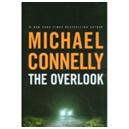 The Overlook started life as an interesting experiment by Connelly; he originally published the tale weekly in the New York Times Magazine and then expanded the story to the form that we have on the bookstore shelves. The result of this exercise is mixed. While a new Harry Bosch tale is always welcome, this story comes off as Bosch Lite. Harry seems to be simply going to the motions of breaking in his new partner, antagonizing his superiors, and nursing one more broken heart as he runs into Rachel Walling as the FBI steps all over his case. The trouble is, none of these things are fleshed out, they simply happen and rarely affect the story in any meaningful way. Perhaps the worst thing is, the killer is identified correctly and the story ends. Not typical Connelly style.
Connelly gives us a quick summer read at barely over 200 pages and, although it tastes good, it is less than satisfying when it ends. There are way too many characters who appear, most of whom Bosch is pissed off with, and the alphabet soup that he bemoans as all of the agencies involved appear confuse the reader who must remember whether they belong to the LAPD, the OHS, or the FBI. Maybe I should have made notes inside the back cover. The Bosch series of books is one of my favorite indulgences but, while this was enjoyable, it is not the best.

