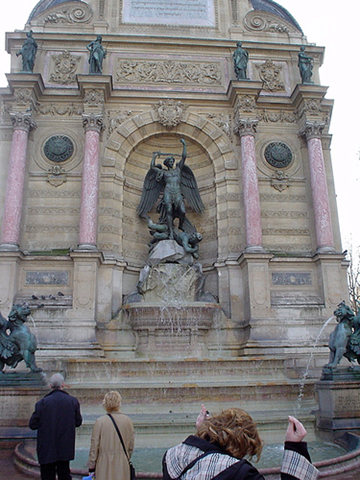
Psalm 48 In the City of Our God

image

Great is the Lord, and most worthy of praise, in the city of our God, his holy mountain.

It is beautiful in its loftiness, the joy of the whole earth. (v 1)

This brief psalm closes the trilogy of praise found in psalms 46, 47, and 48. These were originally utilized in the liturgy of temple worship and they serve(d) the purpose of focusing the people of God of the important characteristics of the Lord they worship. In this prayer, the knowledge of the security that comes from being within God’s city and therefore within His presence is emphasized.

God is in her citadels; he has shown himself to be her fortress. (v 3)

As we meditate on this verse we recognize the core truth that applies to our lives at this moment. Note that where God dwells is not separate from Him, He is the fortress that provides the security. The challenges to the security of Zion come from the four points of the compass in the next four verses but they are rebuffed. There is nothing that can challenge God.

Do we find the same security in knowing the presence of the Holy Spirit in our lives? Is there ‘direction’ from which you are not convinced that God mans the ramparts? We need to come to know that there is no area of our lives that can stand outside of the love and security of God. Areas in which we struggle can be turned over with confidence to God knowing that there is no direction from which a surprise can come for Him. We rest in His security.

Like your name, O God, we meditate on your unfailing love.

Like your name, O God, your praise reaches to the ends of the earth; your right hand is filled with righteousness. (vv 9-10) 


Image by Conor Dupre-Neary

Psalm 47 How Awesome is the Lord Most High

image Clap your hands, all you nations; shout to God with cries of joy.

How awesome is the Lord Most High, the great King over all the earth! (vv 1-2)

The liturgist repeats the words of psalm 47, for the first time calling all nations to worship Yahweh for He is sovereign of everything, not just Israel. If they do not know Him now, one day the word will reach them and his Lordship will be apparent to all. All of this psalm concerns itself with praise for the Lord Almighty. He alone is God and is to be worshipped as such.

The modern reader must place this liturgical psalm in its proper context so as not to misinterpret verse 5. It reads:

God has ascended amid shouts of joy, the Lord amid the sounding of trumpets.

This should not be read as God being anywhere lower than as ruler of the Heavens and Earth. This prayer would have accompanied the movement of Yahweh’s symbolic throne up into the Temple before the final shouts of praise and honor arise from the worshippers.

For God is the King of all the earth; sing to him a psalm of praise.

God reigns over the nations; God is seated on His holy throne.

The nobles of the nations assemble as the people of the God of Abraham, for the kings of the earth belong to God; He is greatly exalted. (vv 7-9)

The current ‘Kings of the earth’ would do well to reflect on this fact.

Image richarddigitalphotos

Psalm 46 A Mighty Fortress is Our God

image A mighty fortress is our God, a bulwark never failing

Our helper He amid the flood, of mortal ills prevailing. Martin Luther

God is our refuge and strength, an ever-present help in trouble.

Therefore we will not fear, though the earth give way and the mountains fall into the heart of the sea,

though its waters roar and foam and the mountains quake with their surging. (vv 1-3)

46 is the first of a trio of psalms that celebrate the security of being God’s people. In the same way that it inspired Luther to pen his well known hymn, the psalm fills all believers with confidence knowing that in God the future is secure despite whatever current circumstances might suggest.  The temptation to seek the comfort of the world in surrender is diminished as the knowledge that all is in God’s control with a Holy outcome assured.

Come and see the works of the Lord, the desolations he has brought on the earth.

He makes wars cease to the ends of the earth; he breaks the bow and shatters the spear, he burns the shields with fire.

Be still, and know that I am God; I will be exalted among the nations, I will be exalted in the earth. (vv 8-10)

The words strike the modern ear as jingoistic but this was not the intention of the psalmist. He points to the Lord’s victories as both a warning against attacking Yahweh’s people and as a sign over the walls of Jerusalem that this city belongs to Him. None should be so bold as to attempt to change that ownership and face the certain ruin that follows. God’s voice bellows in the final verse: “Enough! I alone am God and I will be known throughout the world as Lord!”

Let the final words of the psalm infuse your prayers this week, “The Lord Almighty is with us; the God of Jacob is our fortress.”

Image areyoumyrik

Psalm 45 Your Throne O God Will Last For Ever

image

My heart is stirred by a noble theme as I recite my verses for the king; my tongue is the pen of a skillful writer.

You are the most excellent of men and your lips have been anointed with grace, since God has blessed you forever. (vv 1-2)

Psalm 45 draws our attention because of its shift in focus. This is not a prayer or plea to God as the preceding entries have been. Instead, it is a song in praise of a Royal on his wedding day. Our view of the psalter is expanded and its application to all of life is made more apparent.

The voice of the first verses also gives us a new appreciation for the author of the song. He is an ‘expert scribe’, similar to profession of Ezra (Ezra 7:6). The scribe is not simply a transcriber of words. He is a learned fellow, observing and cataloging the traditions, literature, and practices of his community. In the instance of this psalm, it appears that he has composed this loving tribute orally and speaks it to the King himself. We will now be more aware of his hand in the rest of the psalter as we continue our exploration.

The application of this psalm has expanded through the ages. This was read as a Messianic text in later Jewish practice and others have found it to be speaking allegorically of the relationship between God and His people. Many have struggled with verses 6 and 7 as the King is referenced as God:

Your throne, O God, will last for ever and ever; a scepter of justice will be the scepter of your kingdom.

You love righteousness and hate wickedness; therefore God, your God, has set you above your companions by anointing you with the oil of joy. (vv 6-7)

In the context of the time, modern readers must appreciate that King was seen as divinely appointed by God and possessed a special relationship because of the selection. This is not to be read as an ascendency to divine status nor as idolatry. The author of Hebrews found in these verses the perfect words to speak of the Son of Man and His person and office (Heb 1:8-9). Christians have interpreted this psalm as a song of love between Christ and His church, a beautiful application of beautiful words.

Image steve46814

Psalm 44 Awake O Lord! Why Do You Sleep?

image

Awake, O Lord! Why do you sleep?

Rouse yourself! Do no reject us forever.

Why do you hide your face and forget our misery and oppression?

We are brought down to the dust; our bodies cling to the ground.

Rise up and help us; redeem us because of your unfailing love. (vv 23-26)

How do you face defeat and destruction when you sense that God himself has brought the calamity upon you? Despite your prayer and commitment to the covenant you come to the conclusion that the Lord has purposely directed defeat on your life. Do you abandon the covenant as it appears that God has or do you continue in your commitment, taking the long view of current struggle being a part of the eternal plan?

The psalmist models the latter for modern readers. The psalm relates the tragedy of an unnamed defeat on Israel, one that the writer is certain that God has brought about on His people. Often, the immediate response would be to curse God. He has made a covenant with the people and yet has injured them. Can God be trusted? A rehearsal of all that Yahweh has done forms the foundation for this reflection on current travail.

We have heard with our ears, O God; our fathers have told us what you did in their days, in days long ago.

With you hand you drove out the nations and planted our fathers; you crushed the peoples and made our fathers flourish.

It was not by their sword that they won the land, nor did their arm bring them victory; it was your right hand, your arm, and the light of your face, for you loved them. (vv 1-3)

If God has been consistently good there is no reason to consider His recent act as anything but a necessary moment in the eternal plan of the world. Doubt creeps in, despite this thought. Is it possible that we the people of the covenant have not held up our end? The psalmist also considers this option.

All this happened to us, though we had not forgotten you or been false to your covenant.

Our hearts had not turned back; our feet had not strayed from your path. (vv 17-18)

Ultimately, trust in God’s wisdom and the ultimate good of His eternal course of events brings us consolation. What alternative do we have?

Image celesteh

Psalm 43 – Send Forth Your Light and Truth

image Send forth your light and your truth, let them guide me; let them bring me to your holy mountain, to the place where you dwell.

Then will I go to the altar of God, to God, my joy and my delight. I will praise you with the harp, O God, my God. (vv 3-4)

The Psalmist groans in the face of continued persecution, much as he did in psalm 42. [N.B. Psalm 42 and 43 form a single prayer unit and should be read together.] He begs to be restored into an audience with Yahweh who he will praise. The hope that colors this brief prayer applies now as it did then; praise does not require peace. Praising God requires the long view. We must look beyond our immediate circumstances, whether morass or exultation, and know that in the eternal blueprint that God has for the world he works all things for good.

Why are you downcast, O my soul?

Why so disturbed within me?

Put your hope in God, for I will yet praise him, my Savior and my God. (v 5)


Image Walt Jabsco

Psalm 42 – My Soul Thirsts for God

image

As the deer pants for streams of water, so my soul pants for you, O God.

My soul thirsts for God, for the living God. When can I go and meet with God? (vv 1-2)

Being oppressed by the enemies of God is a theme that abounds within the Psalter. The purpose of the repetition is to give voice to the question that continues to nag us to this day; where is God as trouble closes in around us. Has He abandoned us, do we no longer enjoy His favor? Foolish thoughts, but thoughts we must admit to entertaining.

To fill our minds with the joy of our moments of worship brings comfort and a reminder that God does not forget us. We can be assured that He is always near and worthy of our hope and belief.

These things I remember as I pour out my soul: how I used to go with the multitude, leading the procession to the house of God, with shouts of joy and thanksgiving among the festive throng. (v4)

Meditation on this truth brings the psalmist and us to the same conclusion:

Why are you downcast, O my soul?

Why so disturbed within me?

Put your hope in God , for I will yet praise him, my Savior and my God. (v5)

The oppression and suffering that the psalmist refers to is not of the random type. He recognizes that God’s hand has allowed it, if not brought it upon him. His allusion to the flow from above that washes over him.

Deep calls to deep in the roar of your waterfalls; all your waves and breakers have swept over me. (v7)

The ultimate goodness of God’s totality does not escape him. Ultimately and despite current suffering, praise is the only response to the hand of God.

By day the Lord directs his love, at night his song is with me—a prayer to the God of my life. (v8)


Image bjmccray

Psalm 42 Have Mercy On Me

image The first collection of prayer poetry in the Psalter closes with David’s repeated plea for healing from a serious illness. He does not wait until the healing is complete before effusively praising Yahweh.

But you, O Lord, have mercy on me; raise me up, that I may repay them.

I know that you are pleased with me, for my enemy does not triumph over me.

In my integrity you uphold me and set me in your presence forever.

Praise be to the Lord, the God of Israel, from everlasting to everlasting.

Amen and Amen. (vv 10-13)

David has walked over this ground many times, penning a prayer for relief from whatever ailment was causing his distress. The preceding handful of psalms were similar pleas for mercy while acknowledging that his illness was directly related to his sin. Stepping outside of himself, he looks in through the eyes of those who are enjoying his travail.

I said, “O Lord, have mercy on me; heal me, for I have sinned against you.”

My enemies say of me in malice, “When will he die and his name perish?” (vv 4-5)

To whom are we going to give our attention? It is all too easy to allow the feelings and actions of others to influence our relationship with God. Their malice may even convince us that God has given up, that he has turned his eyes away from us. When we are in the midst of our battles, when our pit of despair seems to grow deeper by the day, when we may even feel as though all is lost…we must praise. We must flip to this psalm and raise our voices to the heavens and declare that despite current circumstance, we say “Praise to the Lord, the God of Israel, from everlasting to everlasting.”

Amen and Amen.


Image Gio

Psalm 40 Many Will See and Fear

image

Sacrifice and offering you did not desire, but my ears you have pierced; burnt offerings and sin offerings you did not require.

Then I said, “Here I am, I have come—it is written about me in the scroll.

I desire to do your will, O my God; your law is within my heart. (vv 6-8)

Before even opening the door to our prayer closets, the first thing we should do is evaluate the attitude that we have carried to that point. An idea that is repeated throughout the whole of scripture is the importance to God of our obedience over our offerings and actions. Sadly, the emphasis on holiness has lost out to the church of felt needs and community services. We have replaced obedience with activity.

It appears that two different prayers were concatenated within this psalm. In verses 1-10, the liturgist expresses contrition and recognition that the troubles we face are of our own making and the result of our sin. The voice of gratitude uses very familiar language to express thanks for the innumerable times that the Lord has pulled us from the pit.

I waited patiently for the Lord; he turned to me and hear my cry.

He lifted me out of the slimy pit, out of the mud and mire; he set my feet on a rock and gave me a firm place to stand.

He put a new song in my mouth, a hymn of praise to our God.

Many will see and fear and put their trust in the Lord. (vv 1-3)

The closing verses of the psalm are a plea for help once again. Though he recognizes his part in the creation of these troubles, the psalmist does not hesitate to reach out again (and again) for the help of the Lord. We need never question our trust in this deliverance but we should always turn back to the highlighted verses in our bibles (get your pen right now) in verses 6 through 8. Obedience is the core of the psalm and obedience is to be at the core of our lives.


Image by geoftheref

Psalm 39 – My Heart Grew Hot Within Me

image

Shall I suffer in silence or express my anguish at the way my life is playing out? All of us have asked this question and David was no exception.

I said “I will watch my ways and keep my tongue from sin; I will put a muzzle on my mouth as long as the wicked are in my presence.”

But when I was silent and still, not even saying anything good, my anguish increased. (vv 1-2)

The psalm expresses an acceptance of the fragility and brevity of life. In the eyes of God, our time on the earth is but a second. We who follow Christ can look forward to eternity but we still have apprehension about the end of our days. Will we worry constantly about it or simply accept it as a fact of our existence. And if we come to this acceptance, will it relieve us from our current travails? David explores this hope in prayer:

But now, Lord, what do I look for?

My hope is in you.

Save me from all my transgressions; do no make me the scorn of fools.

I was silent; I would not open my mouth, for you are the one who has done this. (vv 7-9)

Despite our broken natures, we beg for one more chance to praise the Lord before our time is extinguished.

Look away from me, that I may rejoice again before I depart and am no more. (v 13)

Image by zedzap

Digg This