

Psalm 57 My Heart is Steadfast, O God

image I cry out to God Most High, to God who fulfills his purpose for me.

He sends from heaven and saves me, rebuking those who hotly pursue me; God send his love and his faithfulness. (vv 2-3)

We are flighty creatures, given to shifting alliances and dalliances with suspicious centers of strength, sometimes at the merest hint of a shift in the wind. Trouble pursues us, danger surrounds us on all sides and our demise seems imminent. Someone or something appears whispering the siren song of security. Follow me it says. Trust me.

Often the temptation takes the form of contrast; why trust in something you cannot see when I am here before you.

King David knew danger and yet, his trust in God never waivered. His heart was steadfastly committed to the One who would save him even though there might be danger involved.

I am in the midst of lions; I lie among ravenous beasts—men whose teeth are spears and arrows, whose tongues are sharp swords. (v4)

Danger abounds but the steadfast heart trusts in God and is confirmed by observation of history and circumstances.

They spread a net for my feet—I was bowed down in distress.

They dug a pit in my path – but they have fallen into it. (vv 6)

Have you looked back on your years and considered how danger and trouble have passed? Perhaps for some of us, the trouble has lasted a lifetime without relief while others have been untouched and we wonder why this is. As David does, we turn our eyes back to the first verses of the psalm. We may not know the purpose that He has for us but we know from searching the scriptures that it is ultimately good in the context of His eternal plan. Can we trust in this, knowing that our troubles serve a higher purpose? It is difficult in our finiteness but, as David does, we can praise also and continue to work our hearts into trusting shape. We too can say,

I will take refuge in the shadow of your wings until the disaster has passed. (v1b)

No matter how long that time may extend…


Image Powerhouse Museum

Day Seven in the School of Prayer

WithChristInPrayer

“If you then, though you are evil, know how to give good gifts to your children, how much more will your Father in heaven give the Holy Spirit to those who ask him!” (Luke 11:13)

The Lord asks us to consider how small our prayers are. Are we limited in our thinking concerning what God will provide for us? Our prayers may be filled with the mundane and a focus on our day to day needs when our Father wants us to have so much more. To be filled with the Spirit satisfies so many of our needs and yet we fail to seek Him out. Not only will the presence of the Spirit change us as people, but He will also mature and expand our prayer life. It is through the guidance of the indwelling Spirit that we truly learn to pray the prayers of Heaven instead of dwelling in the smallness of the earth.

Day Six in the School of Prayer

WithChristInPrayer


“Which of you, if his son asks for bread, will give him a stone. Or if he asks for a fish, will give him a snake? If you, then, though you are evil, know how to give good gifts to your children, how much more will your Father in heaven give good gifts to those who ask Him!” (Matthew 7:9-11)

How much more indeed! Often we are willing to settle for simple material gifts when the Father wants to give us so much more. The cursory handling of the verses from the Sermon on the Mount leads to the idea that our material needs—food, clothing, shelter—are to be the core of our prayers as we see the human father gives sustenance rather than danger and damage. The Saints are further led astray by reading into this passage a ‘blank check’ from Heaven in the implicit promise of good gifts. The best gift, Murray points out, is nothing material. It is the indwelling of the Holy Spirit and His control over our life and living in this world. This is the gift we should earnestly be seeking, trusting in God to take care of all of the things He already knows we need.

Jesus teaches in our lesson today to lift our eyes and hearts above our immediate circumstances to see how much more life the Father has for us when we open our connection to the Vine. The Spirit is our connection and the gift we receive upon belief that enables the life-giving nectar of the Vine to flow into our empty souls.

Psalm 53 There is No God

image The refrain that entitles this post rings out on a daily basis in print, song, and behavior. “There is no God!” “You are the god of your life…” Surrounded by the same cultural meme, the Psalmist wrote

God looks down from heaven on the sons of men to see if there are any who understand, any who seek God.

Everyone has turned away, they have together become corrupt; there is no one who does good, not even one. (vv 2-3)

The Christian who is enmeshed in the modern Evangelical lifestyle can quickly lose sight of this truth. Going to church, youth group, and maybe small group meetings can lead us to the false impression that everyone is just like us. Well, maybe not the really bad people, but surely most everybody else. What seems so obvious to us must be equally plain to everyone else.

The reality is that most people do not admit to the truth of God.

The fool says in his heart, “There is no God.”

They are corrupt, and their ways are vile; there is no one who does good. (v1)

How much responsibility do you and I bear for this condition? We are certainly not responsible for the events in the Garden but we are culpable for its continuation. Where salvation and grace were meant to empower us in our Christ emulating lives, we have treated them as fire insurance and a covering for our personal failings. Ask yourself with me, does my life mirror Christ’s in such a way that my neighbors can’t help but notice? Is the Holy Ghost such an influence in my life that only a fool would question His existence and work? Don’t raise your hands…hit your knees.


Image fotdmike

Psalm 52 In Your Name I Will Hope

image

Why do you boast of evil, you mighty man? Why do you boast all day long, you who are a disgrace in the eyes of God? (v1)

The worshipper looks aghast at the wicked man boasting of his deeds. He knows there is going to be vengeance and that the retribution is not always going to come from the hands of man. He remembers the stones heaped on Achan and the burning sulfur that had rained down on Sodom. Those who had previously shaken their fists at God and continued in their evil had paid the price and he was confident that the price would ultimately be paid by all evildoers as well.

The Psalmist recounts over many verses the evil that men do and the price that will be paid. He saves his fiercest condemnation for the end of his rant:

Here now is the man who did not make God his stronghold but trusted in his great wealth and grew strong by destroying others! (v7)

Though our corrupted hearts never cease to imagine new ways of visiting evil on one another, there is no greater failure than to not recognize that one cannot be a god unto himself. Despite your health, wealth, and status, God will always be God and you will not. He demands our obedience and worship and craves our love and to not deliver these things to the king is our ultimate corrupt act.

David leaves a final image of the upright man who is eternal in life and righteous in character. He know his place and his God.

But I am like an olive tree flourishing in the house of God; I trust in God’s unfailing love for ever and ever.

I will praise you forever for what you have done; in your name I will hope, for your name is good.

I will praise you in the presence of your saints. (vv 8-9)

I too will praise you Lord, alone and in the presence of your saints…

Image lincolnblue

Day Five in the School of Prayer

WithChristInPrayer

[In which we follow the Andrew Murray classic With Christ in the School of Prayer]

“Ask and it will be given to you; seek and you will find; knock and the door will be opened to you. For everyone who asks receives; he who seeks finds; and to him who knocks, the door will be opened.” (Matthew 7:7-8)

On the mountainside, the Lord urges us to pray with confidence, assured that the Father hears our prayers and answers them. There are three answers that we are taught to expect as we embark upon our prayer life: Yes, No, or Not Yet. Jesus teaches that  we are to be persistent in our prayer, petitioning the Father until we receive an answer. Ask, seek, and knock and the Lord promises it will be answered.

Our petitions must be properly formed. James 4:3 says “When you ask, you do not receive, because you ask with wrong motives, that you may spend what you get on your pleasures.” This is why we sit at the feet of Jesus in the school of prayer, to learn to pray properly for the things of the kingdom first and foremost and trusting in God for all else. It is up to us to take the lessons to heart.

Murray concludes

Let us no make the feeble experiences of our unbelief the measure of what our faith may expect. let us seek, not only just in our seasons of prayer, but at all times, to hold fast the joyful assurances: man’s prayer on earth and God’s answer in heaven are meant for each other. Let us trust Jesus to teach us so to pray that the answer can come. he will do it, if hold fast the word he gives today: “Ask, and ye shall receive.”

Psalm 51 Create In Me a Pure Heart

David and BathshebaYou do not delight in sacrifice, or I would bring it; you do not take pleasure in burnt offerings.

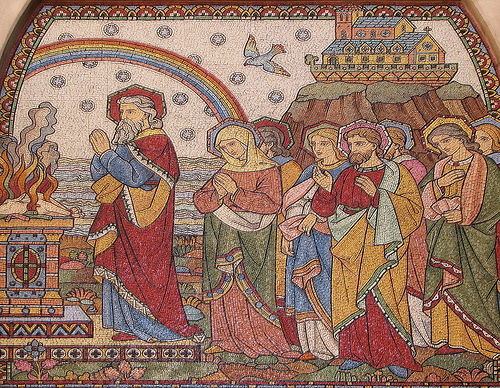
The sacrifices of God are a broken spirit;

a broken and contrite heart, O God, you will not despise. (vv 16 – 17)

This truth has very nearly become obsolete in the modern church. We have replaced contrition and brokenness with ministry busyness, our ‘offerings’ and church attendance. Sin has become rule-breaking rather than a personal affront; it has become external instead of internal. Repentance has become little more than ‘I’m sorry…’.

Psalm 51 is traditionally seen as being composed by David after his adultery with Bathsheba (2 Sam 11) and then being confronted by the prophet Nathan (2 Sam 12). We know how the single transgression of Bathsheba leads to further abhorrent behavior on the part of the King and we know all too well the horrible price that he pays for this string of evils. We don’t know how an exemplar like David can succumb to sin in this fashion but we do know that, if it can happen to someone so close to God it can happen to us as well.

Have mercy on me, O God, according to your unfailing love; according to your great compassion blot out my transgressions.

Wash away all my iniquity and cleanse me from my sin.

For I know my transgressions, and my sin is always before me. (vv 1-3)

Is God moved to offer pardon through this string of praise? Exclaiming God’s unfailing love, His great compassion, and His mercy, is this proclamation of what must be entirely self evident to Him what will invite Him to offer grace? He must view these prefaces to our admission of guilt much as we do our teenager’s statements that they love and respect our household standards: we ask them why they performed such and such and act if they hold such great respect for our rules? No, we should believe that God is moved when our hearts finally arrive at the core truth of our relationship with Him voiced in verse 4.

Against you, you only, have I sinned and done what is evil in your sight, so that you are proved right when you speak and justified when you judge. (v 4)

We must restore the proper understanding of sin in our lives and in His Church. Sin is properly viewed as being personally enacted against God. We have been lured to see sin as an external act, sort of a third party action of simply breaking a rule in which no one gets harmed like running a few miles over the speed limit. No harm, no foul. This is not how God views sin however. He views each act against His holiness personally, as though we look Him in the eye and while defiling His throne. It becomes even more serious when imagine how God must see our sin in the shadow of the Cross.

Statistically, few people read these posts on the Psalms. More people are interested in the Calvinism-Arminianism argument or my posts on the Hebrews warning passages but my prayer is that more will take the time to at least return to their Bibles and prayerfully consider this Psalm. Doctrine is important and it is valuable time spent considering the facts and searching the scriptures for the truths that underlie the doctrines but this cannot be at the expense of our relationship with God and our personal holiness. Far more important in our lives should be a plea similar to David’s:

Create in me a pure heart, O God, and renew a steadfast spirit within me.

Do not cast me from your presence or take your Holy Spirit from me.

Restore to me the joy of your salvation and grant me a willing spirit, to sustain me. (vv 10-12)

School of Prayer Day Four

WithChristInPrayer

[In which we follow the Andrew Murray classic With Christ in the School of Prayer]


This then, is how you should pray: (Mt 6:9)

Because of the new fashion in which He wants His disciples to pray, the Lord offers a model for our emulation. Jesus offers the prayer as a framework through which our own hearts are to poured and our priorities aligned. It was not meant to be simply copied, though that was not prohibited. It is our model, used to teach us how our own prayers are to be formed and it contains ideas new to the first disciples that were stunning in how they change our approach to the throne.

“Our Father in heaven,”…We may take this entreaty for granted having learned this from an early age but, to fully grasp the depth of this adoration we must be mindful that the disciples had never before considered God as their Father. This revelation links us inextricably with the Lord in the household of God—he is our father and the Father of the Son. All that follows in prayer, our trust for provision, our pleas for protection, our expression of confidence, everything is now in the context of the personal. God is not an abstract concept that sits distant from us and deigns to address our words. He is our loving and merciful Father in whom we seek to live our life.

Murray closes with this,

Children of God! It is thus Jesus would have us pray to the Father in heaven. O let His Name, and Kingdom, and Will, have the first place in our love; His providing, and pardoning, and keeping love will be our sure portion. So the prayer will lead us up to the true child-life: the Father all to the child, the Father all for the child. We shall understand how Father and child, the Thine and the Our, are all one, and how the heart that begins its prayer with the God-devoted Thine, will have the power in faith to speak out the Our too. Such prayer will, indeed, be the fellowship and interchange of love, always bring us back in trust and worship to Him who is not only the Beginning but the End.

School of Prayer Day Three

WithChristInPrayer

[In which we follow the Andrew Murray classic With Christ in the School of Prayer]

But when you pray, go into your room, close the door and pray to your Father, who is unseen. Then your Father, who sees what is done in secret, will reward you. (Mt 6:6)

Why does the Lord send us to a secret place to pray? If we read the verse above in its context we find that Jesus wants our prayers to be pure, to be lifted to God’s ears alone rather than simply spouted for show. He wants us to realize the intimacy of the act of prayer. Praying is our time of intimate communion with our Heavenly Father not to be shared with or divided by the outside influences that swirl around us at all times. By entering our prayer closet and closing the door behind us, we are shutting out the world both figuratively and literally. We are alone with God and our beating heart.

Jesus also telegraphs to us His understanding of our fallen nature. He knows that we will either pray for the admiration of those around us in our worst state or we will be constrained by the fear of the crowd’s judgment in our least. The privacy of our closet removes the inhibition that clouds true prayer and the joy of nestling in the Father’s presence, allowing its great comfort and security to wash over us and releasing the prayer of our hearts more than that of our heads.

Psalm 50 Call Upon Me in the Day of Trouble

image

Consider this, you who forget God, or I will tear you to pieces, with none to rescue:

He who sacrifices thank offerings honors me, and he prepares the way so that I may show him the salvation of God. (vv 22-23)

We read this psalm as a bracing splash of cold water in the midst of our self-centered religious practice. The modern Church gives us countless opportunities to think that it exists for us and by us. As God speaks directly to the assembled worshippers, He not so gently reminds us that this is not the case. It is all about Him and in these verses He calls His people to account.

Hear, O my people, and I will speak, O Israel, and I will testify against you: I am God your God.

I do not rebuke you for your sacrifices or your burnt offerings, which are ever before me.

I have no need of a bull from your stall or of goats from your pens, for every animal of the forest is mine, and the cattle on a thousand hills.

I know every bird in the mountains, and the creatures of the field are mine.

If I were hungry I would not tell you, for the world is mine, and all that is in it.

Do I eat the flesh of bulls or drink the blood of goats?

Sacrifice thank offerings to God, fulfill your vows to the Most High, and call upon me in the day of trouble; I will deliver you, and you will honor me. (vv 7-15)

God needs nothing from us. We need everything from Him. Give Him alone the glory.


Image by Lawrence OP
