
The Real Mary: Evangel


 As we come to the fourth chapter of Scot’s book, Mary and the message that she carries about Jesus are appropriately tagged as dangerous. She threatens the powers that were by bringing the news of the powers that will be through her Son. The gospel threatens to rend Jewish society and completely upturn the fragile platform from which the Roman empire exercised its authority over God’s people.

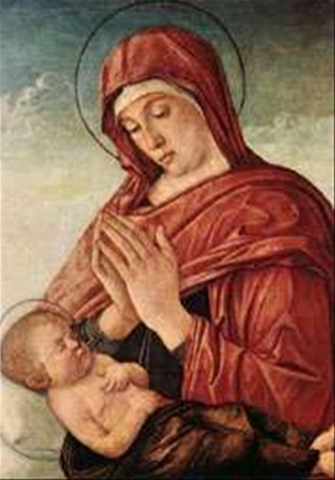
Once again, we must confront a Mary who not just a passive human agent for the incarnation but rather, an active participant in the gospel story. McKnight draws our attention to a verse that is simply read over by some or given a less active sense by others. Luke 2:19 says But Mary treasured up all these things and pondered them in her heart. Bock sees Mary silent in receiving the message of the angels while the others around her are amazed. I. Howard Marshall sees a meditative Mary pondering the gravity of the new additions to her already formidable body of knowledge concerning the reality of the child Jesus. She is not thinking with the narrow intent of understanding the latest addition alone but Mary labors to integrate the latest revelation with the gospel already developing in her short history as Blessed.

Mary will not be content to treasure the message in her heart. Her dangerous message is one that she knows must be shared and, despite the threat that she knows it poses to the powers that dictate her condition, she will open her mouth and proclaim what she knows to be true. Mary’s danger should be a part of us today as well. You have a message that threatens the world around you, threatens to bring peace and love and unity where there is only chaos and hatred and division. It is a threat to those who exercise control through the turmoil. Will you be dangerous today?
 

Technorati tags: , ,

The Real Mary: Harbinger

Does Mary’s clarion call strike us in the same way that it rumbled through Herod’s oligarchy so many centuries ago? Mary the willing becomes Mary the dangerous as she announces the coming of the One who be the incarnation of all justice that God has exercised throughout the history of her people. Her praise extols what God has done in the past…

The Magnificat: Mary’s Song of Praise

Mary responded,

“Oh, how my soul praises the Lord.

How my spirit rejoices in God my Savior!

For he took notice of his lowly servant girl,

and from now on all generations will call me blessed.

For the Mighty One is holy,

and he has done great things for me.

He shows mercy from generation to generation

to all who fear him.

His mighty arm has done tremendous things!

He has scattered the proud and haughty ones.

He has brought down princes from their thrones

and exalted the humble.

He has filled the hungry with good things

and sent the rich away with empty hands.

He has helped his servant Israel

and remembered to be merciful.

For he made this promise to our ancestors,

to Abraham and his children forever.”

Luke 1:46-55 – New Living Translation

Mary’s warning makes her a threat to the way things were, are, and will be. She reminds those who hear her words that God is a god of justice and just like he has throughout history, he will deliver justice to the oppressed. Do these words make us rejoice or cower?


The Real Mary: Blessed Assurance

“I am the Lord’s servant,” Mary answered. “May it be to me as you have said.”

With these words the young woman Mary accepted her calling to participate in the great redemptive work of God. Like the names recorded in the great litany of the faithful of Hebrews 11, she was an ordinary person given an extraordinary vocation. The passage in which these words of faith appear is straightforward but we must not miss the thread of danger that winds through it. When the angel Gabriel makes his appearance, it is said that Mary was greatly troubled. Gabriel soothes her nerves by simply whispering the words “do not be afraid”, the words that are repeated over and over throughout the redemption story when men and women are pointed back to the strength of their faith. This is exactly what we see Mary do.

Mary’s faith is extraordinary, the kind of faith that we all hope to have at the moment of truth. Facing ridicule and castigation for her out of wedlock pregnancy, her words of faith are ‘ may it be.’ When Gabriel announces that she will be carrying the Messiah, the one who her people have been watching and waiting for, Mary must process what it will mean to her betrothal, her own family, and her future. Her engagement could be broken and the security of her own family taken away. The future then would take a much darker turn as her life would be lived out in the streets with nothing to hang on to … except her faith. Though all of these things were possible, Mary does not hesitate to answer yes when God calls her. She is being blessed by the God who has cared for women of faith before her: Rahab, Ruth, Tamar and Bathsheba. She has everything to fear and she has nothing to fear. All generations will call her blessed.

When you and I are called to a task by God, whether it be simple or extraordinary, what will our answer be? Will we hesitate at that moment, fearing what is to come, or will be answer ‘ May it be’ trusting in God as Mary did so many years ago?

The Real Mary and You & Me

Virgin Mary

Daniel Carroll, a seminary professor who was one of the greatest influencers of the trajectory of my ministry in the area of justice and mercy, once asked me if I had developed a Maryology (Mariology). I said no and then quickly side stepped the issue. To a Protestant, Mary was a fixture of Catholic lore surrounded by tradition and theology that had elevated her from the mother of Jesus to holy sainthood. Her vocation was expanded beyond the gospel story to give her stature as mediatrix and her virginity maintained through divine biology. I had given no thought or study the reality or basis of these beliefs and had dismissed the development of a Mariology as unnecessary to the pastoral care of my congregation. Now, several years later, I must once again credit Dr. Carroll as being prescient about the things that can shape one’s ministry.

As I reread McKnight’s The Real Mary, I am spending much more time meditating on the ministry of Mary. In his introductory chapter he gives a satisfying reason for all of us to consider Mary in a new light.

” Because while Mary’s story is that of an ordinary woman, it (is) also the story of a woman with an extraordinary vocation (being mother to the Messiah) who learned to follow this Messiah Jesus through the ordinary struggles that humans face. In this sense, Mary represents each of us– both you and me– in our call to follow Jesus.”

A new look at Mary is in order. Let’s put aside the divisive issues for now and give her renewed meditation. I’m going to track along with Scot’s book as an organizing tool; if you’ve read the book I’d love to hear from you as we give the mother of the Lord a second look.