
Let Casting Crowns speak today from Psalm 121.. where does my help come from? My help comes from the Lord, the Maker of heaven and earth. (v1b-2)
Category: Christianity
Lent Spent with the Psalms Day Twenty One
 Most believers would say aloud that grace is not cheap. Whether out of habit, training, or true belief, the sentiment is expressed in our voices and writings. We ask ourselves today, is it apparent to those outside of the family? When the lost look at our lives and our churches do they see the same thing expressed?
Or have we forgotten this?
In Psalm 81, the psalmist reminds Israel never to forget what God had done for them..
Hear, O my people, and I will warn you—if you would but listen to me, O Israel?
You shall have no foreign god among you; you shall not bow down to an alien god.
I am the Lord your God, who brought you up out of Egypt. Open wide your mouth and I will fill it. (vv 8-10)
Our prayers can rehearse the way in God has brought each of us up out of our personal bondage in Egypt. We can humble ourselves before the crucifix on the hill at Calvary. Or we can forget and cheapen the grace bestowed upon us, taking it for granted and blending back in with the world.
Grace and peace to you…
image paco CT
Working Out Your Theology
 So, budding theologians, you have your resources and the steps of reflection and now it’s time to bring these to bear on the substance of life. Every craftsman has a method that they follow in order to bring the object of their work to life, and theology is no exception. This methodology is necessarily personal and the way that I reflect may not align precisely with yours. What is more important is that we share, or at least understand, the bases on which our method unfolds so that if we should arrive at differing conclusions we can avoid naming the other as heretics.
Christians want to understand God and how we relate to Him. We want to know what can be known about Him, who He is and what Jesus means to us. We also want to understand where we came from, who we are, why we are the way we are, the nature of our relationship with God, what faith in Jesus Christ entails, and where we’re headed. This heady list comprises the singular purpose of the theological reflection that we undertake on a personal basis. We want to know what it means to be a Christian and how it applies to our lives.
Reflection starts at one of two points and the choice is significant. If we begin by examining Christianity in the context of life and then seek to determine the meaning of God’s word we begin from an anthropological starting point. The other path we might follow is the begin with divine revelation, the word of God in the Scriptures, and then move to discover the implications that it has for human life. Noting and revealing this starting point is important to your method as it not only shapes its direction, but it gives important clues to us as to how to best receive the results that you come to. For example, if you express an anthropological beginning you must be cautious not to allow your conclusions to be colored more by culture or other social factors to the extent that they override the core of the gospel message. Likewise, the revelatory method can become removed from the realities of life, separating God from His people and His world.
Start Me Up
None of us comes to this process as empty vessels. Inevitably, we begin applying our theological method from where we are, here and now. As Christians, we also have some understanding of the Faith from our involvement in church, listening to sermons, praying, and reading the Scriptures. We begin in a combination of the anthropological and revelatory positions to forge our theological understandings. We share happiness and struggles and seek to understand them. We want to know what it means to be saved and how the righteousness of Jesus is imputed to us. Mostly, we want to process our lives as best we can through our faith.
The way in which human beings think is a large part of this process as well. There are two basic forms of thinking that we practice, sequential and parallel-synthetic. Sequential thinking is just what is says, linear information processing. We take facts that present themselves and work through them logically; A leads to B and B leads to C and so on. Parallel synthetic processing is big picture thinking. Human beings are capable of seeing the relationships between numerous things at the same time. I am able to look out of my office window and see the birds battling at the feeder, the dog watching them, and the increasing clouds in the air. Our minds will naturally switch between these two modes as appropriate to the task at hand, using the other mode as a complement to complete the picture in our thinking. Both modes are necessary to thorough theological reflection.
Creative Theological Reflection
Many will cringe at the heading above but in fact, theological reflective requires the application of imaginative thinking. Applying God’s revelation in His word to the complexities of life requires that the theologian examine the facts that are available and, in the context of a living and changing world, apply them to the infinitely unique situations which present themselves every moment of every day. This reality disturbs many Christians. They demand that every issue be wedged into a neat five-point framework. Taking the whole of revelation into consideration, especially when it contradicts the neat categories of logical thinking, is a challenge that some are unwilling to make. Creative thinking in theological reflection requires that both cognitive approaches be present to some degree. You and I favor one or the other and should be aware of which is our dominant mode. Once identified, the theologian will engage in activities meant to strengthen or encourage the other mode in our thought process.
Creative theological thinking also demands verification. We are not free to ‘see’ new truths or applications without submitting them to the verification of history and the rest of the Church. Others are capable and engaged in theological reflection and can help us to verify, clarify or challenge our conclusions. Ego and pride have no place in this process. We are all one community and should be allowed or allow others to participate in the task.
So, Let’s Go
The objects of our reflection have a tendency to present themselves to us in the course of life. Once a situation presents itself that we want to have an outline of the steps we will take. A rough process would look something like this:
- identify the Christian truths that apply to the situation we are reflecting on
- determine the strengths and weaknesses of each of these truths as they apply to the current reflection
- propose an adequate solution in light of the message that God has revealed
- explain in theological terms why this solution is preferable to others
The first two steps will comprise our process of analysis and the second pair represent the process of construction. This is theological reflection. Now it’s your turn.
image Klearchos Kapoutsis
Lent Spent with the Psalms Day Twenty
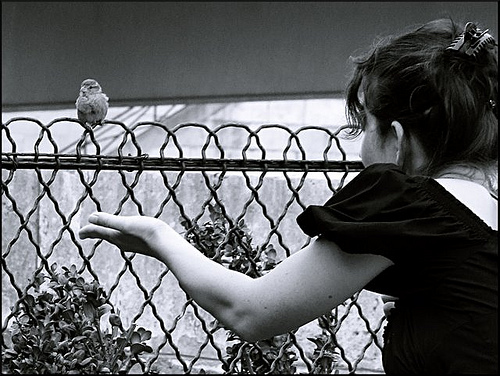 Tell yourself the reason for the Cross today. Look ahead four weeks to the Easter weekend and explain to yourself the reason that Christ is sacrificed. It certainly isn’t rooted in anything we have or can do. It’s not that we are worthy of that sacrifice.
It is grace, pure and simple.
Now I know that the Lord saves his anointed;
he answers him from his holy heaven with the saving power of his right hand. (Psalm 20:6)
We place our trust in this grace and it induces an increase in our humility. We are reduced as the magnitude of this gift is realized. We are drawn closer to the giver of the gift.
Some trust in chariots and some in horses, but we trust in the name of the Lord our God. (v7)
Grace and peace to you…
image julian nistea
Lent Spent with the Psalms Day Nineteen
 The closer we stay to the steps and path of the Shepherd as He helps us to negotiate the dangerous way through this world, the more confidence we have. Strengthened in this way, the inevitable struggles that appear do not perturb us. They are no longer insurmountable challenges that we have to confront on our own. Our Shepherd knows the way and will lead us through. We have peace.
You still the hunger of those you cherish; their sons have plenty, and they store up wealth for their children.
And I—in righteousness I will see your face; when I awake, I will be satisfied with seeing your likeness. (Psalm 17:14b-15)
As you enjoy the security and calm, count the cost as well. Look forward to Calvary and the know the darkness that had to be faced on that Friday and Saturday before the joy of the first light on Sunday.
image LiminalMike
Lent Spent with the Psalms Day Eighteen
 My steps have held to your paths; my feet have not slipped. (Psalm 17:5)
We contemplated our trust in the Shepherd yesterday, knowing that even when He leads us through dangerous territory we are ultimately secure. Fear dissolves as we follow hard on the steps of the Shepherd, our steps are secure. To wander is to face the world on our own.
The Lent season is a period set aside by the church for focused meditation on the cost of Salvation. Have you taken the time to check your commitment to the undeserved righteousness you’ve received? The Shepherd leads us but paid an enormous cost. He didn’t turn away and nor should we. Our commitment to a life of holiness must be equal to the price lest we cheapen the Cross.
Though you probe my heart and examine me at night, though you test me, you will find nothing; I have resolved that my mouth will not sin. (v 3)
Stay close to the path.
image ecstaticist
Lent Spent with the Psalms Day Seventeen
 Approaching the Cross at Calvary, the contemplative Christian cannot help but be struck by the juxtaposition of horror and joy portrayed in the event. The abuse and death of the Savior lead to the unspeakable joy of the Lord’s return. Logically, we can’t have one without the other. Our lives are similar in this division. We live with struggles in the midst of great promise. One of the best known of the psalms speaks directly to our condition. Most people, even non-Christians, know the first couple of lines by heart,
The Lord is my shepherd, I shall not be in want.
He makes me lie down in green pastures, he leads me beside quiet waters, he restores my soul. (Psalm 23:1-3a)
Yes, this is what we want Lord! Peace and well being and communion with you. Why then do the troubles continue to pop up each day? Why are we still challenged? Because, brothers and sisters, we’re called to be His people in the midst of a fallen world. Our lives show the strength of our Shepherd. They show that despite the challenges that surround us, our Shepherd has prepared a safe place for us, he has spread a table before us. We are able to face anything knowing that we are secure in His hand. We have peace, knowing that Easter morning is coming.
image Garry
Day 23 in the School of Prayer: Be Righteous!
 The prayer of a righteous man is powerful and effective. (James 5:16)
Ask and it will given to you; seek and you will find; knock and the door will be opened to you. For everyone who asks receives; he who seeks finds; and to him who knocks, the door will be opened. (Matthew 7:7-8)
Therefore, strengthen your feeble arms and weak knees. “Make level paths for your feet,” so that the lame may not be disabled, but rather healed. (Hebrews 12:12-13)
Saved is saved but saved is not always righteous. When salvation is graced upon us, we are recipients of the righteousness of Christ. This transfers places us in right standing before the Father, cleansed and released from our bondage to sin. A newborn in the world, weak and needing to mature. Many Christians never leave the cradle and then ponder aloud why their prayer seems to be weak and ineffectual.
The fact that their lives bear no fruit may have something to do with it.
Our Savior repeatedly teaches us that we are to be growing into a life of increased righteousness and piety. We are to be diligent about becoming better at keeping His commands and obeying all that He has taught us. Only with this obedience will come the power in prayer that we so earnestly desire. We cannot have one without the other. Christ must be first and foremost in our life before our prayer will have the depth and response that it was meant for. Anything else would cheapen the unfathomable price of the grace we receive.
image jf sebastian
Lent Spent with the Psalms Day Sixteen
 We conclude this week of Lent with with a question. Do we take the grace borne of the Cross for granted? To varying degrees, Christians have been guilty of this for centuries. A promise like that found in Psalm 30 can make us complacent,
When I felt secure, I said, “I will never be shaken.”
O Lord, when you favored me, you made my mountain stand firm; (vv 6-7a)
Easter becomes just a marker in the year pointing out that Spring is imminent. What if Spring didn’t arrive? Would we take notice or simply accept it, soon taking the new weather pattern for granted. Likewise, if God were to hide His face from us, would we soon accept that as the way things are?
… but when you hid your face, I was dismayed. (v 7b)
Don’t allow the soporific world around you to lull you into inattention. The Cross was an eternally history changing event on your behalf. Never allow that grace slip from view. Never take it for granted. The price was too high.
Grace and peace to you.
image Himalayan Trails
Lent Spent with the Psalms Day Fifteen
 I remember the days of long ago; I meditate on all your works and consider what your hands have done.
I spread out my hands to you; my soul thirsts for you like a parched land. (Psalm 143:5-6)
It’s easy to become complacent in facing Easter. We look down the corridor of time back toward the Resurrection and want to know the power of seeing Jesus risen from the tomb. As the stores fill with Peeps and colored grasses for the baskets, we find it easy to satisfy our souls with trinkets and temporary fulfillments. Our often parched and dry souls are smothered by the cultural messages that bombard us with offers to fill us up with this or that. We drink the soda only to find ourselves thirsty again and hour later.
Many in the Church view Lent as ‘that time when we give stuff up’ at best and at worst, with a suspicious eye on the implied ascetic aesthetic. Sacrifice in emulation of our Saviors sacrifice is neither. Our purpose in observing the season of Lent is to put off the things that are controlling our souls and burying the dry, cracked surface of our hearts. Only when we reveal that surface can the grace penetrate deep within us.
Grace and peace to you.
image whiteoakart
 LOVE | ACCEPT | FORGIVE