Building on Bedrock

Dug Down Deep by Joshua Harris
image

Contrary to the oft-heard sentiment among Christians that they “just want to love Jesus” and dispense with the wrestling with the challenges of theology, Pastor Joshua Harris says that “we can’t know him and relate to him in the right way without doctrine.” We know the redeemer, but through the study of doctrine we come to fully understand the contours of how God is working in His world. The study of doctrine enables us to understand “what he’s done and why he’s done it”.

Dug Down Deep is an unexpected joy. Having read and studied many of the lengthy, challenging theological treatises that he references throughout the book, Harris has produced a systematic theology that doesn’t read like the typical volume of this type. Dug Down Deep approaches the key doctrines of Christianity in the pastoral voice of your friend Josh. He swaddles the theological truth with personal accounts, showing over and over how different points of doctrine have a direct application to day to day life.

While Harris has gone to great lengths to make the book approachable for Christians who locate themselves nearly anywhere along the continuum of spiritual maturity, it has a depth that will make it a useful book to return to again and again throughout life. The reader can take away as much as their maturity enables them to understand within each chapter without getting overwhelmed. Repeated reads through the chapters will give new insights and scriptures to meditate upon enough for many years of fruitful study. This book belongs an many shelves where no doctrinal guides exist now.

Pastor Harris’ conversational approach would make this book especially useful for youth and young Christian study groups. He has a pastoral heart for people to know their Lord better and each topic is designed to invite you in and to understand Him on a deeper level. More mature Christians will find the quotes by Packer, Sproul, Stott and others and will gain the confidence to approach some their more challenging theologies.

I’m grateful to Multnomah Books who provided this book for review.
P.R.O.O.F. of Life

Has God Spoken by Hank Hanegraaff

imageThe Bible Answer Man brings us yet another good addition to our apologetics library to sit aside The Apocalypse Code. Battling against the torrent  of semi-gnostic “secret” exposes published by authors such as Bart Ehrman purporting to reveal the falsehoods behind the Scriptures, Hanegraaff offers a flood of his own, laying out the various proofs that undergird the truth of the Bible that we read today.

Structured to provide the reader with an easily accessible tool for developing their apologetic chops, the book is organized logically around the succession of topics that support the truth of the Bible. This is important reading for any Christian who takes Peter’s command seriously to “give an answer to everyone who asks you to give the reason for the hope that you have”. Questions about the accuracy of the texts of the Bible, the places and objects of the Bible and progressive revelation of the Bible are organized into the three initial chapters concerning the provenance of the manuscript, archeology and the linkage of prophecy.

As he does on his radio program, Hank makes these intimidating  topics understandable to Christians not steeped in biblical research. Fact after fact ( with nearly seventy pages of references and bibliography to verify ) pour forth from his pen to counter the challenges presented to factual basis for the Bible. He counters popular theories such as the error-ridden transcriptions (by verifying the numerically superior autographs against which the modern Bible is tested) and holds the archeological findings that affirm the people and places of the Bible against the non-existent findings that contradictory holy books point to.

While Hanegraaff has contributed an immediately useful volume, there are a couple of areas that might be improved. His love for his “hankronyms” went a touch overboard here, seeming to artificially organize the information in order to match the spelling. Mnemonic devices are excellent for memorization but they usually work best in limited use. Organizing the entire book around the acronyms (and sub-acronyms) gave the reading a somewhat challenging flow. Organizing the materials similar to the format that he uses on his radio program might make it easier for readers to locate the facts that they want but don’t know in which direction to turn.

Minor issues aside, I found this to be an excellent book. Hanegraaff has a unique gift set that makes his books great additions to the Christian’s library as they battle against the onslaught of anti-Christian sentiment that pervades our culture today. It is not enough to answer “in faith” when asked why you receive the Scriptures as true when the facts are so quickly accessible to you.

I’m grateful to Thomas Nelson who provided this book for review.

Grace and peace to you.

Church is Not a Spectator Sport

Why Church Matters by Joshua Harris

image“…When your heart begins to beat for God’s glory and God’s people and you begin to glimpse His longing to visit you, Sunday changes. Actually, it becomes something extraordinary. Something sacred. Something essential.”

Let’s get this out of the way right up front; this is a delightful gem of a book that belongs in the hands of every person sitting in the pews on Sunday. Distracted by something that happened at home. Bored by the preacher. Perturbed at the fact that the praise team went astray from the hymnal again. All of these feelings and more are brought into the church for the most important hours of the week, and we wonder why our body doesn’t seem to be more dynamic, activist or interesting.

Could it be us?

It is far too easy for modern Christians to view church from the perspective of a shopper or spectator says Joshua Harris. Our attitude is what can the church do for me or does this church serve my needs. With a little review of the Bible and our hearts, he says, we can ask different questions: what can I contribute to this church or for what purpose did God place me and my family in this church? In seven brief chapters, Harris provokes Christians to view the bride of Christ in a different light, understanding how important the privilege of worshipping and serving together is.

There are a number of volumes that delve into this same topic in much greater depth but that is not the purpose of this volume. Harris has written a conversational book, quick to read and digest that will get the reader thinking. If you don’t see yourself on one page, read a few more paragraphs and you will see something that reminds you of an attitude that may have flirted with. Pastor Harris is looking you in the eye and asking you to think differently. Think about what it means to be a part of a family where you are important, missed when you are absent and cared for when infirm.

I am grateful to Waterbrook Multnomah who provided this book for review.

Rumors of Faith

image

Are we simply content to watch the American church limp into eternity? Are you ready to drift through the rest of your life, lulled and softened by our comfort and ease?

Darren Whitehead and Jon Tyson, the authors of Rumors of God, surveyed the landscape of the American church and pronounce it still alive beneath the surface. Finding niches of active faith in unexpected places, they see life where many say none exists.

Many have proclaimed the ‘Church’ in America dead or drifting. From some vantage points, this might be the perception that an observer would gather. But crawl under the hood, kick the worn tires and turn the key to the slow-revving starter and you gain a different view; the Church in His people is more than alive and well.

Whitehead and Tyson collect a series of illustrations together, finding signs of vigor in the individual faith of Christians across the Church. Separating these individuals from the Church in its catholic sense creates a false impression though. The heart of the Church, regardless of how we segregate into individual assemblies, is the movement of the Spirit within His people. Perhaps a perspective gained from churches not so far removed from the norm would present a more vibrant body of Christ.

I’m grateful to Thomas Nelson who provided this copy for review.

A House Divided

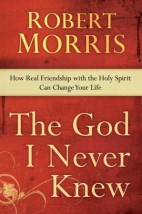
The God I Never Knew by Robert Morris

image

Pastor Robert Morris adds to growing library of works about the often misunderstood and sometimes forgotten third member of the Holy Trinity. This book is his attempt to clear away some of the mystery and confusion that surrounds God in this person.  This volume succeeds wildly on one level, but struggles to find its footing on another.

The first half of the book having to do with the reality of the Holy Spirit and His work is a good addition to the growing attention the Spirit is receiving. It is scriptural and doctrinal, and does a superior job of presenting the reality of the Spirit to a church that is desperately in need of an outpouring of the Spirit’s power. In addition to the fine explication, Morris applies the truths to our daily lives in way that makes us desire more and more of the Spirit.

Sadly, the second part of the book doesn’t hold up the expectations set out in the first. After adhering close to the Evangelical median in his discussion of the reality and work of the Spirit, Morris tips into a scattered series of chapters about separate Baptisms in the Spirit and the miraculous gifts. An extensive presentation of these topics is beneficial to have, but the way in which the author strikes, fires off an anecdote and then moves on is less than satisfying.

Inconsistency aside, The God I Never Knew can serve as a fine introduction to the Spirit or a reminder of the power that He brings to the believer. Some will find the theological diversions unnerving, but understanding the doctrines contributes to the growth of all Christians.

I’m grateful to WaterBrook press who supplied this copy for review.

Follow.Me

One.Life by Scot McKnight

imageThe time has come.

The kingdom of God has come near.

Repent and believe the good news!

Christians are well known for substituting legalism and activity for biblical discipleship of the kind that demands an investment of nothing less than your entire life. McKnight brings his always practical insight to bear on the question of what it should actually look like to walk in the Kingdom of Heaven that Christ announced.

At the core of One.Life is the notion of being all in. That is, life in Christ’s kingdom demands the full commitment of your one life. It was never intended to be a part-time or compartmentalized pursuit. To fully experience the full depth and breadth of the Spirit-enabled kingdom you must go beyond sampling it and make it your complete reality.

Scot touches on a wide variety of beliefs, thoughts and behaviors that generally form the contours of the Christian life, examining each in a kingdom light. In some ways, the book is The Jesus Creed part two. Where that volume helped us to flesh out what it meant to love God above all and love our neighbors as ourselves, One.Life challenges every area of life that we might be tempted to separate as outside of the kingdom.

One.Life is eminently practical on nearly every page. Professor McKnight has a lifetime of experience from which to share examples and the reader will find a variety of lives that mirror their own experiences from which lessons can be extracted. “…the Kingdom.Life only happens when you give yourself (your One.Life) to Jesus, and that means also to His kingdom dream and to those who are in that kingdom dream already.”

One.Life at Zondervan

I’m grateful to Zondervan who provided this copy for review.

23 Nuggets

The Little Red Book of Wisdom by Mark DeMoss

image

In a compact volume that begs to be reread and handed out to everyone you know, author Mark DeMoss collects twenty-three chapters of proverbial wisdom applicable to anyone with enough discipline to apply it. DeMoss highlights his own experiences but the lessons learned at the side of his father and through the lives of others form the fabric that knits it all together. This is a book you will give to your son or daughter, your associates while keeping one copy for yourself close by for regular refreshers. This would be an excellent companion to P.M. Forni’s Choosing Civility.

So many books in this category (Business and Economics) purport to teach wisdom but, more often than not, they disappoint. The critical difference between these and The Little Red Book of Wisdom is a lack of clear integrity. This is not to say that other business authors lack integrity but their focus on profit, growth and self-advancement shadow their wisdom. DeMoss approaches life differently, in the same vein as Truett Cathy, and he places God and Christian-rooted ethics first. The lessons that emerge from his experience can then be traced back to a singular source of truth.

While there are no chapters that you will be tempted to skip, there are many standouts in the book’s pages. Turning nearly to the end, I found the chapter having to do with deathbed regrets especially poignant. Mark points out the advantage of thinking early in life to avoid the regrets later in life that arise from unwise choices in youth. If my son can benefit from a single chapter, I hope it is this one as his whole life unfolds ahead of him.

Savor this book. You can read it quickly in a couple sittings but you will miss the benefits that come from letting his thoughts sink in and bang around a bit. Much like the book of Proverbs he references so often, small sips of wisdom are all the Spirit needs to embed in your character in order for your integrity to be polished and put on display for the world to see.

Thomas Nelson – The Little Red Book of Wisdom

I am grateful to Thomas Nelson for supplying this copy for review.

Average Joe Finds the Updraft

Average Joe by Troy Meeder

image

You won’t find but a handful of web sites devoted to the comings and goings of the average guy. Blogs, books and the media do not celebrate the dad who works all day and then coaches the kids at night and then does battle with his lawn on Saturdays. No paparazzi track their every move and no one votes via text message for the next “American Average Guy”.

And yet, it’s the ordinary guys that make the world work, socially and spiritually.

Troy Meeder invites us into the world of the average guys who have enormous and often unrecognized impact in Average Joe. He builds the book on the notion that God uses average guys for extraordinary works, paralleling the biblical men who stepped out of unsung, ordinary lives ( the fisherman, the waiter, the farmer ) with their modern counterparts who leave their marks on the lives of others while remaining in the background, as far as society is concerned.

Average Joe would have been ideal material for the Promise Keepers movement in its heyday. Meeder encourages Christian men to recognize that their status needn’t be governed by the categories of secular society, the big house, big car and the corner office. Instead, he says, what we are in the eyes of God is measured by how closely we live out the life that He outlines for us. It is a life in which we enrich others, not by what we can do for them in worldly terms, but rather, by what we leave with them that enables them to do the same for others.

If Average Joe only serves to initiate conversation among men as they see themselves or their mentors in the vignettes, it will be a success. If the pages help to open the eyes of a man who is driven to “be somebody” in order to have a Spiritual impact and to help him to see the power of his ordinary devoted life, the ripples will have effect long into the future.

I’m grateful to Multnomah who provided this copy for review.

A Crash of Christians

Unleashed by Erwin McManus

image

Domesticated Christians are far too willing to abdicate the battle for the soul of the world. Civility focuses our energy on all the wrong places. … In contrast, Jesus calls us to a different way. He tells us this is a battle of kingdoms. McManus

Activist pastor and thinker McManus is never shy about emphasizing a wild and untamed Christianity. He is less concerned with church structures, the recitation of creeds or spending all of his precious moments of life arguing theology. Instead, he sees in Jesus a Lord calling into followers into dangerous territory that is fraught with potential pain and even loss of mortal life, in order to reclaim it from the corruption that beset it in the Garden. Faith for McManus is not to be lived in the safety of the sanctuary while the world dies a little more around us. Rather, we are to be following our Lord into the battle for souls and the ground to extend the kingdom.

Unleashed is a repackaging of McManus’ earlier book The Barbarian Way. It was great read in its original form and the additions and edits in its new form make it appealing to reread. The subtle changes in the cover and the text appear to be aimed at opening up the book to more than just the men that the original title appealed to. McManus’ daughter has grown up over the years and her appearances in the book also show that the barbarian heart beats on both sides of the Christian family.

Pastor McManus doesn’t write Unleashed as a prescriptive guide to changing your life. Rather, each chapter encourages you peek outside the walls to see the untamed world outside of your safety zone and take the first tentative steps into it. As he says, “if you make the insane decision to live your life for the sake of others, if you choose to follow the One whose barbarian path led Him to the brutality of the Cross, and if you embrace His invitation to take up your won cross and follow Him, then it has begun.” You can choose safety and simply wait out your time to be called home. Or, as did the original disciples, you can follow the Lord into life completely different from every day that came before.

I am grateful to Thomas Nelson who supplied this book for review.

Hurtling Headlong in the Wrong Direction

The Principle of the Path by Andy Stanley

image“Cars have problems that can be fixed. Computers have problems that can be fixed. Lawn mowers have problems that can be fixed. But generally speaking, people have directions that need to be changed.”

Prolific author and Pastor Andy Stanley sets out the straight-forward proposition that the path we choose determines our destination. Sounds simple, doesn’t it? And yet, as Stanley recounts in the numerous vignettes that illustrate this principle, many people wind up at a crisis point in life, head in hands, asking “how did I get here?” This is like jumping on I-70 west in Denver and then being surprised when you show up in Utah. Each path leads to one destination.

Stanley’s plain-spoken account of the principle makes you wonder why it needs to be spoken out loud or published. Most people are capable of analyzing the destination of the paths they choose in life. Relationships, finances or health; all of the eventual destinations are determined by the path we choose at the beginning of our journey. More often than not, we can see the destination at the end of that path, and yet, we ignore it to our peril.

The simplicity of the preceding paragraph illustrates my disappointment with this book. The principle that Andy presents is simple and requires little adornment or augmentation, and it would make for an excellent topical sermon. One, maybe two. Repeated over and over and touching on the same handful of life-paths, it becomes repetitious. Each chapter treads the same ground, albeit with different illustrations drawn from the pastor’s life experiences.

I am grateful to Thomas Nelson for providing this volume for review.