Letter to a Christian Nation from Sam Harris

image  As I have done more in-depth reading in the Atheist corpus I have discovered major differences between the modern rationalists (as they like to be called) and the elder members of their cohort. The younger generation is consumed with the rant at the expense of careful argumentation. Their approach is scattered, throwing out this and that in an attempt to create a blizzard of thoughts and words so impenetrable that it is impossible to refute them. An interesting exercise is to read non-professional reviews of the literature such as what one might find on Amazon and read the glowing paeans highlighting the lucid arguments and the irrefutable ideas of the author and then wonder what book these readers have read. Many of them read like freshman essays attempting to expound on the student’s first exposure to Nietchze; they appear to have read the book but do not have a sufficient grasp of the philosophy—or religion in the case of this book—to be able to critique beyond simple praise. They like it but don’t know why they like it.

L’enfant terrible Sam Harris offers nothing in his execrable little pamphlet that furthers the Atheist cult. That this book sold numerous copies is not surprising as it perfectly fits the currently acceptable cultural intolerance of Christian belief. As is the script for the new Atheists, Christians are caricatured as irrational, sexually repressed yokels unable to process any thought beyond the flannel-graph images of the animals marching two by two into Noah’s Ark. The reader is given an early glimpse into Harris’ logical approach just a few pages in when he says “The fact that my continuous and public rejection of Christianity does not worry me in the least should suggest to you just how inadequate I think your reasons for being a Christian are.” (p. 4) Let’s see:

P1: I reject Christianity continually and publically

P2: It doesn’t worry me in the least

C: Your reasons for being a Christian are inadequate

How does this work in support of the remaining pages of the book? That he does not believe in the tenets or evidence provided in support of Christianity is sufficient for a Christian to doubt the truth and reality of the living God and the sacrifice of Christ? I will try the same exercise:

P1: I do not like Brussels Sprouts and will tell everyone who listens (even though there is sufficient proof of their nutritious nature)

P2: That this might hurt my mother’s feelings doesn’t worry me in the least (because she is the only person I know who likes them)

C: No one should eat or even see Brussels Sprouts

Harris believes himself to be serious minded yet his approach to the topic at hand is cavalier and simply caustic. He is an angry man and attempts over and over to portray Christians in the same light. Harris hopes that by shouting relentlessly and not giving his opponents an opportunity to interject that he can make his point and somehow walk away victorious. For example, his handling of scripture is to pick a handful of particularly violent passages out of the Bible and then present them as the whole of scripture. The first thing that a freshman bible student is taught in hermeneutics is how to properly handle the texts and the primary rule is context, context, and context. Harris pulls out a trio of passages that he says direct parents to kill their disobedient teenagers. Neither a biblical scholar nor a Hebrew linguist, Harris attempts to make these verses stand alone which they do not. He does not delve into the semantic ranges of the English words he reads and their source in the original languages. He does not place the scriptures in context, immediate or larger. He does nothing except say ‘see, the bible says kill your kids. Let’s get rid of religion!’ Irresponsible at best, a failing grade in any religious studies class at worst.

Harris does not move much beyond this approach throughout the entire book. His tools are mockery and hyperbole which excite the Atheist community but simply look childish and silly when read by the educated and astute Christian. Sam would like a world free from all religion where each accidental creation is free to make his or her own morality. When my moral system interferes with his life in that world, Sam would happily agree that we can both be right and simply suffer the consequences without complaint. Mr. Harris attempts over and over to portray God and those who believe in Him as evil and the source of the problems of the world. I suggest that he look in the mirror. He and I are the source of the problems in the world. The free will that God has imbued his creatures with allows that we can choose to believe in Him or hate him as Mr. Harris does. Choices have consequences.

Digg This

Atheist Manifesto by Michel Onfray

Rant.

Rodomontade.

Petulant Tirade

imageAny of these terms could have been used in the title of this volume and been more descriptive of its contents. The jacket proclaims the book to be “an international bestseller” and the recipient of the Times Literary Supplement Book of the Year award, but after reading the contents contained within, one is left to wonder why. This pretentious, overwrought volume contains none of the advertised case against monotheism. Instead, the reader is confronted with Onfray’s ponderous use of unsubstantiated straw men to vent his barely contained hatred for the monotheistic faiths.

When making the argument in favor of one position over another, the proponent offers his evidence and demonstrates by reason how this evidence better coheres to reality than that presented in favor of the opposing position. Onfray offers this:

Hatred of intelligence and knowledge … is codified in the books [of the monotheistic faiths.] (77)

Hatred of science. Monotheism does not really like the rational work of scientists. (81)

Monotheisms have no love for intelligence, books, knowledge, science. Preferring the ethereal over the material and the real, they have a strong aversion to man’s instincts and basic drives. (95)

Hatred of women is like a variation on the theme of hatred of intelligence. To which might be added hatred of everything women represent for men: desire, pleasure, life. (101)

The religions of the book detest women. (102)

Jesus’s existence has not been historically established. (115)

The reader might expect a presentation of the evidence in support of the allegations and yet none follows. The trained philosopher Onfray should be aware of the ‘bare assertion’ logical fallacy and the damage that it does to the gravitas of your argument and yet he commits it over and over throughout the book. If the evidence of the monotheists is inconvenient  to his position (e.g. the independent historical records of Jesus apart from the Gospels) he simply dismisses it without providing or at least pointing to the testimony undergirding his stand. By the way, you’ll notice my careful use of citations above so that you, the reader, can determine if I have pulled a reference out of context or to read the surrounding text and determine for yourself if I am wrong. You will not find a single reference throughout the entire text, a deficit especially noticeable when the author when he makes assertions such as the hysteria of Paul (“These are all obvious symptoms of hysteria.” pg 133) and impotence as the source of the theological tenets expounded by the Apostle. Support? Citations? None but we are treated to yet another exclamation point complete with ellipsis to help us catch our breath! (This was true hysteria…a hysterical conversion!” pg 132)

If this were a singular example of the rhetorical style of the Atheist corpus, it could simply be dismissed as the rant that it is. Sadly, the more one reads the literature of the true believers, one finds the style quite common. Sentences are rarely without pejorative adjectives and inconvenient issues are dismissed out of hand. A quick survey of reviews for this book show it receiving glowing praise from the Atheist community. I attribute this to its contribution to the echo chamber in which these arguments foment. Serious scholars should look elsewhere for a coherent discussion.

Digg This

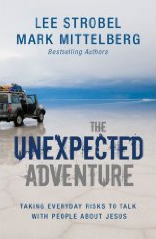
The Unexpected Adventure by Lee Strobel & Mark Mittelberg

imageAs we follow our particular paths through life we’re all going to encounter people like Jack, people laying tile nearby another conversation, and spend moments with our neighbors and friends. We may find ourselves in the company of a young Hindu farmer or even a Billy Moore. In every one of these interactions there is an opportunity for God to call us into the adventure of a lifetime, opening the door for a spiritual conversation that may be the turning point in someone’s life. In The Unexpected Adventure, authors Lee Strobel and Mark Mittelberg draw us into the excitement of recognizing these moments without the pressure that sometimes accompanies a programmed evangelism process.

Adventure is about opportunity. Strobel and Mittelberg speak do not set out a program as we might find in Mark’s earlier effort ‘Becoming a Contagious Christian’ and the training program of the same name. Thousands of churches have participated in these types of programs and trained numerous people in how to have the most important conversation that can be had. You learn your spiritual style and how to find those interactions where this can be utilized to the greatest advantage. In many cases, men and women have been successful in implementing the lessons and have gone on to important evangelistic efforts. Many others have found themselves watching and waiting for their opportunities to put the steps into practice but have been too shy or hesitant to move. What sets Adventure apart is its singular focus on the moments of spiritual opportunity that surround us every day. Strobel and Mittelberg serve up vignettes of personal contacts in which they recognized an opening to tell the gospel story, both directly and obliquely.

Written as a collection of 42 devotion-style entries, each of the chapters serves up a different example of the myriad ways in which God arranges spiritually needy lives to intersect with His evangelistic partners, you and me. From an overheard conversation with someone else, through a misunderstood Buenos Dias, or to a close friend who confides her darkest secrets to you; each is a possible invitation to introduce the hope that you know to someone keenly in need of that hope. The variety of encounters that the authors recall is so broad that you will be able to easily locate yourself in more than one. When you have tuned your spiritual antennae to be alert to these invitations you will find that it becomes the most natural thing in life to share what you know without the pressure of thinking about the ‘E’ word or worrying that it must be done in a specific way.

Strobel and Mittelberg have made a fantastic contribution to the Church and her commandment. This book stands up with Rebecca Pippert’s Out of the Shaker, Paul Little’s Know books and Joe Aldrich’s Lifestyle Evangelism in making sharing your hope a natural outpouring of your transformed life. What sets Adventure apart is page after page of recognizable moments in life that we all have. After reading each chapter, you will fold the pages over your finger and think back to similar times in your own life, perhaps recognizing them for divine appointments and hungry for another chance. With no steps to remember, telling your story of hope or simply answering a question will become a response as easy as breathing. Sign up now for The Unexpected Adventure, you won’t regret it.

Digg This

Creativity According to Twyla

Creativity Twyla Tharp“I walk into a large white room. It’s a dance studio in midtown Manhattan. I’m wearing a sweatshirt, faded jeans, and Nike cross-trainers. The room is lined with eight-foot-high mirrors. There’s a boom box in the corner. The floor is clean, virtually spotless if you don’t count the thousands of skid marks and footprints left there by dancers rehearsing. Other than the mirror, the boom box, the skid marks, and me, the room is empty.”

Everyone who creates must begin here; the environment and your tools. For the woodworker there is the wood and your edge tools. The writer begins with a blank screen and the keyboard, the photographer with a lens and unexposed film, and the teacher with knowledge and a course schedule.  The process of creating something from nothing is difficult, challenging work that often finds you bumping up against a variety of blocks. Preparation to create is the key to climbing over these obstacles to mine the creative gold that lies on the other side.

The renowned choreographer Twyla Tharp shares the core elements that she relies upon to create new dances over and over throughout the decades of her storied career. Key to the process of creating is to prepare yourself to create. You will not run a marathon without having trained yourself to go that distance. A table will not be created from that expensive walnut without your having learned find it in the wood. Why do we expect creativity to simply flow without having trained ourselves to be prepared to harvest the flow?

Tharp’s theme throughout is to emphasize the habits that the truly creative people develop. She relates her own rituals as well as those of other creatives to point you toward finding your own set of habits that will prepare and arrange you in the place where your mind and soul are prepared to create. Be at your keyboard, with your camera, in your workshop and your brain will automatically know that it is time to create.

But I’m not creative, you say. Twyla would say nonsense! You simply have not prepared yourself to create. You have not identified your specific creative spark, you have not developed a process (The Box), you have put yourself in a place to scratch, you have not identified the core of the work (The Spine), and you have not put the time into the basics (Skill) that must be second nature so that creativity can put them to use in new forms.

Tharp’s book is not a manual but rather, an inspiration. She is not telling you to follow her method step by step. Instead Twyla practically demands that you find your personal method, strengthen it and make it tough, and then put yourself in a position of letting it work for you. Savor the book; get a pencil and make it your own.

Now, get out and create something.

Notes:

Pastors and other ministry leaders might look at a book like this and wonder what it might have to offer them. In reality, is there any more demanding job than preparing to speak God’s word each week? God is a Creative Entity and he has placed this in you. Train yourself to be creative, know your skills (scripture and theology), and let that creativity color the work you produce each week.

Merlin turned me on to this book and many of us can benefit from the new direction he has taken 43 Folders. The language and humor can be a little coarse so be aware but check out what he has to say and who he links to if you want to continue to grow in your creativity.

Digg This

Life After Church by Brian Sanders

imageOne of the things many positive traits that Christians should be known for is doing everything with excellence as we strive to make the Imago Dei within us known. As Brian Sanders writes in Life After Church, this should include our leaving church if the Spirit moves us to do so. To some, this suggestion is sacrilege on the order of the pastor declaring that he is leaving his wife because God wants him to ‘be happy.’ Leaving A church is not the same as leaving church, Sanders is quick to remind throughout his work and it is not a confrontation of God. Rather, it is a way of reconciling the internal movement of the spirit within a particular Christian’s life that does not align with the direction of the body in which she worships and has community.

One of the most important things that the author asks us to consider is how we define church. Can a redeemed believer ever leave The Church? Theologically, no. Our membership in the body is sealed at our surrender. To be able to fully deny Jesus and profess unbelief is not the call of this book. Sanders asks the Christian who is considering a move from their current church to no church or to another congregation to consider the form that the soon to be ex-church takes. Three components are needed to declare a body to be ‘church’: worship, community, and mission. He gives three examples (which I quote directly) against which to compare our church:

  • A group of men who meet in a bar after work to talk about living deeper, more surrendered lives in which they take time to pray for their families and invite their nonbelieving friends to share a meal and the gospel would be church.
  • A Sunday morning service where a great organ resounds the glory of God and the music and preaching move thousands of unrelated people, who return the next week to have the same experience, never engaging the mission or each other—this is not church.
  • A group of mothers invites other mothers to a park after school and builds relationships with them and their kids, hoping to share Jesus with them. They also meet to pray for each other, listen to struggles, cry together and recommmit to the goal of living for Jesus and reaching every mother at that school. That is church.
  • The church softball team plays in a church league, worships together on Sunday and even enjoys good fellowship before and after the games with Christians from their own team and from other churches. This is not church.

The Spirit rebels against a ‘church’ where God is not honored, people aren’t in community with each other, or they aren’t reaching anyone. This is what causes the unrest in the Christian’s soul causing him to consider the jump into the unknown. The absence of one or more elements cannot be made up for by the overemphasis on the others. Again, I quote Sanders on falling into this error;

  • Just Worship: hypocrisy. If our spiritual life is confined to a privatized worship that’s sincere but doesn’t lead us into mission or into deep relationships with others, we face the threat of hypocrisy. We offer ourselves to God but don’t put into practice what his presence and his Word would require.
  • Just Community: idolatry. If we pursue deep relationships but fail to live those relationships in the light of the mission of God or to submit those relationships to the headship of Jesus, we risk idolatry. Deep relationships unmediated by a concern for the kingdom and mission of God will take over our hearts, taking a place that should belong only to God. These unbalanced relationships will quickly become unhealthy and detrimental to our spiritual life.
  • Just Mission: pride. If our spiritual life is confined to independently pursuing mission but not open, accountable friendships or dependence on God, we risk becoming our own God. Taking the mission on ourselves without realizing our need for God or the people of God will certainly lead to error and egomania.

Without all three, the place we find ourselves is not church. 

This book didn’t generate the buzz that others have over the past year since it was published and I must admit, this sat on my shelf for some time before I picked it up to read. While it is messy in the way that our lives as Christians are, Brian has filled the book with so many nuggets of wisdom and insight that you want to read with a pencil or marker in hand to underline or highlight those thoughts that you will want to go back to again and again. The final pages about leaving well reveal his true heart for The Church; we are not to leave to damage but to rebuild or strengthen. Selfishly leaving for the satisfaction of injuring others is not an acceptable action for the people of Jesus. We leave in love and concern for those left behind.

Digg This

The Power of Less ~ Leo Babauta

image Five Sentence Emails

My Three Most Important Things

One Goal is My Key

‘Less’– 2009

The minimalist beauty of the Haiku poetry form is attractive because the central thought, though it may be nuanced, is simple and easy to decipher and enjoy. Imagine transferring this simplicity to your lifestyle and countering the Illiad like push to expand our lives to fit in more and more activities, more and more things, more commitments, more goals, and on and on until we come to the point where we realize that we just cannot handle anything more and break down. Leo Babauta’s new book The Power of Less is a turn in the other direction.

Many other books of this type encourage and attempt to teach skills for handling an ever-increasing set of goals, projects, and tasks. These systems are complex in design and often involve myriad lists and charts and numerous steps of analysis and planning. Some people may thrive in this environment and truly enjoy taking on more commitments but there is always a twin pair of risks. The first is that the next task we take on might be the one that breaks us down. Second, these complex planning systems can consume our attention and become the focus themselves.

Babauta suggests a different approach: shedding distractions, simplifying and narrowing your focus in order to improve your life and increase your performance. His system is built around the notion of limiting yourself to only the most important things and ruthlessly treating everything else as a distraction to be avoided. As you read, you begin to realize how many things that you now see as necessary (the little chime announcing each incoming email) are really distractions that are keeping you from accomplishing the things that you deem most important.

Consider your list of goals right now. You may have two or three or even more goals. If you’re the type who sets goals for yourself then you probably also divide your attention amongst these goals as you work toward their accomplishment. Leo suggests a different approach. Select the most important goal and devote all of your attention to attaining it. Your attention will be more focused, your stress reduced (because you won’t be trying to keep multiple plates spinning), and your motivation enhanced as you work toward the goal. When the first is finished – and only then – you start on the next. Simplifying in this fashion will not only improve your overall performance, you’ll find yourself happier as you discover that those things you once thought were crucial were really just distracting you from reaching your most important objectives.

Leo offers this approach up for consideration in many personal and professional areas in Less. Filing, email, and the Internet all threaten to overwhelm us if we let them. What if you only checked you email twice a day? What is the worse thing that would happen? How about unplugging from the Internet? How many times have projects become sidetracked by a quick troll through your favorites bookmarks that turns into an hour or two? In so many areas, Leo points out how many times we have become dissatisfied with ourselves because we have allowed the multitude of things demanding our attention to distract us from what we want to accomplish. Removing clutter from our life, home, and work allows us to focus on what is truly important and to find greater personal joy and satisfaction.

The Power of Less is the exact opposite of The Seven Habits… though both seek the same end, greater personal performance and achievement. If you’ve spent hours developing your mission and moving big rocks around and still find yourself unsatisfied, give Babauta’s ideas a try. Simplify, reduce, and de-clutter and you may just discover the one or two things that are most important to you buried beneath.

Leo’s blog – zenhabits.net

Digg This

Rembrandt in the Mud

John Burke’s first book No Perfect People Allowed solidified a lot of my ideas about ministry and in his new book, Soul Revolution he’s just as good. I came accross this paragraph on my first read,

Imagine you found a Rembrandt painting covered in mud. You wouldn’t focus on themud or treat it like mud. Your primary concern wouldn’t be the mud at all, even though it would need to be removed. You’d be ecstatic to have discovered something so valuable. If you tried to clean it up without the expertise, you might damage it. So you’d take the painting to an expert, who could show you how to restore it to its original condition. When people begin treating one another as God’s masterpiece waiting to be revealed, God’s grace grows in their lives and cleanses them.

The more I think about this, the more I love this.

Blue Parakeet 3

BPkeet

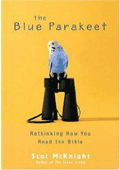
Scot McKnight establishes a key idea in The Blue Parakeet mid way through chapter four. He posits that the Bible that God gives us to read is presented as the unfolding story of His ways with His people. When we approach the text as something else, we lose the power of reading the book as a story. In doing so, we lessen its impact on our lives and may even ‘discover’ interpretations that differ from the original intention of the authors or The Author.

Context is everything in reading the Bible as we’ve seen countless times. Context can be viewed as the concentric rings of a pebble in a pond; there is an immediate ring or context, and then one a little further out, and so on. Each of the verses exists in a context of a passage and that exists in a book and so on until we can see that each of the smallest contextual markers contributes to the whole of God’s story. Rather than standing on their own trying to carry the full weight of biblical revelation, the stories contribute to The Story. McKnight gives us a valuable example in asking us to consider our perspective on paying interest on a loan. Many of us have home mortgages or car loans on which we have agreed to pay a certain percentage of interest. We do this as Christians despite the clear biblical prohibition against it in Leviticus 25:35-38. Why? How do we justify dismissing this (and many other) passage when we claim the whole Bible as the Word of God? We do so saying “that was then, this is now” pointing out culturally how our time in God’s story is different from that of the Israelites. We stand correctly in this assertion because we read the Bible as a story with many different eras and cultures represented for the purposes of God’s expression of His relationship with His creation.

The question that we must address is what determines “what was for then?”  If we read for promises and blessings or morsels of law we lose sight of the story and we are tempted to say that ‘this was for then’ and ‘it is also for now’ to everything, despite the obvious cultural differences. Tempering this is the easily remembered device: God spoke to Moses in Moses ways in Moses days, to Amos in Amos’ days in Amos’ ways and to us in our days in our ways. If we are able to read the Bible as story and we understand the thread that runs throughout, we see that same thread running through our own lives in our own modern ways. Each author reworked the bigger story for his audience and we should read what God has left for us in our own context.

I struggle a bit with this chapter. Is it for everyone to decide what ‘was for then’ on their own? Is it only in the context of reading as a community that we can discover that? I’m interested to hear your views on this and on the book as a whole. 

The Blue Parakeet by Scot McKnight

BlueParakeet

If you’ve read Scot McKnight’s blog Jesus Creed, you know that his work ranges far and wide but almost always centers on the meaning of Jesus in the context of living out our faith in the modern world. His books mirror this broad spectrum of application from drawing Mary back into Protestant life with The Real Mary to emphasizing the twin foci of love as the outcome of spiritual formation in The Jesus Creed.  McKnight’s latest offering is an outstanding entry in his library, moving Christians to consider the way in which they read the Bible. The Blue Parakeet is not a hermeneutics text, it is a challenge to manner in which we hear the words of the text. Is it a collection of ‘thou musts’ linked together by vignettes of human history or a lengthy and far-reaching story of God and His relationship with creation? Scot helps us to discover our initial viewpoint and then leads the reader to discover alternatives that help us to apply the Scriptures to a modern culture that is much different from the setting of the stories we read.

Central to Scot’s ideas throughout the book is the question, how does God speak to people through the Bible? We can read the text in a fossilized state, forever locking words in their first century (or earlier) context while trying to apply them to a twenty-first century culture or, as McKnight asks us, we can consider a broader reading of the Bible as themes that are universally applicable in each proceeding culture. In doing so, we can easily see that God spoke Moses’ days in Moses’ ways, in Jesus’ days in Jesus’ ways, in Paul’s days in Paul’s ways, and given that pattern it is reasonable to hear God speaking to us in our days in our ways. The themes and concepts of the Scriptures were meant to carry God’s words throughout every era of history, continually applicable to an ever-changing culture.

Blue Parakeet weaves an interesting path that leads to the development of discernment in the application of the Bible to our modern lives. Ever the professor, McKnight puts the preceding chapters to the test in applying the ideas to the contentious issue of women in ministry, devoting five full chapters to the subject. This section of the book cements the value of this work as it transfers the ideas that he presents in the early chapters from the abstract to the concrete, demonstrating how they can be applied to an issue. Will this methodology ruffle some feathers (no pun)? Certainly, but by reading the Scriptures as story rather than Torah we find each generation and culture challenges those that came before it and God remaining consistent throughout.

The Blue Parakeet was not written specifically for an academic audience but seminaries would do well to consider including this book alongside their selected hermeneutics text and How to Read the Bible for All Its Worth. As with all of Professor McKnight’s books, Parakeet is well written, organized and applicable. Like a well crafted sermon, each idea has appropriate illustrations and solid application for the reader to use in testing the viability of the proposition. Christian leaders and laypeople alike should spend time reading, discussing and applying this book. 

-oo-

I was privileged to receive an advance reader edition of this book prior to its release and I took a couple of weeks to read it slowly and savor the ideas in small sips. Scot McKnight has once again provided an invaluable contribution to the advancement of the Church and the faith and his style makes the book immediately accessible to every member of the Christian community.  I am going to begin a series of posts on the book, looking at each chapter on its own now that it has been released. It dovetails perfectly with another ongoing series I have been doing on Foster’s book Life with God. Both McKnight and Foster emphasize reading to hear; listening to the scriptures for God’s voice and his unique address to each one of us. What Scot contributes to this discussion is the emphasis on God speaking to us in our ways. Our application should then take cultural context into consideration in every move we make. I’ll look forward to interacting with other readers of the book in the weeks ahead.

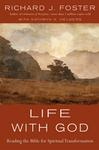
Life with God

image

Most Christians can enunciate the Immanuel principle in some fashion; “God is with us.” This stirring promise has been the foundation of belief and practice for as long as there has been a Church. Discovering the key to tapping into this powerful presence has been a goal of discipleship for centuries, not just for purposes of knowledge but also to seek out the transforming power of that relationship. Through the history of the Church, many disciples have discovered and deepened our understanding of various disciplines that allow us to draw closer to this power source. In 1978, an unknown Friends pastor published a book entitled Celebration of Discipline which has become a standard in Christian libraries. Richard Foster, the author and one of our leading thinkers on Christian spirituality, has contributed a new work that narrows its focus to the practice of reading the scriptures for personal transformation.

The book, Life with God, centers on the practice of Lectio Divina, a contemplative praying of the Scriptures which enables the Word to become a means of union with God. In each of its chapters, Foster challenges us to respond and be shaped by the truth-proposition that God voices throughout the scriptures, “I am with you. Are you willing to be with Me?” If you’ve read the book or would like to, I would love to engage in conversation with you about the ideas and practices within. In the coming weeks I will examine one chapter and idea per week in addition to looking at another book having to do with the reading of the Bible, Scot McKnight’s upcoming The Blue Parakeet.