The Shock of Gideon’s Turn

image

Reading the Gideon cycle in Judges we find ourselves at an unexpected turn after his victory in war. Rather than the hero we are led to expect who transcends his fearfulness and forges forward in trust, we find instead a normal person.

Maybe, a person more like ourselves than we are willing to admit.

What catches us off guard is how quickly Gideon forgets his Yahweh ordained purpose. God did not call on him to destroy parts of Pineil or administer the whipping that the men of Succoth endured; he performed both of these actions out of his own desire for revenge. The Israelites will respond in much the same way as we turn the page. Rather than turning to the Lord in their desire for leadership, they cry out for Gideon to lead them as their ruler. Is there hope for Gideon?

We can benefit today by meditating on the words of a later leader.

Psalm 3

O Lord, how many are my foes!

How many rise up against me!

Many are saying of me,

“God will not deliver him.” Selah

But you are a shield around me, O Lord;

you bestow glory on me and lift up my head.

To the Lord I cry aloud,

and he answers me from his holy hill. Selah

I lie down and sleep;

I wake again, because the Lord sustains me.

I will not fear the tens of thousands

drawn up against me on every side.

Arise, O Lord!

Deliver me, O my God!

Strike all my enemies on the jaw;

break the teeth of the wicked.

From the Lord comes deliverance.

May your blessing be on your people.

Life with God

image

Most Christians can enunciate the Immanuel principle in some fashion; “God is with us.” This stirring promise has been the foundation of belief and practice for as long as there has been a Church. Discovering the key to tapping into this powerful presence has been a goal of discipleship for centuries, not just for purposes of knowledge but also to seek out the transforming power of that relationship. Through the history of the Church, many disciples have discovered and deepened our understanding of various disciplines that allow us to draw closer to this power source. In 1978, an unknown Friends pastor published a book entitled Celebration of Discipline which has become a standard in Christian libraries. Richard Foster, the author and one of our leading thinkers on Christian spirituality, has contributed a new work that narrows its focus to the practice of reading the scriptures for personal transformation.

The book, Life with God, centers on the practice of Lectio Divina, a contemplative praying of the Scriptures which enables the Word to become a means of union with God. In each of its chapters, Foster challenges us to respond and be shaped by the truth-proposition that God voices throughout the scriptures, “I am with you. Are you willing to be with Me?” If you’ve read the book or would like to, I would love to engage in conversation with you about the ideas and practices within. In the coming weeks I will examine one chapter and idea per week in addition to looking at another book having to do with the reading of the Bible, Scot McKnight’s upcoming The Blue Parakeet.

Gideon Pursues the Enemy III

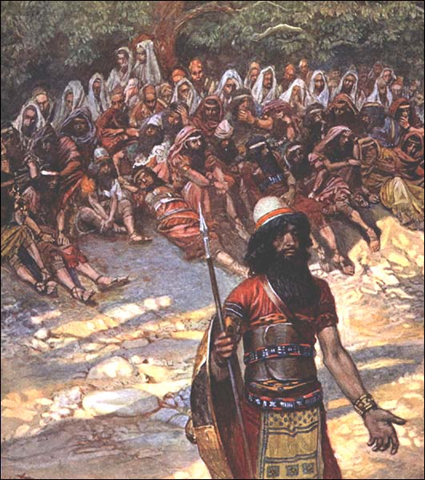
image After Gideon and his army had routed the entire army of the Midianites and began marching their kings Zebah and Zalmunna back toward the Jordan, he must have been wondering why his Israelite brothers had refused to support him. Angrily he must have decided that they remained turned against Yahweh, unwilling to trust the mission that he had been given. Given the distance of time, do we see the irony in Gideon’s rage against them. They were bypassed by the Midian army but would suffer humiliation and destruction at the hands of God’s judge.

Perhaps the irony is masked by the change we see in Gideon himself. Starting out as hesitant and fearful, he slowly obeys God’s commands and embarks on the restorative mission. Obedience marks this Judges’ cycle until ego and the need for revenge transforms the man. Does he feel that God’s mission gives him permission to act independently to punish Piniel and Succoth? He crosses ‘over the line’ in crossing over the Jordan. Are we at similar risk?

Christian leaders are all tempted by ego and the human desire to get ‘even.’ It’s easy to even momentarily forget that we serve at the pleasure of God and it is His glory alone that should be the result of our service. Obstacles may come, we may have to face struggles that prick our every nerve ending and exhaust the limits of our patience, we may even find ourselves sidelined for a season when we feel as though we should be in the middle of the action but we must maintain our trust in God and the purpose he calls us to.

Gideon Pursues the Enemy II

image

After being denied sustenance in Succoth, Gideon pursues similar support in Peniel, to the same end. A vehement no! from the men of Peniel garners similar threats of retribution from Gideon. When he returns this way on the way back home, he states that the tower he is facing will be torn down. Do the men of Peniel respond in fear? For that matter, did a similar threat to scourge the men of Succoth with briars and thorns cause them to give in? The word tells us no and that the army of God’s purpose moved on under the power of the Lord.

Church leaders can find a second item of interest in this passage. It is sometimes the case that we can misread external signals thinking that they guide our purpose. If Gideon had asked of God for sustenance, relying on the people of Succoth and Peniel to be the answerers of this prayer, he may have been tempted to turn back and question his own interpretation of the mission. Maybe not at the first denial, but perhaps the second. How many times have we, as church leaders, been certain of God’s calling to a specific purpose only to find obstacle after obstacle in our way. What is the magic number of denials that we count before we turn back? Maybe our practice needs to be …one more than that.

Gideon Pursues the Enemy

image The story of Gideon is a tale of faith, or the lack of faith. God pursued him to fulfill his purpose in restoring the relationship between Yahweh and Israel. Now, as Gideon pursues the enemy across the border territory of the Jordan. Exhausted but driven, the warriors of Israel pursue the enemy without stop. Needing sustenance to carry on the mission, Gideon asks the men of Succoth for bread to carry them further.

A lack of faith stops them cold.

A church leader faces this all the time. God will implant a vision and a call to the leader for a particular church to accomplish and yet, when the vision is presented to congregation, the naysayers raise the heads and begin to find reasons why that could not possibly be God’s call on that body. In one light, their hesitation is justified. It will cost too much money, it will damage the reputation of the church, it will never work, the carpet will get dirty. The moment of truth arrives for the leader; will they act in faith to God and his strength or give in to the church in fear for their position. Too often, we fall into the latter.

Gideon faced both the fear of the loss of reputation (Ephraim) and the concern for safety (Succoth) but kept his eyes focused on the purpose to which he was called. Did he wonder how Yahweh would ever redeem this people?

Gideon the Diplomat

WordPress.com Tags: , , , ,

image Fresh from living out his purpose in routing the warriors of Midian, Gideon is thrust into the position of diplomat. An intertribal argument awaits him before he has even rested:

Now the Ephraimites asked Gideon, “Why have your treated us like this? Why didn’t you call us when you went to fight Midian?” (Judges 8:1)

The Ephraimites are upset at missing an opportunity to increase their personal glory, indicating perhaps that the troubles that had separated Israel from God in the first place were still in need of attention in this Judges cycle. They had not only lost their perceived glory but a portion of the spoils of war as well. Sharp criticism draws a diplomatic response from Gideon. He placates their anger by alluding to their superior status in the tribal standings. They accept this as an apology and are quieted. We expect the familiar construct “and the land had peace for x years” but God is not finished yet.

Do people who look in on the internecine battles within God’s church see a similar situation? Does denomination A proclaim their superiority over church B, not in God’s glory but in their body count or the size of their fortress? Has God’s hand been forgotten in all things?

Gideon Sounds the Horns

Gideon does the only appropriate thing upon receiving the revelation and assurance of his victory over the Midianites from the mouth of a frightened Midian soldier,

When Gideon heard the dream and its interpretation, he worshipped God. (Judges 7:15)

image This easily overlooked vignette reminds us of our proper priorities. How often we put off the worship of the Father in response to his revelation or leading. Instead, we are only too eager to jump to action now that we are confident of His assurance of our success but there is a good reason for pausing to worship. You see, if we act immediately we are susceptible to taking the credit for any coming success rather than placing it in the proper perspective. Worship first humbles us, helping us to recognize that the assurance comes from God.

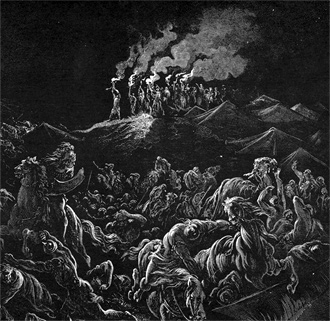
The small force that surrounds Gideon serves a similar purpose. He is humbled as his army is reduced and reduced through the methods that Yahweh pronounces until Gideon must be totally reliant on God’s power for any victory. Yahweh’s power is displayed through the small army; the strategy that Gideon employs makes his force look much, much larger than it really is. In a panic, the Midianites turn upon themselves and flee in fear.

We look to the Bible for life lessons and sometimes, they are more subtle than we would like. Its easy here to lose the truths in the action but there are profound ideals that we can apply. First, as we diminish our own power in trust to God’s power we can count on His strength making itself known in ways we cannot imagine. The second truth that the Midianites learned the hard way is that battling or opposing this power is self-destructive, a guaranteed loser. Are we cautious enough not to step into the shoes of the Midianites?

Gideon and the Tumbling Bread

In the weakened state of an army of 300, Gideon is prepared to move on the Midianites. Israel will be redeemed and freed from the oppression allowed by God to draw them back to Him. We are prepared for a horn to blow, walls to fall, and the Lord to lead Gideon in a route of the opposing forces but He (and we) knows Gideon well, and offers him a moment of assurance.

Now the camp of Midian lay below him in the valley. During that night the Lord said to Gideon, “Get up, go down against the camp, because I am going to give it into your hands. If you are afraid to attack, go down to the camp with your servant Purah and listen to what they are saying.” (Judges 7:8b-11a)

Gideon afraid? Banish the thought! Of course Gideon is frightened; it seems to be his default state. Frightened, hesitant, willing to seek out every chance to avoid the responsibility of his calling. This is the Gideon we know, but God knows differently. He wants him to know the assurance of His presence and the power that this brings to purpose that he calls him to accomplish.

image Sending Gideon to the camp is a reinforcement that stands opposite the diminishment of forces that God has visited on Israel. Gideon and his servant approach the camp under the cover of night to find the true measure of the enemy arrayed against him. They peer over the camp and find the Midianites, the Amalekites, and all the Eastern peoples preparing for battle, camels more numerous than the sands on the seashore. Gideon approaches a little closer in order to overhear a lowly soldier sharing his own fears with his tent mate. His dream showed them a load of barley bread tumbling down the hill above the camp and crushing the Midianites. He rightly comprehends that this is a sign that Gideon and his army are the arm of God himself and that their days are numbered.

We see the assurance of God in this vignette but there is another joy that we can derive from this experience. It is easy to be convinced that all heroes of God are mighty men and women of confidence and strength, leaders of their people that are unafraid of anything and always, always supremely assured of their mission as coming from God. Here Yahweh utilized not only the hesitant Gideon but the lowly private in the Midianite army, another man filled with fear. Do we question whether or not we are suitable for God’s use? Probably, but take heart. God will utilize any vessel available to him so long as our trust is put in the right place. Where is your trust?

Gideon Grows Weaker Still

Gideon was surely puzzled at God’s move to weaken his army, the band of men who were going to save Israel. Yahweh instructed Gideon to diminish his force by sending all those who were trembling in fear to go home, leaving the army twenty-two thousand men lighter. As he watched the men file away, Gideon surely thought that God would be satisfied until the word came from Yahweh, “There are still too many men.”

image

The fearful, hesitant Gideon is faced again with the challenge to trust Yahweh in his weakness. He is far from the bold warrior of legend, being dragged against his will into this leadership, God has diminished the force that has followed him and now, Yahweh demands further attrition from his forces. While thoughts of turning and running back to Ophrah must have coursed through his mind, the Judge follows the Lord’s lead and invites his men to the spring for a drink. It is here that Yahweh will sift them out for him.

Yahweh will sort out the fighters based on the way they drink; some like dogs, plunging their face into the water and others, lifting the water to their vigilant faces and drinking from their cupped hands. Does God favor one method over the other? Contrary to many who have interpreted the scriptures through the centuries, the text does not give us this option. Yahweh’s method and choice of the warriors is purely his arbitrary choice and we must respect it. Certainly, Gideon does. In the arbitrary nature of the decision is the secret that God wants to convey; the 300 are not a sign of Israel’s strength, they are a sign of her weakness in the face of Yahweh, the one who can truly save.

This episode in the Gideon cycle explains so much in our own lives. How many times have we followed the leading of God only to find Him putting up barriers in our way, weakening us? Probably more than we would like. In some cases, we find that after we have accepted one barrier or humbling we find another one put in our way. We question whether or not we are truly following the proper leading. Perhaps the question should be, are we thoroughly dependent on God? Are we still hoarding some of the glory for ourselves?

Gideon Grows Weaker

Finally, the account of Gideon’s judgeship reaches the point of action in its mission to save Israel.

Early in the morning, Jerub-Baal (that is, Gideon) and all his men camped at the spring of Harod. The camp of Midian was north of them in the valley near the hill of Moreh. (Judges 7:1)

His fearful, sputtering start is behind him now. God has shown patience with His Judge; the questions of God’s covenant integrity, the self-centered sacrifice, the undercover operations against Baal, and the hesitant deal making. Gideon and his army are now camped opposite the enemies of Israel, preparing for the battle of redemption. And, at first light, they…

…stopped to count noses!

image Well, God did. When we read the account in English we can lose some of the wordplay that paints a truer picture, one that we have come to expect with Gideon at the center. Gideon and his army are camped at Harod which means trembling in Hebrew. His opposite number is camped near Moreh, a close cognate to mora’ or ‘fearful.’ So we envision ‘trembling’ Israel facing down the ‘fearful’ Midianites. As He overlooks this impending confrontation, God does something that we can all probably relate to, he makes Gideon even weaker.

To ensure that the glory for the victory and the subsequent worship are appropriately assigned, Yahweh tells Gideon that his army is far too large. The temptation will be to claim the victory of their own hands rather than to God so Yahweh reduces the force. Anyone trembling with fear at the coming war is excused and we witness 22,000 soldiers turning and accepting the reprieve. Did this decrease the trembling factor of the remaining army? We are not told but we can place ourselves in Gideon’s position. We are called to fulfill a purpose of God and yet, at every turn, the Lord weakens us such that our only hope is further dependence on Him. Do we have sufficient faith to take the next step?