Gideon Pursues the Enemy

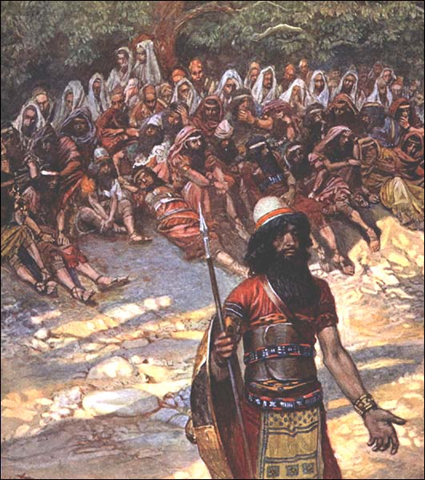
image The story of Gideon is a tale of faith, or the lack of faith. God pursued him to fulfill his purpose in restoring the relationship between Yahweh and Israel. Now, as Gideon pursues the enemy across the border territory of the Jordan. Exhausted but driven, the warriors of Israel pursue the enemy without stop. Needing sustenance to carry on the mission, Gideon asks the men of Succoth for bread to carry them further.

A lack of faith stops them cold.

A church leader faces this all the time. God will implant a vision and a call to the leader for a particular church to accomplish and yet, when the vision is presented to congregation, the naysayers raise the heads and begin to find reasons why that could not possibly be God’s call on that body. In one light, their hesitation is justified. It will cost too much money, it will damage the reputation of the church, it will never work, the carpet will get dirty. The moment of truth arrives for the leader; will they act in faith to God and his strength or give in to the church in fear for their position. Too often, we fall into the latter.

Gideon faced both the fear of the loss of reputation (Ephraim) and the concern for safety (Succoth) but kept his eyes focused on the purpose to which he was called. Did he wonder how Yahweh would ever redeem this people?

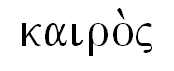
Kairos

image

We as Americans are at a tipping point in our history. Our nation is roughly divided into two ideological camps; one leans toward the notions of individual responsibility with minimal interference from the a central governing authority and the other finds its identity in a large, caretaker governing authority and abdication of individual responsibility to that authority. Christians find themselves on both sides of this division with a decision to make as to whom the next leader will be. Unlike many other elections in the past with little other than the cacophony of partisan slogans and frenzied lowing to differentiate the ideologies, this event is different. It is kairos.

Some in the Christian community will insist that a call to action is misguided and unnecessary; God will place the man or woman that He ordains into this position of authority without human involvement. While miraculous intervention is always a possibility, this ‘sit back and observe’ attitude shows a profound misunderstanding of how God interacts with His world. Even a cursory review of the biblical record demonstrates that God works through His human agents, imbuing them with appropriately formed hearts and the ability to act on what is right. In a country in which we practice representative self-rule, our responsibility is to exercise our franchise based upon the ethics and morality of Christ.

This moment in the history of the United States is kairos. For those unfamiliar with the Greek term, it is a decisive point in a place, situation, or time where the divinely ordained purpose must be grasped boldly by moral agents. It is an opportune time in which human decision is crucial to the fulfillment of divine purpose. Those whose wills are attuned to divine purpose will recognize kairos, those who only hear their internal drummer will not.

Will you act decisively for life in this moment? The next president will be filling positions in the Supreme Court in the coming terms. Will those appointments be men and women who ‘find’ legislation in the Constitution or those who interpret it according to the intention of its authors? Your vote will decide the direction.

Will you act decisively for individual liberty in this moment? The corollary of liberty is individual responsibility guided by your Spirit-driven ethics and morals. The next president will lead the country from either the perspective that you are able to exercise this liberty and be responsible for yourself or that you are unable to be responsible for yourself and that a large government presence and intervention are necessary for your good. Your vote will determine that direction.

Will you act decisively to reverse deepening corruption of the culture? It becomes more difficult each day to see the imago dei in our fellow citizens. The humanity that we each posses is challenged with debasement by a pornified, violent, crass culture that is supported by an underlying attitude of moral equivalency. Cultural insistence that you or I are not to apply our moral or ethical standards to someone else, thus judging their ethics is at the root of the continued and quickening downward cultural spiral. The next president will either lead by an example of honor and principled service to others or from a position in which no morals or ethics are to be judged superior to any other system and that each should seek out whatever they feel is right. Your vote will determine that direction.

If you decide that this is not a kairos moment that needs your action that certainly is your privilege. I urge Christian readers though to review Christ’s insistence that we not retreat into fortresses but that we carry His message of the restoration of humanity and justice in both orthodoxy in the Church and orthopraxy in the world. The Kingdom exists as a here and now concept as well as a yet to come idea. In the here and now, your purpose is to be an influence in the culture, to spread your Christlikeness like yeast throughout your sphere of influence. As a citizen, your responsibility is to apply your values and ethics to selecting the fellow citizen who will lead  us into a strange and new future.

Gideon the Diplomat

WordPress.com Tags: , , , ,

image Fresh from living out his purpose in routing the warriors of Midian, Gideon is thrust into the position of diplomat. An intertribal argument awaits him before he has even rested:

Now the Ephraimites asked Gideon, “Why have your treated us like this? Why didn’t you call us when you went to fight Midian?” (Judges 8:1)

The Ephraimites are upset at missing an opportunity to increase their personal glory, indicating perhaps that the troubles that had separated Israel from God in the first place were still in need of attention in this Judges cycle. They had not only lost their perceived glory but a portion of the spoils of war as well. Sharp criticism draws a diplomatic response from Gideon. He placates their anger by alluding to their superior status in the tribal standings. They accept this as an apology and are quieted. We expect the familiar construct “and the land had peace for x years” but God is not finished yet.

Do people who look in on the internecine battles within God’s church see a similar situation? Does denomination A proclaim their superiority over church B, not in God’s glory but in their body count or the size of their fortress? Has God’s hand been forgotten in all things?

Church Management Software

imageMy lengthy examination of CMS (Church Management Software) is in this month’s Your Church magazine. This software segment has evolved in numerous ways and the packages go way beyond maintaining the membership roles. Some of the vendors are on the verge of creating church based replacements for social networking offerings. It should be interesting to watch.

Read it here.

Gideon Sounds the Horns

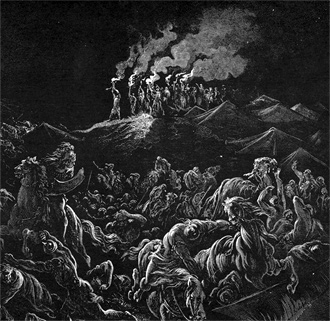
Gideon does the only appropriate thing upon receiving the revelation and assurance of his victory over the Midianites from the mouth of a frightened Midian soldier,

When Gideon heard the dream and its interpretation, he worshipped God. (Judges 7:15)

image This easily overlooked vignette reminds us of our proper priorities. How often we put off the worship of the Father in response to his revelation or leading. Instead, we are only too eager to jump to action now that we are confident of His assurance of our success but there is a good reason for pausing to worship. You see, if we act immediately we are susceptible to taking the credit for any coming success rather than placing it in the proper perspective. Worship first humbles us, helping us to recognize that the assurance comes from God.

The small force that surrounds Gideon serves a similar purpose. He is humbled as his army is reduced and reduced through the methods that Yahweh pronounces until Gideon must be totally reliant on God’s power for any victory. Yahweh’s power is displayed through the small army; the strategy that Gideon employs makes his force look much, much larger than it really is. In a panic, the Midianites turn upon themselves and flee in fear.

We look to the Bible for life lessons and sometimes, they are more subtle than we would like. Its easy here to lose the truths in the action but there are profound ideals that we can apply. First, as we diminish our own power in trust to God’s power we can count on His strength making itself known in ways we cannot imagine. The second truth that the Midianites learned the hard way is that battling or opposing this power is self-destructive, a guaranteed loser. Are we cautious enough not to step into the shoes of the Midianites?

Christians at the Border by Daniel Carroll R.

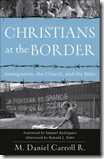
image You can read my review here of M. Daniel Carroll R.’s new book Christians at the Border. Carroll makes the case for framing the discussion of immigration in Christian terms. His prescription centers on keeping the humanity, the imago dei, in the forefront of our attention as we consider possible responses to the dilemma the country faces in dealing with various mass migrations into the culture. Give it a read and let me know what you think.

Danny Carroll was one of the most influential of my seminary professors. He taught me Old Testament and Hebrew but more importantly, his direction toward seeing how important the image of God in people is was deeply challenging to my outlook on social justice issues. He always demands that our theology expand beyond ‘helicoptering’ into a passage and extracting a truth from a proof text without considering the total context of God’s story throughout history. Carroll insists that our vision of God expand and expand as we grow in Christ.