

ByTor-The-Snow-Dog, originally uploaded by wrachele.
The fearsome face of the snow dog and her bionic eye.
ByTor-The-Snow-Dog, originally uploaded by wrachele.
The fearsome face of the snow dog and her bionic eye.
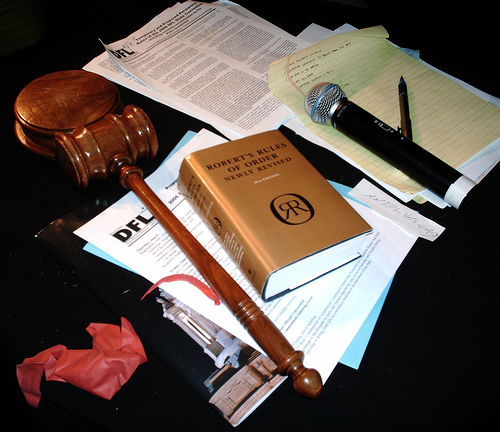
In his book Why Be Moral, Atheist philosopher Kai Nielsen admits the position that the new, angry Atheists like Sam Harris cannot bring themselves to do, that “Pure practical reason, even with good knowledge of the facts, will not take you to morality.” Bertrand Russell, who above all things devoted himself to attempting to live according to reason alone, admitted that he could not account for morality by this method. If reason cannot complete the equation, where are we left to turn?
In every instance of moral decision, there is an evaluation of the opposite positions of good and bad. Moral affirmation cannot be an abstraction. The person who makes a moral evaluation assumes the intrinsic worth in himself and sees that intrinsic worth in the lives of others. In a world of matter alone, there is no intrinsic worth. A moral framework is necessary for the declaration of right and wrong, one which sets the standard for good and bad.
The existence and continued affirmation of a moral framework can lead us to only one conclusion. God exists and is the provider of this moral framework. We can lay it out as:
P1 Objective moral values exist only if God exists
P2 Objective moral values do exist
C God Exists
The arguments from reason for the existence and practice of morality (without God as the lawgiver) trend along the line of humanity doing things in the interest of the community and cooperation for the good of all. The problem is circular though; with an objective source of good and bad how will the billions of sovereign creatures agree on what is good and bad? Since one life (of matter alone) is of no more value than any other life, why would a person ever do anything but in their own self interest? These questions always lead us back to the top of the page.
Image by jonathunder

 Yesterday we left off exploring two important questions that Atheists must answer in a universe composed of nothing but matter:
– When referring to the ‘rights’ of others, where do these rights come from in a world of cellular masses?
– When talking about right and wrong, who defines the meaning of these terms?
Let’s bring another Atheist voice (cheer?) into the discussion. Sam Harris (remember his little book) makes repeated use of moral language throughout his Letter to a Christian Nation. He describes things as good and evil. God especially falls under his moral evaluation as he considers the horrors of the world—disasters, child rape, murder, various evils—and asks why, if there is a God who is presumably good, these evils exist in the world. The trouble that Harris runs into is that, in order to evaluate anything as bad/evil one must have an objectively ‘good’ exemplar. Without that good that all can agree on, who has the authority to define good and bad? Harris? Pol Pot? Stalin? Doug Henning?
This is the main problem that the Atheist runs into when proclaiming their morality and even, superior morality. In order to make such a proclamation, the Atheist must borrow from an objective moral framework in order to make a judgment. Without that framework or its admitted existence, the atheist must defer to his or her feelings to make the call. Bertrand Russell admitted as much,
In a debate with a Jesuit priest, Russell had made a failed attempt to explain the source of his ‘objective’ morality. When the priest asked him how he differentiated between good and bad, Russell answered, “I don’t have any justification any more than I have when I distinguish between blue and yellow…I can see they are different.”
The priest noted “You distinguish between blue and yellow by seeing them, so you distinguish good and bad by what faculty.”
“By my feelings,” Russell replied.
Of course, the follow up question is obvious (but was not asked in order to save face for Russell.) The priest pointed out the corner into which Russell had backed himself by posing this dilemma. “Mr. Russell, in some cultures they love their neighbors; in other cultures they eat them. Do you have a personal preference, and if so, what is it?”
At least Russell is more honest about his agnosticism and the ambiguity of his own views on ethical values than is Mr. Harris. Sam enjoys a morality developed in his own mind but he never answers the question, from where does his intuition as to what is right and wrong come? The Atheist never provides an adequate explanation for how an intuition toward morality can develop from nothing but matter and chemistry.
So, the question we are left with today is, can morality exist apart from a Moral Lawgiver? Discuss amongst yourselves until next time.
Image by Mindsay Mohan
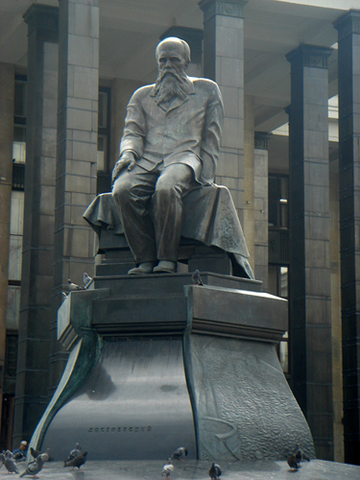
Dostoevsky’s Ivan Karamazov gives voice to a well known idea, that without God, everything is permitted. In an era and culture in which moral relativism is the norm, the very statement of this idea may seem unnecessary; anyone who deigns to judge the actions of another as right or wrong brings the full weight of criticism and labeling against themselves. The Atheist community will point out that they have a morality without God that is sometimes claimed to be superior to that of religious people. The monotheist will claim otherwise, that moral law is sourced in God alone. Can one side or the other adequately defend their proposition or is the discussion really two different discussions, one designed to camouflage its futility?
Watch the language carefully. Professional Atheist David Mills, for example, writes, “I do believe, though, that the terms “right” and “wrong” usually lack a clear unbiased definition when employed by most speakers. Personally, I prefer to label behavior as either “considerate” or “inconsiderate” of someone else’s rights.” (Atheist Universe, 53) Mills uses interesting words here:
– Right & Wrong
– Considerate & Inconsiderate
– Rights
Because most people are unable to attain his level of specificity with regard to the vocabulary of right and wrong, Mills shifts his statement of morality to the more flexible ‘considerate’ and ‘inconsiderate.’ The that cannot escape scrutiny however, is rights. In the atheistic view of the world, nothing is more than a variously evolved collection of cells created by chance. From where do these cellular masses become imbued with rights?
The more sophisticated Julian Baggini presents a similar position; “Morality is more than possible without God, it is entirely independent of him. That means atheists are not only more than capable of leading moral lives, they may even be able to lead more moral lives than religious believers who confuse divine law and punishment with right and wrong.” (Atheism, 37) Baggini leaves us with the same question to be answered, from where do notions of right and wrong come?
Eyes on your own paper and present your answers in essay form.
Dostoevsky image by Mathew.Hickey

Shall I suffer in silence or express my anguish at the way my life is playing out? All of us have asked this question and David was no exception.
I said “I will watch my ways and keep my tongue from sin; I will put a muzzle on my mouth as long as the wicked are in my presence.”
But when I was silent and still, not even saying anything good, my anguish increased. (vv 1-2)
The psalm expresses an acceptance of the fragility and brevity of life. In the eyes of God, our time on the earth is but a second. We who follow Christ can look forward to eternity but we still have apprehension about the end of our days. Will we worry constantly about it or simply accept it as a fact of our existence. And if we come to this acceptance, will it relieve us from our current travails? David explores this hope in prayer:
But now, Lord, what do I look for?
My hope is in you.
Save me from all my transgressions; do no make me the scorn of fools.
I was silent; I would not open my mouth, for you are the one who has done this. (vv 7-9)
Despite our broken natures, we beg for one more chance to praise the Lord before our time is extinguished.
Look away from me, that I may rejoice again before I depart and am no more. (v 13)
Image by zedzap
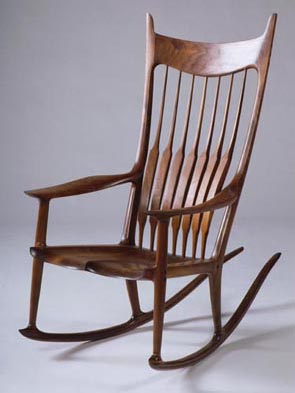
Sam Maloof (1916 – 2009) was an artist that never created furniture to be placed in a gallery with a ‘do not touch’ sign attached. He created an immense body of work that begs to be touched, with its sinewy lines and understated elegance. Sam truly allowed the imago dei to move his hands to create something new and beautiful out of a primary medium that in itself is forever new and beautiful. He truly embraced God’s intention in creation and we are all better for it.
Maloof wrote,
Too often we who make objects – and I speak of all media – become quite taken with what we have done. We accept all credit, all praise. We become smug and conceited. I believe no man has ever designed anything that approaches the complexity of the simplest flower or the grandeur of a great redwood tree. God is the Creator of all things, and the beauty He has given us is awesome.
Make the effort to view any of the Maloof profiles and you will quickly discover two things, his humility and the natural way in which his hands guide the transformation process of the wood. He never forced the wood to conform to his will. Instead, as you see him sort through his piles of Walnut, his eyes and hands are searching for the boards that contain the piece of furniture that they were intended to be transformed into. We would all do well to view our own perspective on creation in the same way.
We’ll miss you Sam. God Bless.


High-Mountain-Waterhole, originally uploaded by wrachele.
 In an attempt to mask the ultimate conclusions of their beliefs, the Atheist community continuously suggests the notion that there should not even be a word for atheism since it is the natural and normal state of affairs. In other words, it is not necessary to label the condition of no-God since there is no God? In the great tradition of Chomsky and Lakoff and the deconstructionists, this is semantic infiltration in order to evade the need to clarify what one believes.
The belief in God (in a variety of forms) is the majority condition in the world, and has been throughout history, continuing despite the countless scientific discoveries that have occurred through the centuries. Contrary to their heartfelt desire, atheism is not the normal state of affairs. A word and label are certainly necessary to describe a condition that is contrary to the majority belief, even if the adherents to that system of belief don’t like being named as such.
Their desire may have something to do with the constantly shifting definitions of atheism that the adherents tend to proffer. That discussion, is for another day.
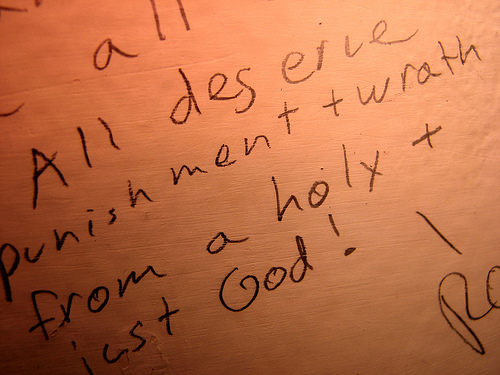
For I am about to fall, and my pain is ever with me.
I confess my iniquity; I am troubled by my sin.
May are those who are my vigorous enemies; those who hate me without reason are numerous.
Those who repay my good with evil slander me when I pursue what is good. (vv 17-20)
Modern readers are tempted to dismiss this psalm as the product of ancient superstition and ignorance of the source of bodily infirmities. The psalmist attributes the overwhelming pain and agony of his suffering to a personal attack by God due to his sinfulness. We understand disease and the decay of body from a scientific perspective but we should be slow to allow this knowledge to color our understanding of God’s hand on our lives.
O Lord, do not rebuke me in you anger or discipline me in your wrath. (v1)
Our actions have consequences, good and bad. Should the Lord prevent us from suffering the consequence of our choices because of his deep love for us? We do this for our children, more often than not. God wants us to grow and mature in our holiness and sometimes that requires pain to enter our lives. The pain reminds us of the choices that we made and gives us an incentive to make better choices in the future. On the other hand, there are numerous pains that are significantly disconnected by time and distance from their original source and we can mistakenly attribute them to chance or label them unexplainable. Anger with God can mount: why God, why? Why would you allow this into my life now? These moments, when we most desire to understand, are the times when our knees should hit the floor as we seek understanding.
O Lord, do not forsake me; be not far from me, O my God.
Come quickly to help me, O Lord my savior. (vv 21 –22)
Photo by Patrick Denker
Thousands enjoying the mountain air and trying to form a circle pit on the benches at Red Rocks.

Offspring at the Rocks, originally uploaded by wrachele.

