Feeding Your Hunger for God

Hungry For God by Margaret Feinberg

image

I’m convinced that people today know a lot more about how to become a Christian than about how to be one. Jesus says, “Behold, I stand at the door and knock; if anyone hears My voice and opens the door, I will come in to him and will dine with him, and he with Me.” This verse isn’t just an invitation to become a believer, but to live as one.

You will read to end of Hungry for God before encountering this nugget but the meandering journey is worthwhile. Author Margaret Feinberg intertwines the scriptures, prayerful insight and keen observations of life in a delightful guide to a variety of ways to hear the voice of God and discern how the words apply to your life. The book serves as a fine introduction to a variety of spiritual disciplines, especially for those intimidated by higher-order approach of a Foster or Willard.

To call the book uneven is a compliment. As each reader peruses the paragraphs, some will pass by unnoticed while others will imprint the words on your mind to be savored and reconsidered later in the day. One such passage describes her experiences attending a church in which she felt herself going through the motions but remaining dry at the conclusion. Margaret tells of a subtle transition that occurred as she became more intentional about preparing for worship, reading the scriptures and studying, opening her heart and becoming more than simply present at the service.

Modern Christianity often portrays the conversion experience as a conclusion rather than a new birth. We devote resources and energy to bring people to the cross but then leave them to discover that it is the beginning of a new life rather than a triumphalist moment. Feinberg’s fine book can serve as an excellent book for discussion among believers trying to learn the basics of living out the life of a Christian. It is accessible to everyone and offers multiple entry points for later consideration. An enjoyable read that can be picked up for a few minutes and then put down for the rest of the day without missing a beat.

I’m grateful to Zondervan who provided this book for review.
Learning to Kneel–Four Means War

image

A.W. Tozer wrote this about worship and the fact that we were created for that purpose: “If we do not honor this purpose our lives will degenerate into shallow, selfish, humanistic pursuits.” Oh, the prescience of brother Tozer.

One of the components of paradise was perfect worship. Before humankind elected to rebel against their Creator, they enjoyed perfect communion with God. They understood Him and were able to communicate directly with Him. They were in the perfect environment  and were able to live out the purpose for which they were created, worshipping God. None of the concerns that plague us today were present. Worship was uninhibited, unlimited, untimed, uninterrupted and the participants were unafraid and unblemished.

And then the wars came.

The theological history of worship begins long before Creation, in the heavens. More than our mundane battles over music style, instrumentation or volume, the wars began to be waged over the object of worship. The first worship battle was sparked by Lucifer, the Star of the Morning, being cast out of the presence of God. The Cherubim to which all others aspired desired for worship to be directed to Him rather than its proper object. God, whose name is Jealous, would not abide with this shared arrangement and the wars began.

Coming in the form of a serpent, a creature over which Man had dominion, Satan slithered into the second battle to interrupt the perfect communion of the Garden. A subtle twisting of the words of God bewitched and betrayed the inhabitants of the garden. Putting themselves above the place of God, they’re minds were opened to the worship of self. Redemptive history begins.

The first casualty of the second offensive was Abel. Differences in worship style start here even though God gives every opportunity for propriety in worship to be restored. Rather than do so, Cain becomes the first to divide fellowship with other men over the way in he decides to worship. Rather than seeking God’s desire for worship, the long, sad history of church division get’s its introduction here.

Grace and peace to you…

The Foundation of Prayer

“Audacious prayer, which perseveres unflinchingly and ceases not through fear, is well pleasing unto God,” wrote Luther. “As a shoe maker makes a shoe, or a tailor makes a coat, so ought a Christian to pray. Prayer is the daily business of a Christian.”  Martin Luther

“God does nothing but in answer to prayer.” John Wesley

imagePrayer is central to our identity as Christians. It is a distinctive that speaks volumes about the singular nature of our faith. We have personal communion with the God of the universe. Our prayers are not issued into the void in hope that some anonymous deity will take pity upon or show favor toward us. We speak directly to God and he will speak to us.

No spiritual discipline has meaning without prayer. Training ourselves to pray effectively is a primary step that is to be mastered before the other disciplines are attempted. When we live a Christian life without prayer we deprive ourselves of the strength, power and transformation that any other discipline might bring about.

To pray is to change.

A foundational truth regarding prayer is that it is simultaneously natural and unnatural. We do not naturally come to prayer and we must be intentional about pursuing it. Prayer requires effort and a long period of apprenticeship. Unlike the apprenticeship of a silversmith however, our initial prayer has power and effect. God knows our abilities and His grace extends his patience with our first, faltering words.

We must sit at the feet of the Master and learn to pray just as His first disciples did. One day Jesus was praying in a certain place. When he finished, one of his disciples said to him, “Lord, teach us to pray, just as John taught his disciples.” (Luke 11:1) These will be our words as well, Lord teach us to pray.

Grace and peace to you.

image khrawlings

Journey to Nowhere

The Sacred Journey by Charles Foster


image

A promising premise—a call for the restoration of the spiritual journey—is fumbled by the author’s frequent foray into the territory of moral equivalence. Why Foster feels the need to make Hindu or Buddhist pilgrimage practice an example for Christians to follow escaped me as I read this volume. The frequent parallels give the book an uncomfortable tone and tend to overshadow the paragraphs in which Jesus actually makes an appearance.

Mr. Foster does make an important point regarding to Jesus that benefits the reader if it can be extracted from the text. The Lord was not sedentary, situating himself in the Temple and demanding that people ‘come to me’. Rather, He is a Lord of movement, of pilgrimage. His command is to “follow me”. He moves forward, taking message and the reality of the Kingdom to His chosen destination.

The Sacred Journey is a weak entry in The Ancient Practices series of books. Perhaps Mr. Foster was not the author to develop this volume, as his journeys appear to involve a lot of observation but little purpose other than some vaguely alluded to spiritual cleansing. As a travelogue, Anthony Bourdain’s viewers will enjoy the subtle mockery, but as a spiritual guide it brings nothing new to the conversation.

I’m grateful to Thomas Nelson publishers who provided this copy for review.

Turn Left at the Blinking Light

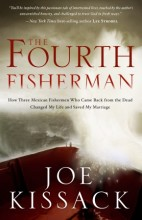
The Fourth Fisherman by Joe Kissack

image[Fade from Black] Camera pans from a calm sea to the prow of a small fishing boat. Voices speaking Spanish in the background as a man walks the beach toward the vessel. As he comes into focus, he is not dressed for fishing and appears to be looking for something. The scene turns with his gaze, sweeping the ocean and then spying a dock further down the beach, the camera follows him as he walks toward it, away from the boat. [Title]

Stories that appear separated that intertwine to lead to an intersection unexpected by the audience are a Hollywood staple. Better yet are divine stories of lives brought together by The Director. Such is the The Fourth Fisherman, the tale of four lives transformed by circumstance unforeseen when the first steps were taken. Author Joe Kissack recounts how his life of Hollywood success led him to the fishing villages in Mexico while a group of impoverished Mexican pescadores  was simply trying to survive the ordeal of being lost at sea for ten months. A growing faith in God brings them together in the port town.

Kissack’s trajectory was taking him higher and higher on the success ladder. He had money, power and prestige. He was also medicating himself, burning himself out on the treadmill of the television industry trying to keep one step ahead. Though he has the outward trappings of success, he finds himself empty inside, wrestling with impressions of inferiority left by his father and the demands of  trying to have it all. Ultimately, he cannot, setting the crisis stage for an encounter with Jesus.

The alternate path through life is portrayed through the lives of five Mexican fisherman who set out on a trip that soon turns bad, leaving them adrift in the Pacific for months on end. Death, hunger and despair challenge them while their faith grounds them, giving them the hope needed to continue scanning the horizon for any sign of rescue. When a ship finally sees them bobbing on the waves little energy remains in the party for celebration.

Kissack skillfully weaves these two threads together to show how God arranged for them to intersect. Though the full ending remains to be written, the story is an inspiration for those wondering about the purpose of their personal crucibles. God doesn’t waste our struggles. They serve a purpose in His larger story, and we only pray that we have sufficient awareness to see that purpose further on down our own road.

I am grateful to Waterbrook Press who provided this Advance Reading copy for review. The book will be available on March 12, 2012. Contact www.waterbrookmultnomah.com for more information.

Prayer, Walnuts and Rice

“…pray without ceasing; in everything give thanks; for this is God’s will for you in Christ Jesus” (1Thes. 5:17-18)

How is this possible in our busy days?

Several years ago at our Bible study, the leader gave each of us a jar with unshelled walnuts, and rice filled in around them. They were a gift meant to remind us how to do it—how to fit prayer into our overfull days—which she then demonstrated.

Read the rest of this fantastic piece by Marcia Morrissey here

Binding Himself and All of Us Together

The Sacred Meal by Nora Gallagher

image“It’s Easter Sunday. A group of men are in prison. They are part of the more than ten thousand political prisoners in this country’s jails. They wan to celebrate communion, but they have no wine, no bread, no cup, no priest…”We have no bread, not even water to use as wine,” their leader says to them, “but we will act as though we have.”

Such is the nature of the Lord’s Table in Christian practice. In all conditions, in wealth and in want, practiced with liturgical precision or among small groups, the Bread and the Cup were given as a constant reminder of the presence of Christ with His people until the day He returns. Nora Gallagher surveys the thoughts and emotions of those who serve and receive the elements, giving us a glimpse of the complexity of the Eucharist.

At the heart of her writing is Ms. Gallagher’s thread of our common connection. In each approach to the table she emphasizes how participation in communion serves as a binding force, tying you and I together even when have allowed the intrusion of negative influences to drive us apart. This is a biblical truth that is often dismissed. We may not be on speaking terms with one of our ‘brothers’ or angry with a ‘sister’. The manner is which we structure our lives enables us to avoid those we dislike or are in conflict with, separating the idea of a common inheritance given in the Scriptures, and our practice of daily living. Approaching the table, on the other hand, allows us no shadow in which to hide. Whether it be a common cup or the same loaf from which we pull our piece of bread, we cannot escape the fact of our familial heritage.

Many will find Nora’s overly poetic work attractive. Those of a more analytical bent will struggle to find meaning in personal memories and sudden realizations that Ms. Gallagher utilizes to illustrate her points. This is little practical material in this volume, so those seeking methods or liturgy are directed elsewhere. For one who seeks a contemplative consideration of the practice and effect of the Table, The Sacred Meal will be satisfying.

I am grateful to Thomas Nelson for providing this review copy.

Living in Sacred Time

imageThe celebration of the various seasons of the historical church calendar has largely fallen from favor in the Evangelical community, though it remains a fixture in many liturgical churches. Christmas and Easter are certainly recognized but the preceding weeks of Advent and Lent have fallen from the consciousness of churchgoers and worship leaders. When was the last time your church celebrated Pentecost? The loss of the calendar for our worship ultimately serves to weaken our worship as secular concerns direct our schedule.

The idea behind the calendar of church life comes from God in creation. In six days he marked each new aspect of creation and then rested on the seventh, showing us the pattern for different times of life each having their own purposes. In the Old Testament we find that the Jewish year revolved around three feasts (Passover, Pentecost, and Tabernacles).

“Three times a year you are to celebrate a festival to me.- Exodus 23:14

Christians soon added Easter and the Christmas celebration to the calendar, along with the seasons of piety (Lent and Advent) that preceded them. More milestones were added during the passing of the year creating what are known as ‘seasons’ within the liturgy. Each season serves as the spiritual foundation of our remembrance of the major events in God’s story. In recognizing the period of the calendar in which we live and share life together we gain a greater sense of our place alongside all of the saints who have preceded us in history. We develop a spiritual awareness of all of the things we hold in common.

Birth of the Savior ~ Christmas

Rebirth and Second Coming of the Savior ~ Advent

Death of the Savior ~ Lent & Holy Week

Resurrection of the Savior ~ Easter

Coming of the Holy Spirit ~ Pentecost

When we recognize the uniquely spiritual nature of our calendar, we serve to draw distinctions between ourselves and the time keeping of the world. It reminds us that God remains in charge of time and that everything occurs according to His schedule. Our recognition of the seasons of worship that we pass through helps us to see and recognize the false idols of the world that attempt to infiltrate our lives for their own selfish purpose. No longer will we be susceptible to the Christmas decorations that begin to appear at the mall before All Saints Day in an attempt to purge our wallets of treasure. We will trust in God to bring the seasons as He deems appropriate.

Since the Reformation, there have been repeated movements to rid the Protestant church of anything that appears to Roman in its structure, and the liturgy and calendar have been victims of these purges. Worship leaders and pastors especially should consider carefully what has risen to replace them in leading of God’s people. We have no reason to fear the calendar and every reason to restore it to its proper place within God’s Church.

Grace and peace to you.

image mudpig

Practice Makes Possible

Finding Our Way Again by Brian McLaren

image“Everybody wants to go to heaven, nobody wants to die.” Peter Tosh

As the late Winston McIntosh said, we strive to possess things but often do not want to do the work necessary to attain them. Within in the realm of Christianity, this is visible in people who want a transformed character without doing all of the work necessary to attain it. Modern Evangelical culture nourishes this empty desire through its promotion of a church-centered spirituality wherein transformation is supposedly a product of attendance at church-sanctioned events. Apparently, it is to be passed via osmosis.

McLaren, in his introduction to The Ancient Practices Series, puts this mythology to rest. Finding Our Way Again spells out the objective of this series of spiritual formation books that are rooted in spiritual disciplines that have encouraged the character formation of millions of saints through the centuries. In the short chapters that follow, he surveys the topics that form the center of the individual volumes that focus on each in greater detail.

If you read Finding looking for detailed instruction in the formative practices you will be disappointed. Once McLaren has established the benefits and need for the disciplines, the chapters that survey are but an amuse-bouche, teasing you into a further exploration. His style is appealing, intertwining personal reflection, ancient patristic writings and clear benefits that derive from the integration of the spiritual disciplines into your life.

Many Evangelicals have developed a fear of McLaren due to his provocative approach to matters within the Christian community. Other than a few references that appear to impart a kind of equality amongst the Abrahamic faiths, there is nothing that should dissuade a broad readership for this volume. Finding Our Way serves as a useful index for the rest of the series, a book that you can return to again and again when searching for a new discipline to explore.

I am grateful to Thomas Nelson who supplied this book for review.