Lent 2009 and Walking with Peter

image

The forty days of Lent for this year begin next week on Ash Wednesday, February 25th. Though Lent as a church observation has fallen from favor in many evangelical churches, I like to follow the Church calendar. It delineates the seasons of the year and helps us to focus on seasons in our lives. Traditionally, Lent is a period of sacrifice leading up to Easter in which we do without and practice penance as a reminder once again to die to self. It is a named period in which we recommit ourselves to holiness…though, this should be our daily vocation.

This year, the Spirit has brought the life and ministry of Simon Peter to my heart as my guide through the Lenten season. I suspect that many of us find a kindred spirit in Peter. He is a bit gruff and rough around the edges. Jesus does not pluck him out of the ivory towers of religiously trained nor was he an important thinker of his time. Just a guy with a boat who spent his cold, dark nights out of the water trying to make his livelihood by netting fish and selling them.

Saint Peter’s mouth is known to have run before his brain and his impetuous behaviors make us initially wonder what Jesus saw in him to validate his selection as an Apostle. As one of His closest disciples, we learn of a man of commitment who shares the same fears and failures that we do. To be with Peter as he abandons his Lord at a crucial moment is to be with us as we question our own commitment when it seems that God’s love should preclude some of the struggles and strife that visit our own lives. Who among us has not stepped from the boat onto the water proclaiming “I believe, I believe” only to falter a few steps in and find ourselves with the waterline quickly approaching our necks?

Lent is a time for us to once again to renew ourselves to the words that Peter left us in his first epistle:

But in your hearts set apart Christ as Lord. Always be prepared to give an answer to everyone who asks you to give the reason for the hope that you have.  1 Peter 3:15

Digg This

Volume != Passion

image In the February 2009 issue of Christianity Today, John Stackhouse has a penetrating piece on the trend toward louder worship bands in the church. (You can read the text on his blog by going here.) The core premise of his essay is that we have lost the intent of the musicians in the church. They are to accompany the praise of the congregation, supporting our voices with rhythm, melody, and key as we lift our hearts in song to our Father who we came to worship. The trend has gone in the other direction however. The praise band have become performers in many cases who feel that they must then project their music onto us as though we were attending a concert.

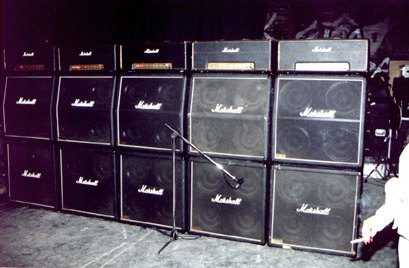
Though no worship band has yet to reach Motorhead-at-the-Warfield sound pressures, the volume in some cases has become annoyingly loud. Besides the physical discomfort of poorly mixed loudness, the volume has an effect that many worship leaders have failed to note. When you cannot hear your voice or those near you, the tendency is to not sing or to sing quietly. Look around you this week if your church uses a high volume praise band and make note of the number of people not singing but instead, simply watching the ‘performers.’ An important part of singing in worship is not often discussed; you are often singing for the benefit of others around you. When a person is unable to raise their own voice in praise due to their pain, suffering, depression, etc. many times it is the sound of your voice that lifts them up and gives them hope. When drowned out by the sound of crash cymbals, an opportunity for love can be lost.

Has your praise group become performers? Has the worship service become so choreographed and scheduled to the second that there is no room for the Spirit to work? When I think back to churches I have visited in which there was a lone pianist who played the melody and God was serenaded by the majority of people in the room and contrast it with some of the production oriented services I have been too, I come to conclusion that the pendulum has swung too far to one side and perhaps it is time for the arc to begin to come back in the other direction. Worship leaders, can you hear us?

Digg This

Psalm 27 ~ Wait for the Lord, Be Strong and Take Heart

imageIn the 27th Psalm we have one of the most eloquent expressions of the central ideal of biblical faith – trust in the Lord. David exhorts us to come to the same conclusion that he has; despite current challenges and threats, the Lord can be trusted in full. Two stanzas of his expression of trust open the psalm.

The Lord is my light and my salvation – whom shall I fear?

The lord is the stronghold of my life – of whom shall I be afraid?

When evil men advance against me to devour my flesh, when my enemies and my foes attack me, they will stumble and fall.

Though an army besiege me, my heart will not fear; though war break out against me, even then I will be confident. (vv 1-3)

Danger is all about and the psalmist has every reason to fear but he will not allow himself to do so. Fear will not overwhelm his confidence in the protective wing of the Lord nor will it challenge his confidence. Do we practice the same steadfast confidence in our current world? We are bombarded constantly with bad news and dire predictions of calamity. Without faith in the preservation of the Lord that he has exhibited throughout history, men and women succumb easily to the short view, seeing their imminent destruction and possibly their final breath. Knowing that life in this plane is not all that there is, the Christian looks forward.

With such confidence, why does the psalmist pray for deliverance in the second half of the psalm? Confidence does not preclude our petition of God. The Bible teaches us the propriety of being in prayerful communion with God and to take all things to him. Asking for a deliverance and His preservation should not indicate a lack of confidence but rather, a knowledge that the Lord craves our presence with him in prayer. The concluding verses of the psalm summarize for us.

I am still confident of this: I will see the goodness of the Lord in the land of the living.

Wait for the Lord; be strong and take heart and wait for the Lord. (vv 13-14)

Digg This

Life After Church by Brian Sanders

imageOne of the things many positive traits that Christians should be known for is doing everything with excellence as we strive to make the Imago Dei within us known. As Brian Sanders writes in Life After Church, this should include our leaving church if the Spirit moves us to do so. To some, this suggestion is sacrilege on the order of the pastor declaring that he is leaving his wife because God wants him to ‘be happy.’ Leaving A church is not the same as leaving church, Sanders is quick to remind throughout his work and it is not a confrontation of God. Rather, it is a way of reconciling the internal movement of the spirit within a particular Christian’s life that does not align with the direction of the body in which she worships and has community.

One of the most important things that the author asks us to consider is how we define church. Can a redeemed believer ever leave The Church? Theologically, no. Our membership in the body is sealed at our surrender. To be able to fully deny Jesus and profess unbelief is not the call of this book. Sanders asks the Christian who is considering a move from their current church to no church or to another congregation to consider the form that the soon to be ex-church takes. Three components are needed to declare a body to be ‘church’: worship, community, and mission. He gives three examples (which I quote directly) against which to compare our church:

  • A group of men who meet in a bar after work to talk about living deeper, more surrendered lives in which they take time to pray for their families and invite their nonbelieving friends to share a meal and the gospel would be church.
  • A Sunday morning service where a great organ resounds the glory of God and the music and preaching move thousands of unrelated people, who return the next week to have the same experience, never engaging the mission or each other—this is not church.
  • A group of mothers invites other mothers to a park after school and builds relationships with them and their kids, hoping to share Jesus with them. They also meet to pray for each other, listen to struggles, cry together and recommmit to the goal of living for Jesus and reaching every mother at that school. That is church.
  • The church softball team plays in a church league, worships together on Sunday and even enjoys good fellowship before and after the games with Christians from their own team and from other churches. This is not church.

The Spirit rebels against a ‘church’ where God is not honored, people aren’t in community with each other, or they aren’t reaching anyone. This is what causes the unrest in the Christian’s soul causing him to consider the jump into the unknown. The absence of one or more elements cannot be made up for by the overemphasis on the others. Again, I quote Sanders on falling into this error;

  • Just Worship: hypocrisy. If our spiritual life is confined to a privatized worship that’s sincere but doesn’t lead us into mission or into deep relationships with others, we face the threat of hypocrisy. We offer ourselves to God but don’t put into practice what his presence and his Word would require.
  • Just Community: idolatry. If we pursue deep relationships but fail to live those relationships in the light of the mission of God or to submit those relationships to the headship of Jesus, we risk idolatry. Deep relationships unmediated by a concern for the kingdom and mission of God will take over our hearts, taking a place that should belong only to God. These unbalanced relationships will quickly become unhealthy and detrimental to our spiritual life.
  • Just Mission: pride. If our spiritual life is confined to independently pursuing mission but not open, accountable friendships or dependence on God, we risk becoming our own God. Taking the mission on ourselves without realizing our need for God or the people of God will certainly lead to error and egomania.

Without all three, the place we find ourselves is not church. 

This book didn’t generate the buzz that others have over the past year since it was published and I must admit, this sat on my shelf for some time before I picked it up to read. While it is messy in the way that our lives as Christians are, Brian has filled the book with so many nuggets of wisdom and insight that you want to read with a pencil or marker in hand to underline or highlight those thoughts that you will want to go back to again and again. The final pages about leaving well reveal his true heart for The Church; we are not to leave to damage but to rebuild or strengthen. Selfishly leaving for the satisfaction of injuring others is not an acceptable action for the people of Jesus. We leave in love and concern for those left behind.

Digg This

Psalm 26 ~ Test Me, O Lord

26Test me, O Lord, and try me, examine my heart and my mind;

for your love is ever before me, and I walk continually in your truth. (vv 2-3)

The Psalmist’s cry to the Lord should cause us to pause in prayer and ask if this is the transparency that we truly want to have before our God. In the lives of many Christians, we offer up our outer beings, the public personae that we rehearse for those around us. That is the cleaned up, polished, and groomed person that we believe will convince others that we are straight and true in our walk. Somewhere in the back of our mind we know it is isn’t true and even more importantly, we know that the Lord isn’t fooled. He needs no invitation to clamber about in our hearts and minds and the know the real us: the one who doesn’t consistently love his neighbor, the one who succumbs to her temptations and on and on.

The proclamations of faith and innocence do not begin or end with those verses that we have seen. In the opening verse, the psalmist proclaims that leads a blameless life and is a man of unwavering faith. The NIV translation of ‘blameless’ is a bit beyond the meaning of absolute purity, something that Yahweh possesses but is found in no man. It is better read as in my integrity I walk which gives it a domain inside of the fallen human experience. Is this braggadocio? Reading further we find instead it is a plea not to be judged as those who are unfairly judging him. The psalmist correctly places his ultimate trust in God.

Do not take away my soul along with sinners, my life with bloodthirsty men, in whose hands are wicked schemes, whose right hands are full of bribes.

But I lead a blameless life; redeem me and be merciful to me.

My fee stand on level ground; in the great assembly I will praise the Lord. (vv 9-12)

Digg This

J.O.Y.

The Amish give us this proverb/acronym as an aid in maintaining our humility and our right relationship to the Lord and to others…

Jesus first

Others next

Yourself last

Women in Ministry: Necessary Preparations

studygirl Coming to a settled position on gender roles and more specifically, women in ministry, is not the simple task that some make it out to be. Whether one falls to either the Complementarian or Egalitarian sides of the issue, there are profound implications for life within the Church and serious effects to be considered in relationships within the Body. Your decision on this issue does not have the same impact theologically as one on an essential doctrine does but it can have far reaching consequences for the life of a church, community, and household.

Deciding this issue responsibly requires that you explore, consider, and understand a vast array of knowledge. Your decision requires more than simple assent to a verse or group of verses within the Bible accepting a singular source as the final word on the subject. “You shall not murder.” is abundantly clear taken alone and there are few, if any, people within the Body of Christ who will argue against the clear meaning and application of this verse. The verses on which many have come to their conclusions regarding gender roles within the church (and sometimes life in whole) in Paul’s letters to the churches at Corinth and Ephesus are not as clear and require much more information be collected before one can arrive at a mature decision.

Properly deciphering the meaning of the key passages on this issue requires that you expend a good deal of energy in study of the Bible as a whole. The first thing that a person must do is place any verse or passage within the larger corpus of the entire Bible, Old Testament and New as well as the history of Christendom. You must devote yourself to developing sound interpretive principles that do not rely on someone else doing all of the work for you. Understanding these contested passages and doctrines requires, for example, that you develop a base of knowledge of the cultures that surround Israel and the early Church and the effect that each had on development of the writing produced there.

Many of the questions that arise during this study come from the grammar and meaning of words in the original language. To decide this issue on the basis of a single English language translation will not suffice. While it is not necessary that you become a linguistics expert, you should avail yourself of resources that can explain the word meanings and connotations that one finds in the Greek (and Hebrew depending on how deeply you want to invest in the topic) text. An interlinear text that matches your English translation is a good place to start.

There are many study skills that are not listed here that can help you come to a mature decision on the issue of gender roles beyond what I’ve mentioned here. The one attitude that can help the most in understanding your position is to recognize that this is not a simple topic with clear cut guidelines (despite what some will tell you.) It is complex and even those within the two camps can find disagreement on the details. As one of my seminary professors said, the more you learn the more complex the subject becomes.

***

The list that follows is not comprehensive by any stretch of the definition but it provides some helpful resources that you may want to add to your library as you become more interested in studying this issue. These are among my tools; if you know of a better alternative I would be interested in knowing about it.

Language Studies
image

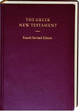
The Greek New Testament is the starting point for language studies. The The Greek New Testament With Greek-english Dictionary is the standard.


image

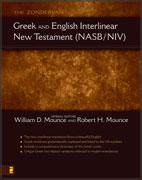
An interlinear places multiple versions of the Bible side by side. I like the Zondervan Greek and English Interlinear New Testament (NASB/NIV) as it puts the Greek alongside my preferred NIV translation as well as the more literal NASB text.


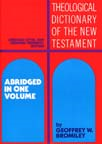
image A dictionary is an absolute necessity when studying languages. As we are aware, each dictionary can provide different insights into a word or word group and the Greek dictionaries are no exception. These tools are very expensive and you may hesitate to invest in more than one for your library. Between the three that are in view on my shelves right now, I recommend the “little” Kittel, the single volume edition of The Theological Dictionary of the New Testament. A sound alternative is the Greek-English Lexicon of the New Testament and Other Early Christian Literature. Another helpful tool is the Greek-English Lexicon of the New Testament: Based on Semantic Domains, otherwise known as the Louw and Nida set.


Introduction and Background

image There are countless volumes that provide cultural information about Israel and the later cultures that the Church would grow within but to be of help, I would suggest starting with Craig Keener’s volumes on the background to particular verses within the Bible. The IVP Bible Background Commentary: New Testament is a good first step that can lead your thinking to ask new questions about the cultural effects that are found in the words we read in the Bible.


image

Introductions to the Old and New testament provide valuable information about each book in the Bible, its context and knowledge about the author that is valuable in understanding the text within. Carson and Moo’s Introduction to the New Testament is a standard.


image

A valuable historical guide to the New Testament is Witherington’s New Testament History. You may not always agree with his conclusions but you cannot argue his scholarship.


Dictionaries

image

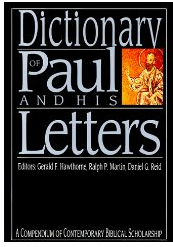
Since Paul is often pointed to as the source or instigator of this issue, the Dictionary of Paul and His Letters is an important tool to have on hand when working through his corpus. Equally important in this series is the Dictionary of Jesus and the Gospels so that the Pauline context does not become the only reference on issues.


image

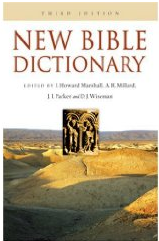
An essential book for any kind of Bible study is a dictionary and my standard go-to is the New Bible Dictionary. I also use the New Dictionary of Biblical Theology. Do not settle for the dictionaries that purport to be for lay people and that are marketed inexpensively. They will often leave you looking for more and wishing you had invested in a more thorough tool in the first place.


It will also be helpful for you to be able to consult a variety of commentaries as you look at various books of the Bible. There are too many in my library to suggest them individually. What I would suggest you do if you must limit the number of resources is to identify one popular evangelical tool ( The NIV Application Commentary series comes immediately to mind), one more technical tool at a level you can utilize (the Interpretation or New International Greek Testament Commentary) and one less technical such as the Holman or  Life Application series. I have concentrated on New Testament resources in this guide but there are equally important and useful Old Testament resources that are needed to understand the entire scope of the gender role issue; it did not start or end with Paul.

Did you notice that none of these resources was specific to the issue at hand? Read and study broadly!

Digg This