Women in Ministry: Necessary Preparations

studygirl Coming to a settled position on gender roles and more specifically, women in ministry, is not the simple task that some make it out to be. Whether one falls to either the Complementarian or Egalitarian sides of the issue, there are profound implications for life within the Church and serious effects to be considered in relationships within the Body. Your decision on this issue does not have the same impact theologically as one on an essential doctrine does but it can have far reaching consequences for the life of a church, community, and household.

Deciding this issue responsibly requires that you explore, consider, and understand a vast array of knowledge. Your decision requires more than simple assent to a verse or group of verses within the Bible accepting a singular source as the final word on the subject. “You shall not murder.” is abundantly clear taken alone and there are few, if any, people within the Body of Christ who will argue against the clear meaning and application of this verse. The verses on which many have come to their conclusions regarding gender roles within the church (and sometimes life in whole) in Paul’s letters to the churches at Corinth and Ephesus are not as clear and require much more information be collected before one can arrive at a mature decision.

Properly deciphering the meaning of the key passages on this issue requires that you expend a good deal of energy in study of the Bible as a whole. The first thing that a person must do is place any verse or passage within the larger corpus of the entire Bible, Old Testament and New as well as the history of Christendom. You must devote yourself to developing sound interpretive principles that do not rely on someone else doing all of the work for you. Understanding these contested passages and doctrines requires, for example, that you develop a base of knowledge of the cultures that surround Israel and the early Church and the effect that each had on development of the writing produced there.

Many of the questions that arise during this study come from the grammar and meaning of words in the original language. To decide this issue on the basis of a single English language translation will not suffice. While it is not necessary that you become a linguistics expert, you should avail yourself of resources that can explain the word meanings and connotations that one finds in the Greek (and Hebrew depending on how deeply you want to invest in the topic) text. An interlinear text that matches your English translation is a good place to start.

There are many study skills that are not listed here that can help you come to a mature decision on the issue of gender roles beyond what I’ve mentioned here. The one attitude that can help the most in understanding your position is to recognize that this is not a simple topic with clear cut guidelines (despite what some will tell you.) It is complex and even those within the two camps can find disagreement on the details. As one of my seminary professors said, the more you learn the more complex the subject becomes.

***

The list that follows is not comprehensive by any stretch of the definition but it provides some helpful resources that you may want to add to your library as you become more interested in studying this issue. These are among my tools; if you know of a better alternative I would be interested in knowing about it.

Language Studies
image

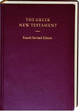
The Greek New Testament is the starting point for language studies. The The Greek New Testament With Greek-english Dictionary is the standard.


image

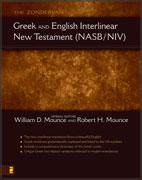
An interlinear places multiple versions of the Bible side by side. I like the Zondervan Greek and English Interlinear New Testament (NASB/NIV) as it puts the Greek alongside my preferred NIV translation as well as the more literal NASB text.
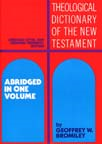


image A dictionary is an absolute necessity when studying languages. As we are aware, each dictionary can provide different insights into a word or word group and the Greek dictionaries are no exception. These tools are very expensive and you may hesitate to invest in more than one for your library. Between the three that are in view on my shelves right now, I recommend the “little” Kittel, the single volume edition of The Theological Dictionary of the New Testament. A sound alternative is the Greek-English Lexicon of the New Testament and Other Early Christian Literature. Another helpful tool is the Greek-English Lexicon of the New Testament: Based on Semantic Domains, otherwise known as the Louw and Nida set.


Introduction and Background

image There are countless volumes that provide cultural information about Israel and the later cultures that the Church would grow within but to be of help, I would suggest starting with Craig Keener’s volumes on the background to particular verses within the Bible. The IVP Bible Background Commentary: New Testament is a good first step that can lead your thinking to ask new questions about the cultural effects that are found in the words we read in the Bible.


image

Introductions to the Old and New testament provide valuable information about each book in the Bible, its context and knowledge about the author that is valuable in understanding the text within. Carson and Moo’s Introduction to the New Testament is a standard.


image

A valuable historical guide to the New Testament is Witherington’s New Testament History. You may not always agree with his conclusions but you cannot argue his scholarship.


Dictionaries
image

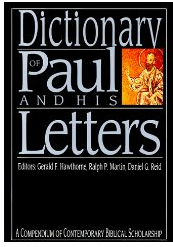
Since Paul is often pointed to as the source or instigator of this issue, the Dictionary of Paul and His Letters is an important tool to have on hand when working through his corpus. Equally important in this series is the Dictionary of Jesus and the Gospels so that the Pauline context does not become the only reference on issues.


image

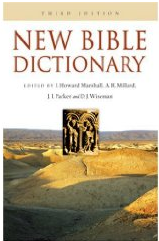
An essential book for any kind of Bible study is a dictionary and my standard go-to is the New Bible Dictionary. I also use the New Dictionary of Biblical Theology. Do not settle for the dictionaries that purport to be for lay people and that are marketed inexpensively. They will often leave you looking for more and wishing you had invested in a more thorough tool in the first place.


It will also be helpful for you to be able to consult a variety of commentaries as you look at various books of the Bible. There are too many in my library to suggest them individually. What I would suggest you do if you must limit the number of resources is to identify one popular evangelical tool ( The NIV Application Commentary series comes immediately to mind), one more technical tool at a level you can utilize (the Interpretation or New International Greek Testament Commentary) and one less technical such as the Holman or  Life Application series. I have concentrated on New Testament resources in this guide but there are equally important and useful Old Testament resources that are needed to understand the entire scope of the gender role issue; it did not start or end with Paul.

Did you notice that none of these resources was specific to the issue at hand? Read and study broadly!

Digg This

Psalm 25 ~ To You O Lord, I Life Up My Soul

Must God be reminded of his character and the covenant mercies that derive from it? In the prayer framework of psalm 25, David approaches the throne in prayer by voicing the grace that is God’s alone to give.

To you O Lord, I lift up my soul; in you I trust, O my God.

Do not let me be put to shame, nor let my enemies triumph over me.

No one whose hope is in you will ever be put to shame, but they will be put to shame who are treacherous without excuse. (vv 1-3)

It’s not so much that God needs to be reminded of who He is or what He is like. Rather, the penitent prayer is suffusing himself with the confidence that comes from rehearsing the promises of God’s goodness in times of trouble.  Here, David puts his trust in God to deal with an enemy that he did nothing to provoke. He trusts that the goodness inherent in God and the promise to shepherd His people will be the hedge of protection that surrounds David and his people.

His approach changes in the verses that follow. Continuing to recite the goodness of Yahweh, David also recognizes and seeks grace for the flaws within himself. The deep contrast is a valuable reminder to us as we enter our prayer closets.

Remember, O Lord, you great mercy and love, for they are from old.

Remember not the sins of my youth and my rebellious ways; according to your love remember me, for you are good, O Lord.

Good and upright is the Lord; therefore he instructs siners in his ways.

He guides the humble in what is right and teaches them his way. (vv 6-9)

Covenant promises are a two-way bond and they require that we not only recognize the goodness and grace that God will exhibit but also, that we recognize and catalog the flaws and corruption within ourselves. We must be penitent before the King.

Digg This

Women in Ministry: An Introduction

Should women be excluded from ministries in the Church in which they would exercise authority over men? This question has been placed before countless leaders over the centuries as called and spiritually gifted women have come into their orbit seeking to fill a pulpit or ascend to another leadership role and exercise their God given gifts. In some instances, the recognition of the gifts and their Giver override the traditional prohibition and great ministries are born. In others, tradition and theology are understood to uphold the ban and the woman is denied the opportunity. While this is not generally counted among the theological essentials of the Christian faith, in an age of modern feminism it is an important topic to discuss and analyze in the hopes of settling your thinking one way or the other. In the same way that Peter extols us to be prepared to give the reason for the hope that we possess (1 Pet 3:15), when we should understand and be able to explain our theological tenets and the choices that we make based on them.

Allowing for a broad spectrum of intermediate points between them, the discussion of gender equality in Church authority is carried by two positions: the egalitarian and the complementarian. The complementarian position holds that ministry roles are differentiated by gender and that, according to the Bible, women are prohibited from holding roles in which they would teach or exercise authority over men. This is also known as the Traditionalist position. The egalitarian position believes in gender equality in church roles and points to the spiritual gifting of women as evidence of a theological shift. The question that we want to address is whether or not this difference can be biblically reconciled in favor of one position over another. We recognize that like so many theological standards (e.g. Calvinism and Arminianism) with equally valid evidence on both sides, we may need to accept that outside of divine inspiration we may need to accept that it cannot. An irenic spirit is an absolute necessity.

To adequately explore this topic requires that we examine a number of exegetical and theological issues that arise in the course of our study. None on their own make a solid case for one position or the other. In fact, many involved in the discussion find that the evidence supports both sides and that it is tradition that causes them to fall to one side. Given the variables and sometime controversy surrounding the issue, prayer and the guiding of the Spirit are the key elements in our movement forward.

Digg This

Friction Free Worship

As I’ve thought more about the impediments introduced by the church coffee shop and bookstore, I see a great deal of value in moving in the opposite direction of the “mall church” trend and instead designing a friction-free worship environment. This would be one which leads a worshipper directly from the narthex to the chancel (or in modern language, from the doorway to the altar) with as few obstacles as possible. Consider this passage from Isaiah as we reflect on the intentional design of our celebration event;

A voice of one calling: In the desert prepare the way for the Lord; make straight in the wilderness a highway for our God. (Isa 40:3)

and this one

And it will be said: “Build up, build up, prepare the road! Remove the obstacles out of the way of my people. (Isa 57:14)

image Each of these verses serves the larger context of the passage in describing the movement of the Lord to the holy place in which He meets with His people. Because He is the King, his people’s desire is to smooth the way for their meeting by removing obstacles and straightening the path so that there is as little friction as possible in His movement toward the destination.

I’m getting the feeling that the ‘all-in-one’ church design is beginning to deter from the core reason for the Sunday celebration. We may not all agree but from the perspective of a pastor, my understanding of the Sunday (or Saturday or Tuesday as it applies) gathering is the corporate worship of God. With this objective placed properly in the hierarchy we can then clearly examine the effect that other activities might have on accomplishing this goal. For example, an issue I raised in an earlier post has to do with the distraction caused by the church coffee shop. It has a certain stickiness, an attractiveness that introduces friction on the path to worship. I am tempted to stop and enjoy a cup of coffee on my way to sanctuary, perhaps justifying it as fellowship, rather than moving deliberately toward the altar, physically and mentally.

When we introduce friction in this manner, we are placing obstacles in our people’s preparation and attendance to worship. Their minds can become distracted from the purpose of the gathering and thus, they become not fully present to God. Our task as the called leaders of the Church is reduce rather than increase any friction between God and His people. Must we do away with the coffee shop or the bookstore? No, they serve a purpose in the community of the church and the lives of the congregation. Perhaps we might consider closing them before and during the worship gathering and opening them afterwards to contribute to the fellowship and growth of the family of God. In doing so we accomplish two things. One, we establish the priority of the corporate worship event and practice in the life of the Christian and two, we make straight the path for the worshipper’s heart so that there is a frictionless path from the door to the altar. What do you think?

Digg This

The Parable of the Community Organizer

imageTheologian Susan Sarandon trotted out her tired proverb once again (hopefully for the last time) on inauguration day. In her latest attempt to equate President Obama with Jesus Christ, she said “He is a community organizer like Jesus was.” Continuing her vacuous line of reasoning, she verbally prostrated herself before him saying, “And now, we’re a community and he can organize us.” Civic and national pride is a good thing, but I’ve got to ask Miss Sarandon, where was this pride during the past eight years? Were you among the Diaspora of yearning souls who just couldn’t connect with one another? Ever hear of Facebook?

As I pored over the pages of my Bible I grow concerned that I am unable to find the stories of the Lord’s community organizing. The principle of community agitation is centered on creating a critical mass of humanity to address a problem that they are facing. Kind of like the Boy Scouts, seeing trash in their neighborhood and picking it up. Later, they build a trash bin so that the problem doesn’t reoccur. The Lord Jesus, on the other hand, did not come to organize humanity to address the problem that they had. There was no possible way for them to do so since propitiation required a perfect sacrifice. He was to become that sacrifice, something we would never be able to do on our own. His shepherding consisted of a single message, believe in this grace and put aside your personal god to worship the One who offers it.

I can’t begin to address the small, confined world in which celebrities exist and form their philosophy. Alfre Woodard voiced her tempered opinion of those outside of her bubble, “I think we might finally grow up as a nation.” Fact, Ms. Woodard, most of us grew up years ago.

Digg This

Psalm 24 ~ Who is this King of Glory?

image Who is this King of Glory?

The Lord strong and mighty, the Lord mighty in battle.

Lift up your heads, O you gates; lift them up, you ancient doors, that the King of Glory may come in.

Who is He, this King of glory?

The Lord Almighty – he is the King of Glory. (vv 7-10)


Modern readers will find this short psalm following the stunning promises of the 23rd psalm and as the page turns, it is easy to get swept up in the shouts of acclamation for the Lord. We shall not diminish the praise of this psalm as we place it in its proper context as a processional liturgy. Historically, this psalm is associated with the entry of God into Zion, either at the time David returns the Ark to Jerusalem or at a later commemoration of the event. Our free church environment has largely cast aside liturgy but it serves an important purpose in leading and aligning the hearts and actions of God’s people.

As the King of Glory enters the Temple, we want to follow his train up the steps but the liturgy stops us. Who may ascend this hill of the Lord it asks. We pause to reflect on our own condition.

Who may ascend the hill of the Lord?

Who may stand in his holy place?

He who has clean hands and pure heart, who does not lift up his soul to idol or swear by what is false. (vv 3 – 4)

The liturgical pace halts our thoughts to consider our condition before the altar. We seek the blessing and vindication promised in verse 5 but we must never take it for granted. Let our prayer today be two examine our heart and hands for the bits of the world that might have crept in or on and need to be cleansed before approaching the throne.

Digg This

The Church Cafe and Shallow Worship

imageThe incongruity of the scene doesn’t affect you as you sweep past on the way to the sanctuary so that you might find a seat a least a few moments before the praise team takes their places. The rich, bittersweet smell of the daily roast caught you as you entered the lobby of the church and you wind through the clusters and knots of people surrounding the cafe. The brisk pace that you set for the family belies the fact that the Nine O’clock hour is moments away, but you can’t help but notice the number of people sitting at the little tables sipping coffee and the number of people still waiting in line to purchase a steaming cup of their own. Taking your seat with a minute or two to spare you glance around at the sanctuary which is barely one quarter full. Your eyes close and your head bows and you focus on the process of quieting your heart and bringing yourself fully present to the community worship of God.

As people trickle into the room for the next twenty or thirty minutes, you can’t help but wonder how many of them were sitting outside enjoying their latte as the praise leader skillfully attempted to lead the congregation into the immediate presence of God. Sure, many of the latecomers have no sense of urgency in being present while prayers are lifted up and voices raised in praise; to some it is simply a prelude to the sermon and it serves no purpose other than ritual. Do those same notions fill the hearts of the coffee drinkers? Have we gone too far in attempting to create an inviting environment, so much so that we have abandoned our primary mission as the Church – the worship of God?

I believe we have. I believe that in some instances the Church has leaned so far into the venues of the world in an attempt to be relevant or attractive that we have done so to the detriment of the Church itself. We would do well to contemplate again and again our purpose in convening on Sunday mornings. Is it to meet our needs for fellowship and only incidentally about worship? Or, do we gather at an appointed hour and place specifically to give corporate expression of our love and worship to God? With our answer in hand, we should then strive to ‘cleanse the temple’ of everything that distracts from that purpose, stripping away things that do not direct the people of God in the appropriate direction.

What do you think? Do you think that the cafe/bookstore/etc. contributes to preparing the hearts of the people of God for worship? Or, should these venues be closed and the hospitality ministry be directed to remove any friction between the front door and the chapel wherein people can quiet themselves, put the world aside, and prayerfully seek to know the presence of the Father?

Digg This