Psalm 65 – Praise Awaits You, O God

imagePraise awaits you, O God, in Zion; to you our vows will be fulfilled.

O you who hear prayer, to you all men will come. (vv 1-2)

When we reach the 65th psalm, the psalter takes a sudden turn to effusive praise and leaves behind the psalms of lament temporarily. God has been praised by the psalmist over and over without hesitation thus far, despite the threatening clouds that seemed to shadow each entry in the book. Here there is no lament; it is either cured or forgotten in favor of pure praise for the goodness of God toward those who love him.

When we were overwhelmed by sins, you forgave our transgressions.

Blessed are those you choose and bring near to live in your courts! (vv 3-4)

Though we should worship God simply because He is who He is, we most often associate our relationship to Him via his remarkable grace toward us sinners. We who were separated from Him by the chasm of our unholiness are given the opportunity to rejoin the community of belief through His grace. Washing us clean, God provides the way for us to move closer and kneel in the courts of praise.

Our response to the grace we are extended is praise for His righteous acts:

You answer us with awesome deeds of righteousness, O God our Savior, the hope of all the ends of the earth and of the farthest seas,

who formed the mountains by your power, having armed yourself with strength, who stilled the roaring of the seas,

the roaring of their waves, and the turmoil of the nations.

Those living far away fear your wonders; where morning dawns and evening fades you call forth songs of joy. (vv 5-8)

Our Father is not content to merely forgive us for our transgressions, he installs us in paradise in a lesser, but still overwhelming, expression of His love for us:

You care for the land and water it; you enrich it abundantly.

The streams of God are filled with water to provide the people with grain, for so you have ordained it. (v 9)

Look around you, find a reason and praise Him today.


image icemomo

Day 20 in the School of Prayer : Glorify!

WithChristInPrayer


And I will do whatever you ask in my name, so that the Son may bring glory to the Father. John 14:13

Self-centered as we are wont to be, we often envision the chief aim of prayer as having something to do with us and our satisfaction. The communion with our Father that is engenders is often viewed peripherally. We pray most often to seek answers from God and these answers feed the ego that we try to suppress with little success.

Jesus turns our thinking around with this brief statement found in the Upper Room discourse, his last moments with His disciples before heading to the cross. Prayer and its answers, He says, are not intended to show the recipient/participant as favored (though we certainly are). The chief aim of prayer to bring glory to God. Unlike the powerless Baal who ignored the pleas and histrionic contortions of his followers (since he didn’t exist in the first place), our Father and Lord does respond to our prayers. In this display of power He is glorified, unlike the false gods who constantly attempt to replace him in our hearts.

Confess. Be forgiven. Glorify through obedience.

Ask. Receive. Proclaim.

Psalm 64 All Mankind Will Fear

image

Hear me, O God, as I voice my complaint;

protect my life from the threat of the enemy.

Hide me from the conspiracy of the wicked, from that noisy crowd of evildoers. (vv 1-2)

The psalmist hides much of the depth of this psalm in the Hebrew but the English reading expresses the trusting relationship between the victims of the wicked and God. They will be attacked publicly but fear nothing that the earthbound can do. Their trust is rooted in the long term. God will prove the righteous true.

All mankind will fear; they will proclaim the works of God and ponder what he has done.

Let the righteous rejoice in the Lord and take refuge in him;

let all the upright in heart praise him! (vv 9-10)

This psalm embraces familiar territory. As Jesus reminded his disciples (for all of history), we will have trouble in this life. The strength we show, rooted in our trust in the Lord, will demonstrate His strength to an unbelieving world.

image jweise

Getting In Shape for Worship

Much of what passes for worship these days has drifted far from its biblical definition. In the minds of many, worship is the praise-singing portion of a church service and nothing more. It gets compartmentalized into a small part of life and becomes a checklist item… read my bible (check!), said grace at dinner (check!), sang a praise chorus at church (check!). This segmentation extends to the whole of our faith. Rather than faith permeating our life and all things passing through that filter, Christianity becomes simply a part of who we are.

image

Modern worship has become I shaped. It is still pointed at God but notice how narrow it has become. It is just a portion of our life, perhaps as little as twenty minutes on Sunday morning. We have allowed worship to become associated solely with the praise choruses of the worship. Many of these contribute to our weak worship as they encourage us to express our singular love for the Lord without expressing the magnitude of his being, his creation or his acts. Segmentation also allows for worship to be put aside as the band lays down their instruments. We fail to make it a part of everything in life.

image When we decide to get in shape for worshipping God, the first improvements we see are that our worship life begins to look more like an upside-down T. Our worship is focused on our love for God but maturity helps us to see that it is a lifestyle. Being a Christian defines who we are rather than being one of many attributes. We have been reborn and given the Holy Ghost to dwell within and guide all we do. Worship is reflected in right thought and right action as we take all things captive to the will of God. The Apostle Paul spoke of this in Romans 12:1-2 in which he preaches that our (whole) lives should be an act of worship.

image

We can declare ourselves in shape for worship when we can see the capital I taking root. In addition to expressing worship through all aspects of our life, our worship of God is told through all available channels. We see the musical, prayer, and teaching events of Sunday service as a part of worship in which our hearts and minds are stretched by the glory of all of God’s acts laid out before us. We express awe as the psalmist did and though the seas were not parted for us, we can look to equally momentous changes in our new birth. We are unsatisfied with prom songs for our friend God and we demand depth; we are convinced that All Is Well with our souls despite the crashing waves, that the grace we know truly is amazing. Prayer encompasses the entire body and not just our own wants and desires. The words of the pastor build muscle and strengthen us in areas that we may not have even seen the weakness.

We cannot afford to continue allowing worship to atrophy, even if our intentions in restraining it seem to be good (such as seeker sensitivity.) Whether we face joy or cataclysm, our first attitude should be that of a worshipper. Remember, others are watching.

The White Horse King

Few people know how often history turns on a single event or rested in the will of a single man. Moderns take for granted the liberties they enjoy or bear the chains that burden them without recognizing the fragility of these states. Humanity is frequently unaware that we are but one battle, uprising, or vote from tyranny or freedom. The historian searches the annals of our existences and can warn us against repeating previous folly or, give us hope that even overwhelming odds can be defeated.

image Such is the case with Benjamin Merkle’s fine new book The White Horse King. The story of Alfred the Great (the only Anglo Saxon king to earn that sobriquet) stands separated from the dusty, dry accounts that litter the history library. The pages turn themselves as Alfred’s life is detailed with equal accounts of his courage in battle, the sharp tactical mind he brought the arrangement of his kingdom, and the piety that drove it all. The intensity of standing side by side within the shield wall  as Ashen spears probe for exposed targets comes off of Merkle’s pages and increases your pulse while you read quickly to see if the threat of defeat becomes a reality. The brief, quiet interludes between skirmishes are spent by Alfred healing but also, seeking the will of God.

The king’s impact on English history may not be well known in our modern age, as more recent Britains such as Churchill come to mind quicker. To understand the import of Alfred’s stand and repulsion of the pagan invaders who were within a breath of conquering and settling England is to recognize the monumental change that this defeat would have had on all of history. Cultural and military history would have tacked much differently had the Vikings been allowed to conquer the Saxons, perhaps delaying even the Christian establishment and its effects for centuries.

The White Horse King reads like a Robert Louis Stevenson adventure mixed with the Nordic sagas of Poul Anderson. The thread of faith winds its way throughout the book but it never reads as proselytizing. Alfred was a man whose faith defined him, his decisions for himself and his people were driven by the Christian values that he held dear. Because the faith was internalized, Alfred does not appear as a man who lines up the Bible against the decision that he wants to make, looking for approval. Instead, the way of Christ has so influenced his heart that we marvel over the distance of time how naturally he applies the paradigm of the Kingdom to the challenges that were forced upon him.

This book was graciously provided by Thomas Nelson for review.

Day 19 in the School of Prayer – Work!

WithChristInPrayer

I tell you the truth, anyone who has faith in me will do what I have been doing. He will do even greater things than these, because I am going to the Father. And I will do whatever you ask in my name, so that the Son may bring glory to the Father. (John 14:12-13)

As the Lord prepared His disciples for His departure from this plane, He left them with a new tier of prayer to attain to. At first, Jesus taught the disciples to pray for themselves and their role in the Kingdom. Their prayers were childlike, simply learning to trust in God as their Father but now the time had come from a new maturity. As the Lord would leave He would expect the disciples to take His place and continue His ministry. For this, they would need to learn that prayer would be their source of direction and power in ministry. With enough faith and a deep relationship with Christ, the disciples would do even greater ministry than He.

Work in the name of the Lord must be accompanied accomplished by prayer. There’s no way around it. Without the guidance, power, and shield that comes of a deep relationship with Jesus, our work is in vain, or worse, it is self-centered and humanist. We must be consumed with prayer and power that emanates from that conduit. The promise that whatever Kingdom objective we raise will be granted energizes our work. The ministry of Jesus is now expanded by billions as each new disciple takes this message to heart. Pray. Ask. Work.

Psalm 63 Your Love is Better Than Life

image

 77356046

O God, you are my God, earnestly I seek you;

my soul thirsts for you, my body longs for you, in a dry and weary land where there is no water. (v1)

Moments of desperation often find men seeking the presence of God, even when their lives prior to that moment have not recognized his existence. Mumbled prayers that begin with “if you really are there, save me” are whispered when the realization that no amount of human effort can extract the supplicant from their troubles. The opposite end of the spectrum also sees people proclaiming allegiance to God in times of desperation. The people of God know that there is no land or depth of struggle that is beyond the reach of the Lord and that He is present even in our darkest moments. Rather than sensing abandonment and giving in to the press of doom, God’s people seek Him, rehearsing their memories of His great triumphs throughout history.

I have seen you in the sanctuary and beheld your power and your glory.

Because your love is better than life, my lips will glorify you.

I will praise you as long as I live, and in you name I will lift up my hands. ( vv 2-4 )

The psalms are perfect to hide in our hearts and recite when we face moments in a vast wasteland, devoid of water and filled with predators waiting to make a move on our lives. When all seems lost the remaining brokenness that remains in our hearts will be tempted to question His presence, the new heart will say ‘God is here, I have no fear.’

…All who swear by God’s name will praise Him…

Day 18 in the School of Prayer – Your Image

image

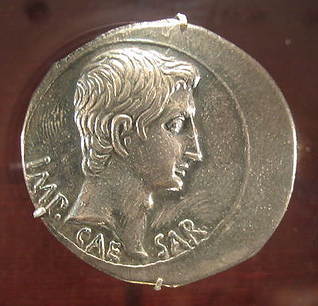
“Bring me a denarius and let me look at it.” They brought the coin, and he asked them, “Whose portrait is this? And whose image?” (Mark 12:15b-16)

So God created man in his own image, in the image of God he created him; male and female he created them. (Gen 1:27)

When Jesus pointed out that the image on the coin determined it’s destiny He set forth a profound principle that is not often associated with prayer. The image on the coin belonged to Caesar Tiberius and therefore, the coin would be used to transact commerce within the realm over which he was the authority. Render unto Caeser is a commonly encountered phrase, one that draws a line of demarcation between the secular and the holy. The image that you bear also determines your destiny. You were created for God’s purposes.

Sharing in the tight communion of the ThreeInOne, we commune via prayer. It is our privilege and destiny to pray, to open up the direct lines of communication to the heart of the father. To pray is to fully realize the divine image within, to connect to the power source from which our destinies and purpose are fulfilled. Turn the pages of your bible to the accounts of Abraham in prayer, notice the power with which his prayer is infused. As God’s friend, his prayer for Sodom and Lot, for Abimelech and Ishmael all change their history. You must remind yourself daily that you too have this divine image within you. You must remind yourself that you hold have the same influence, the same power within you as well. History is waiting for you to put it into action. Pray.

image by mess of pottage

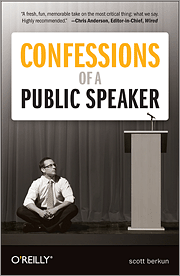
Confessions of a Public Speaker

imageI scrambled for excuses—I’m too busy (lie), I’m tired (lie), my feet hurt from the road test (bad lie)—but before anything good came to mind, he said these invaluable words: “The clutch is your friend.”

How could the clutch be my friend?

How indeed? For Scott Berkun this datum came out of the dark at just the right moment. It distilled a lot of information into a single memorable idea that was needed to be successful at a crucial task (learning to drive his brother’s beloved ‘84 Honda Prelude.) These memorable points, important as they are, are often buried or missing from the lectures, sermons, and talks that we hear (endure?). Should this come as a revelation? As people who communicate for a living it becomes all too easy for preachers, teachers, and speakers to forget the foundation of public speaking: conveying information of value to an audience whose lives will be enriched by receiving it. Everything we think about in terms of speechifying should swirl around this single ideal. To the rescue comes a new reminder in Berkun’s Confessions of a Public Speaker. 

Confessions is not a how-to book as in make three points and start with a humorous story. Instead, the reader gets the benefit of Berkun’s hard earned knowledge of what it’s like to stand up in front 5 or 5000 people and convey something in a meaningful fashion. He talks about the highs and lows with plenty of reality based examples that can aid any speaker willing to invest the time in improving their public speaking skills. There is much about the business of speaking in these pages but the most valuable paragraphs are those in which Berkun is willing to share the failures and their causes. Here is where we learn to improve.

If you are involved in any type of speaking, whether it is in front a church or classroom or simply presenting the TPS reports at a staff meeting, you need to ask yourself how much you have invested in improving yourself in this critical area. We tend to invest our time in learning the information we want to present but simply let the end product, the communication, just happen. The pages of Scott’s invaluable book remind us of the reality; unless we can effectively communicate that information to an audience all of our other efforts are for naught. Make the commitment to improve. Read Confessions and then spend the time necessary to think about the process of speaking. Practice, practice, practice. Then go out and make some noise of your own.

Psalm 62 I Find Rest in God Alone

The Solid Rock

The framing of Psalm 62 serves us well in our prayer life. When we consider the forces that array against us and take them to God in petition, our faith should remind us that all is well in control, that we have placed our trust in an unmovable Rock.

My soul finds rest in God alone; my salvation comes from him.
He alone is my rock and my salvation; he is my fortress, I will never be shaken. (vv 1-2)

One thing God has spoken, two things have I heard:
that you, O God, are strong, and that you, O Lord, are loving.
Surely you will reward each person according to what he has done. (vv 11-12)

The psalmist wonders aloud how long the evil will attempt to topple him. If David is writing, he may be at an advanced age or suffering from another ailment. Some suggest that this prayer fits the period in which Saul is attempting to destroy him. In either case he contrasts the two-faced nature of these men with the steadfast security of God. While they may have his mortal life held under siege, constantly on the edge of death, the Psalmist proclaims that the soul rests on the strong foundation of God. Nothing can shake it.

Lowborn men are but a breath, the highborn are but a lie;
if weighed on a balance, they are nothing; together they are only a breath. (v9)

Take the long view my friends. Our current struggles are but a wisp of wind. They will pass away in the eternal scope of our glorification. We need not dwell on those who come against us. In fact, we would be justified in being please at being chosen to bear these travails. That discussion, however, is for another day. Today we raise our hands and hearts and give thanks for the solid foundation on which our lives are lived.

image by t2o8m2005