Psalm 95–They Have Not Known My Ways

image

Today, if you hear his voice, do not harden your hearts as you did at Meribah, as you did that day at Massah in the desert, where your fathers tested and tried me, though they had seen what I did. (Psalm 95:8-9)

So many moments in our lives are marked by decisions made in haste without due consideration given to our foundation of knowledge. Whether we choose in desperation, anger or confusion, we fail to take the extra second necessary to recall other similar circumstances and their outcomes. Was God present and involved, given the distance of time in your recollection?

This was the repeated failure of Israel that the Psalmist recalls. He reminds us of the incident in the desert recorded in Exodus 17 and Numbers 20. Though the Lord had shepherded His people through the wastelands by the physical presence of fire and cloud and His servant Moses, when the struggle began to wear on the Israelites, their short term memory took over and they could only remember the past hour without water. They failed to recall the unending flow of water that they had benefited from previous. In their rebellion, all of the great works of God were forgotten, replaced by distrust and self-interest.

Has your Savior forgotten you? Consider His promises and track record before allowing this kind of doubt to influence your decisions and behaviors.

Grace and peace to you.

image malec slomas

Credobaptism–The Believer’s Baptism

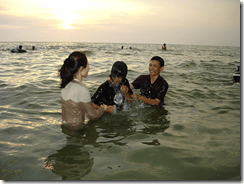
imageThe dominant doctrinal position on baptism in the Evangelical Church is credobaptism, the baptism of professing believers. Regardless of the method of administration (though immersion is  favored), the credobaptist position is rooted in the repeated NT references of baptism linked to repentance and faith. Theological exposition of these passages undergirds the doctrinal position that only those capable of repenting and voicing an expression of faith may therefore be baptized.

The doctrine finds it root in the Great Commission of Christ, specifically Matthew 28:19:

Therefore go and make disciples of all nations, baptizing them in the name of the Father and of the Son and of the Holy Spirit.

Two facets of baptismal doctrine emerge from this core statement, the ordination of the practice and the sequence of events implicit within. Christ commands that all of His disciples be baptized following the course of the their discipleship. In other words, only believers able to express their confession are to be baptized.

Repentance and faith are linked in every instance of Baptism in the New Testament. In the earliest reference to John’s baptism (Mk 1:4), forgiveness of sins moves from a sacrificial system to one of personal faith. In Acts, the baptismal records are consistent in commanding repentance prior to baptism (cf: 2:38, 41). True repentance is impossible without a concomitant belief in the source of forgiveness, and baptism meaningless without a turning from sin. This dynamic is noted in Acts 8:12; “but when they believed Philip as he preached the good news of the kingdom of God and the name of Jesus Christ, they were baptized,”.

The silence of the New Testament regarding the baptism of infants or non-believers is presented as evidence against those positions. Advocates of infant baptism point to the recordings of household baptisms ( cf: Acts 16:31-34 ) as supporting evidence that all were included in the rite. Those who hold to the believer’s baptism position make two arguments against this evidence. First, it is inexplicit with regard to who is being baptized. The argument from silence (i.e. it doesn’t say that children weren’t baptized in these incidents) is unconvincing, especially in the development of Christian doctrine.

The credobaptist presents a string of evidences from the New Testament that they propose explicitly supports the doctrine. The argument against other baptismal positions ( infant, sacramentalist ) by the credobaptist includes the suggested dangers of these beliefs. Bruce Ware asks “How many sons and daughters of Presbyterians ( even more of Lutherans, and more yet of Roman Catholics) are raised convinced that they are “Christians”—that is, truly saved people, in right relationship with God—precisely because they look back to their baptism as infants to instruct their consciences and grant them confidence in their salvation?”

Grace and peace to you.

image Michael Sarver

Psalm 94–Who Formed the Eye

image

O Lord, the God who avenges, O God who avenges, shine forth.

Rise up, O Judge of the earth; pay back to the proud what they deserve.

How long will the wicked, O Lord, how long will the wicked be jubilant? (Ps 94:1-3)

A regular point of argument by non-believers is that the silence of God in the face of evil is proof that He does not exist. That certainly makes sense. If I’m holding a conversation on the Egyptian riots with my imaginary rabbit friend Harvey and he doesn’t respond, I shouldn’t be all that surprised. After all, he’s imaginary. To a person who is insensitive to God and His movement in the world, it can certainly seem as though He is not there. Evil and horror seem to run free, suffering is the order of the day.

The psalmist provides food for thought to those who take this tack in their thinking. Little Darwinian thinking would have intruded on the Psalmists challenges as he calls out to the scoffers in their disbelief;

Take heed, you senseless ones among the people; you fools, when will you become wise?

Does he who implanted the ear not hear?

Does he who formed the eye not see? (vv 8-9)

Does silence truly evidence a lack of presence? Meditate on the proofs that surround you.


Grace and peace to you.

image Rickydavid

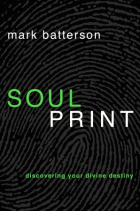
Searching for Soulprints

imageOn Sunday mornings we strive to blend in with the rest of the scrubbed faces in the chairs in the auditorium. We dress nice, but not too nice so we’re not accused of being flashy. We put a smile on our face, not even hinting that there might be problems in our lives. We blend in, masking our individuality because we’re afraid of what others will say if they discover the real you.

We’re afraid because we don’t know who we are ourselves.

Mark Batterson’s new book Soulprint delves into the process of peeling back the layers of makeup that we’ve applied to make ourselves presentable to the world. Washing them away, Batterson encourages us to stand bare before God and to take our identity cues from the hands that formed us rather than the false messages we get from the world.

Using the victories and failures of King David as cairns around which to center his discussions, Mark encourages us to examine ourselves in light of how absolutely unique we are in God’s creation. Just as the shepherd David was the only giant slayer on the battlefield that fateful day, God has created in each of us a singular personality with a purpose that only we can accomplish.

The examination of David’s humility as he sheds worldly trappings to worship with abandon and zero concern for the opinions of those around him is the highlight of the book. To be so fully devoted to God that the world falls away in importance has always been my prayer, but vestiges of the fallen life remain. They remind me not to lift my hands too high, not to allow my foibles to be known, to keep the happy face required in church.  I long to dance in worship.

Pastor Batterson has done a fine job with this volume. Men’s groups will be especially well served by centering a study around this and the applicable scriptures that tell David’s story. If only a small percentage of men can shed the masks they wear in our communities, the Church and world will never be the same.

I’m grateful to Multnomah books who provided this copy for review.

Psalm 93–For Endless Days

image

Your statutes stand firm; holiness adorns your house for endless days, O Lord. (Psalm 93:5)

Think about your life and the amount of impermanence that passes for relationship. We have ‘friends’ on Facebook that we have barely come in contact with. Communication takes place in 140 characters or less, and we follow along, hanging on the every word that chirps on our smart phones. Things that used to change from year to year now transform from minute to minute. We lack foundation.

And yet our souls crave it.

We want something permanent to hang on to, to base our lives upon. Our souls yearn from something that is the same tomorrow as it was yesterday, something we can trust to be there. Israel knew this angst. The psalmist knew all too well how quickly fortunes could change, how one could go from the Chosen ones to the Exiles. He also knew the One who never changed, who was from everlasting to everlasting despite the changes seen.

The seas have lifted up, O Lord, the seas have lifted up their voice;

the seas have lifted up their pounding waves.

Mightier than the thunder of the great waters, mightier than the breakers of the sea – The Lord on high is mighty. (vv 3-4)

Millions of years of crashing waves have reduced the coastlines to sand, but the surf has no effect on the permanence of the one who made the land and the sea. His permanence is our rock. Though we don’t know how many tomorrows we have, we can know and trust the One who numbers them.

Grace and peace to you..

image mfmoriginal

Psalm 92–You Make Me Glad by Your Deeds

imageThe senseless man does not know, fools do not understand, that though the wicked spring up like grass and all evildoers flourish, they will be forever destroyed. (Psalm 92: 6-7)

Contrary to the childhood rhyme that we all remember, ‘cheaters never prosper’, we know from the harsh realities of life that they do. This is always difficult to accept for Christ followers. He warned us that we would always have troubles (Jn 16:33) but that He has overcome the world. The Lord’s words were meant to comfort us and help us to persevere until the end when all would be made right.

Maybe we’re missing something. We note that the psalmist appears to be much more aware of God’s work around him. For you make me glad by your deeds, O Lord; I sing for joy at the works of your hands. (v 4) Have we become self-absorbed to the point where see only our immediate surroundings and circumstance? There are innumerable evidences of His hand in restoring righteousness all around us and we have the ability to become more aware. As we grow in our knowledge of His works, we will also sing. The righteous will flourish like a palm tree, they will grow like a palm tree, they will grow like a cedar of Lebanon; planted in the house of the Lord, they will flourish in the courts of our God. (vv 12-13) 

Grace and peace to you.

image lars hammer

Psalm 91–My Tent is Secure

image

For He will command his angels concerning you to guard you in your ways;

they will lift you up in their hands, so that you will not strike your foot against a stone. (Psalm 91:11-12)

How timely that we re-enter the Psalms here at the beginning of a new year and decade. There is an air of optimism that pervades the nascent days of a new year, a feeling that whatever travails we faced last year will be erased with the turn of a calendar So confident are we that we proclaim structural changes in our life, beginning now!

The source of the psalmist’s security is not earthly riches, the strength of men or fearsome weaponry. It is rooted in a life tucked in close to the shelter of the Lord most high. Though the trajectory to the conclusion may be of different lengths, all people come to this truth. Move in close.

Grace and peace to you..


image Robert in Toronto

Anticipation

image

Let the heavens rejoice, let the earth be glad; let the sea resound, and all that is in it; let the fields be jubilant, and everything in them.

Then all the trees of the forest will sing for joy; they will sing before the Lord, for he comes, he comes to judge the earth.

He will judge the world in righteousness and the peoples in his truth.  (Psalm 96:11-13)


The birth of the Savior brings with it the promise of restoration. For the believer in Christ, the restoration begins at once. Our hope is realized and still, yet to come. For the fields and the forests, the birds and the antelope, the oceans and ice fields, anticipation rules. Their anticipation of restoration must continue until our centuries long Advent is complete. We pray Lord that you don’t tarry.

image Kevin Lallier