Lectio Divina–A Listening Spirit

imageThe spiritual practice of lectio divina is our primary mode of reading the Bible when our purpose is spiritual transformation. Our reading in this manner is directed toward depth rather than breadth. We are not studying, we are allowing our hearts to be drawn to the incalculable depths of God’s love. Our goal is to be immersed in that love, to be washed and shaped by it as stone is by the waves or the rushing of the river.

Once the passage or section is chosen, a quiet environment free from distractions is the ideal place in which to pore over the scriptures. Before the first word is read, allow the quiet of your environment to still your soul. This is not a practice for the coffee shop. God does not normally speak to us through thunder or fire from the sky. It is a quiet voice, a whisper to which we must be attuned in order to hear it. To listen for that hushed voice, we must be expectant and prepared to welcome it into our soul.

When we read with a listening spirit our objective differs from our other reading practices. The words are not as much in focus as is the speaker of those words. We read in such a way that the words of Scripture transcend the page, the ink and even the particular person who is in view in the text, and we hear our Father telling us His story. Read the text without stopping, hearing the voice form the story. Hear His inflections and emphases as our expectant heart directed by the Spirit clues us into the particular message that He wants to communicate to you and me through these words. Repeat the reading a second and third time, repeating until the emphasis becomes crystal clear.

The Lord is near to all who call on him, to all who call on him in truth. Psalm 145:18

When you have extracted the personalized word that the Spirit has guided you to, you are ready to move to the next phase of lectio divina, reflection. We will pick this up in the next post. Until then, grace and peace to you.

Lectio Divina

imageWhen we seek spiritual transformation, our bible reading practices diverge onto two separate paths. We read from cover to cover repeatedly throughout our lives in order to know the scriptures. As we invest in this practice, we make the Scriptures our own and our knowledge of God expands. The benefits of consistent reading are manifold; our love, obedience and understanding increase, but this increase comes at the expense of a relatively fast reading pace. Reading for transformation takes a different pace, a slower velocity in which we breathe deeply and immerse our souls in the Scripture, reading with our hearts.

The practice of lectio divina (divine reading) has a long history among God’s people. It is a slower, meditative form of reading in which we approach the Scriptures in smaller segments, seeking to hear the whisper of God more than the accomplishment of a reading objective. We seek out more than an understanding of the words on the page. Divine reading has as its purpose our spiritual transformation through the submission to the scriptures, allowing it to flow through the processing of our eyes and brains and to settle into our hearts to do its work.

“To get the full flavor of an herb, it must be pressed between the fingers, so it is the same with the Scriptures; the more familiar they become, the more they reveal their hidden treasures and yield their indescribable riches.”– St. John Chrysostom

The unit of reading may be a passage, a sentence or phrase or even a single word. Lectio divina is not study, it is reflection and meditation on the Scripture. It relies upon the Spirit to guide and direct our reflection on the reading, to shine the light on what God wants to communicate to you and me specifically. As we develop in the practice, our meditation leads to praying the scriptures to start a new cycle of understanding. The word we hear in response helps us to apply the passage or verse. Obedience follows from application, and transformation from these.

There are four components to the spiritual practice: listening, reflecting, praying and obeying. We will look at each of these separately in the posts that follow in the coming days. This may be a good time to subscribe so that you don’t miss any part of this series. Grace and peace until we meet again.

image CarynNL

Bible Reading Plans

Planning the Scripture Habit

imageSoul growth doesn’t happen by itself, it requires effort, devotion and commitment. As recent posts have endeavored to show, reading the Bible regularly in an ordered fashion is one of the most important practices to develop early on. Getting into the Word (and the Word into you) opens the conduit to God to hear Him speak.

Starter Plan

If bible reading is new to you, a plan that starts in Genesis and ends in Revelation is not recommended. The narrative history of Genesis and Exodus will sweep you along and then you will hit the wall of Leviticus and Numbers. These books are important, but tough going for new readers and they tend to break down the momentum. An alternative plan that I discovered at The Christian Library has great potential in keeping up your pace while giving you a broad sweep of Christian thought. Over the course of five or six weeks, devote yourself to reading in this order:

Mark – It is written in chronological order

Matthew – Based on Mark and much more detailed

John – Written so that you might believe and includes material not in the other Gospels

Luke/Acts – Written by the same author who records the history of the early Church

Galatians – A condensed explanation of the change in dispensations between the Old Testament Law and the New Testament Grace

Conclude this plan by reading the remaining New Testament books. If you devote yourself to an average of 5 chapters per day you will find yourself enriched by the Word of the New Testament in a little over a month. More importantly, you will have developed the important habit of time reading the Scriptures.

Alternative: The 21 Day Challenge

Lifetime Plans

The most common plan that readers follow enables you to read the entire bible over the course of a set period, usually a year. A plan that covers the scriptures from Genesis to Revelation presents you with a few chapters from each book every day. As the months pass by, you will accomplish a feat that many in the Church have never done, reading the Bible in its entirety.

Some plans sample both the Old and New testament each day. For example, this 365 day plan from BibleGateway opens up Exodus 7-8 and Matthew 15:1-20. The readings are short enough that you will have time to not only read the scriptures, but to spend time pondering their meaning as well.

I would suggest that you avoid plans that subdivide too much. Some reading sequences include the Old Testament, New Testament, a Psalm and some selections from Proverbs each day. The reading units become very small and the skipping through the pages leads to discontinuity in your understanding. If you are interested in this type of reading, perhaps you can take a selection from the Psalms once weekly and make that the reading for the day.

Alternative: Bible-Reading

Concentrated Plans

A reading plan that is attractive to both new and experienced bible readers is one which spends a year or some other period of time concentrating on the New Testament alone. The core of modern Christianity is Jesus, and this is His story. The pace is slower but it also enables you to focus your attention on the history, ideas and truths uniquely found in the New Testament. It is also a good place to start your habit of scripture memorization. Start with John 3:16.

The Old Testament also benefits from a long concentration. Complex law and ritual become clearer when you slow down and are able to spend time thinking about why God brought these to His people. The triumphs and failures of Israel and their ultimate effect on the people of Jesus’ time help you to comprehend the New Testament more fully.

Other concentrated plans center around certain books or types of books. For example, the many Epistles (personal letters) make up a good reading plan that give you a unique insight into the writer’s lives and battles, and the issues that confronted the Church then and now. The Pentateuch ( the first five books of the Bible ), the Psalms and the four Gospels and Acts all have benefit for the reader as points of concentration.

Alternatives: Bible Reading Plans

Avoiding Lethargy

Struggling to read the Bible day after day is a common malady. It is a practice that requires training because, for most people, the discipline to read the Scriptures in our distraction-filled world is not easy to come by. Even those who develop the habit find themselves becoming bored by repeatedly poring over the same pages year after year. One of the things that I do to avoid this threat is to read a different translation each year. This year I’m back in the NIV (New International Version), but last year it was the ESV (English Standard Version).

Build some slack into your reading plan. If you are new to Bible reading and trying to develop the habit, 365 day plans can fill you with guilt if you get a day or two behind. The usual result of this is to abandon the plan and the practice. Set up your plan so that you read every other day or five days a week. Both methods give you open days to catch up so you are less likely to give up.

More Than Just Turning the Pages

According to Wycliffe Bible Translators, there are 168,000 bibles sold or given away each day. Over the course of a year, that amounts to sixty one million, three hundred and twenty thousand bibles that make their way into peoples hands annually.

The Gutenberg Bible was the first major book printed with movable type, starting a revolution in publishing and society that changed history.

The Barna polling organization says that 92% of American households have a Bible in them.

In the beginning, God created the heavens and the earth…The grace of the Lord Jesus be with God’s people. Amen (Genesis 1:1 .. Revelation 22:21 – the first and last verses in the Bible)

imageThere are thousands of interesting facts about the Bible. For example, it has 66 books written by 40 different authors over a span of about 1,500 years. These may be important facts to hold in our heads, they point out an important distinction that we need to bring to our bible reading. Knowing about the Bible is not the same as knowing the Bible.

Bible reading takes many forms in the church family, from not reading at all to those who have the Good Book virtually memorized, breaking down the text into a series of bible verses. The scope of the reading varies as well. Some read the Bible from cover to cover repeatedly, some never venture outside of New Testament while still others read only specific bible verses as they proof-text their way to the truth. While all reading of the Bible is beneficial, not all methods lead to the kind of spiritual growth we are meant to enjoy.

We’re interested in the kind of reading that adds to our spiritual depth and strength. For some of us, this is going to take the form of establishing a regular schedule of scripture reading. For others, a slower pace is required, perhaps camping on a single passage or verse for a few days or weeks and letting God speak meaning into our lives through the words. The important thing is that our reading becomes more than just turning the pages after the words have moved under our eyes. We’re seeking an encounter with God every time we open the book.

We’ll start in the next post with getting in the habit and sticking with it.

image Jamelah

Digging In

imageIt is impossible to enslave mentally or socially a Bible-reading people. The principles of the Bible are the groundwork for human freedom.

Horace Greeley

The foundation of all spiritual development is rooted in the Scriptures. It is on the pages of the Bible that we learn who we are and where we came from. Our need for redemption is established and the great gift of mercy in Jesus is recorded from a number of perspectives. God’s principles for living together are spelled out and explained. Although it is often portrayed as constrictive, the Word is our freedom.

Bible reading is the first of the spiritual habits that we are going to explore and seek to apprehend. We are not going to read simply to turn the pages and for the sense of accomplishment. God speaks to us through the Word. He lives in the pages, displaying His character for us, and recording His interactions with those who came before us. We will be reading to hear Him speak to us so that we are shaped by His hand, rather than by the dominant culture.

We’ll start with establishing a reading plan and getting into the habit. Do you currently follow a plan? Are you more of a free-form reader? I look forward to hearing from you.

Your word is a lamp to my feet and a light for my path. (Psalm 119:105)

image rimabek

The First Step on a Lifelong Journey

lionLamb

We all remember it, even if the name escapes us. The ‘abdominator’ or ‘muscleizer’ or something of that nature. It was a wide, flexible belt with electrodes attached to it that you wrapped around your expanding stomach. Turning it on, if you dared, sent electrical signals to your abdominal muscles causing them to dance and jerk, exercising themselves. Through this miracle device, you could remain slouched in your Lazyboy in front of the television with your favorite beverage and, with enough time and twitches, you would emerge with rock-hard abs. All gain, no pain!

Except, it never worked. You were still flabby and thirty dollars poorer.

If you want to get in better physical condition you have to move. You have to get off the couch, put down the soda and chips and take the dog for a walk. There is no magical way to have the physique and health that you want, you have to work for it. Late-night television and the glossy images on the newsstand will attempt to tell you otherwise, but the facts can’t be disputed. A healthy body requires a healthy life.

Christians often labor under a similar misconception. We think that by appearing in church on Sunday, consuming a sermon and then returning to life we will be transformed. We want a faith like the people we hear about in those bible stories, a faith that can carry us through the tough times. Every so often, we even feel a little tug to change the world.

Except, it doesn’t work.

Rather than a trim, powerful, world-changing faith, we have a soft, casual, private religion that affects our lives very little, and the world even less. The faith we want and that we were intended to have doesn’t come through osmosis. It doesn’t mystically appear by listening to sermons or listening to radio programs. It takes work and devotion, and there are no shortcuts.

That’s why you’re here.

The gift of salvation that you have received is much more than a fire insurance policy. It is meant to be transformative in your life so that you, in turn, will be transformative to the world around you. The Spirit within you craves solid food. He does not want to continue to subsist on milk alone, and His urgings will not let you simply ‘be’.

Together, we’re going to begin a renewed journey of spiritual strength training. We’re going to be exploring the variety of spiritual tools and practices that have proven to produce fruit through the centuries. We’ll talk about and create community around it. You and I will praise Him for the growth we see, and He will be pleased at the transformation we bring to the world. We will be what He intended for us to be.

Run in such a way as to get the prize. Everyone who competes in the games goes into strict training. They do it to get a crown that will not last; but we do it to get a crown that will last forever.  1 Corinthians 9:24-25

Therefore Go

Our Last Great Hope by Ronnie Floyd

image

A fair percentage of the people sitting in our pews on Sunday morning would claim at least a passing familiarity with the Great Commission. A smaller percentage would be able to correctly locate it at the end of Matthew’s gospel. Fewer still would understand the far-reaching implications of these verses.

And only a handful would see the words of Jesus as applying to them personally.

This lack of apprehension lies at the core of Ronnie Floyd’s latest book, Our Last Great Hope. Pastor Floyd seeks to spark a renewed fervor for the mission of the Church in its call as the final hope of the world. Moreover, he wants to personalize the mission to individual believers. So many times, the church views this commission as applying only to the pros: the missionaries, pastors and other spiritual mentors. Pastor Floyd dispels this thinking throughout the book, speaking directly to the reader and imploring them to own the commission.

Floyd writes with a pastor’s heart for the lost and in a preacher’s exhortative voice. The pages ring with the active language of a Sunday sermon and the eyes of the pastor pointed directly at you. As the Christian mission is dissected, Pastor Floyd lays it in your lap and challenges you to claim that reaching the lost isn’t your responsibility. Good luck.

Floyd’s approach to awakening the Church contributes to the success of the book. Rather than a step-by-step, theological-practical treatise, the pastor writes about reorganizing our lives in ways that place us in the perfect position to step up and fulfill our calling. Instead of confronting the reader with the bottomless needs of the city, for example, pastor speaks to the transformation of our families that will naturally encourage engagement in the mission.

Ronnie Floyd has given us a fine book for sparking a renewal of the Mission. Irenic in tone, Our Last Great Hope is nonetheless urgent in proclaiming the need. Read this book and then go.

I am grateful to Thomas Nelson who provided this book for review.

Building on Bedrock

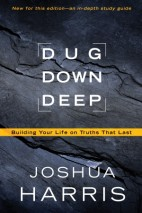
Dug Down Deep by Joshua Harris

image

Contrary to the oft-heard sentiment among Christians that they “just want to love Jesus” and dispense with the wrestling with the challenges of theology, Pastor Joshua Harris says that “we can’t know him and relate to him in the right way without doctrine.” We know the redeemer, but through the study of doctrine we come to fully understand the contours of how God is working in His world. The study of doctrine enables us to understand “what he’s done and why he’s done it”.

Dug Down Deep is an unexpected joy. Having read and studied many of the lengthy, challenging theological treatises that he references throughout the book, Harris has produced a systematic theology that doesn’t read like the typical volume of this type. Dug Down Deep approaches the key doctrines of Christianity in the pastoral voice of your friend Josh. He swaddles the theological truth with personal accounts, showing over and over how different points of doctrine have a direct application to day to day life.

While Harris has gone to great lengths to make the book approachable for Christians who locate themselves nearly anywhere along the continuum of spiritual maturity, it has a depth that will make it a useful book to return to again and again throughout life. The reader can take away as much as their maturity enables them to understand within each chapter without getting overwhelmed. Repeated reads through the chapters will give new insights and scriptures to meditate upon enough for many years of fruitful study. This book belongs an many shelves where no doctrinal guides exist now.

Pastor Harris’ conversational approach would make this book especially useful for youth and young Christian study groups. He has a pastoral heart for people to know their Lord better and each topic is designed to invite you in and to understand Him on a deeper level. More mature Christians will find the quotes by Packer, Sproul, Stott and others and will gain the confidence to approach some their more challenging theologies.

I’m grateful to Multnomah Books who provided this book for review.

P.R.O.O.F. of Life

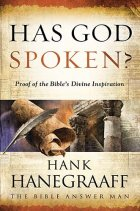
Has God Spoken by Hank Hanegraaff

imageThe Bible Answer Man brings us yet another good addition to our apologetics library to sit aside The Apocalypse Code. Battling against the torrent  of semi-gnostic “secret” exposes published by authors such as Bart Ehrman purporting to reveal the falsehoods behind the Scriptures, Hanegraaff offers a flood of his own, laying out the various proofs that undergird the truth of the Bible that we read today.

Structured to provide the reader with an easily accessible tool for developing their apologetic chops, the book is organized logically around the succession of topics that support the truth of the Bible. This is important reading for any Christian who takes Peter’s command seriously to “give an answer to everyone who asks you to give the reason for the hope that you have”. Questions about the accuracy of the texts of the Bible, the places and objects of the Bible and progressive revelation of the Bible are organized into the three initial chapters concerning the provenance of the manuscript, archeology and the linkage of prophecy.

As he does on his radio program, Hank makes these intimidating  topics understandable to Christians not steeped in biblical research. Fact after fact ( with nearly seventy pages of references and bibliography to verify ) pour forth from his pen to counter the challenges presented to factual basis for the Bible. He counters popular theories such as the error-ridden transcriptions (by verifying the numerically superior autographs against which the modern Bible is tested) and holds the archeological findings that affirm the people and places of the Bible against the non-existent findings that contradictory holy books point to.

While Hanegraaff has contributed an immediately useful volume, there are a couple of areas that might be improved. His love for his “hankronyms” went a touch overboard here, seeming to artificially organize the information in order to match the spelling. Mnemonic devices are excellent for memorization but they usually work best in limited use. Organizing the entire book around the acronyms (and sub-acronyms) gave the reading a somewhat challenging flow. Organizing the materials similar to the format that he uses on his radio program might make it easier for readers to locate the facts that they want but don’t know in which direction to turn.

Minor issues aside, I found this to be an excellent book. Hanegraaff has a unique gift set that makes his books great additions to the Christian’s library as they battle against the onslaught of anti-Christian sentiment that pervades our culture today. It is not enough to answer “in faith” when asked why you receive the Scriptures as true when the facts are so quickly accessible to you.

I’m grateful to Thomas Nelson who provided this book for review.

Grace and peace to you.

Spiritual Gifts: Cessation of the Miraculous

The wind blows wherever it pleases. You hear its sound, but you cannot tell where it comes from or where it is going. (John 3:8)

The Cessationist Position

Doctrine regarding the spiritual gifts is a generally accepted component in the life of the Church. It is recognized that the Holy Spirit empowers redeemed individuals with abilities useful to building up the Body. Individual Christians may be the recipients of one or more of these gifts, evidence of the work of the Spirit in their lives. The precise count of the gifts is variable, dependent upon the system of classification used to enumerate them (Rom 12:6-8; 1 Cor 12:4-11; Eph 4:11; 1 Pet 4:10-11). Certain gifts-often called the miraculous, prophetic or word gifts-raise a question within the Church as to their continued distribution. These include the gift of tongues, prophecy and healing.

The cessationist position argues that the distribution of the miraculous gifts has ceased in the modern era of the Church. The gifts of tongues, healing and prophecy were limited in their assignment to the first century, useful for building up the early churches in the Apostolic era prior to the completion of the canon.

The arguments for cessation are complex and require a broad understanding of eschatology and the “Church Age”. The miraculous gifts are seen to have been products of necessity for the foundation of the early Church. They functioned as a part of the “canonical” principle for the Church during the time in which it was being founded but prior to the completion of the canonical writings. When the canon was closed, the need for the miraculous gifts was over and they subsequently ceased being given by the Holy Spirit.

This idea may be further divided. The prophetic gifts were no longer needed by the Church in light of the necessary Word of God having been canonized. To have further prophetic words from God would necessitate the reopening of the Scriptures so as to include them, thus giving a “never for sure” status to the Bible. The insufficiency of the revelation of the Scriptures must then be addressed as it challenges their closed nature. In other words, if one is to consider the Bible the final word of God for our days then it is required that we not be constantly wondering if a new word is going to modify the old. The maintenance of the prophetic gifts blurs the difference between being led by the Spirit (Rom 8:14) and being carried along by the Spirit (2 Peter 1:21).

In the same way, the sign gifts (tongues, miracles) were given only during the Apostolic age as necessary support for the foundation of the Church (cf Eph 2:20). With the last of the Apostles came the last distribution of these gifts as it is not necessary to lay and re-lay the foundation of the Church throughout history.

The cessationist refers to 1 Corinthians 13:8-13 as a key text on which their position rests. As the application of the spiritual gifts is only efficacious in love, the first verse in this passage sets the bar; “Love never fails.” (vv 8a). Love, as a strengthener and edifier within the Church, will never pass away but prophecy, tongues and knowledge will (vv 8b). They pass as perfection replaces imperfection (vv 10; cf Heb 2:4).

This passage is read by the cessationist as expressing the less than eschatological significance of prophetic gifts of the Spirit. In the Church era until the moment when Jesus returns, faith, hope and love have eschatological meaning, unlike knowledge and other expressions of personal miracles. Fruits of the Spirit express the reality of the Holy Spirit today, serving the twin purposes of evangelism and edification of the Church.

Grace and peace to you.