
Arminian IDLE: A response to Steve Camp

I have tried for a bit now to stay out of the Arminianism-Calvinism debate due to the rancor and division that it creates within the Church but this post on Steve Camp’s site has been eating at me for a few weeks since I first read it. It is typical of the arguments that are arrayed against Arminianism that reveal a lack of thorough scholarship about the subject and a reliance on second-hand or anecdotal evidence, or worse yet, an arrogant dismissal of the soteriological system by associating it with some piece of pop culture.

He starts off on the wrong foot by stating clearly that a thorough examination of the Arminian tenets is not worthy of examination (since they are so obviously wrong?):

Here is the essence of an easy believism gospel. This is not meant to be an exhaustive treatment of Arminianism, but a thumb nail approach.

Simply out of respect for the millions of brothers and sisters whose side of the church you are condemning to perdition, a more respectful approach would be to provide the theologian and quote to which you ascribe the statements you are trying to refute. Instead, we get the anecdotal, ‘I heard this is what Arminians believe’ version. Not the basis for a theological discussion where the eternal souls of men and women are involved. But hey, when you’re right you’re right, right?

I is for Initiated by Man

Camp proposes this fallacious argument:

Initiated by man
Salvation by Arminianism is dependent on man accepting Christ; being a seeker; and responding to the gospel because he chose to do so out of his own free volition. IOW, the A.I. rendering of 1 John 4:19 reads, “He loves us, because we first loved Him.” We were not chosen before the world began (elected); Jesus did not actually redeem us on the cross (particular redemption); and the Holy Spirit didn’t actually regenerate us prior to faith being exercised (1 Cor. 12:3; Titus 3:6-7); or that it was God alone Who must grant to us saving faith to receive Christ as Lord of our lives (Eph. 2:8-9); but Jesus only provided a way of salvation for us at the cross and now sits in the heavenlies waiting for lost people to seek Him, choose Him, find Him, accept Him and “select Him”. This is a picture, beloved, of an impotent Lord–not the great omnipotent Sovereign of the universe.

This is almost a non-starter because of the disheartening rewriting of scripture that the author attempts to attribute to Arminians. I’ve never read Scripture rewritten in any of the Arminian literature so I think Camp needs to provide his source or remove this. Putting this aside, this myth about Arminian theology is simply wrong. Salvation in Arminianism is initiated by the sovereign God, not man. It is God who extends the salvific, prevenient grace to man who is dead in sin. Source please, Steve, where Arminius states otherwise. Suggested reading (by Camp): Ephesians 1:4-14. This passage has to do with election, in which Arminius was in full agreement. The difference between Calvin and Arminius was the basis for election. Where is this discussion?

D is for Dependent on Free Will

The next point is another misstatement of Arminian theology. Arminians do believe in libertarian free will while Calvinists also believe in a form of free will called compatibilist (if they are willing to enter the discussion at all). Why no mention of this? Because it messes up the acronym? Here is what Camp says about this:

Dependent on free will
Man is not so depraved and lost that he cannot, once presented with the right truth by compelling methods, accept Christ by his own merit and choosing. Man is not solely drawn to Christ by the Father (John 6:44), but decides of his own free volition to follow Jesus. We’ve all sung it a myriad of times haven’t we? “I have decided to follow Jesus…” In the Arminian school, man’s will is not so bound and corrupted by original sin or by the penalty and guilt of Adam’s disobedience and sin (Rom. 3:10-18; 5:12-17); nor is he so completely dead in trespass in sin, or by nature a child of wrath (Eph. 2:1-3) as to be restricted from “choosing Christ” as his Savior.

Oops, more reference to election (John 6:44) meant to infer that Arminius did not support election when, if the time is taken to fully understand the theology, you discover that Arminian theology does accept and believe in the sovereign election of God. His second statement regarding the lesser depravity supposedly promulgated by Arminians is also mythology. Arminius himself says ” In his lapsed and sinful state, man is not capable, of and by himself, either to think, to will, or to do that which is really good; but it is necessary for him to be regenerated and renewed in his intellect, affection, or will and in all his powers, by God in Christ through the Holy Spirit, that he may be qualified rightly to understand, esteem, conceive, will, and perform whatever is truly good.” (Arminus writings 1:252)

L is for Lip Service is Enough

Here is Camp’s take on repentance:

Lip service enough
Repentance is a verbal assent to the truth–not a change of mind and life. It is, for example, a common sinner’s prayer that I was taught in my church as a child was, “Jesus I believe in You, Jesus I receive You…” and if you really meant it, you’re born again – that’s all it took. (But is that really how someone becomes a follower of Jesus Christ?) You are now free to baptize them, put them on the roll, have them serve in missions; even teach a Sunday School class or go to seminary. No repentance required (the non-Lordship position), just come as you are in the rags of your own righteousness. If you’re really sincere when you said that prayer, you are now a Christian–welcome to the family of God. Compare that with Matthew 16:24-26; Luke 14:25-30.

Wait, is Camp saying that Arminians do not believe in the necessity of repentance? I’m not sure how he supports this unless I missed something in the Calvinist doctrine in which proof of personal repentance generates a special birthmark or something that proves their personal repentance. (Or can the Calvinist too say they have repented while secretly, or not so secretly, be living an unrepentant lifestyle?) If he is referring to the practices of various churches, then that is one thing, but it is certainly not true of the theological system. This is a very irresponsible statement.

But wait again, doesn’t the act of repentance indicate free will (compatibilist or libertarian)? If God in his grace wills me to salvation and yet I continue on without repentance, does that indicate that God failed? Or, am I incapable of sinning further once I have been saved? This is a very complicated discussion that deserves much more than a cutesy toss off.

E is for Evidence is Not Necessary

Again Camp leads the reader down a rabbit hole, away from true Arminian theology:

Evidence not necessary
Once you have made a verbal profession of faith you are saved for eternity. If you bear fruit or no fruit to that end in your life (John 15:1-5) it is deemed as non-essential. If you were sincere in saying your sinners prayer, then you are saved forever – regardless of how you live. Sanctification is divorced from justification and an elective in the school of Arminian theology and gospel preaching–not a necessary by-product of salvation. IOW, a verbal profession of faith secures your “fire insurance.” Carnal Christianity is an acceptable state for some and ultimately leads to an antinomian view of grace. But I like what Dr. Tozer used to say, “to speak of a carnal Christian is to talk of a heavenly devil.” In Arminianism, here is how 2 Cor. 5:17 reads, “if any man is in Christ Jesus he can remain the same; old things don’t necessarily pass away, behold, nothing needs to become new.” Remember the true words of John Jasper: “If you is, what you was, you ain’t.”
Compare that with Titus 2:12; Matt. 7:21-23; Col. 3:1-14.

This argument can certainly be turned back against the Calvinist who believes he or she is elected and therefore the recipient of God’s grace and the gift of eternal salvation, can’t it? Certainly, Camp does not mean to say that there are not deluded Calvinists does he? Arminian theology never contradicts the simplicity of John 15:1-5 or, even better, Romans 8:13. To lump Arminians in with carnal Christianity is a false association. And again with the rewriting of Scripture that no Arminian theologian has ever engaged in just to support his false argument?

I too stand against easy believism that requires no repentance and produces no fruit. Those who propagate such systems of belief will answer to God but Arminius is not one of them. To associate a theology that has an equal amount of biblical support with easy believism is malicious slander that breaks the unity of the Church, not something I would want to face my Lord with.

God Bless you Steve but this is not the way to approach this topic.

Drying Up

I am reading in Luke 11 this beautiful morning and I looked out to see my neighbor across the creek come out to water his plants. I smiled as I watched him water, but wondered if he really thought he was accomplishing anything. His watering consisted of spraying the tops of the plants from the hose for a couple of minutes, maybe wetting down the leaves of the little trees he just planted and then going in. The top of the soil certainly looks wet but we both know better. Here at this elevation in the Rocky Mountain region, our humidity hovers near zero and with today’s light wind, that top layer of soil is going to dry out within a few minutes after he closes the back door. The roots that are searching down deep for life giving moisture are getting nothing from that exercise.

SO what does this have to do with Luke 11. In the middle of the chapter, verse 28, the Lord utters these words:

Blessed rather are those who hear the word of God and obey it.

How many in churches last Sunday (mine included), or this morning in their quiet time, or listening to a speaker on the radio on the way to work heard God’s word but then failed to translate it into obedience? It is so easy to be bathed in the Word, like the jets from a hose, but then not have that moisture sink in. God’s Word runs off of the skin and dries like water if we fail to absorb it. This requires that we spend the time necessary to let the Word run down deep, where our souls can be nourished. It requires that we meditate on the sermon, on the speaker’s comments, on the passages we read in the Bible rather than just hearing or reading and moving on.

God will provide thunderstorms later this afternoon, so the plants in my neighbor’s yard will get the water that they need. He will make up for our failures. Perhaps today is the day we need to out for a nice long walk in the rain. Want to join me?

Contributions of the Asian Church

A theologian who I have read and respected for some time, Simon Chan, is interviewed in the June 2007 issue of Christianity Today. The theme of the piece is missional theology and one question in particular challenged some long held beliefs about ethnic churches. The interviewer, Andy Crouch, asks What does the Asian church have to contribute to our understanding of discipleship and mission?

I believe the traditional Asian family structure, with its emphasis on extended family and authority within the family, could be very helpful to the Western church and its tendency to atomize the Christian community into autonomous individuals. Western people have great difficulty understanding that a hierarchical structure is not necessarily opposed to individual freedom. They tend to think of hierarchy as an arrangement of domination. But that is not the way we see it in Asia.

There is much to be said for a restoration of the community ethic within our churches. Perhaps too much emphasis has been placed on the idea of our ‘personal’ relationship with Christ, damaging the notion that we are created for community and hindering our acquisition of the theology that derives from it.

The Secret – Hidden in Plain Sight

… is Hidden in Plain Sight according to author Mark Buchanan. The Secret is not to get more of yourself and your thoughts into your life, the secret of more is to have more God in your life. Buchanan gives us an eminently practical book about practicing virtue, but with a twist. What he discovers in this exposition based on Peter’s second letter, verses 1:1-9 is that the pursuit of virtue is not the ever constricting legalism that we often see it portrayed as but rather, a freeing, energizing journey meant to give us life in abundance beyond our wildest dreams.
Peter begins the passage by pointing out that the followers of Jesus already possess everything they could possibly need for life and godliness. There is no further education, ritual, or secret handshake – everything you need has already been given to you by the Lord and the indwelling Spirit. Everything you need to have the full, rich, abundant life that you’ve always wanted is yours, all you have to do is recognize it, take hold of it and live. On top of the life that you’ve dreamed of, God offers more as we make every effort to add the seven virtues that follow to this already charmed life.

Buchanan does his usual excellent job of talking about the seven virtues that give us more – goodness, knowledge, self-control, perseverance, godliness, brotherly kindness, and love. Each chapter is a joy to mull over rather than an instruction manual to be followed. Sometimes we see our shortcomings while other times we are pleasantly surprised to see how far we’ve come as we turn the pages. Mark shows his pastoral heart and a good deal of transparency as the words flow from page to page and suddenly, in too short a time, the book ends. It leaves you wanting more, and God is only too willing to meet you in prayer and grant your wishes.

Now that you know the Secret, you won’t have to buy that other book.

Defining Religion in America

Later this summer, I’m teaching a section of Religion in America in our Themes in Religion and Culture curriculum. The course examines the intersection of various religious traditions and the pluralistic culture of America to see how each contributes and affects the cultural religion of this society. In order to contribute to this discussion, students will need to be clear on the boundaries created by their personal definition of religion and cultural religion. Since many very smart people drop by here from time to time, I would like to enlist your help. Can you provide a definition for both of these terms?

Getting the Gospel Right: Restoring Community

Scot McKnight confronts our gospel of individuality and the problems that derive from it over at Out of Ur. He asks:

What then is Christian spirituality? It is the person who is restored to God, to self, to others and the world – all four directions for all time – by a gospel that emerges from a “communal God” (the Trinity) to create a community that reflects who God is. Do we preach a gospel that gives rise to holistic restoration and that can create a fully biblical spirituality?

The individuality-gospel that is found in many churches (maybe mine, maybe yours) not only has a damaging effect on our spiritual transformation, it is an incomplete representation of the God we serve. We lose the restored community facet of the good news when our gospel is personal alone. McKnight calls this gospel a parody – it’s painful to think of the label that applies to the poor pastor who presents this kind of message.

What I found intriguing in the light of some discussions I have been involved in this week is this:

Let us not suppose that any of these examples has simplistic explanations, but let us think a little more systemically: if we preach a gospel that is entirely focused on “getting right with God” but which does not include in that presentation that God’s intent is to form a community (the Church) in which restored persons live out this Christ-shaped and Spirit-directed spirituality, then we can expect to hear lots of pulpit rhetoric exhorting us that the Church matters. And, if we discover on Sunday morning that everyone in our church is the same ethnically and economically, we can be sure that we are preaching something that is attracting only those kinds of people. And if we are hesitant to admit the implication of this ethnic, economic reality, then we need to be more honest with ourselves. We get what we preach. And we perform what we preach. How we live reveals the gospel we responded to and the gospel we believe.

Read the whole post and chew on it a bit before responding. Better yet, let the Spirit guide your reading and see what comes of it.

The Danger in Waking Up to Worship

Labberton comes to the end of The Dangerous Act of Worship with the answer to the question that has been gnawing at the reader from the first page; how? We have been reminded on each page that everything that matters is at stake in worship. The nudge that opens our eyes to see the world as God does comes through worship. Our hearts rent for justice are a result of worship. Labberton repeats his earlier assertion that we are to be people who heed God’s call to live out our worship in such a way that justice becomes an identifying mark, a testimony to Jesus and His transformative power. And yet, we remain asleep, drowsy from a lack of direction. He offers four concrete steps to rousing ourselves.

First, we must decide for ourselves to worship fully and faithfully. Worship is not measured in attendance and praise singing, it must be a way of life. A worshipful life involves full submission to His Lordship, to dying a little bit to gain a bit more of Him. In doing so our eyes open wider and wider, preparing us to…

Second, choose to see the injustice around us that cries out to be addressed by the transformative power of Jesus Christ. As our blurry vision clears, we must make the effort to focus it on the hungry, the thirsty, the imprisoned, and the oppressive forces that put God’s people in those positions. We see it and as an act of worship…

Third, we choose to engage it. It does no good to simply see injustice, to have viewed it for emotional purposes like a painting in a gallery. Unlike walking away from the picture and promptly forgetting the details, Christ’s brothers and sisters should choose to keep the injustice in clear view. We examine it from all angles in order to restore justice to the situation from as many perspectives as possible. Our vision is filled with the needs of others, trusting in God for our own, so that we can worshipfully…

Four, choose to actively love others as Jesus Himself loves them. We will choose to love in full acceptance and in forgiveness. “When we choose to love in the name of Christ for the sake of justice, we allow our compassion to take us to people and to places for the sake of the other person, in advocacy for their need, out of a compassion for their suffering, even when it means sacrifice and suffering for us.”

Is our worship dangerous to our lives as we have known them? If not, the moment to begin is now. We have the promises of the Father for the future but a vocation to fulfill here in this broken world. It is through true worshippers that justice is restored. Labberton concludes with these questions that we must all ask ourselves:

Are we who follow Jesus Christ believing and acting out what God considers the matters of first importance? Or are we, as I fear, asleep to the real passions of God and the real needs of the world? More specifically, do our lives and practices of worship lead us to live in the ways that matter to God?

Peace be with you.

For the Common Good

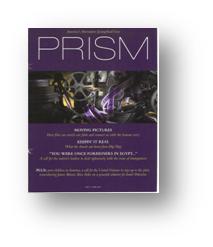
I have an article in the latest PRISM magazine. It talks about the fallout from the Rick Warren invitation to Barack Obama to speak at the Saddleback AIDS conference. My contention is that we as a community led by Jesus need to put aside denominational and perhaps faith differences in order to seek to good of the city (as Jeremiah would put it.) Give it a peek and let me know what you think.

The article PDF is here.

False Assumptions of the Interracial Couple

I’ve managed to alienate a group of brothers and sisters over on another blog by challenging the identity of a church or a Christian that is rooted in any kind of a hyphenated description, Italian-Scottish-English-French-American for example as I would identify my own heritage. While this Balkanization of the American experience is prevalent in the larger culture, my contention was that it had no place in the context of Christ’s church. Gal 3:26-27 says,

You are all sons of God through faith in Christ Jesus, for all of you who were baptized into Christ have clothed yourselves with Christ. There is neither Jew nor Greek, slave nor free, male nor female, for you are all one in Christ Jesus.

While this issue is little discussed outside of a place like the United States where, by definition, every church would be a __________-Church, in a culture where by design the culture is intended to blend by assimilation there should be no hyphenated churches.

Attempts were made to dismiss my position first by challenging the validity of my walk in the _____________-American church. After providing my bona fides there was simply silence. The silence didn’t stir me to respond but one final comment by another poster remains troubling. He says in his final words regarding those of us involved in interracial marriages:

As to the challenging question of interethnic marriage (particularly between White and “other”) it seems important to recognize that any minority person has a bi-cultural identity at some level, or is at least able to function biculturally as interaction with the dominant culture in dominant culture ways is really non-optional. For those in the dominant culture, especially males, even if they are married to a member of a minority group, participation in a minority context is always optional.

I hope I’m reading this wrong, especially in the context of the church. Just like the American experiment was intended to work: a new culture created by the assimilation of immigrant cultures into the larger whole creating a new identity and a release of the old identity, the Church that Christ left was also intended to be made of people who had left their previous identities behind and saw themselves as new people. No hyphens, no dominant culture, no racial division voluntary or otherwise. Those who continue to live in either the American or Christian culture but still retain their primary identity with a hyphen are dividing Christ’s people, not uniting them under a new banner as intended.

What is most troubling is the resentment that this writer holds toward the ‘dominant’ culture and we males that inhabit it. By picturing us as oppressors who can voluntarily flit in and out of ‘minority’ culture while our poor ‘other’ spouses must bow to it without choice he exposes his own racism. My wife was born and raised in a foreign country giving her full right to identify with a hyphen, my child who was born and raised here does not. He is a part of the ‘dominant’ culture, contributing to it the best of both his mother and father’s cultures. What other options does he have or need?