Psalm 30 – Rejoicing Comes in the Morning

30 Thirty Sunburst The middle verses of Psalm 30 remind us of why we return to these scriptures for strength and comfort time and time again.

Sing the Lord you saints of his; praise his holy name.

For his anger lasts only a moment, but his favor lasts a lifetime; weeping may remain for a night, but rejoicing comes in the morning. (vv 4-5)

All of the saints of the Lord are called to raise our voices in praise even though their may be fleeting moments in which we believe that our travails overwhelm our ability to worship. David reminds us that life with the Lord will have these peaks and valleys but that the grace of God remains consistent. We need only turn our hearts toward him to rejoice again in His goodness.

The core thought in this psalm is the distinction between death and silence, and life and praise. Despite current circumstances, the question that it drives us to ask is, are we still drawing breath? If so, we can praise God beginning with this simple fact. Once the praise begins, the Spirit will remind us of all of the other things for which we can praise God as well.

To you, O Lord, I called; to the Lord I cried for mercy.

What gain is there in my destruction, in my going down into the pit?

Will the dust praise you? Will it proclaim your faithfulness?

Hear, O Lord, and be merciful to me, O Lord, be my help. (vv 8-10)

… for if I live I praise you…

You turned my wailing into dancing; you removed my sackcloth and clothed me with joy, that my heart may sing to you and not be silent.

O Lord my God, I will give you thanks forever.(vv 11-12)

It is easy to see only darkness when we feel as though the valley has become too deep to ever climb out of but God has a purpose in it. Small graces will visit us, perhaps even those that we might be unaware of but they are cause for praise. We lift our voices despite the darkness for morning will come, just as God promises.

Digg This

Psalm 28 The Lord is the Strength of His People

The Lord is the strength of His people, a fortress of salvation for anointed one.

Save your people and bless your inheritance; be their shepherd and carry them forever. (vv 8-9)

Read this psalm backwards. By doing so you will discover a contrasting pattern to our human priorities. The psalmist praises the great glory of God, linking Him to shepherd of Psalm 23 and intercedes on behalf of God’s people similar to the cry in Psalm 25.

Praise be to the Lord, for he has heard my cry for mercy.

The Lord is my strength and my shield; my heart trusts in him, and I am helped.

My heart leaps for joy and I will give thanks to him in song. (vv 6-7)

The Lord is so good to His people, to those who trust Him. We are moved to ask, what have we to fear then? Is there a hint of doubt in the opening verses of this prayer? When we read from the beginning, the pleas of David mirror our own concerns that God might not hear us, that he might have turned away.

To you I call, O Lord my Rock; do not turn a deaf ear to me.

For if you remain silent, I will be like those who have gone down to the pit.

Hear my cry for mercy as I call to you for help, as I lift up my hands toward your Most Holy Place. (vv 1-2)

The plea is subtle but important. As David voices his wish to be heard by God, he does not doubt but rather, praises Him by saying that the absence of His voice alone is like being dragged to the pit. To say that we are nothing without the immediacy of God’s presence and His all encompassing holiness is praise of a better quality than some of the prom songs that we lift up to him on Sundays. Our foremost act of worship is to recognize hell as being His absence. Though there may have a time in our lives when we sought to escape Him, to know His closeness and then discover it gone is the worst imaginable fate.

Digg This

Lent 2009 and Walking with Peter

image

The forty days of Lent for this year begin next week on Ash Wednesday, February 25th. Though Lent as a church observation has fallen from favor in many evangelical churches, I like to follow the Church calendar. It delineates the seasons of the year and helps us to focus on seasons in our lives. Traditionally, Lent is a period of sacrifice leading up to Easter in which we do without and practice penance as a reminder once again to die to self. It is a named period in which we recommit ourselves to holiness…though, this should be our daily vocation.

This year, the Spirit has brought the life and ministry of Simon Peter to my heart as my guide through the Lenten season. I suspect that many of us find a kindred spirit in Peter. He is a bit gruff and rough around the edges. Jesus does not pluck him out of the ivory towers of religiously trained nor was he an important thinker of his time. Just a guy with a boat who spent his cold, dark nights out of the water trying to make his livelihood by netting fish and selling them.

Saint Peter’s mouth is known to have run before his brain and his impetuous behaviors make us initially wonder what Jesus saw in him to validate his selection as an Apostle. As one of His closest disciples, we learn of a man of commitment who shares the same fears and failures that we do. To be with Peter as he abandons his Lord at a crucial moment is to be with us as we question our own commitment when it seems that God’s love should preclude some of the struggles and strife that visit our own lives. Who among us has not stepped from the boat onto the water proclaiming “I believe, I believe” only to falter a few steps in and find ourselves with the waterline quickly approaching our necks?

Lent is a time for us to once again to renew ourselves to the words that Peter left us in his first epistle:

But in your hearts set apart Christ as Lord. Always be prepared to give an answer to everyone who asks you to give the reason for the hope that you have.  1 Peter 3:15

Digg This

Psalm 27 ~ Wait for the Lord, Be Strong and Take Heart

imageIn the 27th Psalm we have one of the most eloquent expressions of the central ideal of biblical faith – trust in the Lord. David exhorts us to come to the same conclusion that he has; despite current challenges and threats, the Lord can be trusted in full. Two stanzas of his expression of trust open the psalm.

The Lord is my light and my salvation – whom shall I fear?

The lord is the stronghold of my life – of whom shall I be afraid?

When evil men advance against me to devour my flesh, when my enemies and my foes attack me, they will stumble and fall.

Though an army besiege me, my heart will not fear; though war break out against me, even then I will be confident. (vv 1-3)

Danger is all about and the psalmist has every reason to fear but he will not allow himself to do so. Fear will not overwhelm his confidence in the protective wing of the Lord nor will it challenge his confidence. Do we practice the same steadfast confidence in our current world? We are bombarded constantly with bad news and dire predictions of calamity. Without faith in the preservation of the Lord that he has exhibited throughout history, men and women succumb easily to the short view, seeing their imminent destruction and possibly their final breath. Knowing that life in this plane is not all that there is, the Christian looks forward.

With such confidence, why does the psalmist pray for deliverance in the second half of the psalm? Confidence does not preclude our petition of God. The Bible teaches us the propriety of being in prayerful communion with God and to take all things to him. Asking for a deliverance and His preservation should not indicate a lack of confidence but rather, a knowledge that the Lord craves our presence with him in prayer. The concluding verses of the psalm summarize for us.

I am still confident of this: I will see the goodness of the Lord in the land of the living.

Wait for the Lord; be strong and take heart and wait for the Lord. (vv 13-14)

Digg This

Psalm 26 ~ Test Me, O Lord

26Test me, O Lord, and try me, examine my heart and my mind;

for your love is ever before me, and I walk continually in your truth. (vv 2-3)

The Psalmist’s cry to the Lord should cause us to pause in prayer and ask if this is the transparency that we truly want to have before our God. In the lives of many Christians, we offer up our outer beings, the public personae that we rehearse for those around us. That is the cleaned up, polished, and groomed person that we believe will convince others that we are straight and true in our walk. Somewhere in the back of our mind we know it is isn’t true and even more importantly, we know that the Lord isn’t fooled. He needs no invitation to clamber about in our hearts and minds and the know the real us: the one who doesn’t consistently love his neighbor, the one who succumbs to her temptations and on and on.

The proclamations of faith and innocence do not begin or end with those verses that we have seen. In the opening verse, the psalmist proclaims that leads a blameless life and is a man of unwavering faith. The NIV translation of ‘blameless’ is a bit beyond the meaning of absolute purity, something that Yahweh possesses but is found in no man. It is better read as in my integrity I walk which gives it a domain inside of the fallen human experience. Is this braggadocio? Reading further we find instead it is a plea not to be judged as those who are unfairly judging him. The psalmist correctly places his ultimate trust in God.

Do not take away my soul along with sinners, my life with bloodthirsty men, in whose hands are wicked schemes, whose right hands are full of bribes.

But I lead a blameless life; redeem me and be merciful to me.

My fee stand on level ground; in the great assembly I will praise the Lord. (vv 9-12)

Digg This

Women in Ministry: Necessary Preparations

studygirl Coming to a settled position on gender roles and more specifically, women in ministry, is not the simple task that some make it out to be. Whether one falls to either the Complementarian or Egalitarian sides of the issue, there are profound implications for life within the Church and serious effects to be considered in relationships within the Body. Your decision on this issue does not have the same impact theologically as one on an essential doctrine does but it can have far reaching consequences for the life of a church, community, and household.

Deciding this issue responsibly requires that you explore, consider, and understand a vast array of knowledge. Your decision requires more than simple assent to a verse or group of verses within the Bible accepting a singular source as the final word on the subject. “You shall not murder.” is abundantly clear taken alone and there are few, if any, people within the Body of Christ who will argue against the clear meaning and application of this verse. The verses on which many have come to their conclusions regarding gender roles within the church (and sometimes life in whole) in Paul’s letters to the churches at Corinth and Ephesus are not as clear and require much more information be collected before one can arrive at a mature decision.

Properly deciphering the meaning of the key passages on this issue requires that you expend a good deal of energy in study of the Bible as a whole. The first thing that a person must do is place any verse or passage within the larger corpus of the entire Bible, Old Testament and New as well as the history of Christendom. You must devote yourself to developing sound interpretive principles that do not rely on someone else doing all of the work for you. Understanding these contested passages and doctrines requires, for example, that you develop a base of knowledge of the cultures that surround Israel and the early Church and the effect that each had on development of the writing produced there.

Many of the questions that arise during this study come from the grammar and meaning of words in the original language. To decide this issue on the basis of a single English language translation will not suffice. While it is not necessary that you become a linguistics expert, you should avail yourself of resources that can explain the word meanings and connotations that one finds in the Greek (and Hebrew depending on how deeply you want to invest in the topic) text. An interlinear text that matches your English translation is a good place to start.

There are many study skills that are not listed here that can help you come to a mature decision on the issue of gender roles beyond what I’ve mentioned here. The one attitude that can help the most in understanding your position is to recognize that this is not a simple topic with clear cut guidelines (despite what some will tell you.) It is complex and even those within the two camps can find disagreement on the details. As one of my seminary professors said, the more you learn the more complex the subject becomes.

***

The list that follows is not comprehensive by any stretch of the definition but it provides some helpful resources that you may want to add to your library as you become more interested in studying this issue. These are among my tools; if you know of a better alternative I would be interested in knowing about it.

Language Studies
image

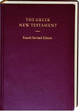
The Greek New Testament is the starting point for language studies. The The Greek New Testament With Greek-english Dictionary is the standard.


image

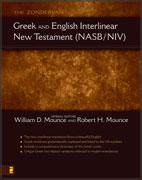
An interlinear places multiple versions of the Bible side by side. I like the Zondervan Greek and English Interlinear New Testament (NASB/NIV) as it puts the Greek alongside my preferred NIV translation as well as the more literal NASB text.


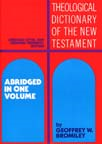
image A dictionary is an absolute necessity when studying languages. As we are aware, each dictionary can provide different insights into a word or word group and the Greek dictionaries are no exception. These tools are very expensive and you may hesitate to invest in more than one for your library. Between the three that are in view on my shelves right now, I recommend the “little” Kittel, the single volume edition of The Theological Dictionary of the New Testament. A sound alternative is the Greek-English Lexicon of the New Testament and Other Early Christian Literature. Another helpful tool is the Greek-English Lexicon of the New Testament: Based on Semantic Domains, otherwise known as the Louw and Nida set.


Introduction and Background

image There are countless volumes that provide cultural information about Israel and the later cultures that the Church would grow within but to be of help, I would suggest starting with Craig Keener’s volumes on the background to particular verses within the Bible. The IVP Bible Background Commentary: New Testament is a good first step that can lead your thinking to ask new questions about the cultural effects that are found in the words we read in the Bible.


image

Introductions to the Old and New testament provide valuable information about each book in the Bible, its context and knowledge about the author that is valuable in understanding the text within. Carson and Moo’s Introduction to the New Testament is a standard.


image

A valuable historical guide to the New Testament is Witherington’s New Testament History. You may not always agree with his conclusions but you cannot argue his scholarship.


Dictionaries

image

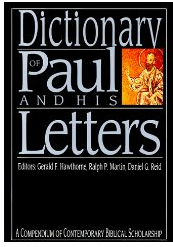
Since Paul is often pointed to as the source or instigator of this issue, the Dictionary of Paul and His Letters is an important tool to have on hand when working through his corpus. Equally important in this series is the Dictionary of Jesus and the Gospels so that the Pauline context does not become the only reference on issues.


image

An essential book for any kind of Bible study is a dictionary and my standard go-to is the New Bible Dictionary. I also use the New Dictionary of Biblical Theology. Do not settle for the dictionaries that purport to be for lay people and that are marketed inexpensively. They will often leave you looking for more and wishing you had invested in a more thorough tool in the first place.


It will also be helpful for you to be able to consult a variety of commentaries as you look at various books of the Bible. There are too many in my library to suggest them individually. What I would suggest you do if you must limit the number of resources is to identify one popular evangelical tool ( The NIV Application Commentary series comes immediately to mind), one more technical tool at a level you can utilize (the Interpretation or New International Greek Testament Commentary) and one less technical such as the Holman or  Life Application series. I have concentrated on New Testament resources in this guide but there are equally important and useful Old Testament resources that are needed to understand the entire scope of the gender role issue; it did not start or end with Paul.

Did you notice that none of these resources was specific to the issue at hand? Read and study broadly!

Digg This

Psalm 25 ~ To You O Lord, I Life Up My Soul

Must God be reminded of his character and the covenant mercies that derive from it? In the prayer framework of psalm 25, David approaches the throne in prayer by voicing the grace that is God’s alone to give.

To you O Lord, I lift up my soul; in you I trust, O my God.

Do not let me be put to shame, nor let my enemies triumph over me.

No one whose hope is in you will ever be put to shame, but they will be put to shame who are treacherous without excuse. (vv 1-3)

It’s not so much that God needs to be reminded of who He is or what He is like. Rather, the penitent prayer is suffusing himself with the confidence that comes from rehearsing the promises of God’s goodness in times of trouble.  Here, David puts his trust in God to deal with an enemy that he did nothing to provoke. He trusts that the goodness inherent in God and the promise to shepherd His people will be the hedge of protection that surrounds David and his people.

His approach changes in the verses that follow. Continuing to recite the goodness of Yahweh, David also recognizes and seeks grace for the flaws within himself. The deep contrast is a valuable reminder to us as we enter our prayer closets.

Remember, O Lord, you great mercy and love, for they are from old.

Remember not the sins of my youth and my rebellious ways; according to your love remember me, for you are good, O Lord.

Good and upright is the Lord; therefore he instructs siners in his ways.

He guides the humble in what is right and teaches them his way. (vv 6-9)

Covenant promises are a two-way bond and they require that we not only recognize the goodness and grace that God will exhibit but also, that we recognize and catalog the flaws and corruption within ourselves. We must be penitent before the King.

Digg This

Women in Ministry: An Introduction

Should women be excluded from ministries in the Church in which they would exercise authority over men? This question has been placed before countless leaders over the centuries as called and spiritually gifted women have come into their orbit seeking to fill a pulpit or ascend to another leadership role and exercise their God given gifts. In some instances, the recognition of the gifts and their Giver override the traditional prohibition and great ministries are born. In others, tradition and theology are understood to uphold the ban and the woman is denied the opportunity. While this is not generally counted among the theological essentials of the Christian faith, in an age of modern feminism it is an important topic to discuss and analyze in the hopes of settling your thinking one way or the other. In the same way that Peter extols us to be prepared to give the reason for the hope that we possess (1 Pet 3:15), when we should understand and be able to explain our theological tenets and the choices that we make based on them.

Allowing for a broad spectrum of intermediate points between them, the discussion of gender equality in Church authority is carried by two positions: the egalitarian and the complementarian. The complementarian position holds that ministry roles are differentiated by gender and that, according to the Bible, women are prohibited from holding roles in which they would teach or exercise authority over men. This is also known as the Traditionalist position. The egalitarian position believes in gender equality in church roles and points to the spiritual gifting of women as evidence of a theological shift. The question that we want to address is whether or not this difference can be biblically reconciled in favor of one position over another. We recognize that like so many theological standards (e.g. Calvinism and Arminianism) with equally valid evidence on both sides, we may need to accept that outside of divine inspiration we may need to accept that it cannot. An irenic spirit is an absolute necessity.

To adequately explore this topic requires that we examine a number of exegetical and theological issues that arise in the course of our study. None on their own make a solid case for one position or the other. In fact, many involved in the discussion find that the evidence supports both sides and that it is tradition that causes them to fall to one side. Given the variables and sometime controversy surrounding the issue, prayer and the guiding of the Spirit are the key elements in our movement forward.

Digg This

The Parable of the Community Organizer

imageTheologian Susan Sarandon trotted out her tired proverb once again (hopefully for the last time) on inauguration day. In her latest attempt to equate President Obama with Jesus Christ, she said “He is a community organizer like Jesus was.” Continuing her vacuous line of reasoning, she verbally prostrated herself before him saying, “And now, we’re a community and he can organize us.” Civic and national pride is a good thing, but I’ve got to ask Miss Sarandon, where was this pride during the past eight years? Were you among the Diaspora of yearning souls who just couldn’t connect with one another? Ever hear of Facebook?

As I pored over the pages of my Bible I grow concerned that I am unable to find the stories of the Lord’s community organizing. The principle of community agitation is centered on creating a critical mass of humanity to address a problem that they are facing. Kind of like the Boy Scouts, seeing trash in their neighborhood and picking it up. Later, they build a trash bin so that the problem doesn’t reoccur. The Lord Jesus, on the other hand, did not come to organize humanity to address the problem that they had. There was no possible way for them to do so since propitiation required a perfect sacrifice. He was to become that sacrifice, something we would never be able to do on our own. His shepherding consisted of a single message, believe in this grace and put aside your personal god to worship the One who offers it.

I can’t begin to address the small, confined world in which celebrities exist and form their philosophy. Alfre Woodard voiced her tempered opinion of those outside of her bubble, “I think we might finally grow up as a nation.” Fact, Ms. Woodard, most of us grew up years ago.

Digg This