
The Real Venerated Mary

 In the final pair of chapters in The Real Mary, McKnight leads Protestants to understand the Roman Catholic traditions regarding The Virgin and the ways in which these beliefs become divisive. Especially in this last chapter, he cautions the evangelical who is uncomfortable at some Catholic practice to differentiate between the Church’s actual teaching and its application. It’s here then that we face the traditions that have formed around Mary that appear to have drifted into the worship of Mary.
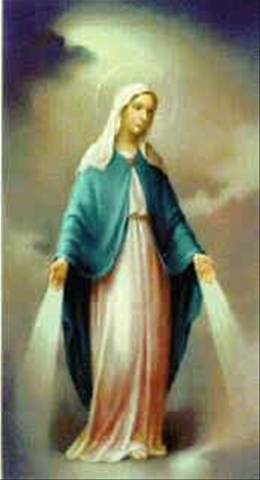
The evangelical who investigates the traditions surrounding Mary finds that Catholic tradition is often developed to fill the silences of the Bible. In response to theological question regarding the absence of Original Sin in Jesus, born of the human Mary, Catholicism develops the position of immaculate conception. If one adheres to this position, Mary is sinless and therefore not subject to the ravages of human life like aging, disease, and death. To explain her movement from earth to heaven without suffering death, the tradition of the glorious assumption develops. On both the Bible is silent but theological questions demand answers and the Catholic theologians responded.

Mary as mediatrix is one of the more threatening positions standing between the evangelical and the Catholic. Much of this schism is rooted in a lack of understanding on the part of the Catholic laity who fail to explain their prayers to saints correctly. The Church’s position is founded on a much more active belief in the communion of the Body. The Catholic view enlivens the saints in their heavenly abode and is not hesitant to ask them for prayer, much as the evangelical asks their friends and family for intercession. Mary, being among the saints in heaven, is asked for her intercession.  Nothing more.

To those who spend time constructing and researching things theological, each of these positions that the Roman Catholic church has taken makes sense. The danger in these positions lies in their transference to the laity who don’t take the time to deconstruct and carefully explain the foundations as each becomes tradition. The dangerous precipice of tradition is that it can easily tip into worship and adoration of Mary, elevating her to a fourth position in the Trinity. Teaching says that Mary is not to be worshipped nor adored, tradition often veers otherwise.

As for Mary’s miraculous appearance in a piece of cheese toast? We’ll leave that for another day but ask the same question. Does such an appearance honor the Real Mary, whose words “may it be to me as you have said” inspire us also to live in reverent obedience?

 

On the Mountainside with Jesus: Lent Reflection 9

Blessed are those who persecuted because of their righteousness, for theirs is the kingdom of heaven.

Go along and get along or stand out, and risk drawing the attention of those around you. This age old dilemma narrows our reflection this morning. The question for followers of the Savior is, do you stand out? Is there such a righteousness apparent in your life, in contrast to the world around you, that your shining light threatens to push back the darkness? Or does your candle flicker so feebly that there is little to distinguish you from the crows. Sadly, in the modern era of cheap grace, the lives of many of Christ’s followers are little different from the prevailing culture and they invite little persecution.

The radical Jesus we walk with toward the three crosses of Calvary this Lent desires radical followers. Followers whose righteousness is seen in word and deed, whose holiness is intentional, and whose sacrifice is total. He desires followers who are a threat to the unrighteousness of the dominant society and whose focus is singularly drawn toward the restoration of justice and the extension of mercy. 

Lent is a good measure of how radical your commitment to Christ is. If it is a period in which your sacrifice is something you are probably better off without anyway, would you honestly say that you’ve counted the cost of discipleship? Perhaps in the remaining few weeks of this years observation it would be a good time to pull out your copy of Bonhoeffer’s work of the same name and consider how the radical pull of the Sermon on the Mount enabled him to stand up under persecution and follow the radical Jesus, even to the point of paying the ultimate cost.


John Edwards Speaks for Jesus

I always find it to be a poor choice to speculate on what Jesus would say when there is such a wealth of his actual words collected, sequenced, and bound that we can turn to. John Edwards says that Jesus would be ashamed of American’s selfishness. Perhaps that spectacular mansion far beyond the needed living space of his family should be removed before he points at my mote of selfishness. I’m sorry but this guy is just not credible speaking to the topic of poverty. 

On the Mountainside with Jesus: Lent Reflection 8

Blessed are the peacemakers, for they will be called sons of God.

To become sons (and daughters) of almighty God is the gift of grace bestowed on those who believe in the speaker of these mighty words. They act like sons and daughters of God when the seek the peace in which the original world was enveloped. Peace is a product of our willingness to live among the tares without exclusion or violence against them until the day of the Harvest, as much as it depends on us.

We can use our meditative focus during the Lenten season to consider how we are each contributing to the peace of our little place in the world. Are we using our faith as a bludgeon to summarily judge those who disagree with us or are we converting faith into action, hoping to show the truth to one more? Have we reconciled broken relationships within our own family? The choices for action are endless.

We can be peacemakers, accepting the responsibility of our sonship and working where our Father is working. Or, (no flippant discourse today in the interest of peace.)


The Real Mary, Mother of God

 Calling Mary the Mother of God is enough in some evangelical circles to start a division of fellowship that may never be repaired. This seemingly innocent title has a logical basis that cannot be impugned. Mary gave birth to Jesus, Jesus is God, ipso facto, Mary is the Mother of God. Why then does a statement such as this raise such ire? For the answer, the evangelical body must face the dichotomy of Mary: the Mary of the New Testament and the Mary of Roman Catholic sacred tradition. The last section of Scot McKnight’s book help us to briefly survey these differences and face them fairly. 

The greatest difference in how evangelicals and Catholics devise their Maryology comes down to sola scriptura. While the evangelical necessarily limits their view of Mary to what appears in the canonized scriptures, the Roman Catholic view is developed through a combination of scripture and sacred tradition. Further, it’s important to note that Catholic sacred tradition is ongoing in its development and subject to modification over time as each revelation unfolds new ways of looking at Mary.

Beliefs such as Mary’s sinlessness, perpetual virginity, and appearance in Revelation 12 divide the traditions but should they also divide fellowship? Evangelical positions on these issues often attribute the Catholic belief to nothing more than pure fantasy evolved from an incorrect veneration of the Holy Mother. This is a wholly uncharitable view of the theological basis that undergirds the Catholic position and makes the holder appear religiously bigoted and uninformed. It also causes us to be challenged in our own Bible scholarship. Why is it, for example, that we read words such as “brothers and sisters” and others see “cousins” or “relatives”? Are we equally trusting in our own tradition to understand the meaning of the words or have we done the necessary Greek translation, cross referencing the semantic domains in Louw-Nida to come to our conclusions?

Neither McKnight nor myself argues for the adoption of the Catholic position, only the need for a better understanding of how such tradition-based beliefs have developed through the history of the Church. By removing the fractiousness from Mary caused by the divide, the evangelical experience is enriched as we are free to see the important role that she plays in the life of the Savior and in God’s history of His world. Is that such a bad thing?   


Second Sunday in Lent Readings

The reading for this morning is Genesis 15:5 – 18 and Psalm 27 in response to this great promise. The only correct response to a calling from God is obedience without hesitation. Abram faces the challenging promise of God, which includes a long period of oppression and difficulty, with a stutter. He only sees the possibilities within himself. But, as he discovers, God is not limited by our frailties. He makes only God-sized promises and asks only that we trust and obey.


Technorati tags: , , ,

On the Mountainside with Jesus: Lent Reflection 7

Blessed are the pure in heart, for they will see God.

The radical, uncompromising Jesus is unpopular wherever cheap grace has taken hold. Simply reading the Beatitudes tells the disciple that there is to be a ruthless break with one’s old ways. We cannot be people who go through the motions of following Jesus in his sacrifice while all the while allowing our hearts to be polluted by their hold on our ways. Purity of heart is integrity; our outward actions match our internal intentions. Our hearts are not divided between longing for God and longing for the things of this world.

As Jesus progresses toward the cross in our observation of Lent, the radical nature of his mission must cause us to become little radicals as well. Cheap grace is not for us. We will count the cost of our freedom and we will rid our lives of everything that threatens to divide our hearts. Our vision will clear as we focus on a single master rather than trying to keep two or more in our sight.

Or, we can give up listening to the radio for Lent. We might miss something Rush or Medved says but we can always fill the silence with some other distraction.


On the Mountainside with Jesus: Lent Reflection 6

Blessed are the merciful, for they will be shown mercy.

What does it mean to merciful in our world. Is it simply serving a meal or soothing a hurt? These are certainly merciful acts but are the reflective of our Spirit transformed core? The mercy that is blessed goes beyond compassion, it is measured by forgiveness. Forgive as you have been forgiven.

As we reflect during our observation of Lent on the mercy that has been shown to us, we are called to bring that mercy to life, to be incarnational. The news invades our meditations. A young woman in nearby Pueblo has traded her baby for the down payment on a gold Dodge Intrepid. Our mercy is gauged in our reaction to this evil act. Does our mercy extend to her, praying for her restoration and for the welfare of the family or are we quick to pass judgement? Blessed are the merciful, for they will be shown mercy.

No, lets just give up sugar instead. It’s easier and each cup of coffee without it will remind us with each bitter swallow of the sacrifice that we are soon to commemorate. Or, we can consider the mercy that has transformed our standing before God and pray that this same mercy can be visited on the lives of others.

Technorati tags: , , , , ,