Psalm 28 The Lord is the Strength of His People

The Lord is the strength of His people, a fortress of salvation for anointed one.

Save your people and bless your inheritance; be their shepherd and carry them forever. (vv 8-9)

Read this psalm backwards. By doing so you will discover a contrasting pattern to our human priorities. The psalmist praises the great glory of God, linking Him to shepherd of Psalm 23 and intercedes on behalf of God’s people similar to the cry in Psalm 25.

Praise be to the Lord, for he has heard my cry for mercy.

The Lord is my strength and my shield; my heart trusts in him, and I am helped.

My heart leaps for joy and I will give thanks to him in song. (vv 6-7)

The Lord is so good to His people, to those who trust Him. We are moved to ask, what have we to fear then? Is there a hint of doubt in the opening verses of this prayer? When we read from the beginning, the pleas of David mirror our own concerns that God might not hear us, that he might have turned away.

To you I call, O Lord my Rock; do not turn a deaf ear to me.

For if you remain silent, I will be like those who have gone down to the pit.

Hear my cry for mercy as I call to you for help, as I lift up my hands toward your Most Holy Place. (vv 1-2)

The plea is subtle but important. As David voices his wish to be heard by God, he does not doubt but rather, praises Him by saying that the absence of His voice alone is like being dragged to the pit. To say that we are nothing without the immediacy of God’s presence and His all encompassing holiness is praise of a better quality than some of the prom songs that we lift up to him on Sundays. Our foremost act of worship is to recognize hell as being His absence. Though there may have a time in our lives when we sought to escape Him, to know His closeness and then discover it gone is the worst imaginable fate.

Digg This

Psalm 27 ~ Wait for the Lord, Be Strong and Take Heart

imageIn the 27th Psalm we have one of the most eloquent expressions of the central ideal of biblical faith – trust in the Lord. David exhorts us to come to the same conclusion that he has; despite current challenges and threats, the Lord can be trusted in full. Two stanzas of his expression of trust open the psalm.

The Lord is my light and my salvation – whom shall I fear?

The lord is the stronghold of my life – of whom shall I be afraid?

When evil men advance against me to devour my flesh, when my enemies and my foes attack me, they will stumble and fall.

Though an army besiege me, my heart will not fear; though war break out against me, even then I will be confident. (vv 1-3)

Danger is all about and the psalmist has every reason to fear but he will not allow himself to do so. Fear will not overwhelm his confidence in the protective wing of the Lord nor will it challenge his confidence. Do we practice the same steadfast confidence in our current world? We are bombarded constantly with bad news and dire predictions of calamity. Without faith in the preservation of the Lord that he has exhibited throughout history, men and women succumb easily to the short view, seeing their imminent destruction and possibly their final breath. Knowing that life in this plane is not all that there is, the Christian looks forward.

With such confidence, why does the psalmist pray for deliverance in the second half of the psalm? Confidence does not preclude our petition of God. The Bible teaches us the propriety of being in prayerful communion with God and to take all things to him. Asking for a deliverance and His preservation should not indicate a lack of confidence but rather, a knowledge that the Lord craves our presence with him in prayer. The concluding verses of the psalm summarize for us.

I am still confident of this: I will see the goodness of the Lord in the land of the living.

Wait for the Lord; be strong and take heart and wait for the Lord. (vv 13-14)

Digg This

Psalm 26 ~ Test Me, O Lord

26Test me, O Lord, and try me, examine my heart and my mind;

for your love is ever before me, and I walk continually in your truth. (vv 2-3)

The Psalmist’s cry to the Lord should cause us to pause in prayer and ask if this is the transparency that we truly want to have before our God. In the lives of many Christians, we offer up our outer beings, the public personae that we rehearse for those around us. That is the cleaned up, polished, and groomed person that we believe will convince others that we are straight and true in our walk. Somewhere in the back of our mind we know it is isn’t true and even more importantly, we know that the Lord isn’t fooled. He needs no invitation to clamber about in our hearts and minds and the know the real us: the one who doesn’t consistently love his neighbor, the one who succumbs to her temptations and on and on.

The proclamations of faith and innocence do not begin or end with those verses that we have seen. In the opening verse, the psalmist proclaims that leads a blameless life and is a man of unwavering faith. The NIV translation of ‘blameless’ is a bit beyond the meaning of absolute purity, something that Yahweh possesses but is found in no man. It is better read as in my integrity I walk which gives it a domain inside of the fallen human experience. Is this braggadocio? Reading further we find instead it is a plea not to be judged as those who are unfairly judging him. The psalmist correctly places his ultimate trust in God.

Do not take away my soul along with sinners, my life with bloodthirsty men, in whose hands are wicked schemes, whose right hands are full of bribes.

But I lead a blameless life; redeem me and be merciful to me.

My fee stand on level ground; in the great assembly I will praise the Lord. (vv 9-12)

Digg This

Psalm 25 ~ To You O Lord, I Life Up My Soul

Must God be reminded of his character and the covenant mercies that derive from it? In the prayer framework of psalm 25, David approaches the throne in prayer by voicing the grace that is God’s alone to give.

To you O Lord, I lift up my soul; in you I trust, O my God.

Do not let me be put to shame, nor let my enemies triumph over me.

No one whose hope is in you will ever be put to shame, but they will be put to shame who are treacherous without excuse. (vv 1-3)

It’s not so much that God needs to be reminded of who He is or what He is like. Rather, the penitent prayer is suffusing himself with the confidence that comes from rehearsing the promises of God’s goodness in times of trouble.  Here, David puts his trust in God to deal with an enemy that he did nothing to provoke. He trusts that the goodness inherent in God and the promise to shepherd His people will be the hedge of protection that surrounds David and his people.

His approach changes in the verses that follow. Continuing to recite the goodness of Yahweh, David also recognizes and seeks grace for the flaws within himself. The deep contrast is a valuable reminder to us as we enter our prayer closets.

Remember, O Lord, you great mercy and love, for they are from old.

Remember not the sins of my youth and my rebellious ways; according to your love remember me, for you are good, O Lord.

Good and upright is the Lord; therefore he instructs siners in his ways.

He guides the humble in what is right and teaches them his way. (vv 6-9)

Covenant promises are a two-way bond and they require that we not only recognize the goodness and grace that God will exhibit but also, that we recognize and catalog the flaws and corruption within ourselves. We must be penitent before the King.

Digg This

Psalm 24 ~ Who is this King of Glory?

image Who is this King of Glory?

The Lord strong and mighty, the Lord mighty in battle.

Lift up your heads, O you gates; lift them up, you ancient doors, that the King of Glory may come in.

Who is He, this King of glory?

The Lord Almighty – he is the King of Glory. (vv 7-10)


Modern readers will find this short psalm following the stunning promises of the 23rd psalm and as the page turns, it is easy to get swept up in the shouts of acclamation for the Lord. We shall not diminish the praise of this psalm as we place it in its proper context as a processional liturgy. Historically, this psalm is associated with the entry of God into Zion, either at the time David returns the Ark to Jerusalem or at a later commemoration of the event. Our free church environment has largely cast aside liturgy but it serves an important purpose in leading and aligning the hearts and actions of God’s people.

As the King of Glory enters the Temple, we want to follow his train up the steps but the liturgy stops us. Who may ascend this hill of the Lord it asks. We pause to reflect on our own condition.

Who may ascend the hill of the Lord?

Who may stand in his holy place?

He who has clean hands and pure heart, who does not lift up his soul to idol or swear by what is false. (vv 3 – 4)

The liturgical pace halts our thoughts to consider our condition before the altar. We seek the blessing and vindication promised in verse 5 but we must never take it for granted. Let our prayer today be two examine our heart and hands for the bits of the world that might have crept in or on and need to be cleansed before approaching the throne.

Digg This

Psalm 23 ~ Goodness and Love Will Follow Me

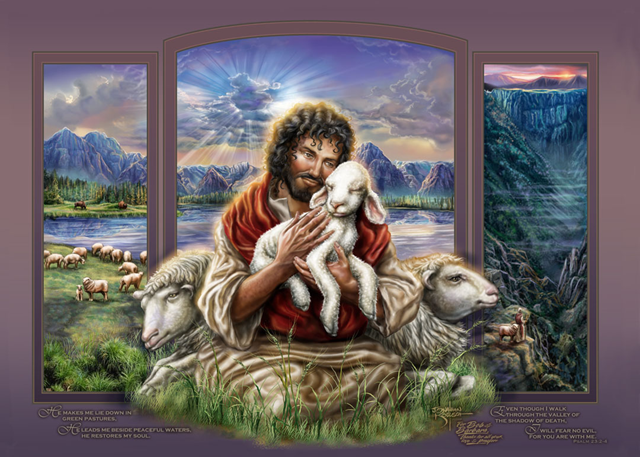
image The Lord is my shepherd, I shall not be in want.

He makes me lie down in green pastures, he leads me beside quiet waters, he restores my soul.

He guides me in paths of righteousness for his name’s sake.

Even though I walk through the valley of the shadow of death, I will fear no evil, for you are with me, your rod and your staff, they comfort me.

You prepare a table before me in the presence of my enemies. You anoint my head with oil; my cup overflows.

Surely goodness and love will follow me all the days of my life, and I will dwell in the house of the Lord forever.

The 23rd psalm is one of the most beloved and well known entries in the Psalter. Though many individual verses have become a part of our praise music vocabulary, many people know this psalm by heart in its entirety. There is an appealing promise in these verses that is painted with vibrant and pleasing verbiage that brings an image of the Good Shepherd (John 10:11) cradling and protecting his lambs. He alone will look out for our every need (though not necessarily our every desire.)
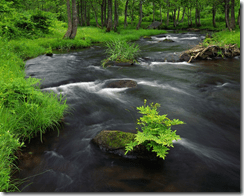
imageIn an age of image we have stored in our minds a catalog of green pastures and quiet waters so these words immediately paint with swathes of verdant, lush tropical greens or the deep  emerald of a grassy countryside. Quiet waters soothe with their deep blues turning to black as the depth increases and pops and gurgles silence us as we strain to catch the song of the water as it moves by. We miss out on the depth of this verse unless we meditate on unforgiving landscape in which the psalmist sees the work of the shepherd.
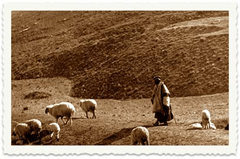
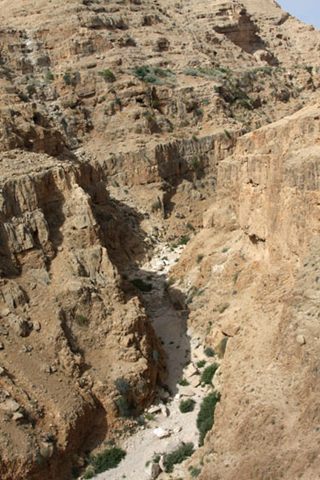
image The desert of the Middle East is far from the viridescence that our mind shows us as the words are processed in our minds. A dry, khaki, hardened land required extraordinary efforts from the shepherd. Food for the sheep might require movement, the search for water a knowledge of the terrain and the ability to bargain with those who guarded its source. The ewe and ram on their own may stand little chance of survival; dependence on the shepherd is not optional.

imageSuddenly, the imagery changes to one who walks in the shadow of death. The deep and arid Wadi Qelt might be bright at midday but every other hour of the day fills it with ponderous shadows that might hide evil around each bend or rock. Walking alone in this valley, the walls rising high above, the only escape route would be forward or backward and yet the psalmist voices no fear as the Lord walks alongside him.

image Verses 4 and 5 form the core for us in our modern day as they did for Yahweh’s people. Our valley of shadows might be more urban but it holds the same dangers and fears. We will not fear these things though as our Shepherd walks beside us and comforts us. In verse five are presented with the image of the table and the cup, overflowing with good and yet, look carefully at the placement of this table. It is in the midst of our enemies. It is not removed from, guarded from, above, below, or in any way away from our enemies. We will sit with the Shepherd in the presence of our enemies.

You see the Psalmist does not envision an escape from the travails of this world to an eventual dwelling with the Lord in his temple. It is not a psalm of escape. Instead, it is an expression of supreme confidence in the Lord and the knowledge of His intimate presence even as we face trouble and danger in this world. All is for the greater glory of God. Though our pain might be temporary, in the economy of the Good Shepherd it is necessary in the greater picture of His-story. We are blessed in playing our role.

The promise of the 23rd psalm is simple: by following the Good Shepherd we will walk in goodness and love throughout all of our days. It does not mean we will escape the trials and troubles of this world but following the Shepherd will always lead us to better days. No wonder it remains a favorite.

Digg This

Psalm 22 ~ Why Have You Forsaken Me? Part 3

The psalmist turns in the final section of this psalm to the nature of steadfast faith. In the middle segment we encountered the voice of despair as the believer found himself facing travail from every direction. Despite the struggles he knew who would save and redeem him from these challenges. In the closing verses, he praises the Redeemer for the future good that the will bring.

I will declare your name to my brothers; in the congregation I will praise you.

You who fear the Lord, praise him! All you descendants of Jacob, honor him! Revere him all you descendants of Israel! (vv 22-23)

Instructive for us is the expansive view that the suffering man proclaims. It is easy to dwell on our personal issues and troubles at the expense of looking outward to others. The Christian must face the possibility that their suffering is for the good of another, either as instruction and example, or to directly benefit them at your expense. A true and deep faith looks beyond today toward the promise of tomorrow and our eternal time with the Lord.

From you comes the theme of my praise in the great assembly; before those who fear you will I fulfill my vows.

The poor will eat and be satisfied; they who seek the Lord will praise him – may your hearts live forever!

All the ends of the earth will remember and turn to the Lord, and all the families of the nations will bow down before him, for dominion belongs to the Lord and he rules over the nations. (vv 25-28)

Faith always look forward.

Digg This

Psalm 22 ~ Why Have You Forsaken Me? Part 2

As we read into the middle section of this psalm (vv 12 – 21) we find a poetic device at work to emphasize the only source of hope for the psalmist, salvation by the Lord. Notice how the dangers bracket the redeemer:

Bulls, Lions, Dogs

Hope in the Redeemer

Dogs, Lions, Bulls

Nearly all of us can identify with the despair of the psalmist as our troubles surround us on all sides, threatening to engulf us. The vicious nature of one’s enemies is on full display; the lions roar their deafening cry while tearing at the flesh, the horns of the bulls glisten red in the light as they snort and bring their enormous bulk closer and closer and, all the while, the snarling dogs snap and dodge, circling around their prey. Their teeth pierce the hands and feet of the besieged as he grows weaker and weaker.

I can count all my bones; people stare and gloat over me. They divide my garments among them and cast lots for my clothing. (vv 17-18)

There is always hope, even if it is not restored in this life. We are children of the Lord and despite our current danger, we will rest in the safety of his hand knowing that our circumstances serve the greater purpose of God.

But you, O Lord, be not far off; O my Strength, come quickly to help me.

Deliver my life from the sword, my precious life from the power of the dogs.

Rescue me from the mouth of the lions; save me from the horns of the wild oxen. (vv 19 – 21)

Digg This

Psalm 22 ~ Why Have You Forsaken Me? Part 1

It is a challenge for modern Christians to read this psalm without hearing Jesus voice the words of the opening verse. Our thoughts turn to our Lord, sacrificed on the cross and crying out in the final moments of his agony. We are filled with questions; did God forsake Him? Will He forsake us? Is God really far from our laments and our deliverance?

My God, my God, why have you forsaken me?

Why are you so far from saving me, so far from the words of my groaning?

O my God, I cry out by day, but you do not answer, by night, and am not silent. (vv 1-2)

Many of us have lamented in this fashion as our prayers appeared to hit the ceiling and fall without response. The appearance of God’s distance has left us feeling alone and vulnerable, especially to those who deny Him.

But I am a worm and not a man, scorned by men and despised by the people.

All who see me mock me, they hurl insults shaking their heads:

“He trust in the Lord; let the Lord rescue him. Let him deliver him since he delights in him. (vv 6-8)

Do we allow these insults to pierce our souls or do we continue to trust in God? His will for each of us is beyond our thoughts and understanding and many times, especially in those moments when He seems far away, our faith must persevere. This is why we search the scriptures wherein we encounter others enduring in the same way we are. We see negative examples of those who do not wait on God (wandering in the desert, waiting for a child) and those who know that their only hope in is in the mercy of God (Job.) We can trust in His ways to be perfect despite current circumstances and continue to turn to him in love and faith.

Yet you brought me out of the womb; you made me trust in you even at my mothers breast.

From birth I was cast upon you; from my mother’s womb you have been my God.

Do not be far from me, for trouble is near and there is no one to help. (vv 9-11)

Psalm 21 ~ The King Trusts the Lord

There is an important faith concept in Psalm 21 that is easily missed, the idea of giving thanks in advance. Human nature often moves us to live in anticipation of something and then we give thanks when it is received. The logic is pure and simple; why give thanks for something not received? On the other, do we not give thanks to God in advance because our trust is weak?

For the king trusts in the Lord; through the unfailing love of the Most High he will not be shaken. (v 7)

This psalm is paired with Psalm 20 as the prayer intercedes on behalf of the king so that as the leader is successful, the king’s people will be blessed as well. It is not a historical record, rather, the expressions of trust and belief and gratitude precede the battle or other travail and they demonstrate a faith rooted in the belief that the outcome will be positive. In other words, the prayer does not follow a demonstration of God’s faithfulness, it anticipates it. As we approach the day of Christmas we would do well to search our own hearts to see if we have developed this same attitude.