Immigration and the Evangelical Mindset

Here is an article I wrote for Evangelicals for Social Action (link on my blogroll for further information) regarding the current division of the Evangelical community on the topic of illegal immigration.  

Balancing the Scales on a Theology of Immigration

The Bible is used as a bludgeon and a shield, but either extreme is improper when used in this debate. Read the piece and let me know what you think.

Technorati tags: , , , , , , ,

Dangerous Sabbath

In his book, Mark Labberton continues to urge the church toward a reformation in worship that takes the focus off of comfort, stability, and safety and turns its back to the wild and frightening objective of seeking God’s presence that urges us toward a heart for justice. In an interesting turn, the chapter Doing Justice Starts with Rest, Labberton he asserts that rest – in the practice of Sabbath keeping – is essential to empowering the action that he urges on the other pages. To quote, “Scripture’s call to seek justice surely involves action, considerable and costly. But a life that does justice rises out of worship, which starts with rest, is sustained by rest and returns to rest.”

Sabbath keeping is a difficult spiritual exercise in our modern go-go society. To be at rest is often seen through cynical eyes as laziness and a lack of motivation. If we’re not moving and doing, we can’t possibly be accomplishing anything. God wants us to take a different perspective; He wants us to understand that our accomplishments come from Him and that the Sabbath demonstrates our reliance upon His power. God gives us the Sabbath as a boundary, helping us to understand that we can trust in our rest when God Himself took a day off after the greatest creative moments in history. When we practice the Sabbath we finally understand that it is the Father and not us that keeps the world spinning. Worship in its purest form.

When we finally slow down and recognize the providence in which we exist, we find a release that allows our eyes to rise to the One who also rested. Unplugged, our head clears to recognize who we are in the Father’s eyes. We also see who our neighbor is, not in MySpace or WordPress or some other artificial connection, but the living, breathing humans who inhabit our world and the heart of the Father. Imagine if we were all at rest together.

Worship Awakening From Our Dangerous Slumber

We’ve all had the experience of waking up while travelling and taking a moment or two to realize where we are, and to orient ourselves to our new surroundings. The slumbering Church, by and large, remains somnolent and unaware of the new address to which God has moved them. In our dream state we see ourselves residing at our old address, identified with our American culture and failing to see that God has relocated us to the larger world where our neighbors are oppressed and hungry and ill and living in poverty. We have been moved to a new neighborhood and just don’t know it yet. Welcome to Injusticeville.

For our worship to reflect the glory of the God we serve, we must be fully awake and locate ourselves in the God’s world. Mark Labberton leads us in his fifth chapter to rouse ourselves and to identify ourselves as a part of a new neighborhood filled with God’s people rather than remaining frozen in the comfort zone that we self selected. Coming to know and love our neighbors moves us to action in restoring justice in their lives, as God’s heart controls our own. We are woken up and, as our eyes adjust to our surroundings, God’s immense perspective becomes ours.

Is your alarm set?


God’s Ground Force by Barbara Sullivan

Often, books about being the Church or how to do Church fly under the radar because they didn’t have the cachet of a well known pastor’s name on the byline. Sometimes they disappear after their first print run and other times they become underground classics like Love, Acceptance & Forgiveness and The Church Unleashed still sought on the second hand market years after they gone out of print. A recent book that has not received the attention it deserves is God’s Ground Force, written by Barbara Sullivan in 2006. The journey from call to full blown ministry as Restoration ministries captivates you from page one as Barbara’s plain-spoken wording invites you to seek out parallels in your own life to her experiences.

The story recounts the variety of growth experiences that formed her church and ministry and gives us many insights on how it affected her family and relationships. Realizing that obedience to God’s call came above all else was the key to her discovery of the ‘more’ in the statement, ‘there has to be more to life.’ By allowing the Spirit to freely guide their choices and actions, the Sullivans have been at the center of a Spirit centered ministry as followers. Contrast this with the marketing approach so many planters take today in which they sense the call but then push the Spirit aside, thinking that once they have been given the assignment they must rely on their own abilities to facilitate the birth and growth of the body.

You can read the book in a day or two but you won’t. At each juncture, you will sense the Spirit prodding you. Perhaps it is with an assignment or a change of course, the secret Barbara reminds us is to turn over the reins to God and let Him run the show. It’s hard to argue with the results she shares on the pages of this fine book. Don’t overlook this one.

Real Dangerous Worship

As we come toward the end of another week, for most churches, worship planning for Sunday is well underway. The sermon is taking shape, the songs and prayers will be selected and rehearsed, sound and video are setting up their cues and yet, once again we will fail in our purpose. We will not encounter God, who hardly feels constrained by the boundaries that we lay out around our idea of worship, but we will come face to face with our idol, ourselves.

Labberton continues to challenge in The Dangerous Act of Worship, pointing out that our biggest downfall as followers of God comes from the fact that we don’t realize that our beliefs or the transformed lives that derive from beliefs matter as much as the Bible suggests. We willing to settle for lives that circle around the ‘I’ idol instead of yearning to meet the God of consuming fire and immeasurable righteousness.

We are desperate to tame God in order to avoid the changes that an unfettered God would bring about in our lives. We seek out a God who is what we want and run and hide from any possible influence of the God who is. As a result our worship is filled with lies; we proclaim Him as Lord and the object of our love and yet we hate our neighbor, avoid the oppressed, forget the widow, and withhold nourishment from the starving.

Our worship makes light of the false dangers and avoids the real. Worship is to be transformative, change us as people and changing the world through our influence. Anything less is too safe. Instead of noting the time when we enter the sanctuary we should beg others to tie a rope around our leg as we approach the alter for fear that the awe of actually being in the presence of the almighty God should actually lead us away to a place from which we cannot return.


The Dangerous Act of Worship: False Dangers

Where did we ever get the idea that worship should be safe? One hour, four songs, a sermon, a hug and then off to lunch. As Labberton confront us in The Dangerous Act of Worship, we try to domesticate God. His presence in our worship is more than welcome, so long as fits within our framework. When safety is the organizing theme of our worship, we become inured to be in awe of false dangers rather than being in awe of our God. The fear of the Lord is the beginning of knowledge…(Proverbs 1:7)

What are these false dangers? Mark lists six:

  • Worship that is not under control
  • Worship that doesn’t seem relevant
  • Worship that doesn’t meet expectations
  • Worship that isn’t popular
  • Worship that isn’t comfortable
  • Worship that’s unfamiliar
  • If you are involved in planning worship, leading worship,

If you lead worship, plan worship, or just show up at worship, you cannot help but read this list and see our guilt in pushing God’s dangerous presence out of the worship that is supposed to be directed at Him. I was humbled and convicted as I slowly read each section and realized how our worship services had become conformed to the wishes of man rather opened up to the arrival of God. The question we are forced to deal with then is what will happen within our churches if we rid ourselves of these false dangers and open up the worship to the awe of God? We can almost immediately picture in our minds those who will leave because things are not in control, they are not comfortable, the songs are oddly chosen, etc. I suppose the very fact that this is our thought points to how far away from true worship we gone. Shall we repent together?


The Dangerous Act of Worship: The Real Battle

We’ve all heard of the ‘worship wars’ and maybe even participated in the battles. Often, the skirmishes have centered around guitars versus the organ, hymns over the praise chorus, or even robes being more godly than the polo shirt. All of this, Labberton continues in The Dangerous Act of Worship, serves as distraction from the real battle within the body, the ease with which we forget our neighbor. The fracas over our personal preferences becomes somnolent, inducing a deep sleep that avoids God’s call for His people to seek justice in the lives with which theirs intersect.

Mark laments the ease with which the Church has forgotten her vocation. We have fallen asleep to the needs of our neighbor and, as we have turned inward within our fortress sanctuaries, we have forgotten that “our suffering world longs for signs of God on the earth.” He puts this omission in sharp relief by reminding us that Jesus’ command in Mark 12:29-31

(These) commands set the agenda for lifestyles of worship. No allegiance of love is ever to be greater than our allegiance to God. In God’s being and purpose, these are not rival allegiances. Love for God comes first and leads us to love our neighbor. In fact, failing to love our neighbor throws serious doubt on whether we are loving God.

We are challenged to expand our notion of worship from that hour on Sunday morning to include every twenty four hour in which we draw breath. Worship that loves God includes love for all of His creation and Creations. If our worship is limited to the verses of How Great Thou Art without recognizing the human-greatness in God’s eyes of our neighbor, we are slumbering. Worship that experiences the heart of God feels the burden he carries for our fellow man and woman who are suffering injustice in the world He made. Only when we awaken to this, are we fully engaged in worship.

What do you think?


The Dangerous Act of Worship: What’s at Stake?

Mark Labberton, the author of the demanding The Dangerous Act of Worship, answers this question quite simply; Everything. All that we are, have as potential, or hope to become is wrapped up in our worship of God. Yet, with all this in the balance we concern ourselves with such mundanity as guitars versus the organ or KJV rather than NIV, all the while avoiding the suffering, poverty, and injustice that surrounds us. Labberton paints a vivid picture of the church as slumbering, unwilling or unable to waken itself.

In this first chapter, Mark establishes the foundation upon which he wants to ignite a change in our worship practices. He uses the familiar passage from Micah (6:8) to center his idea of true worship:

He has showed you, O man, what is good. And what does the Lord require of you? To act justly and to love mercy and to walk humbly with your God.

His thesis, teased out in the remaining chapters, is that we as the Church have fallen asleep to the call for mercy and justice. We should be awake, as our Lord Jesus was fully awake.

Jesus, if anything, was and is awake. That’s the shock for those who encounter him in the Gospels. He came to make a world of those who are awake-awake to God, to each other and  to the world. Waking up is the dangerous act of worship. It’s dangerous because worship is meant to produce lives fully attentive to reality as God sees it, and that’s more than most of us want to deal with.

What do you think of his analogy of the Church asleep and the contributions of her leadership to its slumber? Is your congregation focused on comfort or justice? I’ll be interested in exploring this further with you.


Jesus Offended by Chocolate?

The planned display of the crucified chocolate Jesus sculpture during Passion Week has melted down. The gallery that was to display the work relented to pressure from Christian groups calling for a boycott of the businesses that supported sculpter Cosimo Cavallaro’s work. 

Good, right? Christian effort was able to quash the display of what is an obviously offensive portrayal of the Lord. Sunday, we can gather together in our sanctuaries secure in the knowledge that we protected the name of Jesus. He will smile on us and bless our gathering.

Or, will He?

Is the Creator of the Universe, the Savior of Humankind, our loving Lord this easily defamed? Through the centuries His name has been subjected to every conceivable defamation, every incorrect portrayal, every curse and damnation, and yet through it all He remains our Lord and Savior. If this is true then we have to ask ourselves if we’re devoting our energies to the right things. In other words, are there things in this world that He finds more offensive?

 “I tell you the truth, whatever you did for one of the least of these brothers of mine, you did for me.”
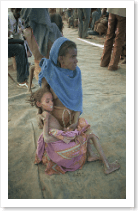


“For I was hungry and you gave me something to eat.”


“I was thirsty and you gave me something to drink,”


“I was a stranger and you invited me in”



“I was sick and you looked after me,”


“I was in prison and you came to visit me.”


Are these the images that offend our Lord? His name and image are glorified and lived out by His Church…by you and me. A statue of Jesus made of chocolate is bound to be forgotten weeks from now. Then, how will people see Jesus through us?