Clearing Our Temple

In John chapter two, we catch a glimpse of the Jesus we don’t often picture in our minds. The meek, gentle curly haired, soft featured Jesus turns into the gigantic, whip wielding terror who overturns tables with his eyes blazing and the chords of the flail snapping as His righteous anger intersects with His love for the Father’s house. Rather than Jesus meek and mild, we see the Lord, mean and wild. Perhaps, on this glorious Sunday morning, we too can be deeply troubled by the unrighteousness that we encounter, in the Lord’s house or on the way there. Let your heart be stirred by the same things that stirred Jesus. Let it be driven to action by oppression and prejudice and usury and all of the things that affect God’s people. Do something outrageous of your own…Jesus did.

Be blessed this day.

Contributions of the Asian Church

A theologian who I have read and respected for some time, Simon Chan, is interviewed in the June 2007 issue of Christianity Today. The theme of the piece is missional theology and one question in particular challenged some long held beliefs about ethnic churches. The interviewer, Andy Crouch, asks What does the Asian church have to contribute to our understanding of discipleship and mission?

I believe the traditional Asian family structure, with its emphasis on extended family and authority within the family, could be very helpful to the Western church and its tendency to atomize the Christian community into autonomous individuals. Western people have great difficulty understanding that a hierarchical structure is not necessarily opposed to individual freedom. They tend to think of hierarchy as an arrangement of domination. But that is not the way we see it in Asia.

There is much to be said for a restoration of the community ethic within our churches. Perhaps too much emphasis has been placed on the idea of our ‘personal’ relationship with Christ, damaging the notion that we are created for community and hindering our acquisition of the theology that derives from it.

Defining Religion in America

Later this summer, I’m teaching a section of Religion in America in our Themes in Religion and Culture curriculum. The course examines the intersection of various religious traditions and the pluralistic culture of America to see how each contributes and affects the cultural religion of this society. In order to contribute to this discussion, students will need to be clear on the boundaries created by their personal definition of religion and cultural religion. Since many very smart people drop by here from time to time, I would like to enlist your help. Can you provide a definition for both of these terms?

Hidden Hope

I’m preaching from John chapter one this morning and there is a passage which offers much hope to those of us who have prayed and shared and done everything we could to brings friends and family to Christ without any outward signs of movement. When Jesus runs into the skeptical Nathanael (“can anything good come from Nazareth?”) he sees something that we don’t. He sees that the Spirit has already been at work in Nate and that his heart has already turned toward the Messiah. Philip who shared his witness with Nate sure didn’t see it and his outward behavior sure doesn’t show it but Jesus knows it.

You and I never know how the Spirit is working in someone but the Lord does. Trust Him and take hope that He will leave none of His own behind.

Be blessed

Getting the Gospel Right: Restoring Community

Scot McKnight confronts our gospel of individuality and the problems that derive from it over at Out of Ur. He asks:

What then is Christian spirituality? It is the person who is restored to God, to self, to others and the world – all four directions for all time – by a gospel that emerges from a “communal God” (the Trinity) to create a community that reflects who God is. Do we preach a gospel that gives rise to holistic restoration and that can create a fully biblical spirituality?

The individuality-gospel that is found in many churches (maybe mine, maybe yours) not only has a damaging effect on our spiritual transformation, it is an incomplete representation of the God we serve. We lose the restored community facet of the good news when our gospel is personal alone. McKnight calls this gospel a parody – it’s painful to think of the label that applies to the poor pastor who presents this kind of message.

What I found intriguing in the light of some discussions I have been involved in this week is this:

Let us not suppose that any of these examples has simplistic explanations, but let us think a little more systemically: if we preach a gospel that is entirely focused on “getting right with God” but which does not include in that presentation that God’s intent is to form a community (the Church) in which restored persons live out this Christ-shaped and Spirit-directed spirituality, then we can expect to hear lots of pulpit rhetoric exhorting us that the Church matters. And, if we discover on Sunday morning that everyone in our church is the same ethnically and economically, we can be sure that we are preaching something that is attracting only those kinds of people. And if we are hesitant to admit the implication of this ethnic, economic reality, then we need to be more honest with ourselves. We get what we preach. And we perform what we preach. How we live reveals the gospel we responded to and the gospel we believe.

Read the whole post and chew on it a bit before responding. Better yet, let the Spirit guide your reading and see what comes of it.

For the Common Good

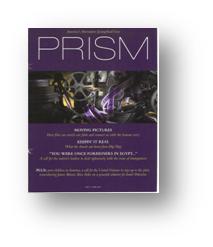
I have an article in the latest PRISM magazine. It talks about the fallout from the Rick Warren invitation to Barack Obama to speak at the Saddleback AIDS conference. My contention is that we as a community led by Jesus need to put aside denominational and perhaps faith differences in order to seek to good of the city (as Jeremiah would put it.) Give it a peek and let me know what you think.

The article PDF is here.

Imagine a Dangerous Life of Worship

Can you remember the first time you started reading the Bible? There were a lot of weird names and miraculous things happening and, whether you finished a single book or the entire Bible, you probably had a pretty good handle of the story because you read most of the words. Now, think about the second, third, or twentieth time you read through a book of the Bible. You began to discover things that you didn’t see the previous times. If you are involved in a bible study, others around you point out things that they saw that are new to you and vice versa. This awakening comes with the expansion of our imagination, growth that is a product of our deepening relationship with the Author of the story. Mark Labberton talks about worship that broadens our imagination in chapter nine of The Dangerous Act of Worship. True worship fires our imagination and enables us to have a more expansive view of our roles in restoring that justice that God wants for His world.

Imagination here is not just fanciful musings on what could be. Worship that brings us closer to the King is worship that fills us with God’s dreams and it leads us to look at people and events and our lives in a different way, discovering things that were not there the last time we looked, just as when we read the Bible over and over again. This process is enabled by our realization that God has placed His repentant children in a new place where we live by His grace power rather than our own contrition and energy. Our participation is ignited through prayer and scripture reading that opens our eyes to those around us. We seek their benefit while trusting in the Father for our own. As our imagination expands in this way we begin to see how God has arranged our intertwining lives such that we can contribute to a restoration of justice in their lives. Worship expands beyond our hour on Sunday to become our lifestyle.

At Saddleback last Sunday, Pastor Rick Warren said it plainly, if you don’t have a dream – a God sized dream- you’re just marking time. What’s your dream?     

Dangerous Worship Defined by Diaspora

Labberton draws close to concluding his move to awaken the Church to the realities of the dangers of true worship with chapter 8 calling the reader to recognize the effects of location on their adoration. He asks us to view our condition through the lens of two biblical designations of residence; exile or exodus. The dangerous worship we seek is brought to a keen edge when we live in one of these conditions rather than asserting our permanence in a country or culture that is earthbound. Disconnecting our idea of ‘home’ from our current abode frees our imagination to encompass God’s idea of justice. The worship effect that derives from this viewpoint comes from our view of the Promised Land; is it here (wherever ‘here’ is) or is it our permanent abiding home with the Lord?

We forget our dependence on God when we are not people of Exodus. In many ways we attempt to solve our own problems in the desert. We try to buy our way out of the desert or work our way out of the desert but every move we make on our own takes our eyes off of the cloud that moves ahead of us. We are barraged with messages every day that guide us to the earthbound Promised Land through sex or money or substances or stuff. Our imagination is dulled and we see no injustice around us.

Even less attractive is to worship God from a place of exile. Our eyes can easily become so focused on our own situation and seeking our own good that we fail to seek the well being of those around us. God once reminded His people in exile to seek the good of the city rather than putting so much energy into seeking an escape from where He had placed them. Spread justice as you unpack your boxes because you are going to stay awhile.

Where do you find yourself and your church?

Joy Returns

Sometimes things that begin with great excitement and vigor and with a vision to break through the boundaries of the establishment fall into lethargy and habit and, one day, when you look around, you come to find that you have become mired in the structural mud, unable to move and your strength slowly ebbing away… that is, until something – gravity, inertia, centrifugal force, explosive force, or a sudden yank by a tow hook – breaks you free from the miry clay that held you captive… it takes a few days or weeks to regain your footing and then generate momentum but you find it easy to do so because the joy returns.

After the ‘event’ of several weeks ago, I have discovered a newfound joy in the ministry that I’ve been called to. Artificial restraints have been lifted and a return to a more organic simplicity has benefited all of those who remain a part of our church. My passion has been restored and is more evident in our worship and in my talks. The joy of the Lord is our only guide and we pour our hearts in it without concern for breaches of formality that had begun to hinder us. The love of God is moving in us and will once again move through us to others.

Consider it pure joy, my brothers, whenever you face trials of many kinds, because you that the testing of your faith develops perseverance.

Amen…

The Social Gospel Revisited

On the republication of Walter Rauschenbusch’s seminal book Christianity and the Social Crisis, OpinionJournal.com reminds us that the pursuite of social justice by the Church must be balanced. Without an equivalent emphasis on personal repentance and holiness, the social gospel fell dangerously close to other movements which thought that they could perfect humankind given the appropriate circumstances.

More on Rauschenbusch:

Wiki

Rauschenbusch Center

Technorati tags: , , , , ,