Distraction or Attraction

Looking out the window of my office at this early hour and watching the sunrise turn the bottoms of the gray clouds a vivid pink, fading to orange as the cacophony of the avian masses sing their praises to the Creator, once again I am struck by the glory of God. The simple beauty of His creation stirs my heart each day and I bend in worship. It takes nothing more than a sunrise or a single flower or the languorous flight of one of the water birds off the nearby lake to focus my attention on the greatness of the Lord.

Yet, come Sunday, churches across the land will focus their worshippers on the video screens and try to gain their attention through technically proficient multimedia shows. I wonder if we’ve gone a bit overboard to the point where our attention is distracted. We have the ability to project our praise lyrics over the top of moving images that transition into a video vignette that leads to a twelve slide set of sermon notes, all with stunning transitions and a fade to black before coffee. Do we really need this? Perhaps our attention would be better focused on God if we were to shift our worship hour to 5:00 AM to see His natural transitions and images.

Defining Religion in America

Later this summer, I’m teaching a section of Religion in America in our Themes in Religion and Culture curriculum. The course examines the intersection of various religious traditions and the pluralistic culture of America to see how each contributes and affects the cultural religion of this society. In order to contribute to this discussion, students will need to be clear on the boundaries created by their personal definition of religion and cultural religion. Since many very smart people drop by here from time to time, I would like to enlist your help. Can you provide a definition for both of these terms?

Getting the Gospel Right: Restoring Community

Scot McKnight confronts our gospel of individuality and the problems that derive from it over at Out of Ur. He asks:

What then is Christian spirituality? It is the person who is restored to God, to self, to others and the world – all four directions for all time – by a gospel that emerges from a “communal God” (the Trinity) to create a community that reflects who God is. Do we preach a gospel that gives rise to holistic restoration and that can create a fully biblical spirituality?

The individuality-gospel that is found in many churches (maybe mine, maybe yours) not only has a damaging effect on our spiritual transformation, it is an incomplete representation of the God we serve. We lose the restored community facet of the good news when our gospel is personal alone. McKnight calls this gospel a parody – it’s painful to think of the label that applies to the poor pastor who presents this kind of message.

What I found intriguing in the light of some discussions I have been involved in this week is this:

Let us not suppose that any of these examples has simplistic explanations, but let us think a little more systemically: if we preach a gospel that is entirely focused on “getting right with God” but which does not include in that presentation that God’s intent is to form a community (the Church) in which restored persons live out this Christ-shaped and Spirit-directed spirituality, then we can expect to hear lots of pulpit rhetoric exhorting us that the Church matters. And, if we discover on Sunday morning that everyone in our church is the same ethnically and economically, we can be sure that we are preaching something that is attracting only those kinds of people. And if we are hesitant to admit the implication of this ethnic, economic reality, then we need to be more honest with ourselves. We get what we preach. And we perform what we preach. How we live reveals the gospel we responded to and the gospel we believe.

Read the whole post and chew on it a bit before responding. Better yet, let the Spirit guide your reading and see what comes of it.

For the Common Good

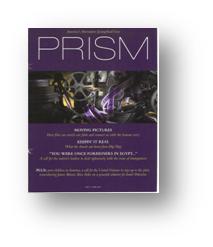
I have an article in the latest PRISM magazine. It talks about the fallout from the Rick Warren invitation to Barack Obama to speak at the Saddleback AIDS conference. My contention is that we as a community led by Jesus need to put aside denominational and perhaps faith differences in order to seek to good of the city (as Jeremiah would put it.) Give it a peek and let me know what you think.

The article PDF is here.

False Assumptions of the Interracial Couple

I’ve managed to alienate a group of brothers and sisters over on another blog by challenging the identity of a church or a Christian that is rooted in any kind of a hyphenated description, Italian-Scottish-English-French-American for example as I would identify my own heritage. While this Balkanization of the American experience is prevalent in the larger culture, my contention was that it had no place in the context of Christ’s church. Gal 3:26-27 says,

You are all sons of God through faith in Christ Jesus, for all of you who were baptized into Christ have clothed yourselves with Christ. There is neither Jew nor Greek, slave nor free, male nor female, for you are all one in Christ Jesus.

While this issue is little discussed outside of a place like the United States where, by definition, every church would be a __________-Church, in a culture where by design the culture is intended to blend by assimilation there should be no hyphenated churches.

Attempts were made to dismiss my position first by challenging the validity of my walk in the _____________-American church. After providing my bona fides there was simply silence. The silence didn’t stir me to respond but one final comment by another poster remains troubling. He says in his final words regarding those of us involved in interracial marriages:

As to the challenging question of interethnic marriage (particularly between White and “other”) it seems important to recognize that any minority person has a bi-cultural identity at some level, or is at least able to function biculturally as interaction with the dominant culture in dominant culture ways is really non-optional. For those in the dominant culture, especially males, even if they are married to a member of a minority group, participation in a minority context is always optional.

I hope I’m reading this wrong, especially in the context of the church. Just like the American experiment was intended to work: a new culture created by the assimilation of immigrant cultures into the larger whole creating a new identity and a release of the old identity, the Church that Christ left was also intended to be made of people who had left their previous identities behind and saw themselves as new people. No hyphens, no dominant culture, no racial division voluntary or otherwise. Those who continue to live in either the American or Christian culture but still retain their primary identity with a hyphen are dividing Christ’s people, not uniting them under a new banner as intended.

What is most troubling is the resentment that this writer holds toward the ‘dominant’ culture and we males that inhabit it. By picturing us as oppressors who can voluntarily flit in and out of ‘minority’ culture while our poor ‘other’ spouses must bow to it without choice he exposes his own racism. My wife was born and raised in a foreign country giving her full right to identify with a hyphen, my child who was born and raised here does not. He is a part of the ‘dominant’ culture, contributing to it the best of both his mother and father’s cultures. What other options does he have or need?

The Social Gospel Revisited

On the republication of Walter Rauschenbusch’s seminal book Christianity and the Social Crisis, OpinionJournal.com reminds us that the pursuite of social justice by the Church must be balanced. Without an equivalent emphasis on personal repentance and holiness, the social gospel fell dangerously close to other movements which thought that they could perfect humankind given the appropriate circumstances.

More on Rauschenbusch:

Wiki

Rauschenbusch Center

Technorati tags: , , , , ,

Immigration and the Evangelical Mindset

Here is an article I wrote for Evangelicals for Social Action (link on my blogroll for further information) regarding the current division of the Evangelical community on the topic of illegal immigration.  

Balancing the Scales on a Theology of Immigration

The Bible is used as a bludgeon and a shield, but either extreme is improper when used in this debate. Read the piece and let me know what you think.

Technorati tags: , , , , , , ,